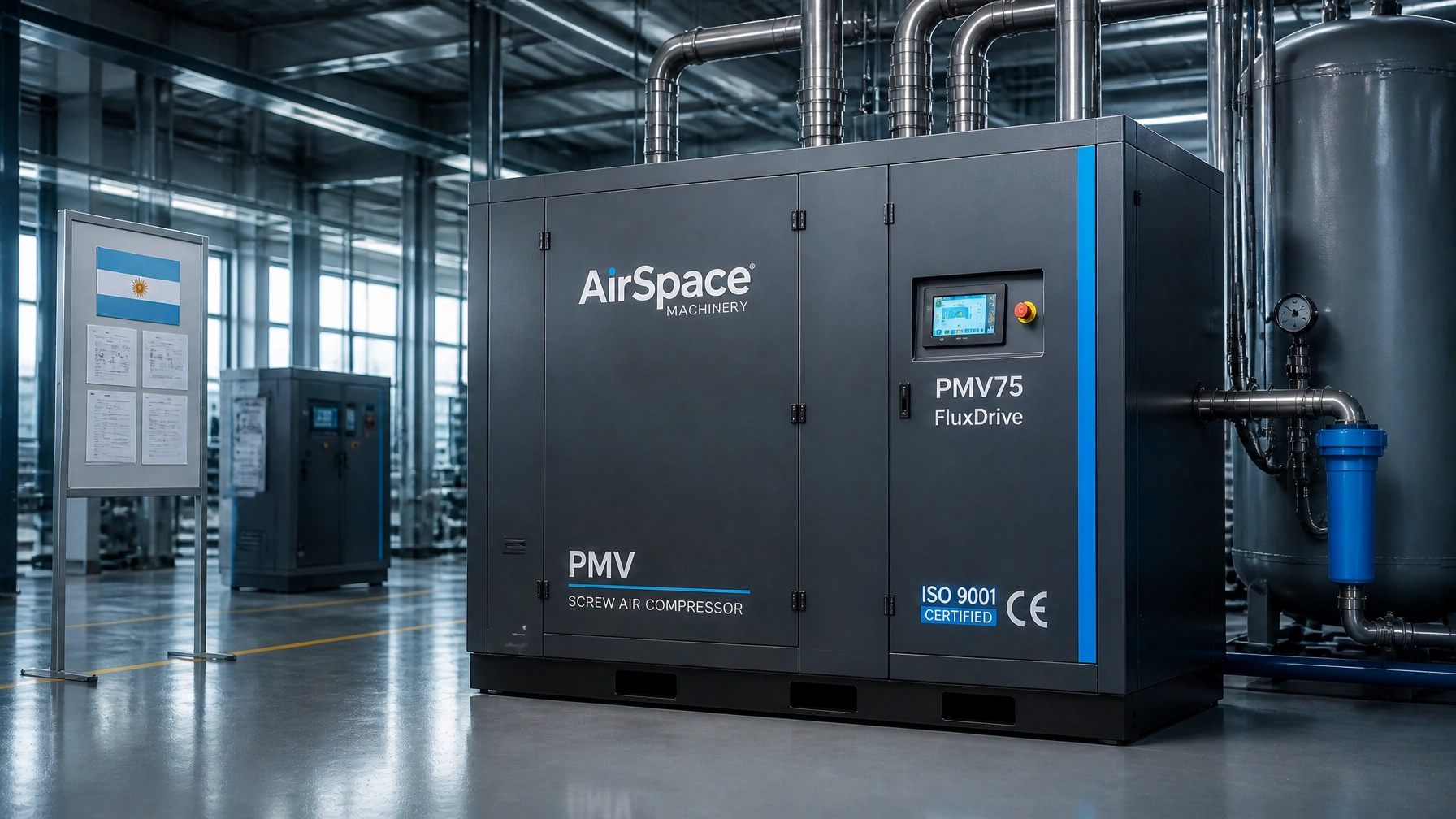
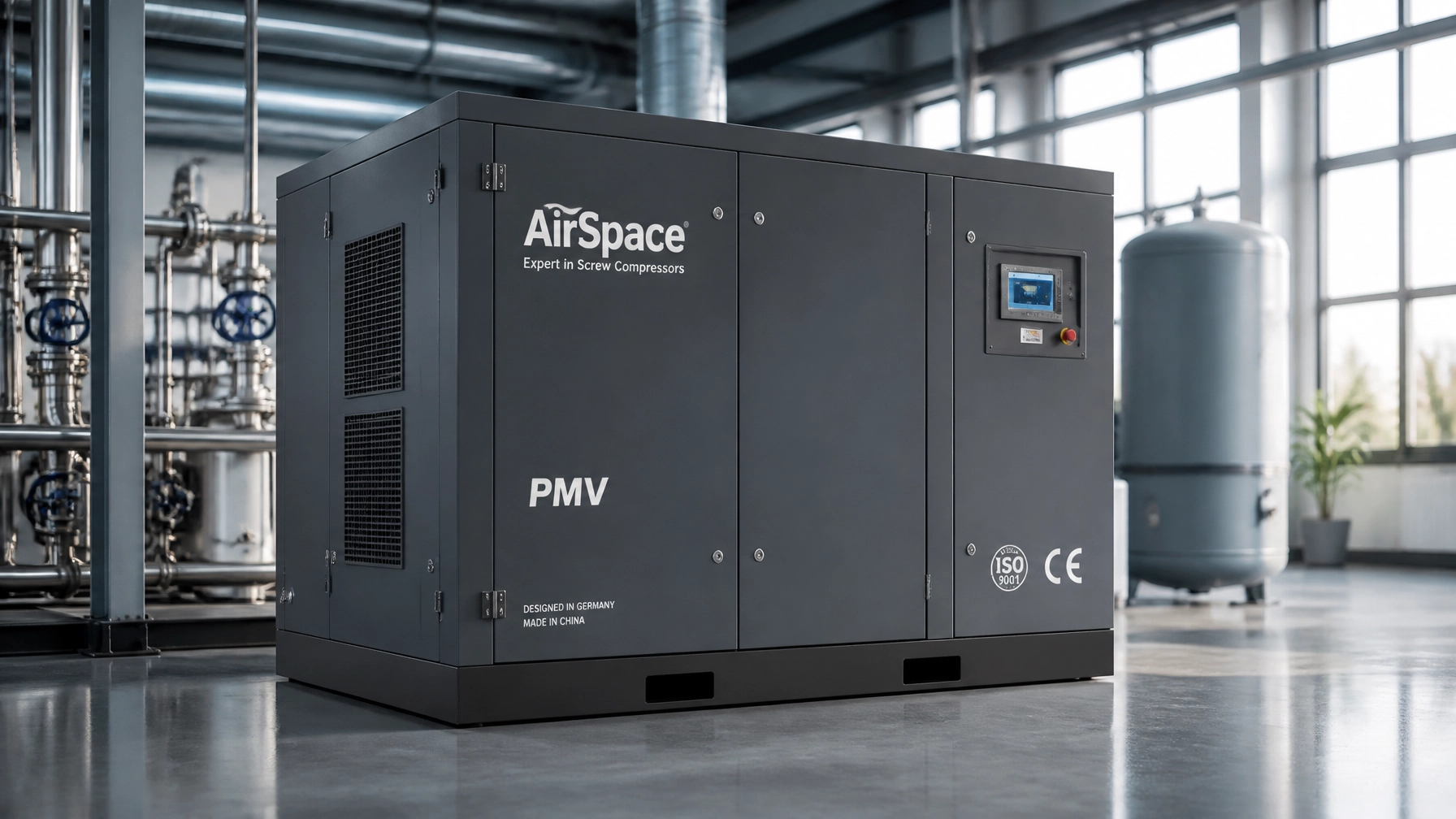
One World, Nine Borders , The Compliance Challenge
In the modern manufacturing landscape, compressed air is indisputably the Fourth Utility. Just as essential as electricity, water, or gas, industrial air systems power everything from the delicate robotics of an electronics assembly line to the heavy-duty actuators in a metal processing plant. However, unlike electricity, which generally stays within a localized grid, the machinery that generates this utility is a global commodity. For a procurement manager or factory owner, the challenge isn’t just finding a high-performance PMV screw air compressor; it’s ensuring that the 10-ton piece of precision engineering actually clears customs and operates legally in their specific territory.
Navigating the regulatory landscape in 2026 has become significantly more complex. We are seeing a global shift toward stricter energy efficiency mandates and mandatory safety certifications that move away from “self-declaration” toward rigid, government-monitored “third-party” certification schemes. From India’s massive BIS Scheme X overhaul (with its looming September 1, 2026 deadline) to Mexico’s aggressive LIGIE tax reforms and Brazil’s stringent NR-13 pressure vessel codes, the “cost of non-compliance” is no longer just a fine, it is a total shipment rejection, port seizure, or catastrophic equipment failure due to grid mismatch.
This blog post serves as the master executive summary of our “Global Compliance Series.” It is designed to be your desk-reference cheat sheet, a technical blueprint for successfully importing and operating industrial air compression equipment in the world’s most active manufacturing hubs.
The 9-Country Quick-Reference Matrix
To help you navigate these waters, we have condensed thousands of pages of regulatory text into a single, actionable matrix. Every entry below represents a critical market where AirSpace Machinery regularly facilitates high-performance PMV screw air compressor deployments.
1. 🇮🇳 India: The BIS Scheme X Transition
🟢 Status: Critical Update Pending
The most significant shift in the Asian market is the implementation of the Machinery and Electrical Equipment Safety (Omnibus Technical Regulation) Order. This moves compressors from optional standards to mandatory federal law.
- Standard: IS 17093:2019 (Reciprocating) and relevant ISO-equivalent Indian Standards for Screw/Rotary.
- Certification: BIS Scheme X (ISI Mark).
- Grid: 50Hz / 415V (3-Phase).
- Key Documents: BIS License, Factory Audit Report, Type Test Reports from BIS-recognized labs.
- Duty: ~7.5% Basic Customs Duty (BCD) + Social Welfare Surcharge.
- HS Code: 8414.80.90 (Other air compressors).
- 2026 Update: Mandatory compliance deadline is September 1, 2026. After this date, no non-BIS compressor can legally enter India.
- Top Risk: Total rejection at the port of entry for any unit not carrying the ISI mark.
2. 🇸🇦 Saudi Arabia: The SABER Portal
🟢 Status: Online & Active
Saudi Arabia has digitized its entire conformity process through the SABER platform, focusing heavily on pressure vessel safety and energy efficiency.
- Standard: SASO Technical Regulations for Machinery; SASO GSO IEC 60335 series.
- Certification: SABER PCoC (Product Certificate) and SCoC (Shipment Certificate).
- Grid: 60Hz / 380-400V (Industrial standard).
- Key Documents: Certificate of Conformity (CoC), Manufacturer Declaration, Technical File.
- Duty: 5% Standard Duty.
- HS Code: 8414.80.10.
- 2026 Update: Increasing focus on High-Efficiency PMV motors (IE4/IE5 equivalent).
- Top Risk: Consignment held indefinitely at the port due to an unlinked SCoC in the SABER system.
3. 🇦🇺🇳🇿 Australia & New Zealand: The RCM & Pressure Vessel Code
🟢 Status: High Safety Threshold
The ANZ market is defined by its unique approach to electrical safety and rigorous “Design Verification” for pressure vessels (the air tank).
- Standard: AS/NZS 3788 (Pressure Equipment); AS/NZS 3000 (Wiring Rules).
- Certification: RCM (Regulatory Compliance Mark).
- Grid: 50Hz / 400-415V.
- Key Documents: Manufacturer’s Data Report (MDR), AS/NZS Test Reports, Hydrostatic Test Certificates.
- Duty: 0-5% (Depending on Free Trade Agreements).
- HS Code: 8414.80.
- 2026 Update: Enhanced auditing of electrical components for RCM compliance.
- Top Risk: “Vessel Condemnation.” If the air receiver tank does not meet AS/NZS 1210 design standards, the entire unit may be barred from installation.
4. 🇿🇦 South Africa: NRCS & SANS 347
🟢 Status: Mandatory Registration
South Africa requires all imported machinery to be vetted by the National Regulator for Compulsory Specifications (NRCS).
- Standard: SANS 347 (Categorization of pressure equipment).
- Certification: NRCS Letter of Authority (LoA).
- Grid: 50Hz / 400V.
- Key Documents: Test reports from accredited third parties, LoA application.
- Duty: 5-10% depending on the specific model.
- HS Code: 8414.80.
- 2026 Update: Stricter enforcement on the “unlawful sale” of non-LoA machinery.
- Top Risk: Civil and criminal penalties for the importer if the unit is sold or operated without a valid LoA.
5. 🇳🇬 Nigeria: The SONCAP Scheme
🟢 Status: Documentation Sensitive
Nigeria uses the Standards Organisation of Nigeria Conformity Assessment Programme (SONCAP) to prevent the dumping of sub-standard machinery.
- Standard: NIS Standards (Nigerian Industrial Standards).
- Certification: SONCAP Product Certificate (PC) and SONCAP Certificate (SC).
- Grid: 50Hz / 400V.
- Key Documents: Product Certificate (Route A, B, or C), Form M.
- Duty: 5% (Reduced in 2026 to stimulate industrial growth).
- HS Code: 8414.80.
- 2026 Update: Duty reductions for energy-efficient PMV screw air compressors.
- Top Risk: Inability to open a “Form M” or secure an SC after the vessel has departed the port of origin.
6. 🇦🇪 UAE: MOIAT & ECAS
🟢 Status: High Efficiency Focus
The UAE, through the Ministry of Industry and Advanced Technology (MOIAT), enforces strict safety and energy labeling.
- Standard: UAE.S IEC 60204-1 (Safety of machinery).
- Certification: ECAS (Emirates Conformity Assessment Scheme).
- Grid: 50Hz / 400V.
- Key Documents: ECAS Certificate of Conformity, MOIAT Approval.
- Duty: 5% Standard.
- HS Code: 8414.80.
- 2026 Update: Integration of “Green Industry” requirements into ECAS certifications.
- Top Risk: Rejection based on specific model ID discrepancies between the ECAS certificate and the physical nameplate.
7. 🇧🇷 Brazil: INMETRO & The NR-13 Barrier
🟡 Status: High Complexity / High Tax
Brazil is arguably the most difficult market to enter due to its “Tax Cascade” and unique NR-13 pressure vessel requirements.
- Standard: NR-13 (Pressure Vessels); ABNT Standards.
- Certification: INMETRO (for specific electrical components) + NR-13 Certification.
- Grid: 60Hz / 380-480V (Regional variations exist).
- Key Documents: Technical Prontuário (NR-13 Manual), Import License (LI).
- Duty: 40-100% (Cumulative Tax Cascade including II, IPI, PIS, COFINS, ICMS).
- HS Code: 8414.80.
- 2026 Update: Move toward the DUIMP (Single Import Document) for all machinery.
- Top Risk: Motor burnout. Exporting a 50Hz compressor to a 60Hz Brazilian grid causes the motor to run 20% faster, leading to immediate mechanical failure.
8. 🇲🇽 Mexico: NOM & LIGIE Reform
🟡 Status: North American Grid Standards
Mexico aligns closely with North American standards, requiring specific NOM certifications for safety and efficiency.
- Standard: NOM-001-SEDE (Electrical Installations); NOM-008-SCFI.
- Certification: NOM (Norma Oficial Mexicana).
- Grid: 60Hz / 220-480V.
- Key Documents: NOM Certificate, Pedimento (Customs Declaration).
- Duty: ~41.8% Total Adder (When considering the LIGIE surcharge and VAT).
- HS Code: 8414.80.
- 2026 Update: Revised LIGIE tariffs on “China-made screw air compressor” imports to protect local manufacturing.
- Top Risk: Mechanical failure due to frequency mismatch (60Hz) and non-compliance with ENER (Energy Efficiency) NOMs.
9. 🇹🇷 Turkey: TAREKS & CE Alignment
🟢 Status: EU-Aligned
Turkey utilizes the TAREKS system to monitor imports, maintaining strict alignment with European CE directives.
- Standard: Machinery Directive 2006/42/EC; Pressure Equipment Directive (PED) 2014/68/EU.
- Certification: CE Marking + TAREKS Registration.
- Grid: 50Hz / 400V.
- Key Documents: Declaration of Conformity (DoC), Technical Dossier, Turkish Manual.
- Duty: ~0-4% (Varies by HS code) + 20% VAT (KDV).
- HS Code: 8414.80.
- 2026 Update: No more “out-of-scope” exemptions for 8414 HS codes in TAREKS.
- Top Risk: Date mismatch. If the Declaration of Conformity (DoC) is dated after the Bill of Lading (BoL), TAREKS will flag the shipment for physical inspection (Red Lane).
Comparative Analysis: 60Hz vs. 50Hz Markets
One of the most common, and expensive, mistakes in global industrial procurement is ignoring the “Frequency Trap.” While much of the world (Europe, China, India, UAE) operates on a 50Hz electrical grid, the Americas (Brazil, Mexico, USA) and parts of the Middle East (Saudi Arabia) utilize a 60Hz standard.
The Technical Reality:
A motor designed for 50Hz will attempt to run 20% faster when connected to a 60Hz power source. This is not a “minor efficiency loss”; it is a catastrophic engineering event.
- Heat Generation: The increased speed leads to excessive friction and heat, typically burning out the motor windings within hours.
- Component Strain: Bearings, seals, and the screw airend itself are calibrated for specific RPMs. Exceeding these limits voids all warranties and significantly reduces the lifespan of the unit.
- The PMV Advantage: AirSpace Machinery’s Permanent Magnet Variable Frequency (PMV) technology provides a buffer. Our advanced VSD inverters are often designed to handle a wider range of input frequencies and voltages, but the base motor must still be wound for the target market’s grid.
| Market Type | Core Countries | Frequency | Primary Risk |
|---|---|---|---|
| 60Hz Markets | 🇧🇷 Brazil, 🇲🇽 Mexico, 🇸🇦 Saudi Arabia, 🇺🇸 USA, 🇵🇭 Philippines | 60Hz | Over-speeding, motor burnout, cooling failure. |
| 50Hz Markets | 🇮🇳 India, 🇦🇪 UAE, 🇹🇷 Turkey, 🇳🇬 Nigeria, 🇿🇦 South Africa, 🇦🇺 Australia | 50Hz | Standard industrial speed, higher torque requirements. |
The Localization Table (Manuals and Labeling)
Compliance isn’t just about what’s inside the machine; it’s about what’s printed on it and the language in the box. In many jurisdictions, providing an English-only manual is a violation that can stop a factory inspection in its tracks.
| Language | Required Markets | Specific Enforcement Level |
|---|---|---|
| Portuguese | 🇧🇷 Brazil | High. Mandatory for NR-13 safety documentation. |
| Spanish | 🇲🇽 Mexico | Medium. Required for operational safety under NOM. |
| Arabic | 🇸🇦 Saudi Arabia, 🇦🇪 UAE | High. Labeling must be bilingual (Arabic/English). |
| Turkish | 🇹🇷 Turkey | Very High. TAREKS will reject units without Turkish manuals. |
| English | 🇮🇳 India, 🇳🇬 Nigeria, 🇿🇦 South Africa, 🇦🇺🇳🇿 AUS/NZ | Universal. Standard for international trade. |
Duty Tiers and “China-Origin” Surcharges
Importing a “China-made screw air compressor” involves varying levels of financial friction depending on the destination’s trade relationship with China. Understanding these tiers is vital for accurate CapEx (Capital Expenditure) forecasting.
- High Barrier (40%+ Total Taxes): Brazil and Mexico. These markets utilize complex tax cascades to protect local industry. In Brazil, the cumulative effect of II, IPI, PIS, COFINS, and ICMS can double the landed cost of a machine.
- Moderate (15-25%): Turkey (due to the 20% KDV/VAT), South Africa, and India. These markets have reasonable basic duties but high secondary taxes.
- Low (0-5%): UAE, Saudi Arabia, Nigeria (new 2026 guidelines), and New Zealand. these are the most “frictionless” markets for high-tier industrial machinery.
Strategy Tip: To offset high rates in Brazil, look for Ex-Tarifário status if no equivalent machine is produced locally. In Mexico, the PROSEC program can drastically reduce duties for specific manufacturing sectors.
The Digital Gatekeepers (Mandatory Portals)
The era of paper certificates is over. In 2026, compliance is digital. If your shipment isn’t registered in the national database, it doesn’t exist to customs.
- TAREKS (Turkey): Risk-based trade control system for CE documentation.
- SABER (Saudi Arabia): The central hub for all SASO conformity.
- DUIMP (Brazil): The new “Single Import Document” framework.
- MOIAT Portal (UAE): For ECAS and EQM certifications.
- SONCAP Portal (Nigeria): For managing PC and SC links.

Why Compliance is Your Strategic Moat
At AirSpace Machinery, we believe that compliance should not be an afterthought, it should be a strategic advantage. In a global market flooded with budget suppliers who “ship and pray,” we have built our “Engineering Freedom” philosophy on the foundation of regulatory certainty.
When you partner with AirSpace, you aren’t just buying a 100HP PMV screw air compressor; you are buying a technical dossier that has been pre-vetted for your specific market. We provide:
- Technical Documentation (The Dossier): We supply all Test Reports, Declarations of Conformity, and specialized engineering drawings (like the NR-13 Prontuário) at least 14 days before the ship leaves the port.
- The 35% Energy Delta: Our systems are designed to meet, and exceed, the most stringent energy efficiency standards in the world (ISO 9001, CE), ensuring you don’t just pass customs, but also save thousands in annual energy costs.
- Local Alignment: We custom-configure the electrical grid specs (Voltage/Frequency) and localization (Labels/Manuals) at the factory level, eliminating the need for expensive on-site modifications.
Frequently Asked Questions
Q: Which country has the strictest pressure vessel codes?
A: Brazil (NR-13) and Australia (AS/NZS 1210/3788). Both require detailed design verification and material certifications that go far beyond standard “shop air” requirements.
Q: What is the most critical compliance deadline in 2026?
A: The India BIS Scheme X deadline on September 1, 2026. This is a hard stop for the industry; any air compressor or spare part arriving in India without the ISI mark after this date will likely be seized or returned to the origin.
Q: Can I use CE certification everywhere?
A: No, but it is the “Gold Standard” of supporting documentation. While the US (UL), Mexico (NOM), and Brazil (NR-13) have their own specific rules, a valid CE Technical Construction File (TCF) provides 90% of the data needed to satisfy TAREKS (Turkey), MOIAT (UAE), and Indonesian standards.
Q: Why do Brazil and Mexico require 60Hz while most others use 50Hz?
A: This is an inheritance of the North American grid standard. Operating a 50Hz motor on these grids without a properly tuned VSD/Inverter will lead to the motor running 20% over-speed, resulting in overheating and mechanical failure.
Conclusion: Compliance is an Uptime Guarantee
Compliance is not just a hurdle to clear at the border; it is an uptime guarantee. A machine that isn’t compliant is a machine that isn’t working: it’s sitting in a warehouse, stuck in a port, or burning out on an incompatible grid.
As we move through 2026, the gap between “standard equipment” and “compliant engineering” will only widen. By choosing a partner like AirSpace Machinery, you are choosing to avoid the “Industrial Taxes” of delays, fines, and retrofitting costs. We are the authority on global regulatory engineering, ensuring that your “Fourth Utility” is ready to work the moment it hits your factory floor.
Download the Full 9-Country Reference Sheet or Get a Proposal for a specific market assessment today.
Author: Penny Winston
Technical Writer & Global Compliance Specialist at AirSpace Machinery Co., Ltd.
Specializing in ‘The 35% Energy Delta,’ ‘The Fourth Utility Concept,’ and ‘ISO 8573-1 Class 0 Integrity.’
Reviewed by Engineering: July 14, 2026
Follow us for more industrial updates on LinkedIn.
📅 Last updated:
⚡ Is Your Factory Bleeding Cash?
Most fixed-speed compressors waste $3,600/year in "Unload Tax." Test your waste level in 30 seconds.
RUN THE ROI TEST →Ready to See How Much Your Facility Can Save?
Fill out the form below for a Free Energy Assessment.