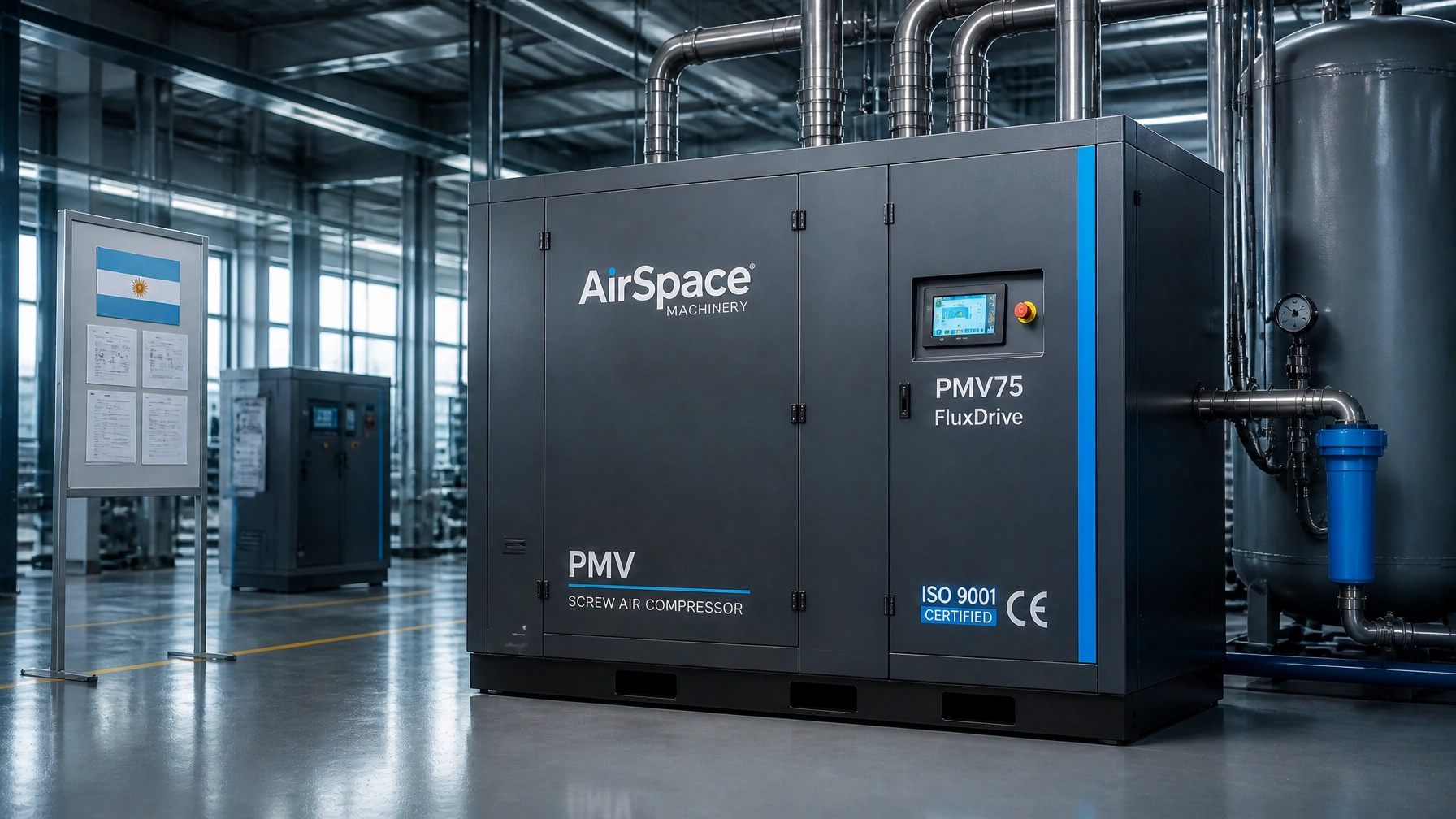
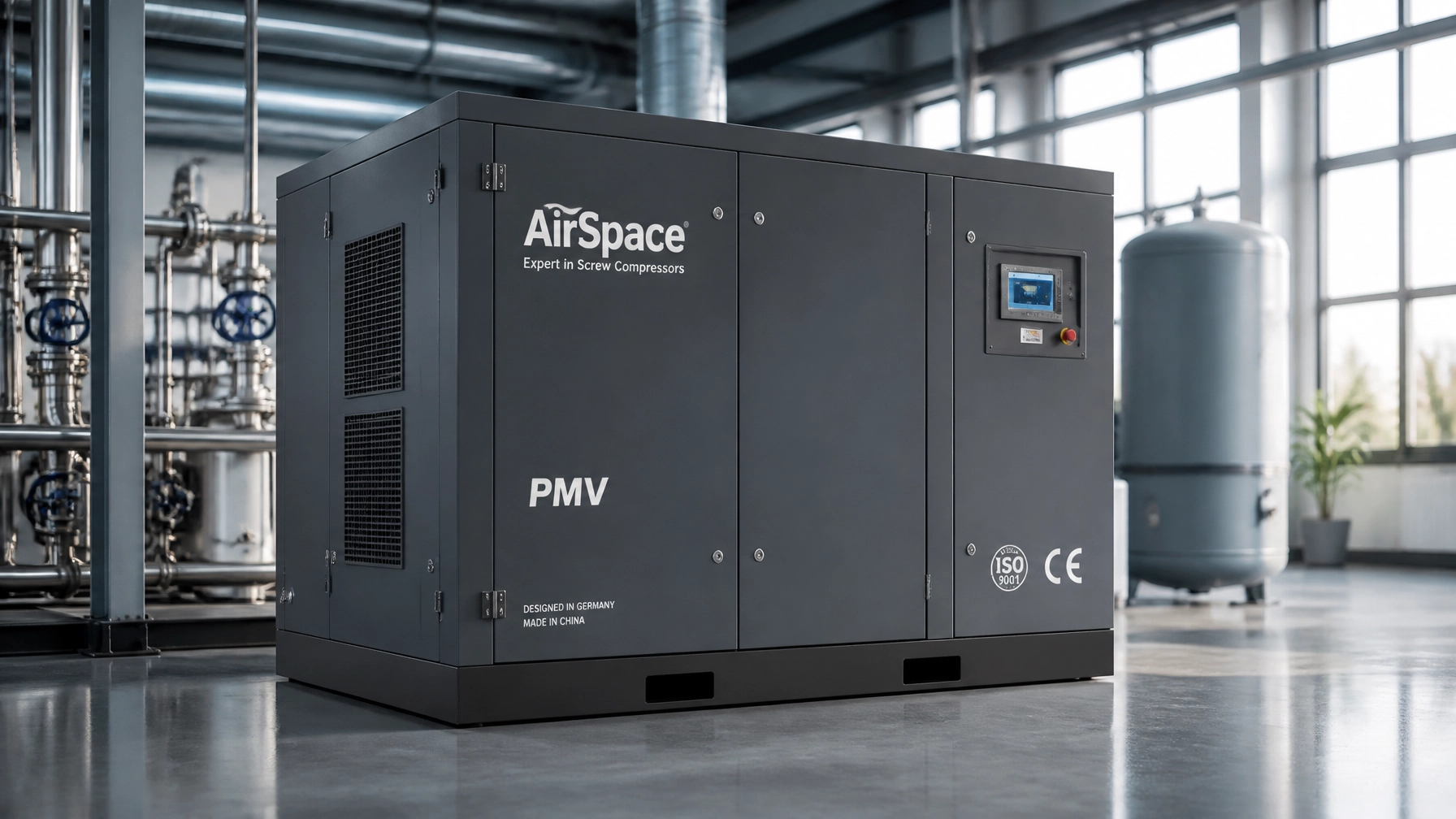
Industrial air compressors entering the Brazilian market in 2026 must navigate two mandatory regulatory frameworks: INMETRO Portaria 120/2021 for product safety and NR-13 for pressure vessel integrity. While Brazil offers massive industrial potential, its regulatory complexity and high import taxes, often adding 40% to 100% to the landed cost, require a proactive compliance strategy. AirSpace Machinery provides 60Hz-configured, PMV-driven systems that meet these standards while delivering a 35% energy delta over legacy fixed-speed units.
The Brazilian Market , High Potential, High Barriers
Brazil is Latin America's largest compressed air market, driven by a robust automotive sector, pharmaceutical growth, and a rapidly modernizing textile industry. However, it remains one of the most complex regulatory environments globally. For a compressor to be legally sold and operated in Brazil, it must satisfy two parallel pathways: INMETRO certification (governing the design and manufacture of the product) and NR-13 (governing the safety of pressure vessels during operation).
Beyond documentation, the physical requirements are unique. Brazil utilizes a 60Hz grid standard (typically 380V or 440V for industrial sites), which is distinct from the 50Hz standard found in Europe, China, and much of Asia. Furthermore, the tropical climate necessitates a "Heat Tax" and "Humidity Tax" mitigation strategy, ensuring equipment can survive 55°C ambient temperatures and high moisture levels without premature failure.
Local Brazilian manufacturers have traditionally dominated this space due to their familiarity with these codes. However, as energy costs rise, these legacy brands often fall short on efficiency. AirSpace Machinery bridges this gap by offering "China made screw air compressor" technology that is fully localized for Brazil’s grid and climate, ensuring that the "Fourth Utility" (compressed air) remains reliable and cost-effective.
Pathway 1 , INMETRO Certification
The National Institute of Metrology, Standardization and Industrial Quality (INMETRO) is the gatekeeper for product safety in Brazil. For industrial air compressors, several ordinances (Portarias) are critical:
- Portaria 120/2021: This is the primary regulation for serially manufactured pressure vessels, including the air receivers and oil separators integrated into screw air compressors. It mandates that these components be certified and registered with INMETRO before they can be marketed.
- Portaria 148/2022: Covers the electrical safety requirements for portable and certain industrial equipment.
- Portaria 06/2022: Regulates sound power levels, ensuring that noise pollution in the workplace is minimized, a core feature of AirSpace's low-noise PMV units.
The INMETRO process involves testing at accredited laboratories, a comprehensive factory inspection, and a legal review by a local representative. The resulting certificate is typically valid for one to five years, with annual maintenance audits required to ensure ongoing compliance. The INMETRO mark must be clearly affixed to both the product and its packaging.

Pathway 2 , NR-13 Pressure Vessel Compliance
While INMETRO focuses on the product as it leaves the factory, NR-13 (Norma Regulamentadora 13) focuses on the product as it is used on the factory floor. Governed by the Ministry of Labor and Employment, NR-13 applies to all pressure vessels where the product of pressure (kPa) and volume (m³) exceeds 8 (PV > 8 kPa·m³).
The latest revision, Portaria MTP nº 1.846 (July 1, 2022), mandates several key safety measures:
- Design Verification: Must be verified by a CREA-registered engineer (Conselho Regional de Engenharia e Agronomia).
- ART (Anotação de Responsabilidade Técnica): A formal document signed by the engineer responsible for the design and manufacturing integrity.
- Safety Devices: Every vessel must have a safety valve set at or below the Maximum Allowable Working Pressure (PMTA).
- Documentation: Complete technical files, including material certificates, weld procedures, and hydrostatic test reports, must be maintained on-site.
Failure to comply with NR-13 is not just a fineable offense; it is a significant safety risk that can lead to equipment seizure and criminal liability for the plant manager.
NR-13 Inspection Intervals
Vessels are classified by hazard level (Category I to V). For most industrial air receivers, the inspection intervals are as follows:
| Category | Description | Internal Inspection | External Inspection |
|---|---|---|---|
| Category I | Lowest Risk | Every 72 months | Every 36 months |
| Category II | Moderate Risk | Every 48 months | Every 24 months |
| Category III | Standard Industrial | Every 36 months | Every 18 months |
| Category IV/V | Highest Risk | Every 12-24 months | Every 6-12 months |
AirSpace ensures that all integrated vessels in our systems are pre-tested with documented hydrostatic results, making the "Initial Safety Inspection" in Brazil a formality rather than a roadblock.
Import Duties and Taxes (2026 Update)
Importing a "China made screw air compressor" into Brazil involves a "Tax Cascade" that is famously steep. As of July 2026, the following rates apply to NCM Code 8414.80.19:
| Tax | Estimated Rate | Calculation Base |
|---|---|---|
| II (Import Duty) | 14% – 20% | CIF (Cost, Insurance, Freight) |
| IPI (Industrialized Product Tax) | 0% – 15% | CIF + II |
| PIS/COFINS (Social Contributions) | ~9.25% | CIF + II + IPI |
| ICMS (State VAT) | 17% – 22% | CIF + II + IPI + PIS/COFINS |
| AFRMM (Freight Renewal) | 8% | Sea Freight Value |
| DUIMP (System Fee) | Fixed | Per transaction |
The Ex-Tarifário Strategy:
One of the most effective ways to lower the "Import Tax" is the Ex-Tarifário regime. If you can prove that no equivalent compressor is manufactured within Brazil, the Import Duty (II) can be reduced to 0%. Because our Permanent Magnet Variable Frequency (PMV) technology offers superior energy savings compared to local legacy brands, many of our high-capacity systems qualify for this reduction.
Additionally, the EU-Mercosur FTA saw provisional application start on May 1, 2026. While this primarily benefits EU-origin goods, it has shifted the competitive landscape, making it even more vital for buyers to choose efficient, high-performance systems like AirSpace's PMV line to offset the costs.
Technical Requirements: Overcoming the Brazil "Taxes"
In our "Industrial Tax Series," we analyze the hidden costs of poor equipment choices. For Brazil, three specific "Taxes" apply:
1. The Humidity Tax (SEA/Tropical)
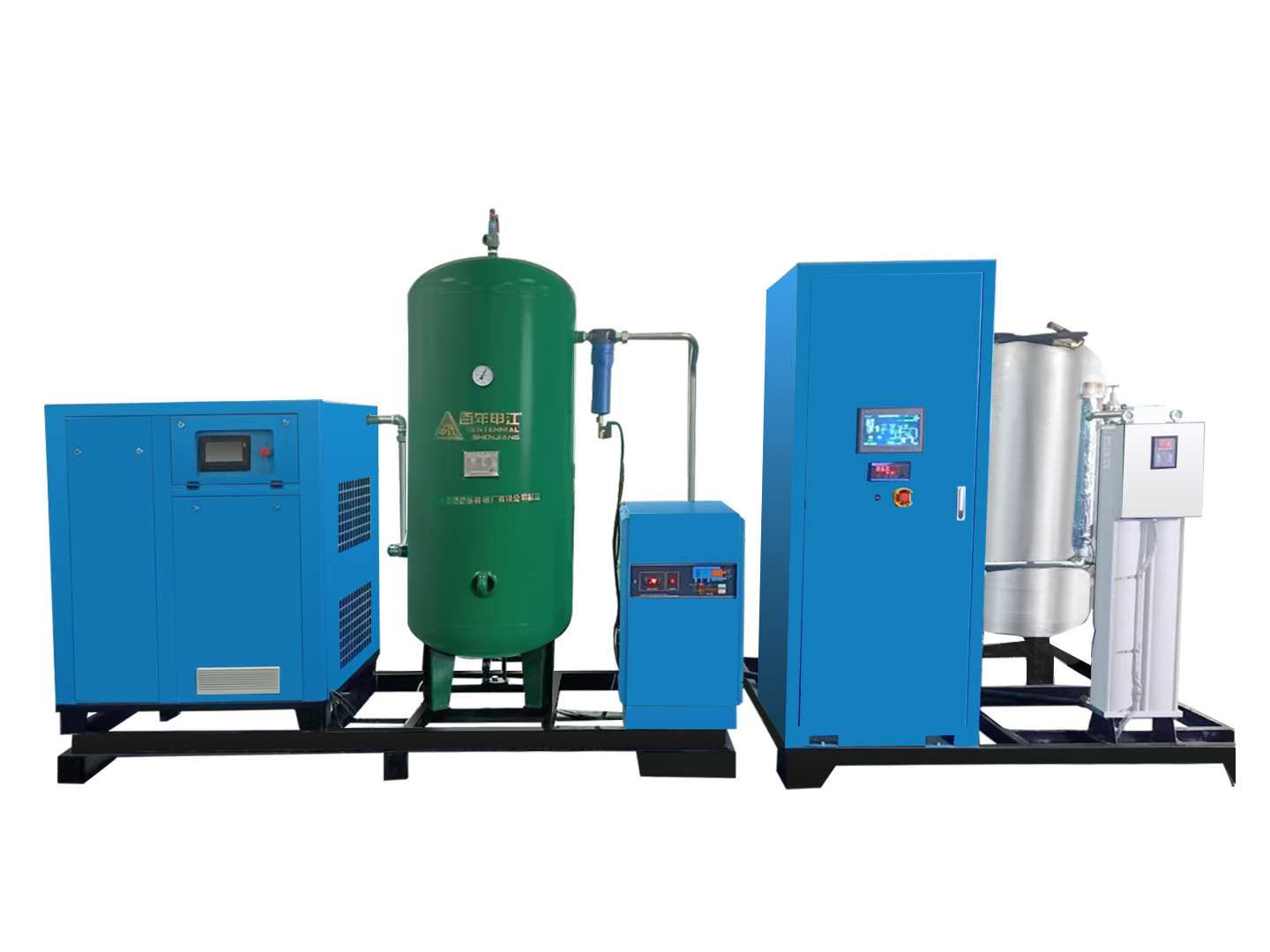
Brazil's coastal industrial zones (Santos, Rio) and the Amazon basin (Manaus) suffer from high relative humidity. This results in massive condensate build-up in the air lines. AirSpace counters this with our integrated twin-tower desiccant dryers and stainless steel piping, ensuring ISO 8573-1 Class 0 integrity and preventing the rust and tool failure associated with the "Humidity Tax."

2. The Heat Tax (Extreme Heat)
In states like Minas Gerais or during the summer peaks in São Paulo, ambient temperatures in compressor rooms can exceed 45°C. Most budget compressors will trip due to overheating. AirSpace systems are "Extreme Climate Engineered," featuring oversized cooling packages rated for 55°C ambient stability.
3. The Unload Tax (Fixed-Speed Waste)
Electricity in Brazil is expensive. Legacy fixed-speed units often run in "unload" mode, consuming 30% or more of their full power while producing zero air. Our PMV technology eliminates this "Unload Tax," delivering a 35% energy delta by matching motor speed exactly to air demand.
Step-by-Step Brazil Market Entry Process
- Identify the NCM Code: Confirm your equipment falls under 8414.80.19.
- Select a Local Representative: You must have a Brazilian entity to hold the INMETRO certificate.
- Check for Ex-Tarifário: Verify if your specific PMV configuration allows for a 0% Import Duty.
- Engage an OCP (Conformity Assessment Body): Start the INMETRO testing and factory audit process.
- 60Hz Customization: Ensure the unit is built for 380V-440V / 60Hz operation.
- NR-13 Preparation: Have a CREA-registered engineer prepare the ART and design documentation before shipment.
- Clear Customs via DUIMP: Submit all digital documentation through the new Brazilian single portal.
- Initial Inspection: Perform the NR-13 safety inspection on-site before the first startup.
Common Pitfalls and How to Avoid Them
- 50Hz Motors on a 60Hz Grid: Using a standard 50Hz motor in Brazil will lead to excessive heat and winding failure. Always specify 60Hz.
- Missing Portuguese Manuals: Brazilian law (and INMETRO) requires all safety labels and manuals to be in Portuguese. English-only documentation will lead to customs rejection.
- Overlooked Oil Separators: The oil separator tank inside the compressor is a pressure vessel. If it lacks an INMETRO stamp, the entire unit may be deemed non-compliant.
- Underestimating Landed Cost: Always calculate the total "Tax Cascade." A $10,000 compressor can easily cost $18,000 by the time it reaches your factory floor.
How AirSpace Machinery Can Help
At AirSpace Machinery, we specialize in high-performance industrial air compression systems that are engineered for global compliance. Our experience in the Brazilian market allows us to provide:
- Brazil-Ready PMV Technology: Supporting 380V/440V at 60Hz with ±0.1 bar pressure stability.
- ISO 8573-1 Class 0 Solutions: For pharmaceutical and food processing plants in Brazil that demand the highest purity.
- Full Documentation Support: We provide the technical files, material certs, and test reports your CREA engineer needs for NR-13 compliance.
- 35-Day Delivery: Reliable shipping to major ports like Santos and Paranaguá.
FAQ Section
Q: Is INMETRO certification mandatory for air compressors in Brazil?
A: Yes, specifically for the pressure vessels (air receivers and separators) under Portaria 120/2021. The complete unit may also require electrical safety certification under Portaria 148/2022.
Q: What is the difference between INMETRO and NR-13?
A: INMETRO is a manufacturing and marketing certification. NR-13 is an occupational safety regulation for the operation and maintenance of the equipment within Brazil. You need both.
Q: What voltage/frequency does Brazil use for industrial equipment?
A: Industrial sites typically use 380V, 440V, or 480V at 60Hz. It is essential to confirm the specific site voltage before ordering.
Q: What is Ex-Tarifário and can my compressor qualify?
A: It is a temporary reduction of Import Duty to 0% for capital goods. AirSpace’s high-efficiency PMV compressors often qualify because they offer technical advantages not available from local manufacturers.
Q: How long does INMETRO certification take?
A: Typically 4 to 8 months, depending on whether testing is done at the factory or in a Brazilian lab.
Q: Do I need a Brazilian agent to import?
A: Yes, you need a Legal Representative in Brazil to hold the product certificate and handle customs clearance via the DUIMP system.
Q: Does AirSpace ship compressors to Brazil?
A: Yes, we regularly ship our PMV and oil-free units to Brazilian ports, ensuring all technical specs are tailored for the 60Hz grid and tropical climate.
Conclusion
Entering the Brazilian market requires more than just a high-quality machine; it requires a deep understanding of INMETRO and NR-13 mandates. By selecting a PMV-driven "China made screw air compressor" from AirSpace Machinery, you are not only ensuring regulatory compliance but also protecting your facility from the "Heat," "Humidity," and "Unload" taxes that drain industrial profitability.
Navigating Brazil's 2026 regulatory landscape is complex, but the rewards are significant. Contact AirSpace Machinery today for a Brazil compliance readiness assessment and get a proposal for your next high-efficiency project.
Internal Links:
- India BIS Certification Guide
- Saudi Arabia SABER Compliance
- UAE ESMA ECAS Compliance
- View our 50HP PMV Variable Frequency Compressors
- Explore our Industrial Case Studies
Follow us for more engineering insights: AirSpace Machinery on LinkedIn
Author Box
Penny Winston
Technical Writer at AirSpace Machinery Co., Ltd.
Penny is a specialist in industrial efficiency frameworks, focusing on The 35% Energy Delta and The Fourth Utility Concept. With a background in international regulatory standards, she helps global manufacturers achieve ISO 8573-1 Class 0 Integrity while navigating complex import landscapes like Brazil's INMETRO and NR-13.
Connect with Penny on LinkedIn
Reviewed by Engineering
📅 Last updated:
⚡ Is Your Factory Bleeding Cash?
Most fixed-speed compressors waste $3,600/year in "Unload Tax." Test your waste level in 30 seconds.
RUN THE ROI TEST →Ready to See How Much Your Facility Can Save?
Fill out the form below for a Free Energy Assessment.