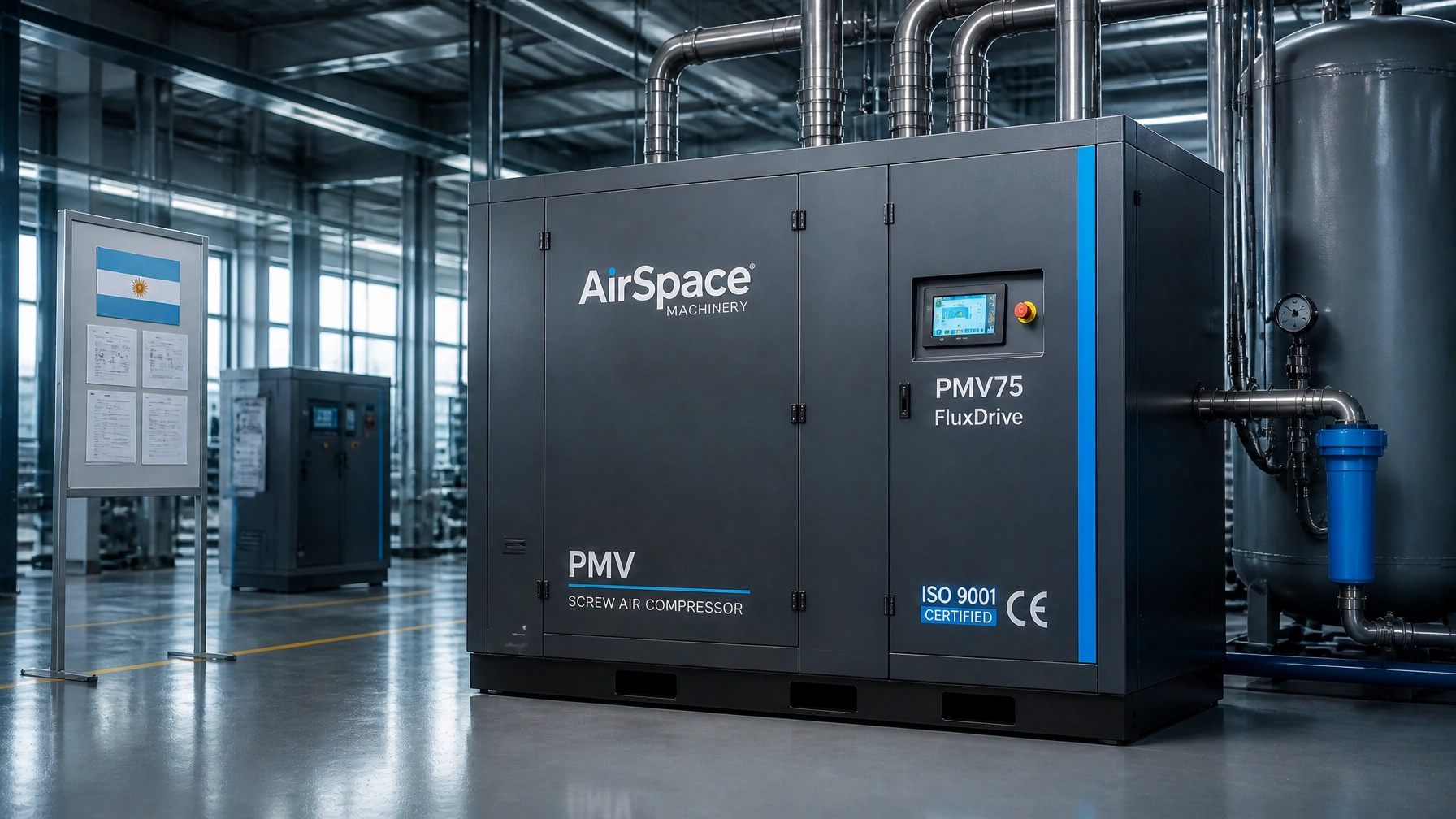
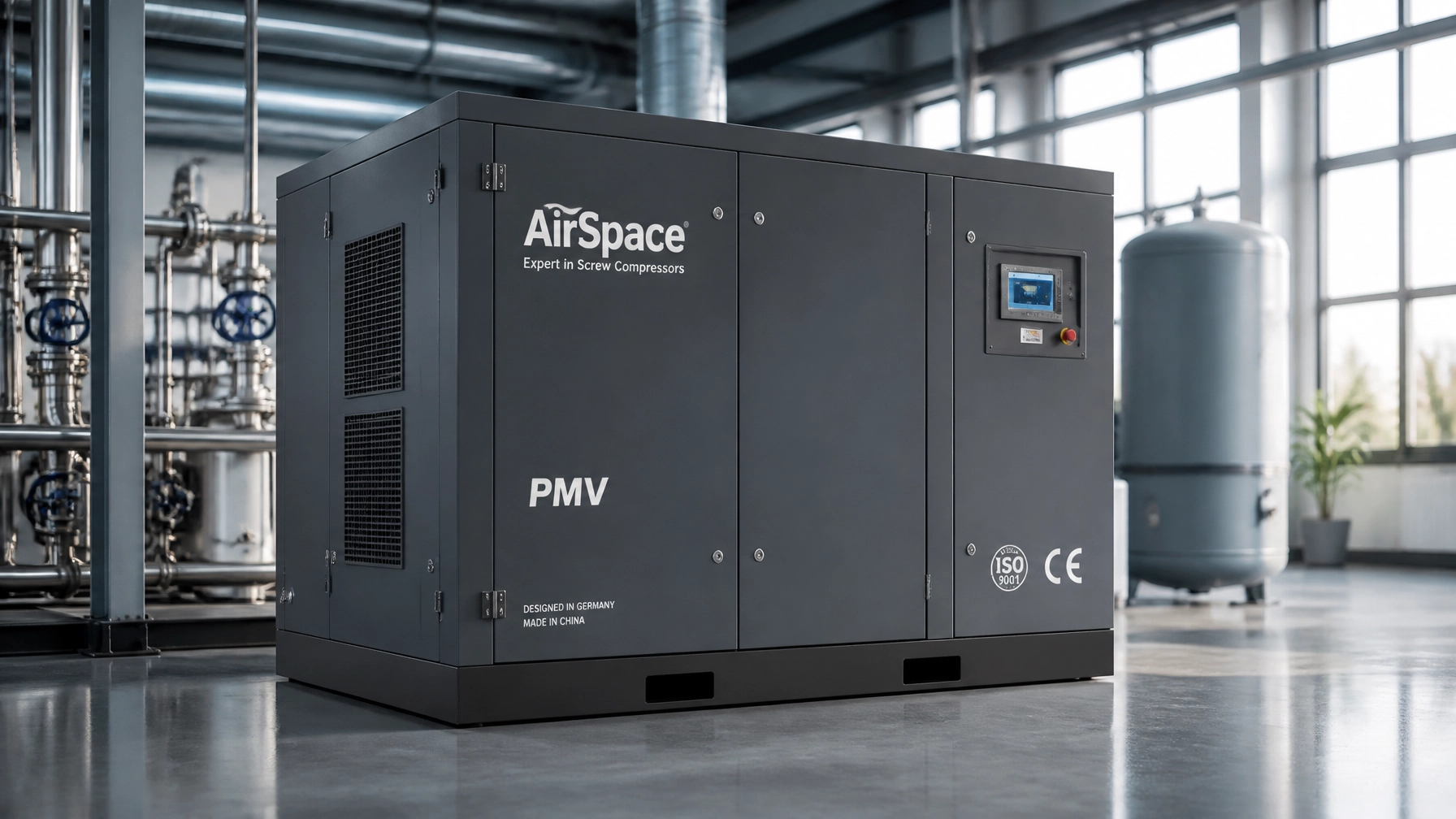
Nigeria is Africa's Largest Compressed Air Market , But Only If You're Compliant
Nigeria remains the industrial powerhouse of Africa, yet for many factory owners, the "Import Tax" isn't just about the money, it's about the complexity. To legally clear a china made screw air compressor through the Ports of Apapa, Tin Can Island, or Onne, you must navigate the SONCAP (Standards Organisation of Nigeria Conformity Assessment Programme) regime.
The Standards Organisation of Nigeria (SON), governed by the SON Act No. 14 of 2015, mandates that all regulated products must be certified before they even leave the country of origin. In 2026, the landscape shifted. Under the 2026 Fiscal Policy Measures (FPM), the Nigerian government slashed import duties on air compressors from 10% to 5% to stimulate industrial growth. However, this lower duty is only accessible if your SONCAP documentation is flawless.
Failure to comply doesn't just mean a delay; it triggers a 20% penalty of the CIF value or a minimum fine of ₦2,000,000. For a high-performance PMV screw compressor system, that is a "Compliance Tax" no business should have to pay.
10 Common Headaches for Nigerian Air Compressor Importers
- Starting the SONCAP process after the ship has already left the port of supply, a fatal error.
- Miscalculating the 2026 duty rates and failing to claim the reduced 5% tariff.
- HS Code mismatch where stationary rotary screw compressors (8414.80) are classified as portable units (8414.40).
- Rejection of Form M due to discrepancies between the Product Certificate and the Commercial Invoice.
- Incomplete technical dossiers that lack ISO/IEC 17025 accredited laboratory test reports.
- Using Route A for monthly shipments, leading to repetitive and expensive inspection costs.
- Local banks refusing to open letters of credit because the PC (Product Certificate) has expired.
- Discovering that "legacy brands" or budget suppliers have no understanding of Nigerian NIS standards.
- Unexpected demurrage charges at Lagos ports due to PAAR (Pre-Arrival Assessment Report) delays.
- Purchasing equipment that cannot handle the 45°C+ ambient temperatures and humidity of Nigerian industrial zones.
The Two Certificates You Need for a Seamless Import
Every shipment requires two distinct levels of certification. You cannot have one without the other.
- Product Certificate (PC): This document proves that the specific model of compressor, for example, an AirSpace PMV-75, meets Nigerian Industrial Standards (NIS) or approved international standards (CE/ISO). The PC is typically valid for 6 to 12 months.
- SONCAP Certificate (SC): This is a per-shipment certificate. Once your PC is active, an inspection body verifies the specific consignment (the quantity, serial numbers, and packaging) and issues the SC. This is what your bank and Nigerian Customs (NCS) use to clear the goods.
Both certificates must be obtained before shipment. The SONCAP Certificate is linked directly to your Form M on the Nigeria Single Window Trade Portal.

Three Routes to Product Certification (2026 Table)
Depending on how often you import and the depth of your quality management, you must choose one of three routes.
| Feature | Route A (Unregistered) | Route B (Registered) | Route C (Licensed) |
|---|---|---|---|
| Target User | One-time or infrequent buyers | Regular importers | High-volume industrial users |
| PC Type | PC1 (6 Months validity) | PC2 (1 Year validity) | PC3 (1 Year validity) |
| Inspection | 100% per shipment | At least 40% of shipments | Periodic (minimum 1 per year) |
| Lab Testing | Mandatory every time | Periodic | Periodic / Factory Audit |
| Estimated PC Cost | ~$500 | ~$1,000 | ~$2,000 |
| Clearance Speed | Slowest | Moderate | Fastest |
Step-by-Step: The SONCAP Certification Process
Step 1: Classification. Verify your compressor falls under HS Code 8414.80. Ensure it is not on the prohibited list (air compressors are currently allowed).
Step 2: Engage an IAF. Contact an SON-accredited Independent Accredited Firm (IAF) or Conformity Assessment Body (CAB) in China.
Step 3: Document Submission. Provide technical data sheets, ISO 9001 certificates, and test reports. At AirSpace, we provide full ISO/IEC 17025 accredited reports to support this step.
Step 4: Product Testing. If you don't have valid reports, the IAF will require testing against NIS or international equivalents.
Step 5: Factory Audit (Routes B & C). The IAF sends an inspector to the AirSpace manufacturing facility to verify quality controls.
Step 6: Receive Product Certificate (PC). This PC is used to open your Form M with an authorized dealer bank in Nigeria.
Step 7: Consignment Inspection. Before the container is sealed, an inspector witnesses the loading and checks serial numbers.
Step 8: Receive SONCAP Certificate (SC). The IAF issues the SC after the shipment departs but based on the pre-shipment inspection.
Step 9: PAAR Generation. Your agent in Nigeria uses the SC to generate the Pre-Arrival Assessment Report (PAAR) via the Nigeria Customs Service.
Import Duties and Taxes: The 2026 Update
The 2026 Fiscal Policy Measures (FPM) significantly reduced the financial burden on manufacturing. Here is the typical landed cost structure for a china made screw air compressor in 2026:
- Import Duty: 5% (Reduced from 10% effective April 2026).
- VAT: 7.5% (Applied on CIF + Duty + Surcharge).
- Surcharge: 7% of the Import Duty.
- CISS (Cargo Inspection Service Scheme): 1% of the FOB value.
- ETLS (ECOWAS Trade Liberalization Scheme): 0.5% (Since China is non-ECOWAS).
Total landed cost adders typically range between 15% and 20% of the CIF value. By utilizing AirSpace's PMV technology, which offers a 35% energy delta over fixed-speed units, many Nigerian factories recover these import costs through electricity savings in the first 14 months of operation.

Penalties for Non-Compliance
If you attempt to circumvent the SONCAP process, the consequences are severe under the 2015 SON Act:
- Port Rejection: Goods cannot be cleared. They will sit in a bonded warehouse, accumulating demurrage fees that can exceed $150 per day.
- Monetary Fines: A flat penalty of 20% of the CIF value is standard for shipments arriving without a valid SC.
- Minimum Penalty: The minimum fine is ₦2,000,000, regardless of the shipment's value.
- Seizure and Destruction: In cases of severe non-conformity (e.g., falsified documents), SON has the authority to seize and destroy the equipment at the importer's expense.
2026 Updates: What Factory Managers Must Know
The 2026 FPM wasn't just about the 5% duty. It also modernized the e-SONCAP portal. For the first time, PAAR linkage is instantaneous once the SC is uploaded. However, market surveillance by SON has also increased. They now perform "post-clearance audits" where inspectors may visit your factory to verify that the compressor in operation matches the one certified in the PC.
This makes "ISO 8573-1 Class 0 Integrity" even more critical. If you are in the pharmaceutical or food processing industries in Lagos or Agbara, using a compliant oil-free system ensures you pass both SONCAP and NAFDAC (National Agency for Food and Drug Administration and Control) inspections.
How AirSpace Machinery Supports the Nigerian Market
We don't just sell equipment; we manage the "Fourth Utility" for our global partners. Here is how we simplify your Nigerian import:
- Documentation Ready: Our CE and ISO 9001 certifications are pre-aligned with IAF requirements for Route B and Route C certification.
- Ambient Engineering: Nigeria's heat and humidity are notorious for killing standard compressors. Our units are engineered for 55°C peak ambient operation, avoiding the "Humidity Tax" and "Heat Tax" that plague budget suppliers.
- Pre-Shipment Support: We facilitate the inspection process at our facility, ensuring the IAF inspector has everything needed to issue your SC within 96 hours of departure.
- Logistics Transparency: We provide 35-day transit times to major Nigerian ports, with all shipping marks precisely matching your PC/SC requirements.

FAQ: Navigating Nigeria SONCAP
Q: What is the difference between PC and SC?
A: The Product Certificate (PC) approves the product design and quality system for a period of time. The SONCAP Certificate (SC) is required for every single shipment to confirm that specific consignment is compliant.
Q: How long is a Product Certificate valid?
A: Under Route B or C, the PC is valid for 12 months. Under Route A, the PC1 is only valid for 6 months and a single shipment.
Q: Can I use CE certification instead of NIS testing?
A: While SON accepts CE as a basis for compliance, you still must go through the IAF to convert those test results into a Nigerian Product Certificate. You cannot clear customs with a CE certificate alone.
Q: What is the import duty on air compressors in Nigeria?
A: As of the 2026 Fiscal Policy Measures, the duty is 5%, down from the previous 10%.
Q: What happens if my shipment arrives without SONCAP?
A: You will face a penalty of 20% of the CIF value or ₦2,000,000, and the goods will be detained until a post-shipment SONCAP (which is much more difficult to obtain) is processed.
Q: How long does the SONCAP process take?
A: Obtaining the initial PC takes 4 to 8 weeks. Once the PC is in hand, the SC for a specific shipment is usually issued within 4 to 7 working days.
Q: Does AirSpace ship compressors to Nigeria?
A: Yes, we have a long history of supporting Nigerian industrial projects in Lagos, Kano, Port Harcourt, and Ibadan.
Q: Do I need a Nigerian agent for SONCAP?
A: While you can manage the application, a local clearing agent is essential for handling the Form M, PAAR, and terminal clearance once the goods arrive.
Conclusion: Don't Let Compliance Be Your Energy Drain
Nigeria offers massive opportunities for industrial scaling, but SONCAP is the gatekeeper. By securing your Product Certificate and SONCAP Certificate before shipment, you take advantage of the new 5% duty rate while avoiding the devastating 20% non-compliance penalty.
At AirSpace Machinery, we ensure that every china made screw air compressor we ship is a "Solution," not a "Problem." From the 35% energy delta of our PMV systems to the meticulous documentation required for Nigerian Customs, we are your partner in engineering freedom.
If you are planning an import for 2026, contact us today for a SONCAP readiness assessment.
Get a Proposal
Author: Penny Winston
Penny Winston is a Technical Writer specializing in the "Fourth Utility" concept and industrial efficiency. She focuses on helping global buyers navigate complex regulatory frameworks while maintaining ISO 8573-1 Class 0 Integrity. Penny is a leading advocate for the 35% Energy Delta framework in emerging markets.
Connect with AirSpace on LinkedIn
Reviewed by Engineering
Infinite Loop: Explore Other Global Compliance Guides
- India BIS Air Compressor Compliance Guide 2026
- Saudi Arabia SABER/SASO Import Guide for Industrial Machinery
- Australia and New Zealand Pressure Vessel Regulations (AS/NZS 3788)
- South Africa NRCS and SANS 347 Compliance Handbook
📅 Last updated:
⚡ Is Your Factory Bleeding Cash?
Most fixed-speed compressors waste $3,600/year in "Unload Tax." Test your waste level in 30 seconds.
RUN THE ROI TEST →Ready to See How Much Your Facility Can Save?
Fill out the form below for a Free Energy Assessment.