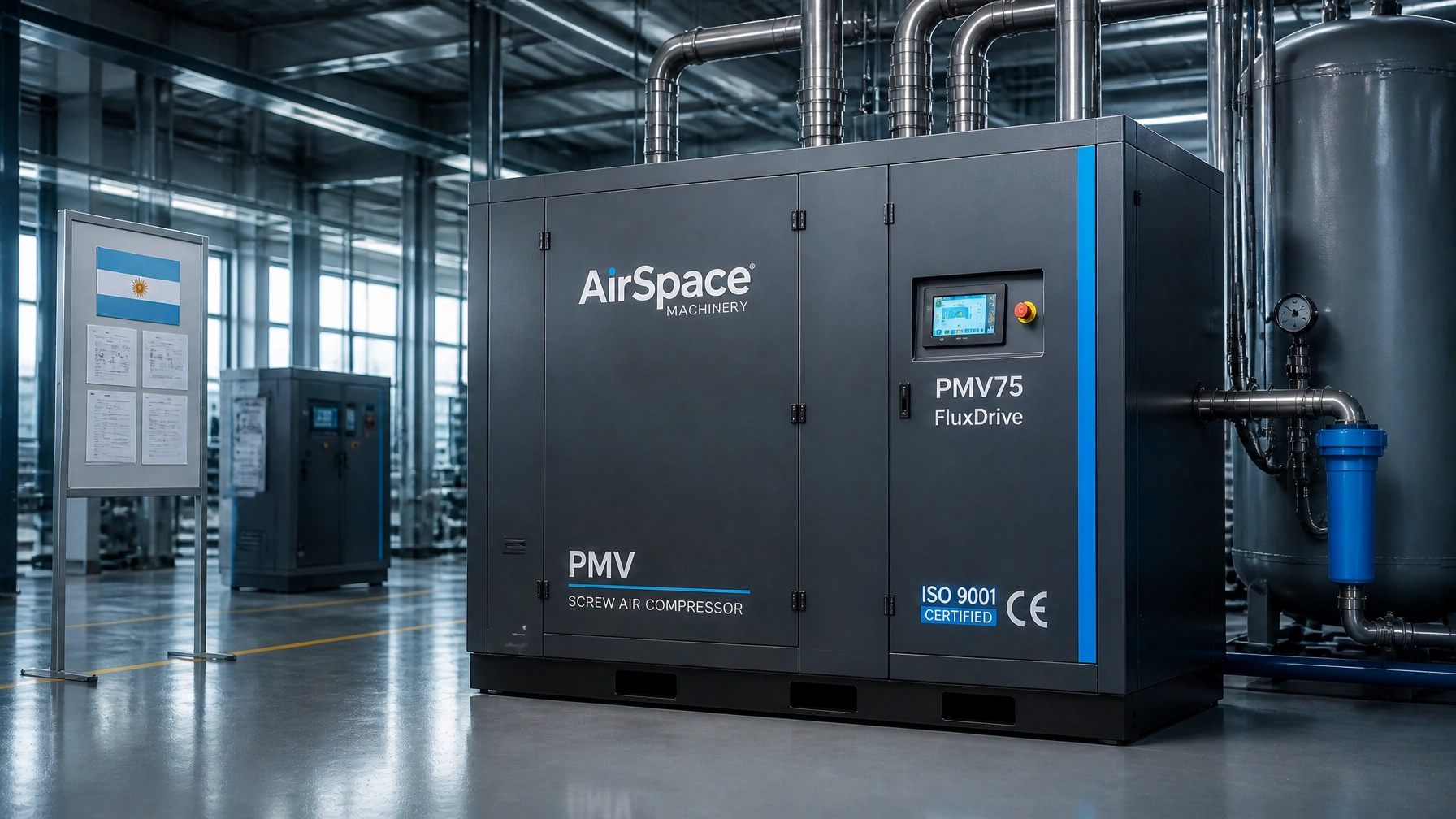
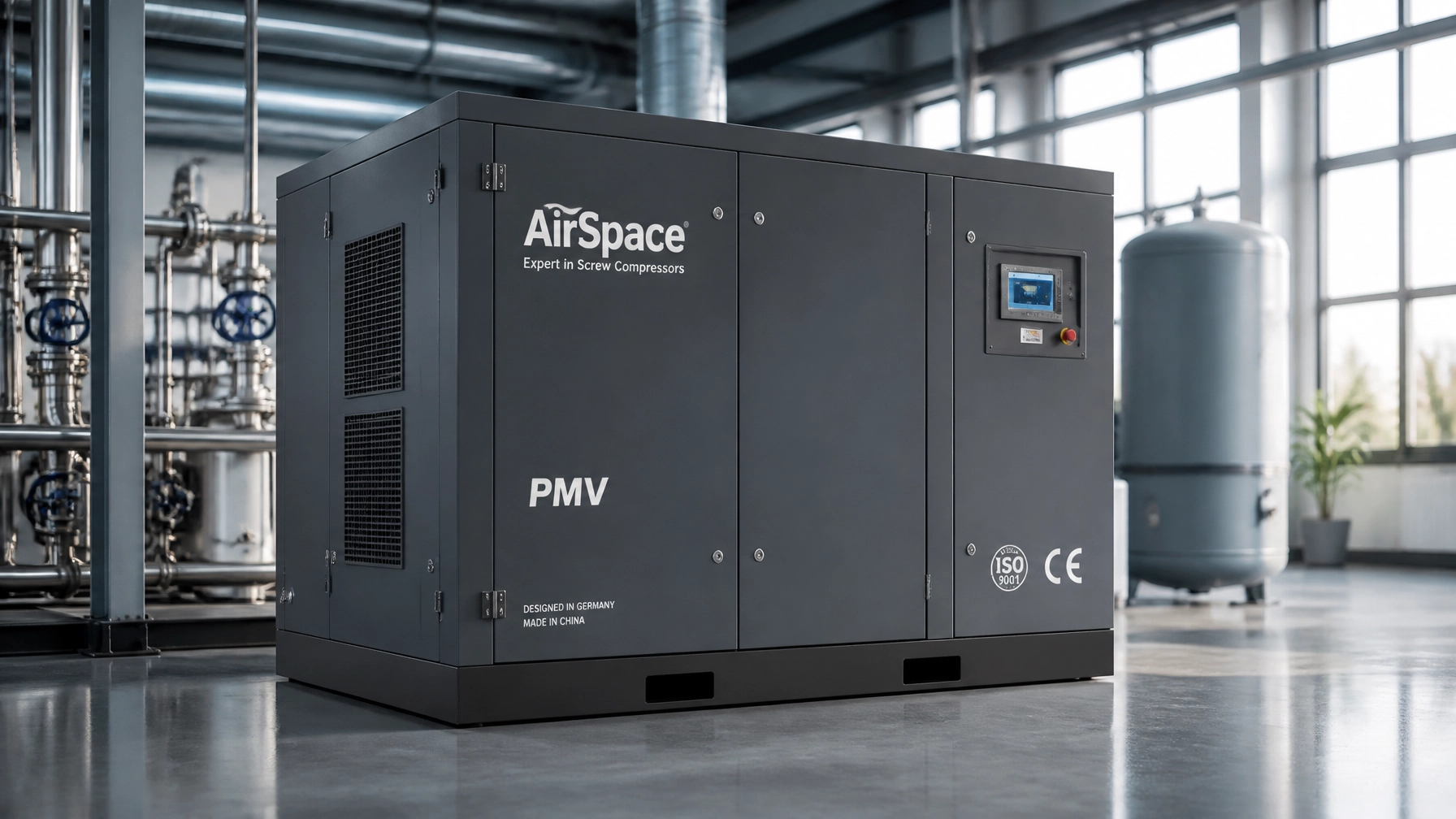
THE REGULATORY GATE INTO SOUTH AFRICA
South Africa maintains one of the most rigorous and technically demanding import compliance frameworks on the African continent. For industrial operators and procurement managers, navigating the intersection of electrical safety and pressure vessel integrity is not merely a bureaucratic hurdle, it is a critical operational requirement. In 2026, the South African market has shifted toward even stricter enforcement at ports of entry, with the South African Revenue Service (SARS) and the National Regulator for Compulsory Specifications (NRCS) implementing a more integrated digital linkage.
To successfully import and operate a china made screw air compressor in South Africa, importers must navigate two parallel regulatory pathways. The first is the NRCS Letter of Authority (LoA), which addresses the electrical safety and energy performance of the motor and control systems. The second is the Pressure Equipment Regulations (PER), governed by the Occupational Health and Safety Act and formalized through SANS 347. Both pathways must be satisfied before the equipment can be legally cleared through customs or commissioned for use in a factory.
At AirSpace Machinery, we view compressed air not just as a tool, but as The Fourth Utility. Just like electricity, water, and gas, compressed air must be delivered with 99.9 percent uptime and total compliance. Failure to secure the proper certifications results in what we call the Unload Tax, the massive financial loss incurred when high-end machinery sits idle at a port or a factory floor due to missing paperwork.
PATHWAY 1: NRCS LETTER OF AUTHORITY (LOA)
The Letter of Authority, or LoA, is the mandatory certificate issued by the NRCS that confirms a product complies with specific Compulsory Specifications (VCs). For air compressors, this primarily concerns the electrical integrity of the unit. Without a valid LoA, it is illegal to import, sell, or supply the equipment within the borders of South Africa.
- VC 8055: Safety of Electrical and Electronic Apparatus. This is the foundational safety requirement for any air compressor driven by an electric motor. It ensures the unit is grounded, insulated, and protected against electrical faults.
- VC 9008: Energy Efficiency and Labeling. While historically focused on household appliances, the scope of VC 9008 is expanding. In 2026, there is an increased push toward monitoring the Minimum Energy Performance Standards (MEPS) of industrial motors. Using Permanent Magnet Variable Frequency (PMV) technology allows AirSpace systems to easily surpass these thresholds, providing what we call the 35 Percent Energy Delta compared to legacy fixed-speed units.
An LoA is typically valid for three years. However, it is important to note that the NRCS treats renewals as new applications, meaning updated test reports from ISO/IEC 17025 accredited laboratories are required every 36 months to maintain compliance.
NRCS LOA: STEP-BY-STEP PROCESS
Securing an LoA is a time-sensitive process that should begin at least 12 weeks before the equipment is scheduled to depart the port in China.
Step 1: Importer Registration. The South African entity responsible for the import must be registered with the NRCS as an authorized importer.
Step 2: VC Determination. The specific model of the compressor must be classified under the correct Compulsory Specification. For industrial screw compressors, this is usually VC 8055, though integrated dryers may trigger additional checks.
Step 3: Technical Dossier Submission. This is where most budget suppliers fail. A complete dossier must include:
- A Business Registration Certificate for the SA importer.
- Full technical specifications and circuit diagrams.
- Valid test reports from a laboratory with ISO/IEC 17025 accreditation.
- Proof of compliance with SANS IEC 60335 or equivalent international standards.
Step 4: Assessment and Issuance. The NRCS reviews the evidence of conformity. If the technical data aligns with South African National Standards, the LoA is issued.
Step 5: Shipment Verification. For every subsequent shipment, the importer must ensure that the product arriving at the port of Durban or Cape Town matches the approved type described in the LoA. Any deviation in motor specs or control panels can result in the shipment being impounded.

PATHWAY 2: PRESSURE EQUIPMENT REGULATIONS (PER)
While the NRCS handles the “electrical” side, the Department of Employment and Labour oversees the “pressure” side through the Pressure Equipment Regulations (PER). This is governed by the Occupational Health and Safety Act (Act 85 of 1993). Every air receiver, separator vessel, and high-pressure pipe in a screw compressor system is legally defined as pressure equipment.
The PER mandates that all pressure equipment with a design pressure equal to or greater than 50 kPa (0.5 bar) must be designed and manufactured in accordance with a health and safety standard incorporated into the regulations. In South Africa, that standard is SANS 347.
Unlike the LoA, which is a market-access document, PER compliance is a safety-critical requirement that stays with the machine for its entire operational life. It requires the involvement of an Approved Inspection Authority (AIA). These are independent bodies authorized by the South African National Accreditation System (SANAS) to verify that equipment is safe to operate.
SANS 347: THE CATEGORIZATION SYSTEM
SANS 347 uses a risk-based categorization system to determine how much oversight is required during the manufacturing and inspection phases. The category is determined by the Fluid Group, the pressure, and the volume of the vessel.
Category 1: Low Hazard. This typically applies to very small air receivers or low-pressure components. While a high standard of manufacturing is required, a formal AIA counter-signature is generally not mandatory for the design phase.
Category 2: Medium Hazard. Most industrial air compressors (10HP to 180HP) with standard 300L to 1000L tanks fall into this category. It requires the manufacturer to provide a certificate of conformity and have the manufacturing process verified by an AIA.
Category 3: High Hazard. Large-scale industrial installations or high-pressure systems (such as our 16-bar laser cutting units) often fall here. These require full design verification and more frequent in-service inspections.
Category 4: Very High Hazard. This is reserved for extremely large or dangerous pressure systems and requires the highest level of conformity assessment.
For South African importers, the most critical data point is the AIA mark. Without this verification, a compressor cannot be legally commissioned, and an insurance provider may refuse to cover the facility in the event of an accident.
MANDATORY DATA PLATE REQUIREMENTS
One of the most common reasons for customs delays and site rejections is an incorrect or missing data plate. In South Africa, the PER is very specific. Every air receiver must have a permanently attached stainless steel data plate that includes ten mandatory items.
- Manufacturer Name and Address: This must clearly state AirSpace Machinery.
- Country of Origin: Clearly marked as China.
- Year of Manufacture: To track the equipment’s age and inspection cycles.
- Serial Number: A unique identifier for the specific vessel.
- Standard Reference: The specific version of SANS 347 or ASME used for the design.
- Design Pressure: Stated in kPa (Kilopascals). Note that South African regulators prefer SI units over PSI.
- Design Temperature: The minimum and maximum operating temperatures (typically -10°C to 100°C for our units).
- Capacity: The internal volume of the vessel in cubic meters (m³).
- AIA Mark: The stamp or logo of the Approved Inspection Authority.
- Hazard Category: Clearly stating if the unit is Category 1, 2, or 3.
If any of these ten items are missing, the equipment is technically non-compliant. At AirSpace, we pre-configure all South African export units with laser-etched stainless steel plates that meet these exact specifications, ensuring zero friction during the AIA inspection.
IN-SERVICE INSPECTION REQUIREMENTS
Compliance does not end at the port. Under the PER, the owner of the air compressor is legally responsible for its ongoing safety. This involves a mandatory inspection cycle that must be performed by a registered AIA.
External Inspection: Every 36 months (3 years), the vessel must undergo an external visual inspection and a safety valve test.
Internal Inspection and Hydraulic Test: Depending on the category and the AIA’s assessment, an internal inspection and pressure test may be required.
Importers must retain the original Manufacturer’s Data Report (MDR) and all conformity documentation for a minimum of 12 years. This is a legal requirement in South Africa. If a factory inspector visits your site and you cannot produce the SANS 347 certificates for a machine installed five years ago, you face the risk of immediate equipment condemnation and heavy fines.
2026 UPDATES TO WATCH
As we move through 2026, several key changes are impacting the South African industrial landscape:
- PVoC Expansion: The Pre-Export Verification of Conformity programme is being expanded to cover a wider range of industrial machinery from China. This means a Certificate of Conformity (CoC) may be required before the ship even leaves China, in addition to the LoA.
- Digital Linkage: The SARS Customs system is now more tightly integrated with the NRCS database. If your H.S. Code (typically 8414.80 for air compressors) is entered and there is no matching LoA on file, the system will automatically flag the shipment for a physical stop.
- SANS 347 Revisions: Updated editions of SANS 347 are placing more emphasis on the environmental impact and energy efficiency of the pressure system as a whole, not just the vessel.
- Market Surveillance: The NRCS has increased its “boots on the ground” presence, conducting unannounced inspections at industrial supply stores and factory sites to verify that equipment in use has the proper LoA.
COMMON PITFALLS AND HOW TO AVOID THEM
In our two decades of engineering excellence, we have seen many importers struggle with South African compliance. Here are the most frequent mistakes:
Pitfall 1: Applying from abroad. You cannot apply for an LoA from China. You must have a South African-based agent or a registered local company to hold the LoA. AirSpace works with local partners to facilitate this for our clients.
Pitfall 2: Missing the AIA mark. Many budget manufacturers in China provide “standard” tanks that lack the AIA verification required by SANS 347. Retrofitting a tank with an AIA mark in South Africa is nearly impossible and extremely expensive.
Pitfall 3: Assuming CE is enough. While our equipment is CE and ISO 9001 certified, South Africa specifically requires evidence that the equipment meets SANS (South African National Standards). While CE test reports are a great starting point, they must often be mapped to SANS requirements.
Pitfall 4: Units of Measurement. South African inspectors are strict about SI units. Ensure your gauges and data plates show Bar or kPa, and avoid units that are not recognized by the Trade Metrology Act.
HOW AIRSPACE MACHINERY CAN HELP
Navigating South African compliance shouldn’t feel like a Robbery of your time and resources. AirSpace Machinery provides a comprehensive compliance package for the South African market.
- Our PMV systems provide a 35 Percent Energy Delta, helping you meet the growing energy-efficiency demands of the KSA and South African markets.
- We provide full technical dossiers, including accredited lab reports for VC 8055 compliance.
- Every air receiver is manufactured to SANS 347 standards with pre-verified AIA-ready documentation.
- Our “Extreme Climate” engineering is specifically designed for the Heat Tax of the Northern Cape and the Humidity Tax of KwaZulu-Natal, ensuring our compressors maintain ISO 8573-1 Class 0 Integrity even in 45°C ambient temperatures.
- With a 35-day transit time to Durban, we provide the fastest compliant path from China to your factory floor.
If you are planning an installation in South Africa, do not leave your compliance to chance. Contact us today for a South Africa Compliance Readiness Assessment.

FREQUENTLY ASKED QUESTIONS
Q: What is the difference between NRCS LoA and PVoC?
A: The LoA is a mandatory 3-year certification for electrical safety and energy efficiency. The PVoC (Pre-Export Verification of Conformity) is a per-shipment verification process to ensure the goods match the declared standards before they leave China.
Q: How long does the NRCS LoA process take?
A: Typically, it takes 4 to 12 weeks. We recommend starting the process as soon as your order is confirmed to avoid port storage fees.
Q: Do I need a South African agent to apply for an LoA?
A: Yes. Only a South African registered entity can be the legal holder of an NRCS LoA.
Q: What is the inspection interval for air receivers in South Africa?
A: Under the PER, external inspections and safety valve testing are required every 36 months (3 years) by an AIA.
Q: Can I use CE certification instead of SANS certification?
A: CE certification is excellent evidence of quality, but it must be accompanied by a SANS 347 categorization and AIA verification to be legal in South Africa.
Q: What happens if my shipment arrives without an LoA?
A: The shipment will likely be detained by customs. You may be forced to return the goods to China or pay heavy fines and storage fees while a “late” application is processed.
Q: Does AirSpace ship compressors to South Africa?
A: Yes, we have a long history of supplying the South African automotive, textile, and mining industries with fully compliant PMV screw compressors.
Q: What is the voltage and frequency for South Africa?
A: South Africa operates on a 400V/50Hz three-phase system. All AirSpace units for the SA market are custom-wound for these specific electrical parameters.
COMPLIANCE SUMMARY TABLE
Document: NRCS Letter of Authority (LoA)
Authority: NRCS
Validity: 3 Years
Requirement: Electrical Safety (VC 8055)
Document: SANS 347 Certificate
Authority: Approved Inspection Authority (AIA)
Validity: Lifetime (subject to 3-year inspections)
Requirement: Pressure Vessel Integrity
Document: Certificate of Conformity (CoC)
Authority: PVoC Agent (e.g., SGS, Intertek)
Validity: Per Shipment
Requirement: General Import Verification
CONCLUSION
Success in the South African market requires more than just high-performance machinery; it requires a deep commitment to local regulatory standards. By ensuring your china made screw air compressor meets both NRCS LoA and PER/SANS 347 requirements, you protect your investment from legal penalties and operational downtime.
As a leader in the global “Industrial Tax Series,” AirSpace Machinery is dedicated to helping you eliminate the Unload Tax and the Efficiency Tax. Whether you are dealing with the Heat Tax of the desert or the Humidity Tax of the coast, our PMV technology and engineering support ensure you stay compliant and productive.
INTERNAL COMPLIANCE RESOURCES
To see how we handle compliance in other major markets, please visit our other guides:
- India BIS Air Compressor Compliance Guide: Learn about the new 2026 mandatory standards for the Indian market. (https://www.chinacompressor.org/india-bis-air-compressor-compliance-guide/)
- Saudi Arabia SABER and SASO Guide: Navigating the KSA regulatory landscape. (https://www.chinacompressor.org/saudi-arabia-saber-saso-compliance-guide/)
- Australia and New Zealand Compliance Guide: Understanding WorkSafe and AS/NZS 1200 requirements. (https://www.chinacompressor.org/australia-new-zealand-air-compressor-compliance-guide/)
For more updates, follow AirSpace Machinery on LinkedIn: https://linkedin.com/company/luoyou-compressor-shanghai-co-ltd
AUTHOR BOX
Penny Winston
Technical Writer at AirSpace Machinery
Penny is an expert in global industrial regulations, specializing in the “35% Energy Delta” framework and “The Fourth Utility Concept.” She works closely with our engineering teams to ensure every AirSpace system maintains ISO 8573-1 Class 0 Integrity across international borders.
LinkedIn: https://linkedin.com/company/luoyou-compressor-shanghai-co-ltd
Reviewed by Engineering
📅 Last updated:
⚡ Is Your Factory Bleeding Cash?
Most fixed-speed compressors waste $3,600/year in "Unload Tax." Test your waste level in 30 seconds.
RUN THE ROI TEST →Ready to See How Much Your Facility Can Save?
Fill out the form below for a Free Energy Assessment.