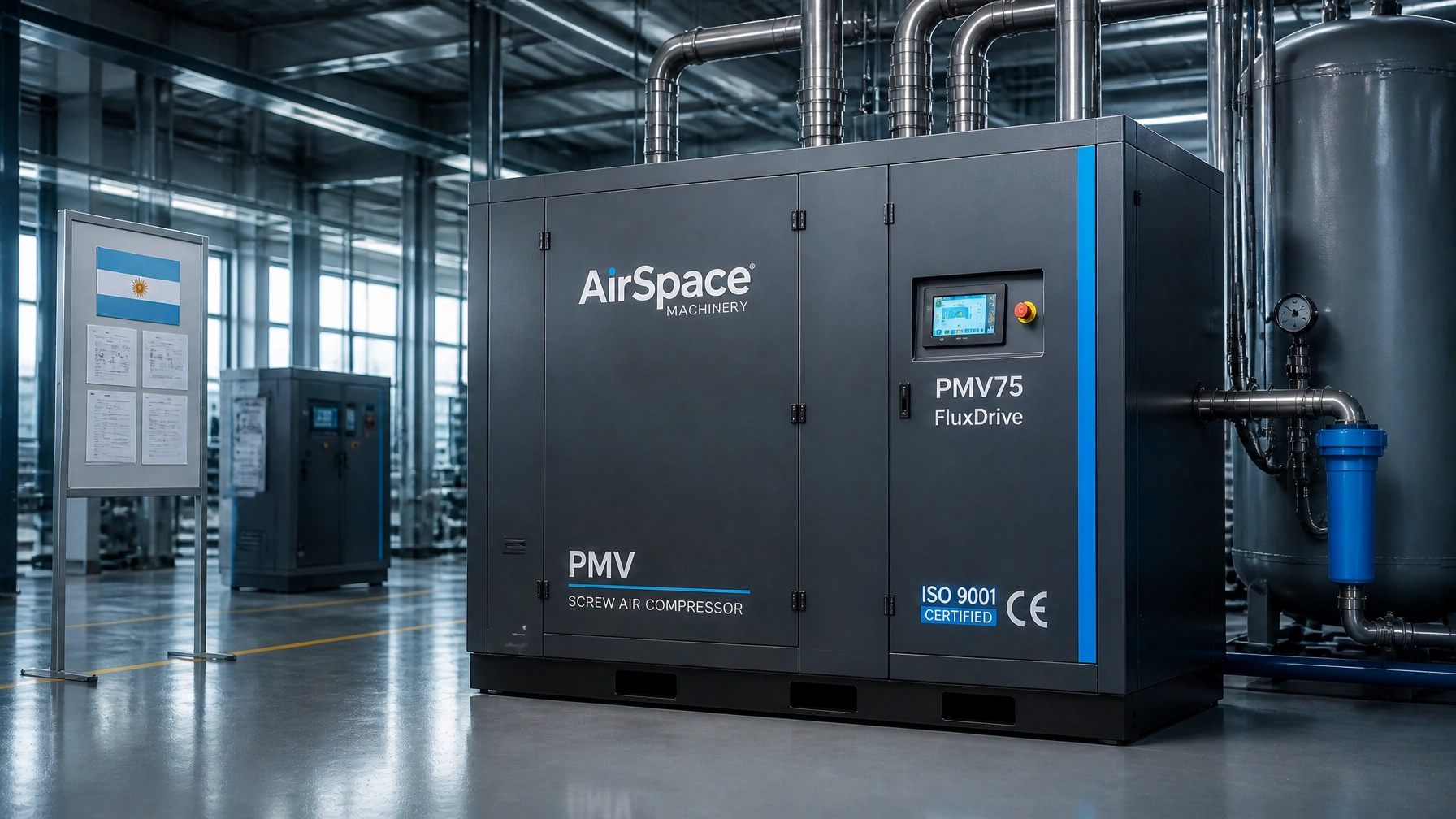
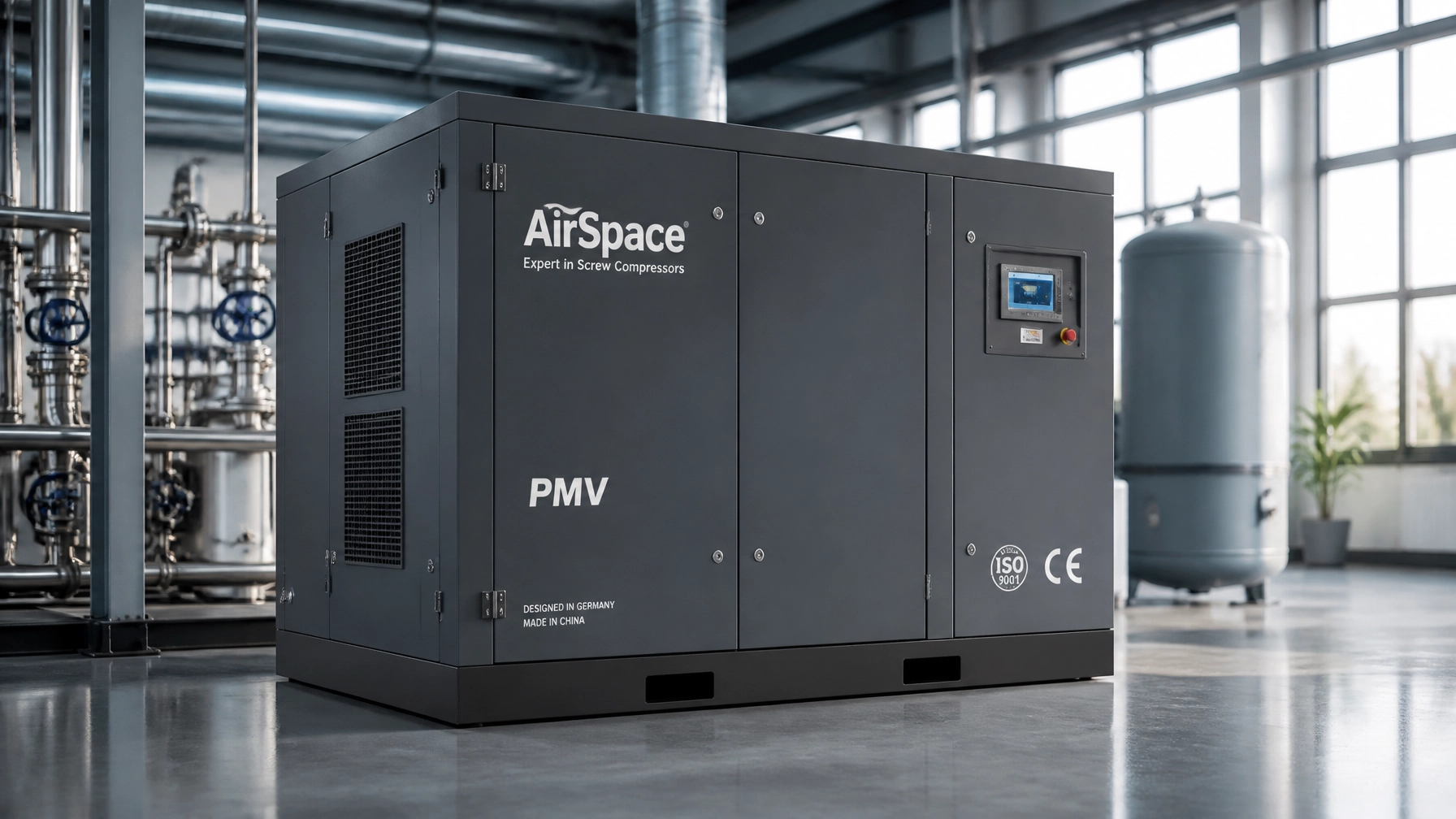
A stuck intake valve on a screw air compressor typically results in a machine that runs but fails to build pressure, or stays fully loaded regardless of demand. To fix this, you must depressurize the system, remove the valve assembly, clean internal carbon deposits and varnish with a non-abrasive solvent, and replace worn seals or the return spring. This failure often stems from degraded oil or short-cycling, leading to a massive spike in energy waste known as the Unload Tax.
At AirSpace Machinery, we view compressed air as the Fourth Utility. Just like electricity or water, any disruption to your air supply halts production. For many factory managers, a stuck intake valve is a ghost in the machine: it causes the unit to consume 70 to 100 percent of its full-load power while producing zero usable air. In a standard 75HP system, this can bleed over $4,200 in annual energy costs before the fault is even diagnosed.
Common Audience Headaches with Intake Valves
- Compressor runs but the pressure gauge refuses to move.
- High-pressure safety valves popping because the unit won’t unload.
- Motor overload trips during startup because the valve is stuck open.
- Inconsistent air pressure causing quality rejects in precision manufacturing.
- Excessive oil carryover into downstream filters.
- Solenoid valves clicking but no mechanical movement at the inlet.
- Varnish buildup from low-quality lubricants locking internal pistons.
- Broken return springs causing sluggish loading response.
- Short-cycling leading to premature wear on the unloader assembly.
- Excessive noise and vibration during the load/unload transition.
The Intake Valve Comparison: Symptoms and Impacts
The following table summarizes how a malfunctioning intake valve behaves and the technical impact on your facility.
Status: Stuck Closed
- Symptom: Compressor runs but builds zero pressure.
- Impact: Total production halt.
- Energy Waste: 25-35% of full-load power consumed for zero output.
Status: Stuck Open
- Symptom: Safety valve lifts; unit stays at max pressure.
- Impact: Risk of component failure and motor burnout.
- Energy Waste: 100% power consumption regardless of actual demand.
Status: Leaking / Sluggish
- Symptom: Erratic pressure swings; pressure drops too low before loading.
- Impact: Critical for automation and electronics assembly.
- Energy Waste: Increased cycles, reducing the 35% Energy Delta advantage.

Why Intake Valves Fail: The Humidity and Heat Tax
In high-humidity environments across Southeast Asia or extreme heat zones in the Middle East, standard compressors often face what we call the Humidity Tax. Moisture mixes with degraded oil to form a thick, varnish-like sludge. This sludge coats the intake valve piston, causing it to bind within its sleeve.
Legacy brands often use proprietary-focused designs that make these valves difficult to service without expensive kits. At AirSpace, we focus on ISO 9001 quality standards and engineering freedom, ensuring our PMV systems are accessible for standard technician-level maintenance.
7-Step Field Diagnostic and Repair Guide
Follow these steps to restore your screw compressor unloader valve to 99.9% uptime performance.
Step 1: Safety First (LOTO)
Never work on a pressurized system. Perform a Lock-Out Tag-Out (LOTO) on the power source. Open the manual drain valve to fully depressurize the sump and the internal lines. Verify the gauge reads 0 bar before loosening any bolts.
Step 2: Disconnect Control Lines
Remove the small diameter control air tubing connected to the intake valve. Unplug the electrical connector for the solenoid valve. Note the orientation of the lines to ensure correct reassembly.
Step 3: Remove the Valve Assembly
Unbolt the intake valve from the air end. Be cautious: many valves contain a powerful internal return spring. If the housing is under tension, loosen the bolts slowly and evenly to release spring pressure safely.
Step 4: Visual Inspection for Varnish
Disassemble the valve and inspect the internal piston and bore. Look for dark brown or black deposits. This is varnish: a direct result of the Heat Tax on your lubricant. Check the return spring for cracks or loss of tension.
Step 5: Clean and Polish
Use a high-quality solvent to dissolve carbon and varnish. Do not use heavy abrasives like sandpaper, as they can damage the precision sealing surfaces. A soft cloth and solvent should be sufficient to restore a mirror-like finish to the piston and bore.
Step 6: Test the Solenoid and Seals
Apply power to the solenoid valve (if safe to do so) and listen for a distinct click. If the solenoid is weak, the valve won’t actuate even if it’s clean. Replace all O-rings and gaskets using an AirSpace-approved service kit to ensure ISO 8573-1 Class 0 integrity is not compromised by leaks.
Step 7: Reassemble and Test
Manually check that the piston moves freely through its entire travel range before reinstalling. Once mounted, restart the compressor. The valve should remain closed during the initial start and open fully once the load signal is received.

Preventative Strategy: Avoiding the Unload Tax
The best way to fix a stuck valve is to prevent it from sticking in the first place. This is where the 35% Energy Delta of AirSpace PMV technology becomes critical.
- Use High-Tier Lubricants: Low-quality oils degrade rapidly at high temperatures, creating the varnish that sticks valves. Always use industrial-grade lubricants designed for the 2000-4000 hour service interval.
- Prevent Short-Cycling: If your compressor is oversized, it will load and unload too frequently. This mechanical stress wears out the intake valve seals and springs. Our PMV (Permanent Magnet Variable Frequency) systems eliminate this by adjusting motor speed to match demand, keeping the valve in its optimal position.
- Regular Inspections: Every 2,000 hours, check the solenoid valve and the intake filter. A dirty filter forces the intake valve to work harder against a vacuum, accelerating wear.
The AirSpace Advantage
If your legacy brand compressor is constantly bleeding cash through stuck valves and inefficient loading cycles, it is time to evaluate a high-performance upgrade. Our China made screw air compressors are engineered for extreme climates, featuring robust PMV stability and 100 million yuan of manufacturing excellence behind every unit.
From automotive manufacturing to pharmaceutical clean rooms, AirSpace provides the reliability required to eliminate the “Industrial Tax” on your bottom line.
Get a Proposal for our latest PMV screw compressor systems and secure your facility’s 99.9% uptime.

Author: Penny Winston
Penny Winston is a Technical Writer at AirSpace Machinery, specializing in The 35% Energy Delta and The Fourth Utility Concept. With a focus on ISO 8573-1 Class 0 Integrity, she translates complex engineering challenges into practical field solutions for global industrial leaders.
Reviewed by Engineering
📅 Last updated:
⚡ Is Your Factory Bleeding Cash?
Most fixed-speed compressors waste $3,600/year in "Unload Tax." Test your waste level in 30 seconds.
RUN THE ROI TEST →Ready to See How Much Your Facility Can Save?
Fill out the form below for a Free Energy Assessment.