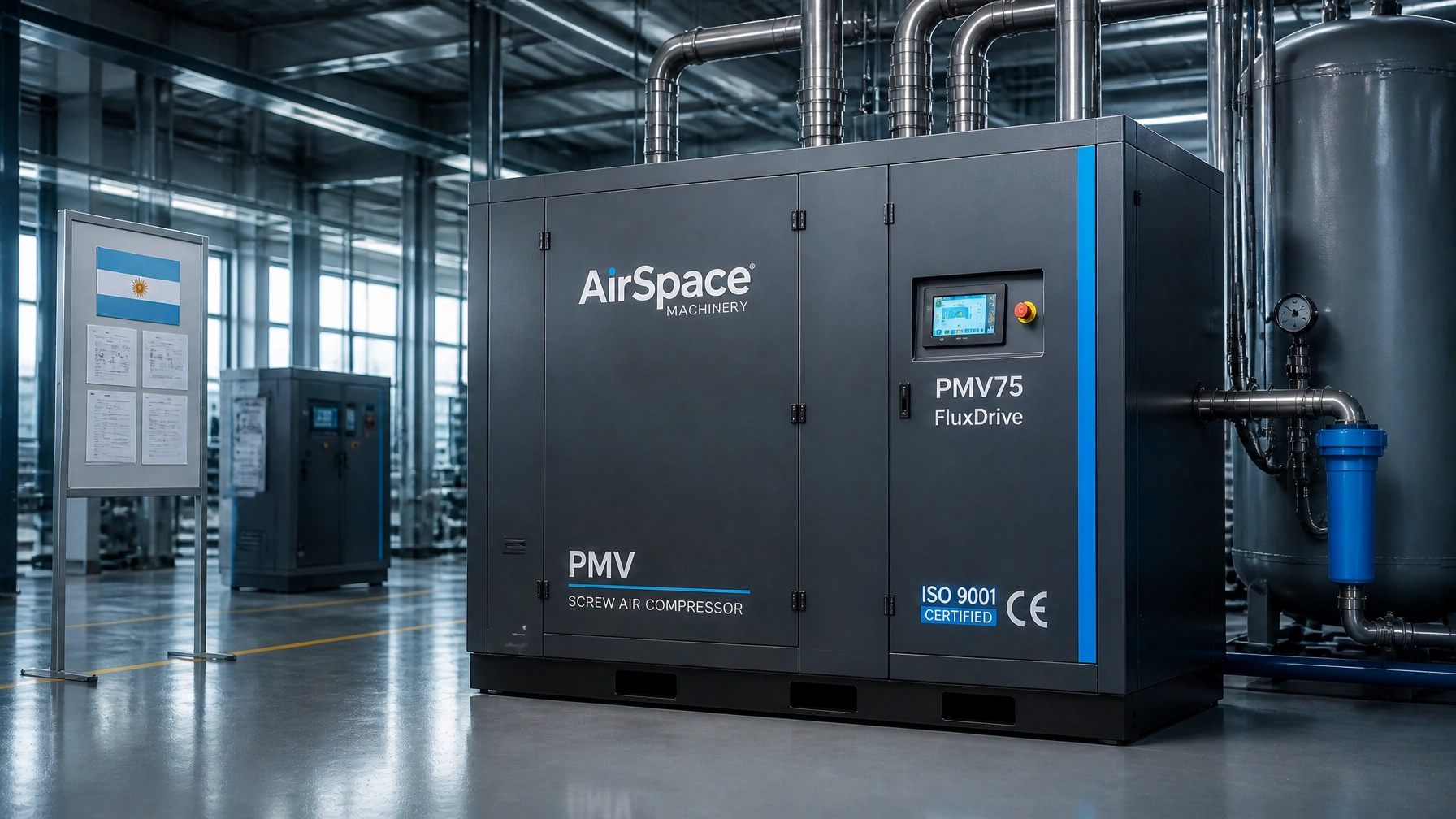
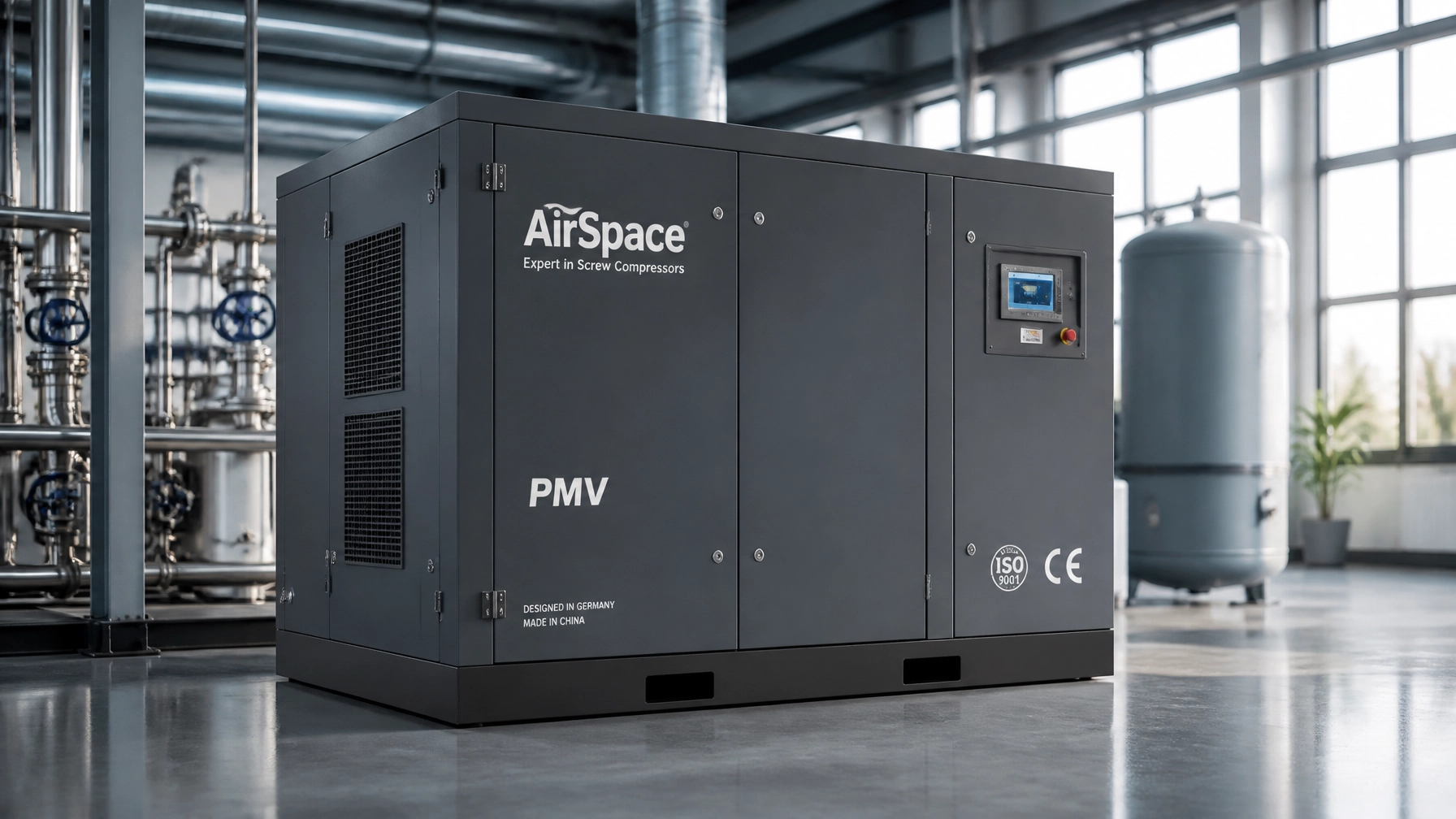
Latin American copper mines in Chile, Peru, and Brazil are currently facing a silent financial leak known as the "Legacy Brand Tax." While the global demand for copper surges, mining operations are being squeezed by inflated equipment prices, 20-week lead times, and energy-inefficient systems from industry giants. Many mines are unknowingly paying a premium for names rather than performance, accepting "Air as a Service" contracts that prioritize the supplier’s bottom line over the mine’s operational efficiency.
The reality of the "Legacy Brand Tax" is measurable. It manifests as equipment that derates in the Atacama heat, capacity losses at high altitudes, and energy claims that stop at "up to 30%." For a standard 200HP mining air compressor running 8,000 hours per year, the gap between a legacy system and a modern Permanent Magnet Variable Frequency (PMV) system isn't just a technical preference, it is a $7,200 annual robbery.
The 35% Energy Delta: Plugging the Multi-Thousand Dollar Leak
In the high-stakes environment of copper mining, energy is often the second largest operating expense after labor. Legacy brands frequently market their Variable Speed Drive (VSD) systems with promises of "up to 30%" energy savings. While this sounds impressive, it leaves a significant "Unload Tax" on the table.
AirSpace Machinery’s PMV technology delivers a proven 35% Energy Delta compared to standard fixed-speed units and a critical 5% efficiency advantage over the "up to 30%" legacy standard. This 5% difference is where the hidden losses reside.
Hard Stats: The Energy Calculation
For a typical 150kW (approx. 200HP) compressor operating in a Chilean mine:
- Power draw: 150 kW
- Annual Runtime: 8,000 hours (24/7 operation)
- Local Energy Cost: $0.12/kWh (Chilean mining average)
- Legacy VSD Savings (30%): $43,200 saved per year
- AirSpace PMV Savings (35%): $50,400 saved per year
The "Legacy Brand Tax" in this single unit is $7,200 per year. Over a standard five-year maintenance cycle, a mine pays $36,000 extra just for the privilege of using a legacy nameplate. When you scale this across a compressor house with five or ten units, the financial leak becomes a multi-million dollar liability over the life of the mine.

The Atacama Factor: Beating the Heat Tax and Altitude Tax
Mining air compressors in the LATAM region, particularly in the Chilean Atacama Desert or the Peruvian Highlands, face environmental challenges that standard industrial equipment cannot handle without significant "derating."
The Heat Tax
Most legacy brands rate their equipment for a maximum ambient temperature of 40°C (104°F). However, summer temperatures in mining regions and the internal heat of compressor houses often exceed this limit. When a standard compressor hits 40°C, it must derate, reducing its output and efficiency, to prevent thermal shutdown. AirSpace Machinery’s PMV systems are engineered with a 55°C (131°F) ambient rating. This means no derating, no unexpected shutdowns, and 100% capacity even during the hottest shifts.
The Altitude Tax
In the Peruvian highlands, air density is significantly lower. Standard compressors lose capacity as they go higher, forcing mines to buy larger, more expensive units just to meet their actual CFM requirements. Our high-tier engineering standards account for these low-density environments. By utilizing oversized, high-efficiency airends and PMV stability, we ensure that your copper mining compressor delivers the required "Fourth Utility" without the efficiency drop-off common in budget or legacy designs.
The Logistics Gap: 35 Days vs 20+ Weeks
One of the most aggressive tactics currently used by legacy brands in LATAM is the acquisition of local distributors to create a "bottleneck" in the supply chain. By controlling distribution, they can prioritize their own high-margin service contracts while quoting 20 to 30-week lead times for new equipment.
AirSpace Machinery breaks this cycle. While industry giants are buying distribution, we are earning it through delivery performance. We maintain a standard shipping timeline of 35 days from Purchase Order (PO) for most configurations.
In the mining sector, 20 weeks of waiting is 20 weeks of lost production or 20 weeks of running an inefficient, failing unit. If a failing compressor costs a mine $1,000 a day in lost productivity or excess energy, a 15-week delivery gap represents a $105,000 opportunity cost. By choosing a factory-direct model, mines can bypass the distributor backlog and have a high-efficiency system operational before a legacy brand even finishes their internal "approval" process.

The FTA Advantage: 0% Tariff vs 6% MFN
Financial directors at Chilean mines are increasingly looking at the "hidden" costs of international procurement. Because of the China-Chile Free Trade Agreement (FTA), equipment from AirSpace Machinery often qualifies for a 0% import tariff.
In contrast, many legacy brands that manufacture in regions without similar trade agreements are subject to the 6% Most Favored Nation (MFN) tariff. On a $100,000 compressor installation, that is a $6,000 day-one penalty just for the country of origin. When you combine the 0% tariff with our more efficient manufacturing cost structure, the initial capital expenditure (CAPEX) for an AirSpace system is often 20-30% lower than a legacy equivalent, without sacrificing a single metric of performance.
The “Air as a Service” Trap: Rental vs Ownership
A new trend among legacy manufacturers is "Air as a Service", a rental model where the mine pays a monthly fee for "guaranteed" air. While this appeals to short-term OPEX budgets, it is often a long-term financial trap.
- No Asset Equity: You pay for the equipment indefinitely but never own the asset.
- Escalating Costs: These contracts often include "escalation clauses" that tie future payments to inflation or service fees.
- Lock-in: It becomes nearly impossible to diversify your supplier base once you are locked into a 5-year "as-a-service" contract.
Our PMV ownership model offers a 12-18 month payback period. After that point, the 35% energy savings go directly to your bottom line, not back to a supplier’s rental department. Ownership provides the ultimate "Engineering Freedom" to manage your facility’s utilities without external interference.

Conclusion: Diversifying the Supply Chain for Copper Surges
As copper demand continues to rise, the mines that succeed will be those that operate with the leanest, most efficient utility structures. Relying on a single legacy brand is no longer a "safe" choice, it is a choice that incurs a 5% energy penalty, a 6% tariff penalty, and a 20-week production delay.
By integrating AirSpace Machinery’s PMV technology, LATAM mining operations can achieve ISO 8573-1 Class 0 integrity and plug the $7,200/year energy leak. Whether you are operating in the high altitudes of Peru or the intense heat of the Atacama, your compressed air system should be an asset, not a tax.
Mines that diversify their compressor supply chain now, focusing on the 35% Energy Delta and extreme-climate engineering, will have the competitive advantage as the market grows. It is time to stop paying the "Legacy Brand Tax" and start investing in performance.
Frequently Asked Questions: LATAM Mining Compressed Air
Q: How can we verify the CE and ISO 9001 certifications for equipment manufactured in China?
A: All AirSpace Machinery equipment is shipped with full documentation packages, including CE and ISO 9001:2015 certificates. These can be verified through international accreditation databases. We also provide factory-direct testing reports (FAT) for every unit before shipment to ensure compliance with specified pressure and flow requirements.
Q: Does the PMV technology require specialized maintenance in remote mining sites?
A: No. Our PMV systems are designed for simplicity and reliability. Unlike proprietary-focused manufacturers that require "black box" service tools, AirSpace uses universal components and intuitive digital controllers. Local technicians can perform standard maintenance, and we provide 24/7 technical support and expedited parts shipping to ensure 99.9% uptime.
Q: How does the 35% Energy Delta compare to the "Double Stage" systems often promoted by industry giants?
A: While double-stage compression offers efficiency gains, they are often offset by higher maintenance costs and mechanical complexity. Our Permanent Magnet Variable Frequency (PMV) technology achieves comparable or superior savings by eliminating the "Unload Tax" and maintaining peak efficiency across the entire 25% to 100% load range, which is more critical for the fluctuating demands of mining.
Q: Can these compressors handle the high-vibration environment of a mobile mining site?
A: Yes. Our "Extreme Climate" series features reinforced frames and vibration-isolated mounting for all sensitive electronic and mechanical components. This makes them ideal for both stationary compressor houses and portable, diesel-driven configurations used in active excavation zones.
Author: Penny Winston
The 35% Energy Delta | The Fourth Utility Concept | ISO 8573-1 Class 0 Integrity
Reviewed by Engineering
Get a Proposal
Ready to plug the leak? Contact our engineering team for a customized proposal. Please specify your required pressure (bar/psi) and flow (m³/min or CFM) for an accurate TCO analysis.
Internal Knowledge Web:
- Learn how a German automotive plant plugged their energy leak.
- Explore the 2026 Guide to Oil-Free vs Class Zero Air.
- Understand how double-stage screw compressors maximize efficiency.
📅 Last updated:
⚡ Is Your Factory Bleeding Cash?
Most fixed-speed compressors waste $3,600/year in "Unload Tax." Test your waste level in 30 seconds.
RUN THE ROI TEST →Ready to See How Much Your Facility Can Save?
Fill out the form below for a Free Energy Assessment.