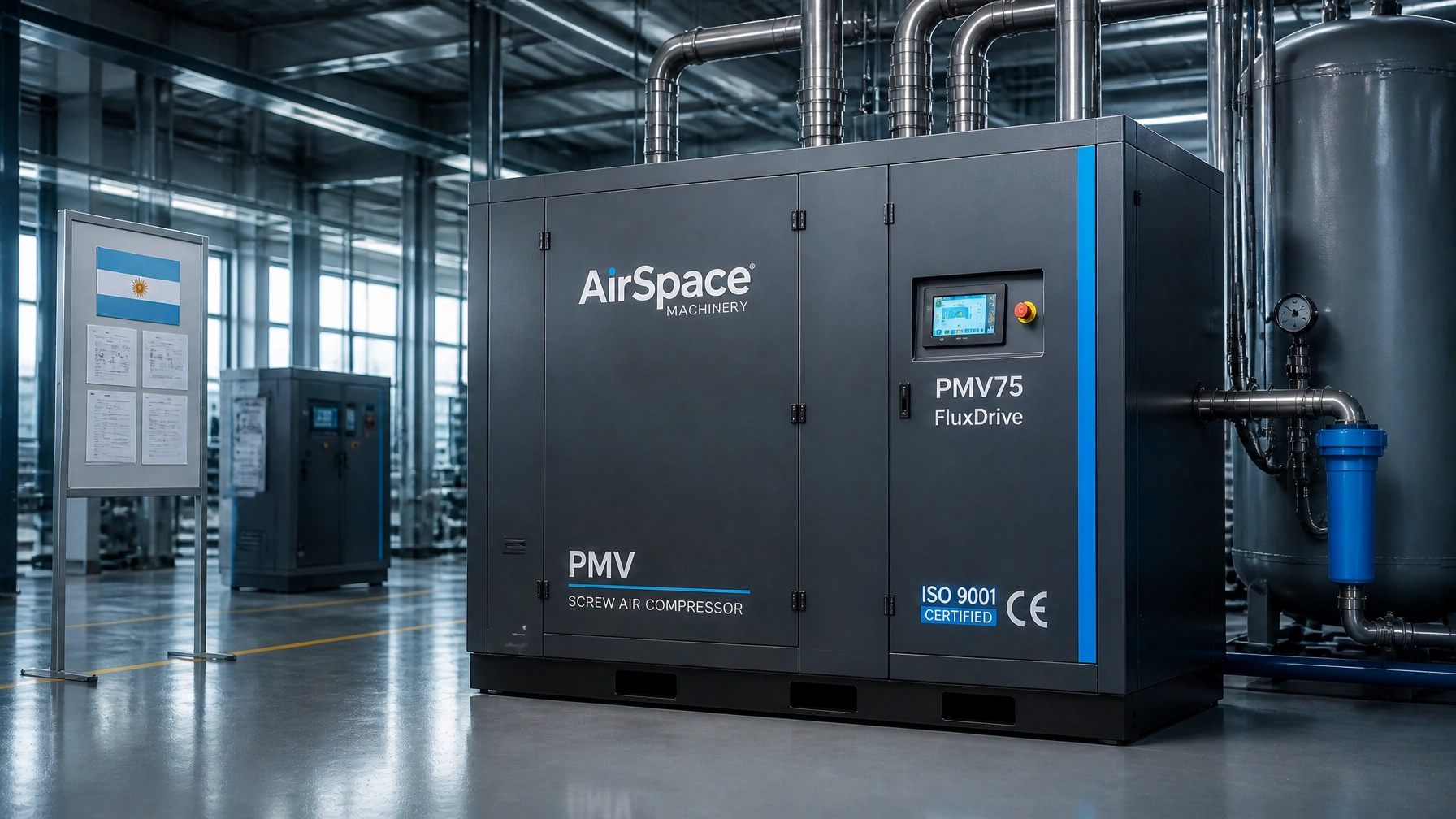
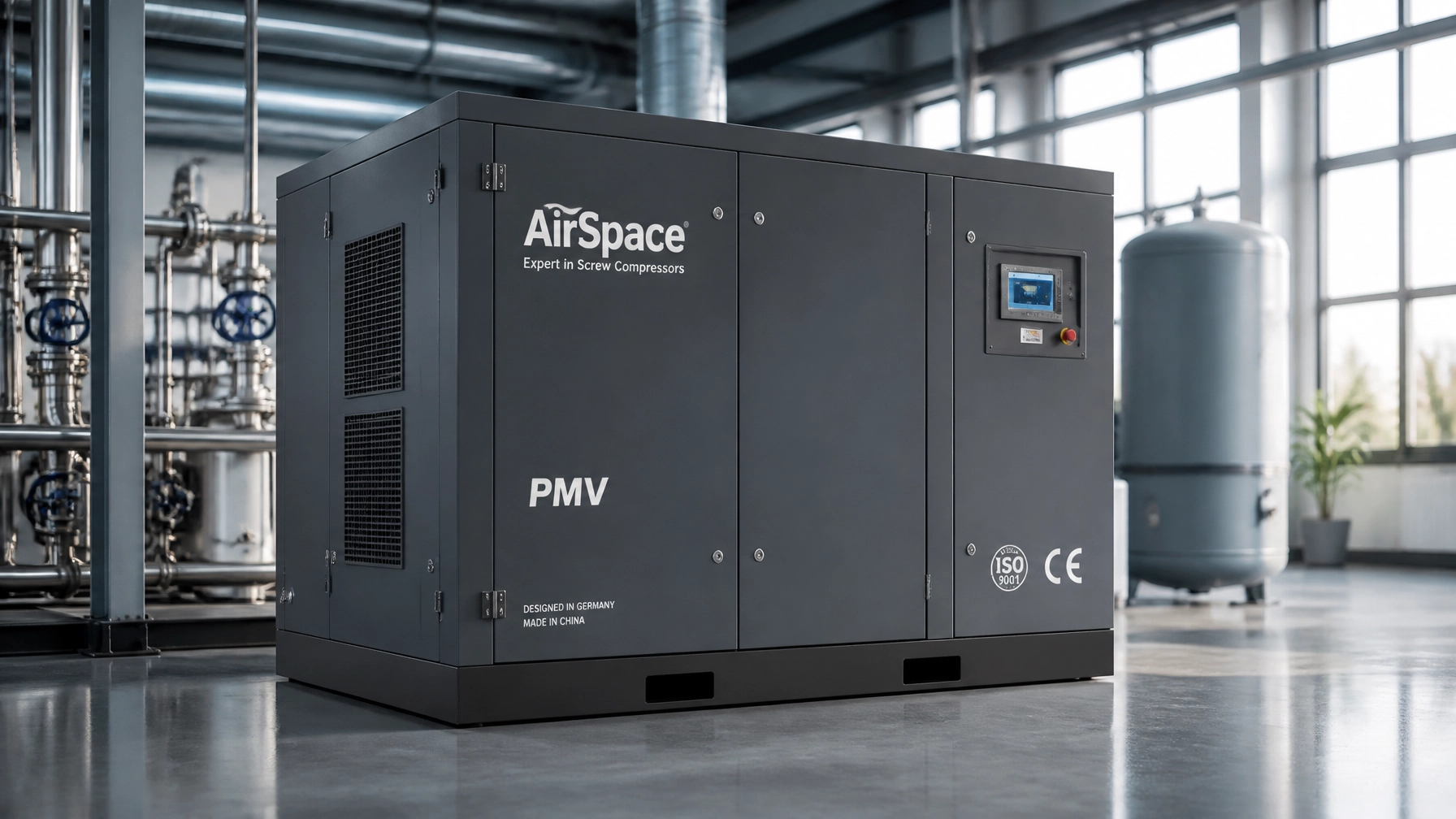
Importing industrial machinery into Australia and New Zealand is not as straightforward as many legacy brands would have you believe. While these two markets share many technical standards under the AS/NZS prefix, the enforcement, registration, and emissions requirements have diverged significantly as we move through 2026. If you are a factory manager in Brisbane or a procurement officer in Auckland, you are likely staring down the barrel of three major regulatory hurdles: the Product Emissions Standards (PES) Act, the updated AS/NZS 3788:2024 Amd 1:2025 inspection regime, and the complex web of state-based WorkSafe registrations.
The direct answer to your compliance question is this: To legally operate a china made screw air compressor in Australia or New Zealand, you must ensure the pressure vessel (air receiver) is design-registered for the specific hazard level (A-D) per AS 4343, and if it is engine-driven (under 19kW), it must meet PES emissions certification. Non-compliance is not just a paperwork issue, it is a “Legal Tax” that leads to equipment seizure at the port or immediate site shutdowns by WorkSafe inspectors.
At AirSpace Machinery, we view compliance as a foundational engineering metric, not an afterthought. This guide breaks down the technical and legal requirements for the AU/NZ markets to ensure your facility maintains 99.9% uptime without the threat of regulatory interference.
Two Markets, One Standard , But Different Rules
While Australia and New Zealand frequently harmonize their engineering standards, the “How” of compliance remains distinct. Both nations rely on AS/NZS 1200:2015 as the parent standard for pressure equipment, yet the way you register that equipment depends entirely on which side of the Tasman Sea you land on.
In Australia, the framework is governed by the Model WHS Act and Regulations. However, enforcement is decentralized. Each state and territory (e.g., WorkSafe Victoria, SafeWork NSW) maintains its own register. In contrast, New Zealand operates under the Health and Safety at Work Act 2015 (HSWA) and the PECPR 1999 regulations, with WorkSafe NZ acting as the sole, centralized regulator.
Australia , The Regulatory Framework and the Heat Tax
Operating a compressor in Australia means dealing with the “Heat Tax”, the brutal ambient conditions of the outback and rural industrial zones. Standard “budget” compressors designed for temperate climates often fail when temperatures hit 40°C, leading to thermal shutdowns and oil degradation. Compliance in Australia isn’t just about the law; it’s about engineering for the environment.
The core standards you must meet include:
- AS/NZS 1200:2015: The primary standard for pressure equipment.
- AS 1210:2010: The specific design and construction standard for pressure vessels (air receivers).
- AS 4343:2014: The hazard level classification system (A through E).
- AS/NZS 3788:2024 Amd 1:2025: The most recent update for in-service inspection intervals.
- AS/NZS 3000: The “Wiring Rules” for electrical safety and switchboard compliance.
Australia Hazard Levels and Registration Requirements
In Australia, your administrative burden is determined by the “Hazard Level” of your air receiver. This is calculated using the formula H = P x V x Fc x Ff x Fs (Pressure x Volume x generic factors).
- Hazard Level A, B, and C: These require both Design Registration (the engineering blueprints) and Plant (Item) Registration (the specific unit on your floor).
- Hazard Level D: Requires Design Registration only.
- Hazard Level E: Does not require formal registration but must still be manufactured to a recognized standard and maintained safely.
A critical “money leak” for Australian importers is assuming that a registration in New South Wales is valid in Western Australia. While there is some mutual recognition, you must verify the specific “Item of Plant” registration requirements with the local regulator where the equipment is installed. Victoria is the notable outlier here; they abolished individual plant registration in 2014, focusing instead on the owner’s duty to maintain a safe register.
PES Act Compliance: The Small Engine Robbery
If you are importing portable air compressors driven by petrol or small diesel engines (spark-ignition ≤19 kW), you are subject to the Product Emissions Standards (PES) Act 2017. These units are classified as Emissions-Controlled Products (ECPs).
Failure to verify PES compliance is a common “robbery” of your time and capital. Customs will block any unit that does not carry a recognized international certification (such as US EPA, EU Stage V, or CARB) or a specific Australian certification. AirSpace Machinery ensures all our portable units meet these stringent requirements, protecting you from fines that can reach tens of thousands of dollars.

New Zealand , The PECPR 1999 Framework
The New Zealand market is governed by the Health and Safety in Employment (Pressure Equipment, Cranes, and Passenger Ropeways) Regulations 1999, commonly known as PECPR. While the standards (AS/NZS 1200) are shared with Australia, the inspection intervals are often more rigid.
In New Zealand, the “Controller” (the person in charge of the equipment) has a non-negotiable duty to ensure that no pressure equipment is operated without a current Certificate of Inspection.
New Zealand Inspection Intervals and Mandatory Requirements
Unlike Australia’s more flexible risk-based approach, New Zealand typically adheres to fixed intervals for air receivers:
- External Inspection: Every 2 years.
- Internal Inspection: Every 4 years.
- Safety Relief Valve Testing: Every 2 years.
These inspections must be conducted by a WorkSafe NZ-recognized inspection body. If you are operating a 50HP PMV screw air compressor in Christchurch, you cannot simply “self-certify.” You must have the design verified by a qualified engineer before it ever enters service.
Key Differences: Australia vs. New Zealand
Understanding the nuance between these two markets prevents costly delays:
- Registration: Australia is state-based with 6 different regulators; NZ is centralized via WorkSafe NZ.
- PES Act: This is an Australian-specific requirement for small engines; New Zealand does not currently have an equivalent emissions scheme for small portable compressors.
- Inspection: NZ follows the PECPR-specific 2yr/4yr cycle for air receivers, whereas Australian states allow for more variation based on AS/NZS 3788:2024 risk assessments.
- Language and Labeling: Both markets require English labeling. Do not fall for the myth that “international symbols” are enough, clear, English-language safety warnings and data plates are mandatory.
Step-by-Step Guide: Importing to Australia
Step 1: Determine if the PES Act applies. Is the engine ≤19kW and spark-ignition?
Step 2: Verify existing certifications. Does the unit have EU Stage V or US EPA papers?
Step 3: Calculate the Hazard Level per AS 4343 for the air receiver.
Step 4: Engage a design verification body for Hazard Levels A-D.
Step 5: Register the design with the state WHS regulator (e.g., SafeWork NSW).
Step 6: Register the plant/item (Hazard Levels A-C) once installed.
Step 7: Schedule the first in-service inspection per AS/NZS 3788:2024.
Step 8: Retain all records for the equipment’s lifetime.
Step-by-Step Guide: Importing to New Zealand
Step 1: Confirm the unit is designed to AS/NZS 1200 or an equivalent recognized standard.
Step 2: Obtain design verification from a WorkSafe-recognized verifier.
Step 3: Calculate the Hazard Level using AS 4343.
Step 4: Contact a recognized inspection body for the initial “Certificate of Inspection.”
Step 5: Ensure the unit is permanently marked with design details (Max Pressure, Temp, Volume).
Step 6: Establish an inspection register to track the 2-year external and 4-year internal cycles.
Common Pitfalls for AU/NZ Importers
- The “One State” Myth: Assuming your Queensland registration is all you need for a job in Sydney. Check local state regulations for “Item of Plant” rules.
- Ignoring the 2024 Update: AS/NZS 3788:2024 Amd 1:2025 changed the clarification on time-based intervals. Using the old 2006 standard for your maintenance plan is a major compliance gap.
- Missing Electrical Compliance: Australia and New Zealand use 230V/400V 50Hz. Importing 60Hz equipment from North America or certain parts of Asia without a VFD conversion is an “Electrical Tax” that will fry your motors.
- Neglecting the “Humidity Tax”: In Queensland or Northern NZ, high humidity leads to massive condensate buildup. Ensure your system includes a high-capacity refrigerated air dryer and automated drains to meet ISO 8573-1 air quality standards.
How AirSpace Machinery Solves the Compliance Puzzle
Navigating AS/NZS 3788 and the PES Act shouldn’t be your job, it’s ours. We position AirSpace Machinery not just as a manufacturer, but as a compliance partner.
- 35% Energy Delta: Our PMV (Permanent Magnet Variable Frequency) systems outperform legacy fixed-speed brands, significantly reducing the “Unload Tax” common in Australian workshops with fluctuating demand.
- Extreme Climate Engineering: Our units are rated for 55°C ambient conditions, ensuring the “Heat Tax” doesn’t stop your production line.
- Document Readiness: We provide the full suite of technical drawings, material test reports, and design data required for AS 4343 hazard level calculations and WorkSafe registrations.
- Fast Logistics: With 35-day delivery to major ports like Melbourne, Sydney, and Auckland, we bridge the gap between China’s manufacturing speed and AU/NZ regulatory precision.

FAQ: Australia and New Zealand Compressor Compliance
Q: Do I need a separate registration for each Australian state?
A: Design registration is generally recognized across states, but “Item of Plant” (the specific unit) registration is often state-specific. Always check with the local WHS regulator before commissioning.
Q: What is the PES Act and does it apply to my air compressor?
A: The Product Emissions Standards Act applies to portable compressors with spark-ignition engines ≤19kW (petrol units). It does not apply to electric compressors.
Q: How often do I need to inspect my air receiver in New Zealand?
A: Under PECPR, you typically need an external inspection every 2 years and an internal inspection every 4 years.
Q: What hazard level is typical for a 10HP air compressor?
A: Most 10HP (7.5kW) industrial units fall into Hazard Level C or D, depending on the pressure rating and tank volume.
Q: Can I use CE certification instead of Australian certification?
A: CE certification is an excellent foundation and indicates high quality, but it does not replace the legal requirement for AS/NZS 1200 design verification or AS 4343 hazard level registration in AU/NZ.
Q: Does AirSpace ship compressors to Australia and New Zealand?
A: Yes. We regularly ship to major AU/NZ ports and provide the necessary documentation to clear customs and pass local inspections.
Q: What is the voltage/frequency for Australian air compressors?
A: 400V/3-Phase/50Hz is the standard for industrial units. We also offer VFD options that are grid-stable for remote sites.
Conclusion: Plug the Compliance Leak Today
Australia and New Zealand represent high-growth markets for those who respect the “Fourth Utility”: high-purity, energy-efficient compressed air. By following the AS/NZS 3788 and PECPR frameworks, you aren’t just following the law; you are ensuring your equipment operates with the 99.9% uptime required for modern manufacturing.
Don’t let a “Compliance Tax” or a “Heat Tax” drain your profits. Whether you need an oil-free solution for a medical facility in Melbourne or a rugged PMV unit for a textile plant in Auckland, AirSpace Machinery is ready to assist.
Contact us today to Get a Proposal and a compliance readiness assessment for your next AU/NZ project.
Author: Penny Winston
Penny Winston is a Technical Writer specializing in the ‘35% Energy Delta,’ ‘The Fourth Utility Concept,’ and ‘ISO 8573-1 Class 0 Integrity.’ She bridges the gap between complex engineering standards and practical factory floor outcomes.
Follow us on LinkedIn: AirSpace Machinery Co., Ltd.
Reviewed by Engineering
Internal Loop – Explore our Global Compliance Series:
- 🟢 India BIS Certification for Air Compressors: The September 2026 Deadline Guide
- 🟢 Saudi Arabia SABER Certification for Air Compressors: The 2026 Guide to SASO Compliance
- 🟡 Permanent Magnet Variable Frequency (PMV) Technical Whitepaper
📅 Last updated:
⚡ Is Your Factory Bleeding Cash?
Most fixed-speed compressors waste $3,600/year in "Unload Tax." Test your waste level in 30 seconds.
RUN THE ROI TEST →Ready to See How Much Your Facility Can Save?
Fill out the form below for a Free Energy Assessment.