Air compressors serve as the “power heart” of the metal cutting industry, providing stable and high-quality compressed air for processes such as plasma cutting, laser cutting, and oxyfuel cutting. Brazil, as South America’s manufacturing hub with abundant mineral resources and a mature metal processing sector, presents unique market demands and operational challenges for air compressor applications. This case study takes MetalCut, a medium-sized metal processing enterprise in São Paulo, Brazil, as the research object, systematically analyzing the industry background, customer pain points, customized solutions, and implementation effects, aiming to provide practical references for industry practitioners, potential clients, and researchers.
- Brazilian Metal Cutting Industry Background & Market Characteristics
1.1 Industry Overview
Brazil’s metal cutting industry is deeply rooted in its rich mineral resources (ranked among the world’s top in iron ore, bauxite, and copper reserves) and robust downstream demand. The industry mainly serves key sectors such as automotive manufacturing (accounting for 32% of metal cutting demand), construction machinery, aerospace, and infrastructure construction. São Paulo, Minas Gerais, and Rio de Janeiro form three major manufacturing clusters, gathering over 60% of the country’s metal processing enterprises. In recent years, driven by the recovery of Brazil’s automotive industry and the government’s infrastructure investment plan, the metal cutting industry has maintained a 4.5% annual growth rate, with increasing demand for high-precision and energy-saving processing equipment.
1.2 Core Market Characteristics
Energy Structure Constraints: Brazil’s power supply relies heavily on hydropower (accounting for 65% of total electricity generation). However, frequent droughts in recent years have led to volatile electricity prices—peak-season tariffs can be 2-3 times higher than off-peak. Energy cost has become the second-largest operating expense for metal cutting enterprises, following labor costs.
Climatic Adaptability Requirements: Most metal processing areas are located in the tropical savanna climate zone, characterized by high temperature (average annual temperature 25-28℃) and high humidity (relative humidity 70-85% in rainy seasons). This poses strict requirements for the heat dissipation and dehumidification capabilities of air compressors.
Localization Service Demand: Brazil’s vast territory and complex logistics lead to long delivery times for imported spare parts. Enterprises prioritize air compressor suppliers with local service networks and 24-hour emergency response capabilities.
Environmental Regulatory Pressure: The Brazilian Ministry of Environment has implemented strict energy efficiency standards (such as INMETRO certification) for industrial equipment since 2020, requiring air compressors to meet IE3 energy efficiency levels or higher, and limiting noise emissions to below 85dB(A).
- Client Case: MetalCut’ s Needs & Pain Points
2.1 Company Profile
Founded in 2010, MetalCut is located in the São Paulo Industrial Zone, specializing in precision cutting of carbon steel, aluminum alloy, and stainless steel. Its main customers include major automotive manufacturers such as Volkswagen Brazil and Ford Brazil, with an annual processing capacity of 8,000 tons of metal materials. Before 2022, the company relied on three old piston air compressors (purchased in 2015) with a total power of 75kW.
2.2 Key Pain Points
Unstable Air Supply Affecting Processing Precision: The piston compressors had large pressure fluctuations (±0.3bar), leading to uneven cutting surfaces and excessive burrs. The product scrap rate reached 5%, far exceeding the industry average of 2%.
High Energy Consumption: The old compressors operated at fixed speed, consuming 52,000 kWh of electricity per month, accounting for 22% of the company’s total electricity bill. During the dry season (June-September), the high electricity price further increased operational costs.
Frequent Maintenance and Downtime: The compressors required major overhauls every 3 months, with an average monthly downtime of 8 hours. The lack of local spare parts often prolonged maintenance cycles, affecting order delivery.
Poor Air Quality: Due to inadequate dehumidification, the compressed air contained moisture and oil residues, accelerating the wear of cutting nozzles and reducing their service life by 40%.
2.3 Core Requirements
Based on its operational challenges, MetalCut put forward clear requirements for the new air compressor system:
- Stable outlet pressure (fluctuation ≤±0.1bar) to ensure cutting precision;
- Energy efficiency improvement of over 30% to reduce electricity costs;
- Extended maintenance intervals (≥12 months) and reduced downtime;
- Adaptability to high-temperature and high-humidity environments;
- Localized after-sales service with spare parts delivery within 48 hours.
- Customized Air Compressor Application Solution
To address the client’s needs and adapt to Brazil’s market characteristics, the supplier designed a integrated solution centered on variable frequency (VF) screw air compressors, combined with efficient air treatment equipment and intelligent monitoring systems.
3.1 Core Equipment Configuration
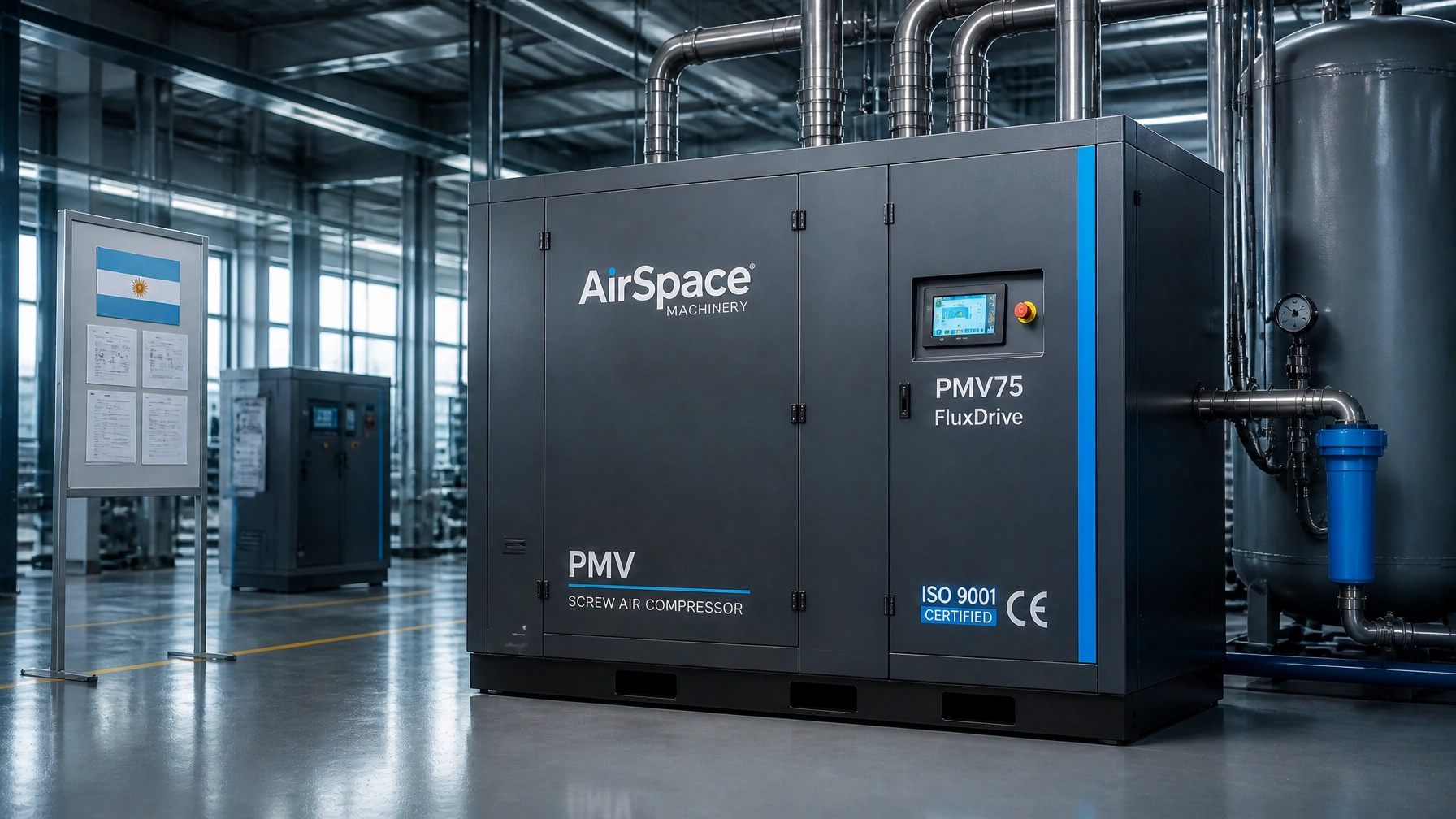
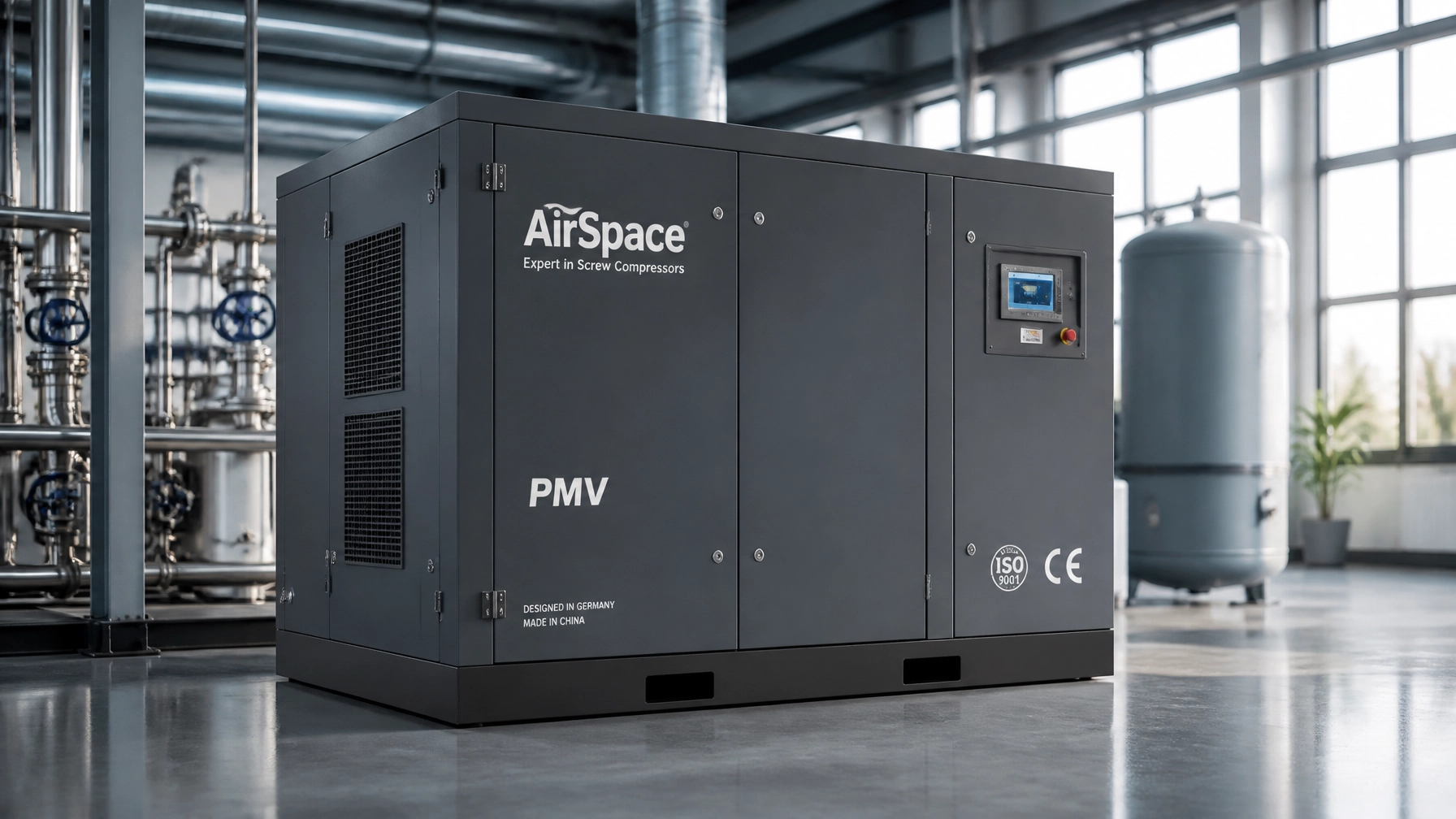
Main Compressor: Two 55kW VF screw air compressors with IE4 ultra-high efficiency motors, equipped with intelligent pressure sensors. The frequency conversion range of 30-75Hz allows precise matching of air supply with cutting load changes.
Air Treatment System: Two integrated Refrigerated Air Dryers with a dehumidification capacity of 0.01μm and two stages of precision filters (particle filtration + oil removal), ensuring the compressed air’s dew point is ≤3℃ and oil content ≤0.01mg/m³.
Intelligent Control System: A central monitoring platform connected to the company’s ERP system, enabling real-time monitoring of pressure, temperature, energy consumption, and fault alerts. Remote parameter adjustment and predictive maintenance reminders are also supported.
Customized Adaptations: Enhanced heat dissipation systems (enlarged radiators and high-speed fans) to adapt to high temperatures; corrosion-resistant components for humid environments; and compliance with Brazil’s 380V three-phase power standard.
3.2 Localization Service Support
Established a spare parts warehouse in São Paulo, storing key components such as air filters, oil separators, and frequency converters to ensure delivery within 48 hours.
Deployed a professional service team of 5 technicians with bilingual training (Portuguese-English) to provide on-site installation, commissioning, and maintenance services.
Signed a 3-year maintenance contract, including quarterly regular inspections and 24-hour emergency response.
- Implementation Effects & Value Presentation
The new air compressor system was officially put into operation in March 2022. After 18 months of operation, the implementation effects exceeded the client’s expectations:
4.1 Operational Performance Improvements
Stable Pressure Ensures Precision: The outlet pressure fluctuation was controlled at ±0.05bar, reducing the cutting scrap rate from 5% to 1.2%. The qualified rate of products supplied to automotive manufacturers reached 99.8%, winning additional orders of 1.2 million US dollars.
Significant Energy Savings: The VF technology reduced average power consumption by 38%, from 52,000 kWh to 32,240 kWh per month. Based on the average electricity price of 0.18 US dollars/kWh, the company saves 3,556.8 US dollars in electricity costs monthly, with an annual savings of 42,681.6 US dollars. The investment return period is 14 months.
Reduced Maintenance and Downtime: The maintenance interval was extended to 15 months, and monthly downtime was reduced to 1 hour, a decrease of 87.5%. The annual maintenance cost was reduced from 18,000 US dollars to 6,500 US dollars.
Improved Air Quality: The compressed air’s dew point and oil content fully met the ISO 8573-1 Class 1 standard, extending the service life of cutting nozzles by 50% and reducing tool replacement costs by 35%.
4.2 Strategic Value for the Client
The upgrade of the air compressor system not only reduced operational costs but also enhanced MetalCut’s competitiveness in the market. The company successfully passed the ISO 50001 energy management system certification and was recognized as a “Green Manufacturing Enterprise” by the São Paulo Industrial Association, laying the foundation for expanding cooperation with international clients.
- Industry Insights & Implications
The successful application of the air compressor system at MetalCut provides valuable insights for the Brazilian metal cutting industry:
5.1 Equipment Selection Principles
Prioritize Energy Efficiency: Given Brazil’s volatile and high electricity prices, VF screw air compressors with IE3/IE4 motors should be the first choice. The energy-saving benefits can significantly offset the higher initial investment.
Adapt to Local Climate: Select equipment with enhanced heat dissipation and dehumidification functions. For enterprises in rainy areas, it is recommended to configure adsorption dryers for extreme humidity conditions.
Integrated Solutions: Combine compressors with high-efficiency filters and dryers to improve air quality, which is crucial for precision cutting processes and extending tool life.
5.2 Service Cooperation Strategy
Localization is Key: Choose suppliers with local warehouses and service teams to avoid production disruptions caused by delayed spare parts.
Long-Term Maintenance Contracts: Sign annual or multi-year maintenance agreements to ensure regular inspections and timely fault resolution, reducing unplanned downtime.
5.3 Future Development Trends
Intelligent Upgrade: Promote the application of IoT-enabled air compressors to realize remote monitoring, predictive maintenance, and energy consumption analysis, improving operational efficiency.
Sustainable Development: With the tightening of environmental regulations, enterprises should prioritize equipment with low noise, low emissions, and recyclable lubricants to meet green production requirements.
Energy Recovery: Utilize waste heat recovery systems from air compressors for factory heating or hot water supply, further reducing energy costs.
Conclusion
In Brazil’s metal cutting industry, where energy costs, climate conditions, and localization services are critical factors, the successful case of MetalCut demonstrates that customized air compressor solutions can effectively solve industry pain points. By selecting energy-efficient, climate-adaptable equipment and cooperating with suppliers with strong localization capabilities, enterprises can achieve cost reduction, efficiency improvement, and enhanced competitiveness. As Brazil’s manufacturing industry moves toward precision and sustainability, air compressors will play an increasingly important role as core supporting equipment. This case provides a valuable reference for industry peers to optimize their air supply systems and promote the high-quality development of the metal cutting industry.
For further in-depth analysis—such as energy efficiency comparison data of different compressor types, or customized solution designs for specific metal materials (e.g., stainless steel vs. aluminum alloy cutting)—please feel free to contact us for detailed technical reports.
📅 Last updated:
⚡ Is Your Factory Bleeding Cash?
Most fixed-speed compressors waste $3,600/year in "Unload Tax." Test your waste level in 30 seconds.
RUN THE ROI TEST →Ready to See How Much Your Facility Can Save?
Fill out the form below for a Free Energy Assessment.