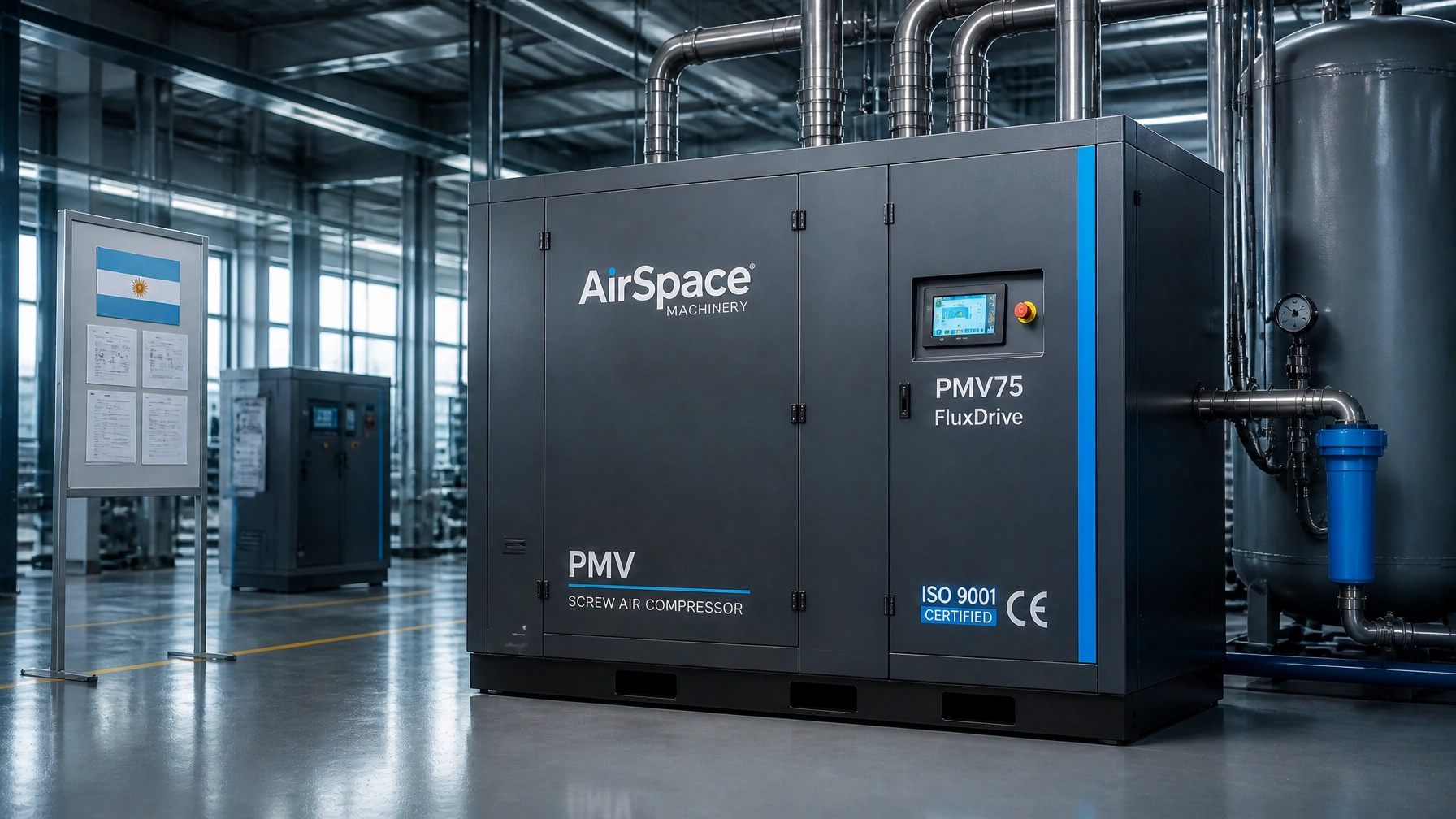
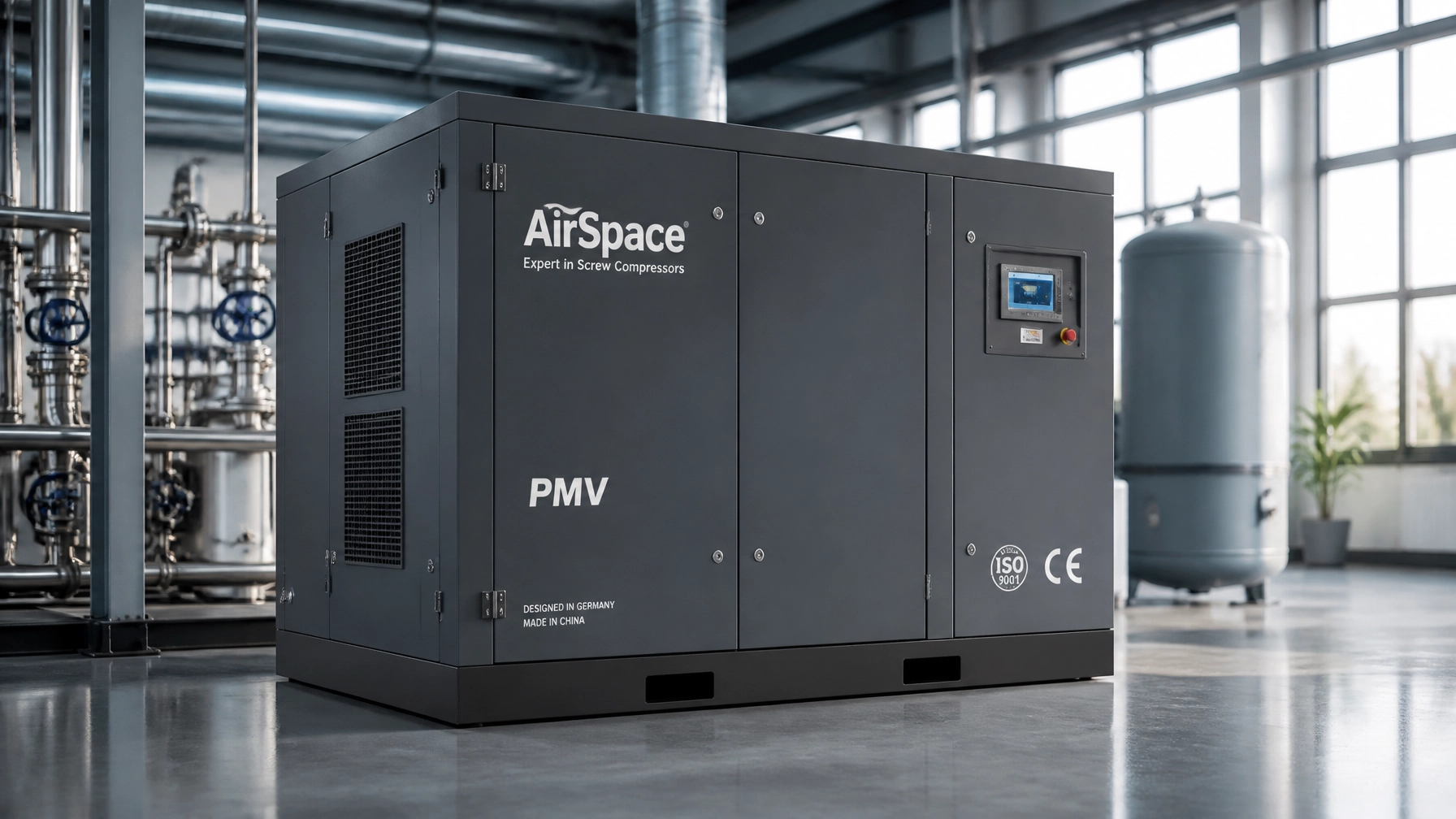
An industrial compressor that refuses to start is more than a mechanical failure; it is a financial robbery. In a high-output automotive or electronics facility, every hour of downed air can bleed thousands of dollars in lost labor and missed shipping windows. However, 80% of “won’t start” service calls are resolved without ever replacing a major component.
The direct answer to why your china made screw air compressor won’t start usually falls into one of four buckets: safety interlock lockouts, electrical supply irregularities, control logic errors, or mechanical binding. Before you call a service technician and incur a $500 call-out fee, follow this systematic diagnostic flow to identify the money leak and get your Fourth Utility back online.
Phase 1: The Basics (The “Duh” Checklist)
Before opening the electrical cabinet, verify the obvious. Industrial environments are chaotic, and safety features are often triggered accidentally.
- The Emergency Stop (E-Stop): This is the #1 cause of “dead” machines. Verify the button is twisted or pulled out. Even a slightly bumped E-Stop will break the control circuit.
- System Pressure vs. Cut-In Pressure: If your plant air tank is at 7.5 bar (109 psi) and your compressor is set to start at 7.0 bar (102 psi), the machine will correctly remain in standby. Check your “Cut-In” settings.
- Power Presence: 🟢 Is the main disconnect switch in the ON position? 🔴 Is there a “Phase Loss” or “Emergency” light on the panel?
Phase 2: Electrical Diagnostics – Hunting the Hidden Faults
If the panel is lit but the motor won’t turn, the issue likely resides in the electrical supply or the motor protection circuit.
Voltage Irregularities:
Industrial grids can be unstable. A drop of just 10% in incoming voltage (a brownout) can prevent the motor from generating enough torque to start, or trigger an undervoltage trip.
- Phase Sequence: If you have recently performed electrical work, your phase rotation might be reversed. Most modern PMV systems, like those from AirSpace Machinery, feature phase-sequence protection to prevent the air end from rotating backward, which would cause immediate mechanical damage.
- Phase Loss: If one leg of your three-phase power is dead, the motor will hum but won’t rotate. This is a critical failure that can burn out motor windings in seconds if the overload relay fails to trip.
The Overload Relay:
The overload relay is a thermal guardian. If it trips, the compressor is dead until you press the small “Reset” button inside the electrical cabinet.
🟡 Warning: If it trips twice in one hour, do not reset it again. You likely have a genuine electrical leak or a mechanical drag.
Phase 3: Control Circuit & Sensor Diagnostics
If power is good but the “Run” command is ignored, the control logic is likely waiting for a signal that isn’t coming.
- The Pressure Switch / Transducer: This component tells the PLC what the air pressure is. If the transducer fails or the wiring is loose, the PLC may think the system is already at full pressure.
- Control Transformer: This converts your 380V/460V mains down to 24V or 110V for the control panel. If the fuse on the secondary side of this transformer is blown, the display will be dark even if the main power is ON.
- Loose Terminal Blocks: Industrial vibration is the enemy of electrical connections. Check for loose wires at the PLC and contactor terminals. A single loose wire can break the entire “Start” signal chain.
Phase 4: Mechanical & Pneumatic Resistance
Sometimes the motor wants to turn, but physics says no. This often presents as a motor that tries to start for one second, then trips the breaker.
- High Sump Pressure: A screw compressor must start “unloaded.” If the minimum pressure valve (MPV) or the auto-blowdown valve fails to vent the internal sump pressure after the last shutdown, the motor has to fight against 7 bar of pressure immediately. This is the “Unload Tax” in action: energy and mechanical stress wasted due to poor pneumatic management.
- Seized Air End: While rare with proper maintenance, a lack of lubrication or a failed bearing can seize the rotors. With the power locked out (LOTO), try to rotate the coupling by hand. If it is rock solid, you have a major mechanical failure.
- Unloader Valve Position: The intake valve must be closed during start-up. If it is stuck open, the machine is trying to pump air the moment it turns, creating an “over-torque” condition that trips the electrical system.
Phase 5: Diesel Portable Unit Specifics
For construction and building materials companies using diesel-driven portable units, the “won’t start” diagnostic flow adds an internal combustion layer.
- Battery Health: 🔴 12.6V is the goal. Anything below 12V likely won’t have the cold-cranking amps to turn the high-compression diesel engine.
- Fuel System: Verify the fuel solenoid is clicking when the key is turned. Air in the fuel lines after a filter change (as discussed in Episode 1) is a common culprit.
- Glow Plugs: In colder climates, if the glow plug relay fails, the engine will crank forever without firing.
The Logical Diagnostic Flow (The Technician’s Map)
Follow this order to save time:
- Power Supply Check: Is electricity reaching the terminals? (Mains -> Fuses -> Transformer)
- Safety Interlock Check: Is anything blocking the start? (E-Stop -> Overload -> Alarms)
- Control Signal Check: Is the “Start” command reaching the motor? (PLC -> Contactor Coil)
- Mechanical Check: Can the motor turn freely? (Sump Pressure -> Air End Rotation)
Common Mistakes to Avoid
- Bypassing Safety Interlocks: Never “jumper” a high-temperature switch or an overload relay just to get the machine running. This is a recipe for a catastrophic fire or motor meltdown.
- Misdiagnosing the Motor: Many technicians assume a tripped breaker means a “bad motor.” In reality, it’s often just a “loaded start” caused by a $20 solenoid valve failure.
- Ignoring the Display: Modern AirSpace PMV systems provide specific error codes. Don’t guess; read the screen. It will tell you exactly which sensor is unhappy.
The AirSpace Advantage: Intelligent Self-Diagnostics
At AirSpace Machinery, we engineer our Permanent Magnet Variable Frequency (PMV) systems to eliminate the guesswork. Our controllers monitor over 20 parameters in real-time, providing 99.9% uptime by alerting you to issues before they become “won’t start” emergencies.
By maintaining ISO 9001 quality standards and implementing advanced PMV technology, we deliver a 35% Energy Delta over legacy fixed-speed units. Our systems are designed to handle the “Heat Tax” of the Middle East and the “Humidity Tax” of Southeast Asia, ensuring that your Fourth Utility is always ready when production begins.
If you have performed these checks and your machine remains dormant, contact our technical support team for a deeper dive into your specific configuration.
Review by Engineering: Verified for Technical Accuracy by the AirSpace Engineering Department.
Author Box
Penny Winston is a Technical Writer at AirSpace Machinery Co., Ltd. She is a leading advocate for the Fourth Utility Concept, helping industrial facilities achieve ISO 8573-1 Class 0 Integrity through high-performance compression. Her work focuses on bridging the 35% Energy Delta gap, ensuring global manufacturers maximize efficiency and reliability in their air systems.
Internal Knowledge Web:
- Maintain your filtration system to prevent start-up drag: https://www.chinacompressor.org/how-to-change-air-filters-oil-filters-air-oil-separators-focus-series-episode-1/
- Ensure high-pressure performance for specialized applications: https://www.chinacompressor.org/dedicated-16-bar-fiber-laser-compressors-vs-standard-shop-air-which-is-better-for-your-finish-quality
- Don’t let filter leaks rob your production: https://www.chinacompressor.org/stop-the-1200-maintenance-leak-how-to-replace-china-made-screw-air-compressor-precision-oil-filter-cartridges-focus-series-episode-2/
📅 Last updated:
⚡ Is Your Factory Bleeding Cash?
Most fixed-speed compressors waste $3,600/year in "Unload Tax." Test your waste level in 30 seconds.
RUN THE ROI TEST →Ready to See How Much Your Facility Can Save?
Fill out the form below for a Free Energy Assessment.