US STEEL FINISHING PLANT RECOVERS $122,000/YEAR BY REPLACING 5 MISMATCHED COMPRESSORS WITH A 2-UNIT PMV CENTRALIZED SYSTEM
EXECUTIVE SUMMARY: RECOVERING THE INDUSTRIAL TAX
A midwestern US steel finishing plant successfully eliminated 122,000 USD in annual operational waste by replacing a fragmented system of five mismatched compressors with a centralized 2-unit Permanent Magnet Variable Frequency (PMV) system. By addressing the 35% Energy Delta and implementing a Fourth Utility heat recovery strategy, the facility achieved a full project payback in 22 months. This transition reduced annual electricity consumption by 630,000 kWh and stabilized production uptime to 99.9%.
TEN COMMON HEADACHES IN METAL PROCESSING AIR SYSTEMS
Before the upgrade, the procurement and plant management teams faced these ten critical issues:
- Rapid thermal shutdown: Mismatched units often overheated during peak summer humidity.
- The Unload Tax: Fixed-speed units stayed running while not producing air, wasting thousands in idle power.
- Pressure drops at the finish line: Inconsistent air supply led to coating defects and rework.
- Maintenance sprawl: Managing five different service schedules and parts inventories for various legacy brands.
- High rental dependency: Frequent breakdowns forced a 10,000 USD annual spend on backup rental units.
- Extreme heat tax: High ambient temperatures in the compressor room reduced the lifespan of sensitive electronics.
- Oil carryover: Aging units contaminated the air lines, threatening the integrity of the steel finishing.
- Noise pollution: Five unsynchronized compressors created a deafening environment for floor staff.
- Space inefficiency: The fragmented layout blocked valuable floor space needed for production expansion.
- Carbon footprint pressure: Stakeholder demands for lower kWh per ton of finished steel were not being met.
THE BEFORE STATE: A FRAGMENTED AND EXPENSIVE INFRASTRUCTURE
The facility operated a 24/7 steel finishing schedule. Over two decades, the air system had grown organically rather than through strategic engineering. The result was a collection of five compressors of varying ages and technologies. Most were legacy fixed-speed units that were either too large for the night shift or too small for the heavy-duty morning processing runs.
The total annual cost to keep this system breathing was 267,000 USD. This included 180,000 USD in electricity (based on 1.8 million kWh), 67,000 USD in frequent emergency maintenance, and 20,000 USD split between rental units and wasted space heating.
From a technical authority perspective, this plant was suffering from a massive Unload Tax. Fixed-speed compressors are designed to run at full capacity. When demand drops, they enter an unload state where the motor continues to spin at 100% speed while producing zero air. In this specific metal processing application, the compressors were spending 40% of their time in the unload state, essentially burning cash to move nothing but air around an internal loop.
THE SOLUTION: AIRSPACE PMV CENTRALIZATION
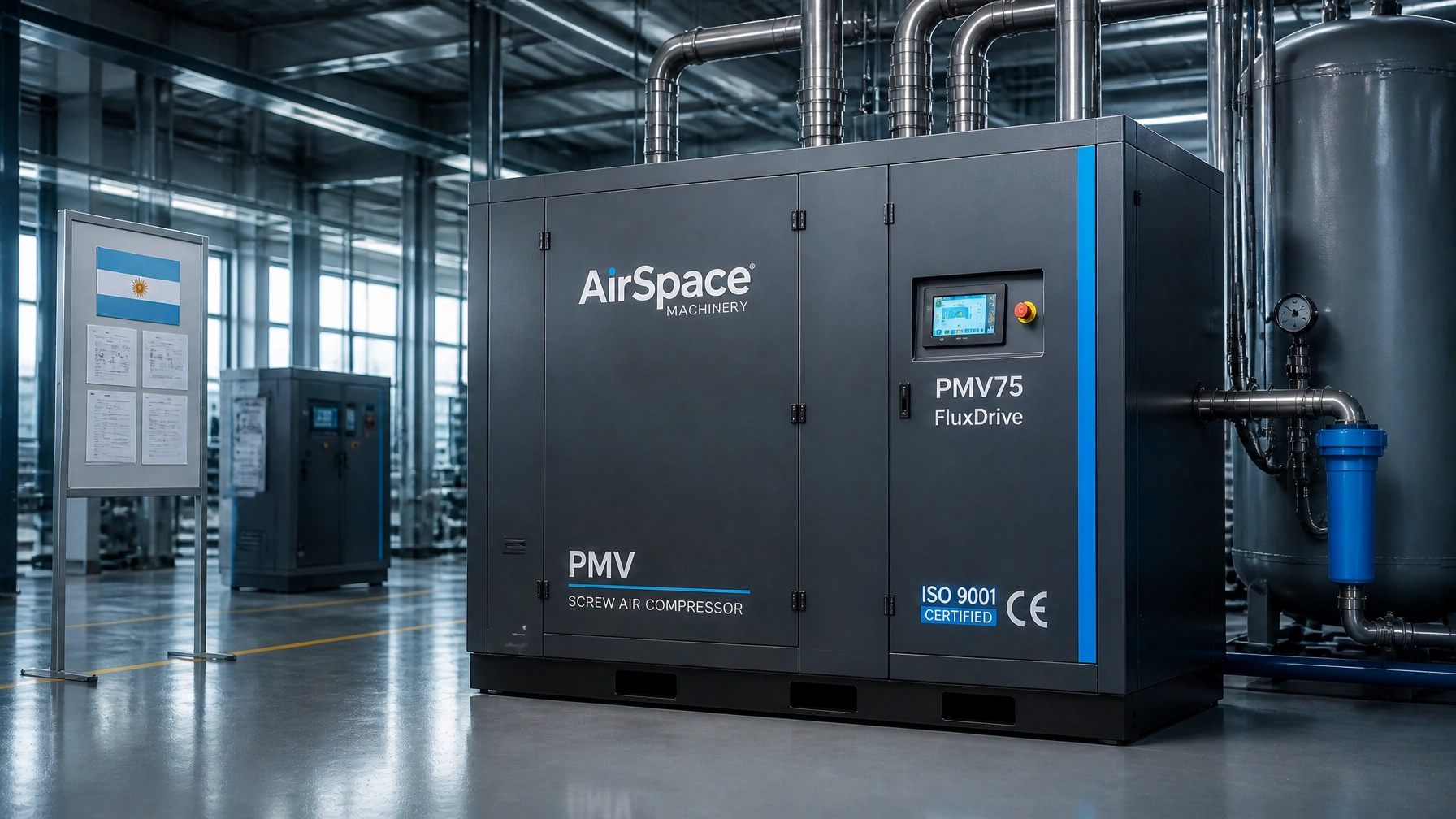
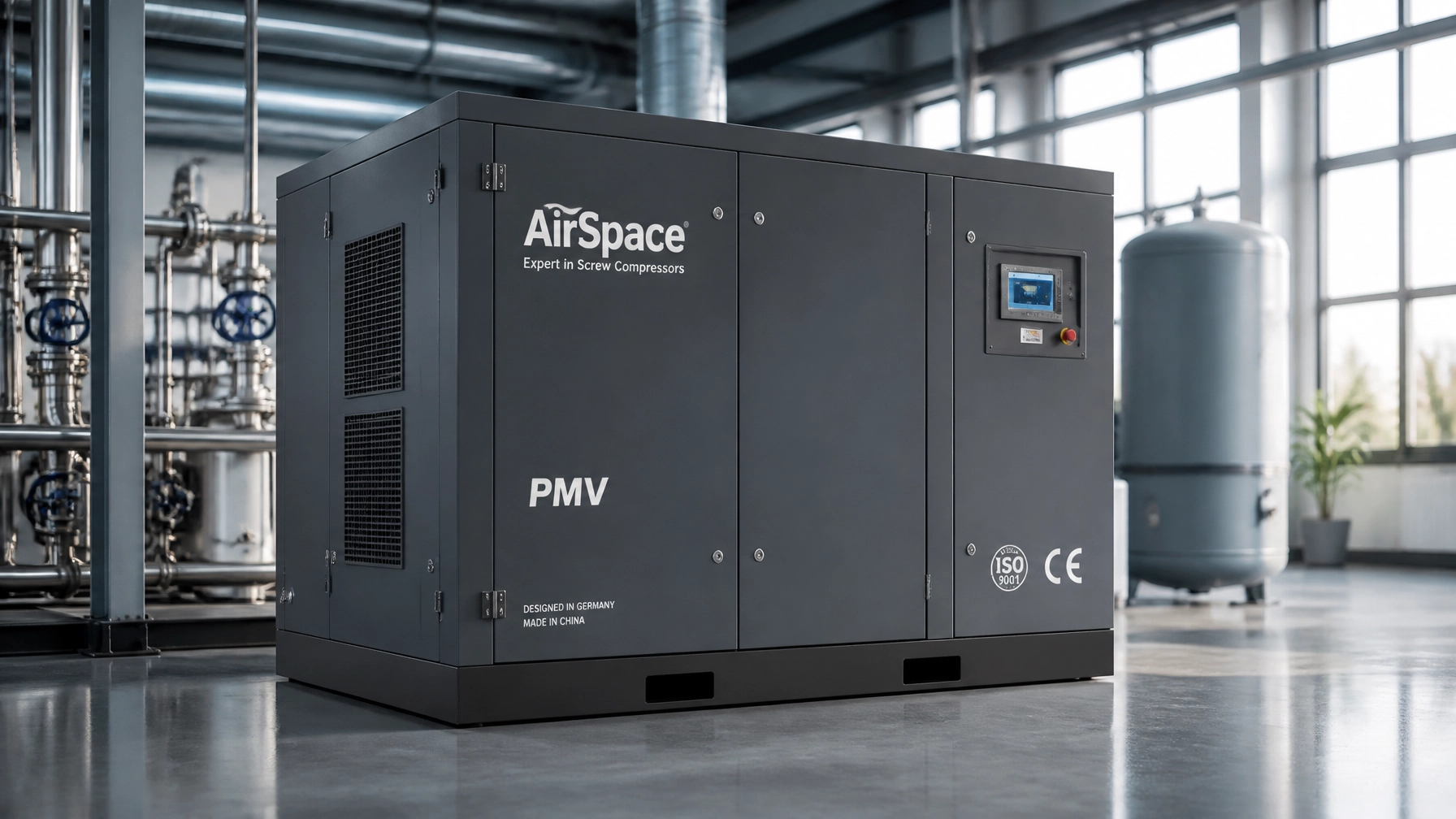
Engineering freedom begins with simplicity. AirSpace Machinery recommended the removal of all five legacy units. In their place, we installed two 150HP AirSpace PMV (Permanent Magnet Variable Frequency) screw air compressors in a centralized configuration.
These units are built to handle the rugged environment of a metal processing plant. The PMV technology allows the motor speed to match the air demand perfectly, down to 1% increments. If the finishing line only needs 50% of the air capacity, the motor only consumes approximately 50% of the power. This eliminates the 35% Energy Delta often found in legacy setups.

THE HARD STATS: A DATA-DRIVEN RECOVERY
The following table outlines the measurable shift in performance metrics following the installation of the AirSpace system.
Performance Metric | Legacy 5-Unit System | New 2-Unit PMV System | Net Benefit
Annual Electricity Use | 1,800,000 kWh | 1,170,000 kWh | 630,000 kWh Saved
Electricity Cost (0.106 USD/kWh) | 191,000 USD | 124,000 USD | 67,000 USD Saved
Annual Maintenance Cost | 15,000 USD | 5,000 USD | 10,000 USD Saved
Rental & Emergency Repairs | 10,000 USD | 0 USD | 10,000 USD Saved
Heat Recovery Credit | 0 USD | 35,000 USD | 35,000 USD Recovered
Total Annual Operating Cost | 216,000 USD (Core) | 94,000 USD (Core) | 122,000 USD Saved
The 67,000 USD in electricity savings is a direct result of the PMV technology. By eliminating the unload state, the plant stopped paying for energy they weren't using. Furthermore, the centralized control system ensures that the two units work in harmony. During low-demand periods, only one unit runs at its peak efficiency point, while the second unit remains in standby, ready to assist within seconds if demand spikes.
THE FOURTH UTILITY CONCEPT: RECOVERING WASTE HEAT
In the midwestern US, facility heating is a significant expense for at least six months of the year. Standard air compressors convert approximately 90% of their electrical input into heat. In the legacy system, this heat was vented out of the roof, effectively throwing money into the atmosphere.
As part of the AirSpace installation, we implemented a Fourth Utility strategy. We integrated a heat recovery system that captures the thermal energy from the compressor's oil cooling circuit. This recovered heat is now piped into the facility's air handling units, providing space heating for the primary finishing floor.
This single move recovered 35,000 USD in annual natural gas and heating costs. It transformed the compressor from an energy drain into a multi-functional utility. This is the core of ISO 8573-1 Class 0 Integrity, not just in air purity, but in systemic efficiency.

RELIABILITY AND MAINTENANCE: REDUCING THE HEADACHE
Maintenance in a five-compressor shop is a logistical nightmare. Different filter sizes, different oil types, and varying belt tensions meant the maintenance team was always playing catch-up.
The two-unit AirSpace system simplified this to a single schedule. Because PMV motors do not have the high-current "inrush" spikes associated with starting a fixed-speed motor, the mechanical stress on the screw airend and bearings is significantly reduced. This soft-start capability extends the life of the equipment and reduces the probability of a field failure.
With a 99.9% uptime guarantee, the plant was able to cancel their standing contract with a local rental agency, immediately saving 10,000 USD per year. The stability of the AirSpace units also improved the finish quality of the steel. Consistent pressure (within 0.1 bar of the set point) means that pneumatic tools and coating sprayers operate exactly as designed, reducing product waste.
ROI BREAKDOWN AND THE 22-MONTH PAYBACK
For the procurement manager and the board, the most important figure is the payback period. The total project cost, including the two 150HP PMV units, the centralized piping, and the heat recovery integration, was approximately 224,000 USD.
- Annual Operational Savings: 87,000 USD (Power + Maintenance + Rental)
- Annual Thermal Recovery: 35,000 USD
- Total Annual Benefit: 122,000 USD
By dividing the total investment by the annual benefit, the facility reached its break-even point in just under 22 months. Beyond that point, the 122,000 USD becomes pure bottom-line profit every year for the lifespan of the equipment.

CONCLUSION: THE AIRSPACE ADVANTAGE
This case study proves that compressed air should not be viewed as a static expense, but as a manageable utility. By moving away from legacy brands and fragmented systems toward a china made screw air compressor solution from AirSpace Machinery, industrial plants can recover significant capital.
The 35% Energy Delta is real. The Heat Tax is optional. The Industrial Tax on inefficient air is a choice.
If your facility is currently running multiple mismatched units and facing rising energy costs, it is time to evaluate a centralized PMV approach. AirSpace Machinery brings 20 years of engineering excellence to every configuration, ensuring that your air system supports your production rather than draining your profits.
FREQUENTLY ASKED QUESTIONS
Question: How does PMV technology handle the dusty environment of a steel plant?
Answer: AirSpace PMV units utilize a high-protection-grade housing (IP55 or higher) and advanced heavy-duty air filtration. The permanent magnet motors are typically oil-cooled or fully enclosed, preventing metallic dust from interfering with the internal magnetic fields.
Question: Why use two 150HP units instead of one large 300HP unit?
Answer: Redundancy and efficiency. With two units, you have 50% backup capacity if one unit requires service. Additionally, during low-demand shifts, a single 150HP unit can run at its most efficient speed, whereas a 300HP unit might be forced to run at the very bottom of its range, where efficiency begins to drop.
Question: Is heat recovery difficult to install on an existing building?
Answer: It depends on the proximity of the compressor room to the areas needing heat. In most industrial plants, the ductwork is straightforward. AirSpace provides the heat exchange modules as part of the compressor package, making the plumbing a standard mechanical task.
Question: What is the expected lifespan of an AirSpace PMV screw air compressor?
Answer: With proper maintenance according to our engineering standards, the high-tier airends are designed for over 50,000 hours of operation. The permanent magnet motors are even more durable, as they lack the bearings and windings that typically fail in standard induction motors.
Question: Can I monitor the 122,000 USD savings in real-time?
Answer: Yes. Our units come equipped with smart controllers that track power consumption and air output. When integrated with a building management system, you can see the 35% Energy Delta in your weekly reports.
For more information on high-efficiency solutions, explore our dedicated 16-bar fiber laser compressors (https://www.chinacompressor.org/dedicated-16-bar-fiber-laser-compressors-vs-standard-shop-air-which-is-better-for-your-finish-quality) or view our full range of variable frequency systems (https://www.chinacompressor.org/category/variable-frequency). You can also learn about our commitment to quality on our about page (https://www.chinacompressor.org/about).
AUTHOR BOX
Penny Winston
Technical Writer at AirSpace Machinery
Penny is an expert in industrial efficiency, focusing on the 35% Energy Delta and the Fourth Utility Concept. With a background in technical communication and industrial systems, she helps facility managers navigate the transition to ISO 8573-1 Class 0 Integrity. Connect with Penny on LinkedIn to discuss your next air system upgrade.
Reviewed by Engineering
📅 Last updated:
⚡ Is Your Factory Bleeding Cash?
Most fixed-speed compressors waste $3,600/year in "Unload Tax." Test your waste level in 30 seconds.
RUN THE ROI TEST →Ready to See How Much Your Facility Can Save?
Fill out the form below for a Free Energy Assessment.