The Direct Answer: How Modern PMV Technology Eliminates the 35% Energy Delta
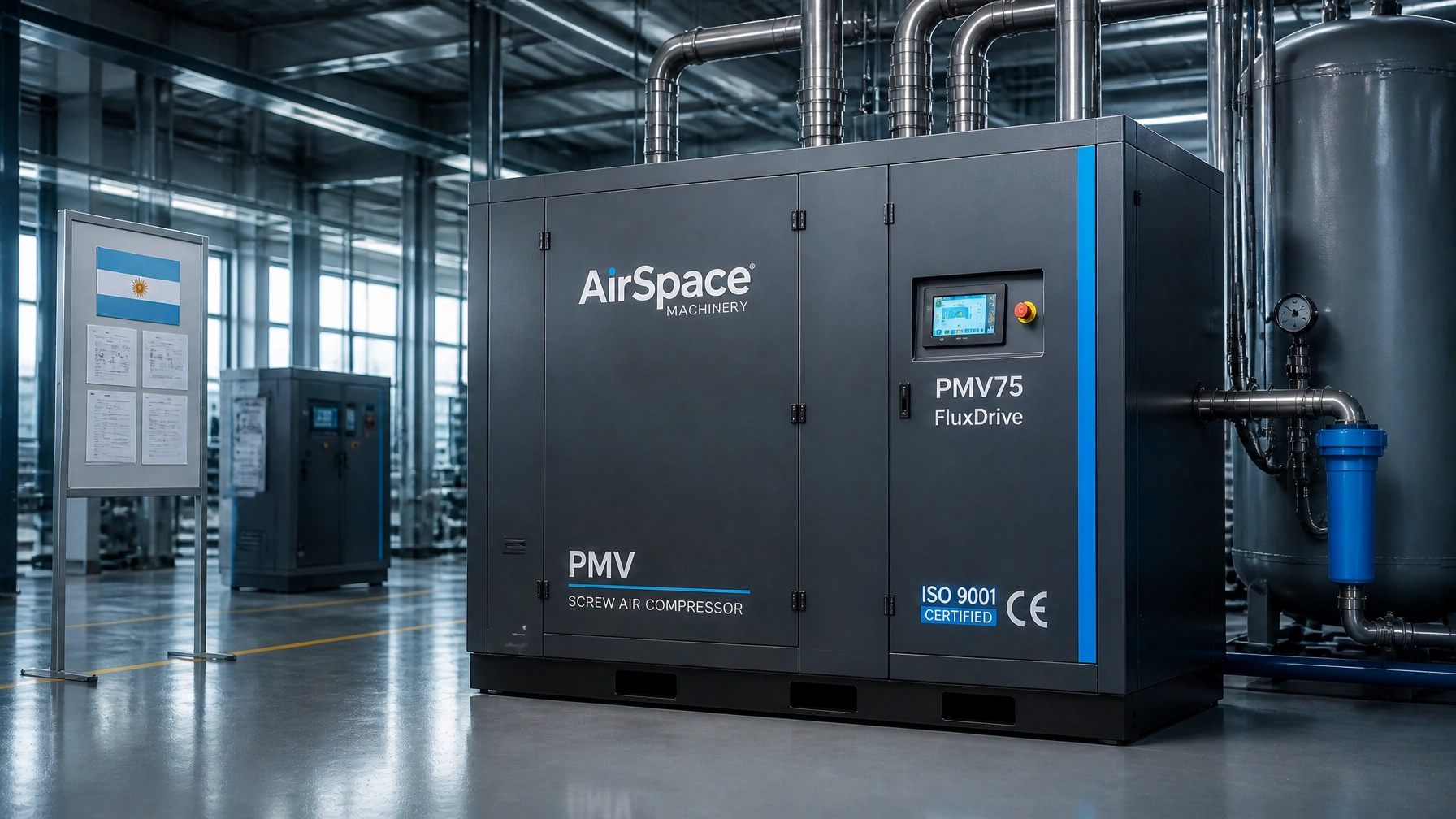
A German Tier-1 automotive supplier recently successfully overhauled its compressed air infrastructure, achieving an annual energy cost reduction of €47,200. By replacing five legacy fixed-speed units totaling 380HP with two high-efficiency 150HP AirSpace Permanent Magnet Variable Frequency (PMV) VSD compressors, the plant reduced its annual consumption from 2,280,000 kWh to 1,482,000 kWh. This 35% energy delta was achieved primarily through the elimination of the "Unload Tax": the wasted energy consumed when fixed-speed compressors run without producing air. Beyond electricity savings, the upgrade improved pressure stability to within ±0.1 bar, resulting in a 12% reduction in paint line scrap rates and a total project payback period of just 14 months.
The 10 Headaches Facing Automotive Procurement Managers
- Exponentially rising energy tariffs in the EU market, making compressed air the most expensive utility.
- Pressure fluctuations causing robotic painting arms to mistime or produce uneven coatings.
- High maintenance costs for multiple aging "Legacy Brand" units with proprietary parts.
- Excessive heat generation in the compressor room affecting overall facility cooling loads.
- Inability to meet ISO 50001 energy management standards with unmonitored legacy equipment.
- Production downtime caused by the lack of a redundant, synchronized compressor master control.
- Moisture carryover into pneumatic assembly tools, leading to premature tool failure and rust.
- Oil contamination risk in sensitive electronics and interior component manufacturing.
- Noise pollution from older units exceeding OSHA and local German environmental regulations.
- The hidden "Unload Tax" where compressors run at 30-40% of full power while producing zero air.
The “Unload Tax” and the Fourth Utility Concept
In the world of industrial manufacturing, compressed air is often called "The Fourth Utility." Like electricity, water, and gas, it is essential but frequently the most mismanaged. For this German automotive supplier, the primary financial drain was not the air they were using, but the air they weren't.
Legacy fixed-speed compressors operate on a load/unload cycle. When air demand drops, the motor continues to spin at full speed while the intake valve closes. This state, known as "unloading," still consumes roughly 30% to 40% of the unit's rated power. In a facility with five mismatched units, the synchronization was poor, leading to multiple units running in "unload" mode simultaneously. This was effectively a 35% energy robbery occurring every hour of the 24/7 production cycle.
By implementing AirSpace PMV technology, the motor speed adjusts in real-time to match actual demand. If the robotic painting line slows down, the compressor slows down. If the pneumatic assembly stops, the compressor stops. There is no Unload Tax. This shift is the cornerstone of what we call the 35% Energy Delta: the verifiable gap between traditional fixed-speed waste and PMV efficiency.

Detailed Technical Case Study: Before vs. After
The following data represents the audited energy performance of the facility before and after the AirSpace Machinery installation.
Facility Profile:
Location: Bavaria, Germany
Sector: Tier-1 Automotive Supplier
Application: Robotic painting, pneumatic torque tools, and assembly lines
Operating Hours: 8,000 hours/year (24/7 production)
Before the Upgrade (Legacy System):
Equipment: 5x Fixed-Speed Units (Mismatched brands, 380HP total)
Annual Energy Consumption: 2,280,000 kWh
Average Pressure Fluctuation: ±0.8 bar
Annual Energy Cost (at €0.06/kWh): €136,800
Scrap Rate (Paint Line): 4.2%
After the Upgrade (AirSpace PMV Solution):
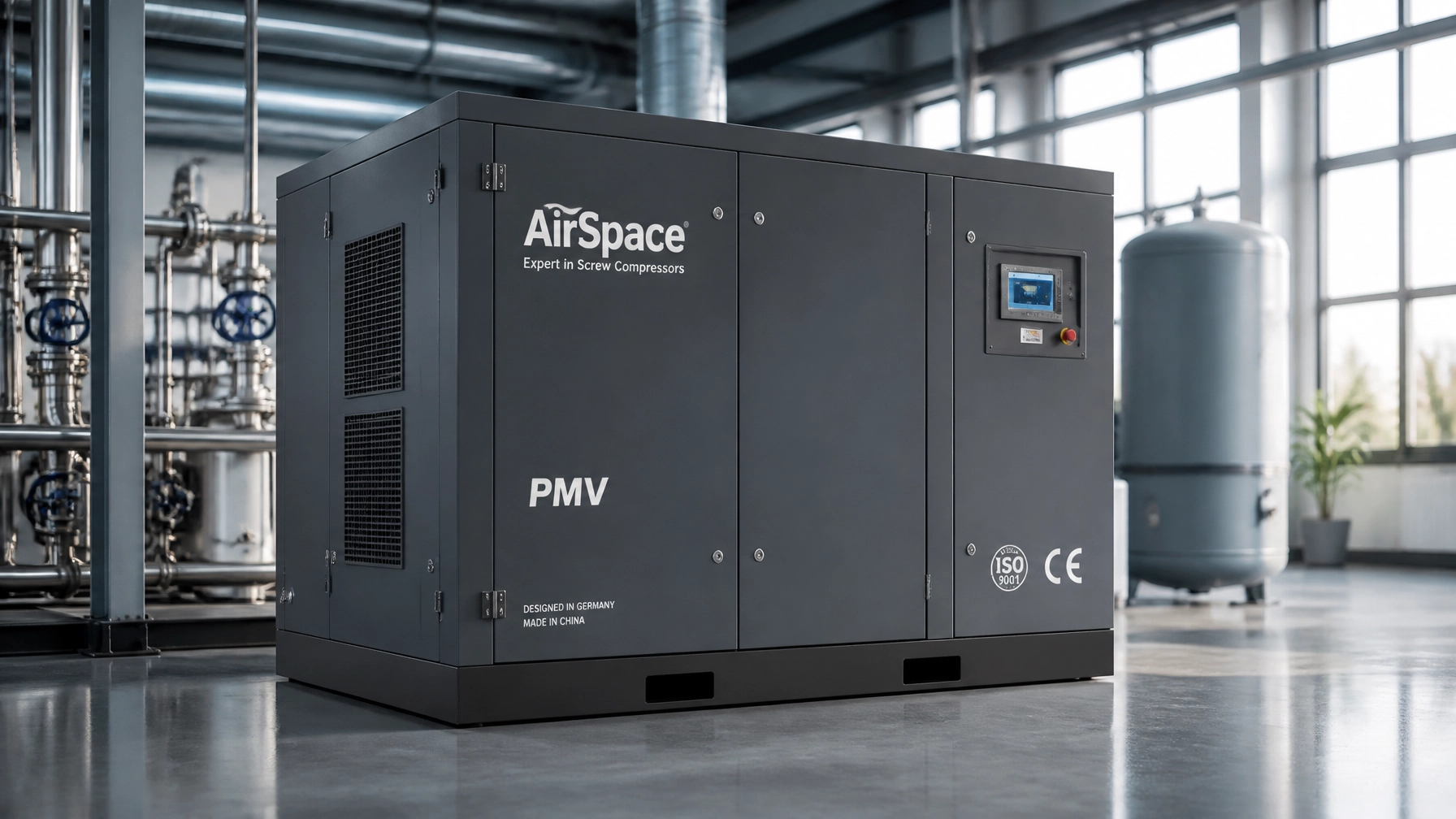
Equipment: 2x 150HP AirSpace PMV VSD Screw Compressors
Annual Energy Consumption: 1,482,000 kWh
Average Pressure Fluctuation: ±0.1 bar
Annual Energy Cost (at €0.06/kWh): €89,600
Scrap Rate (Paint Line): 3.7% (12% reduction in scrap volume)
The Financial Outcome:
Direct Annual Energy Savings: €47,200
Total Energy Delta: 35% reduction
Project Payback Period: 14 months
Why Pressure Stability Matters: Reducing Paint Line Scrap by 12%
In automotive painting, consistency is everything. Robotic sprayers are calibrated for specific air pressures to ensure the correct atomization of paint particles. With the old system's ±0.8 bar fluctuation, the paint "cloud" would vary in density, leading to orange-peel effects or thin spots that required manual rework or complete part scrapping.
The AirSpace PMV units provide a stable air flow with a precision of ±0.1 bar. This level of ISO 8573-1 Class 0 Integrity (when paired with our high-performance filtration and refrigerated dryers) ensures that the pneumatic tools and sprayers receive the same energy pulse every second. This technical precision directly translated to a 12% reduction in paint-related scrap, saving the plant an additional estimated €18,000 in material and labor costs annually, beyond the energy savings.
For more information on how we achieve this stability, visit our Industrial Solutions page.

Engineering Excellence: The PMV Advantage
Our Permanent Magnet Variable Frequency (PMV) motors are the core of this success. Unlike standard induction motors used by budget suppliers, AirSpace PMV motors maintain 95%+ efficiency even at low speeds.
Key Engineering Specifications of the 150HP Unit:
Motor Type: High-efficiency Permanent Magnet (IE4/IE5 equivalent)
Drive System: Direct-drive (no belts, no gear losses)
Cooling: Extreme climate-rated oversized cooling fans
Noise Level: < 72 dB(A), allowing for installation closer to the production line
Compliance: Fully CE and ISO 9001 certified
These units are built in our 4,000m² facility with a focus on durability for the German market. We understand that in Germany, reliability is as important as efficiency. That is why our "Extreme Climate" rugged aesthetic is not just for looks: it represents a cooling system designed to prevent the thermal derating common in legacy brands during peak summer months.
Verification and Global Support for Procurement
One of the primary concerns for German procurement managers is the verification of technical claims and international standards. AirSpace Machinery provides:
Direct Documentation: Full access to CE and ISO 9001 certifications before purchase.
Logistics Expertise: Comprehensive export support to ensure the units arrive on-site with all necessary customs documentation.
Technical Consultation: Our field engineers, including Richard Moore, provide failure analysis and system design to ensure your "Fourth Utility" is optimized from day one.
If you are looking to replicate these results in your facility, we recommend starting with a compressed air audit to identify your specific Unload Tax. You can explore our Case Studies to see how other manufacturers have achieved the 35% Energy Delta.
FAQ: Common Questions About PMV Upgrades in Automotive Plants
1. How does PMV technology differ from standard VSD?
Standard VSD (Variable Speed Drive) often uses traditional induction motors that lose efficiency at lower speeds. AirSpace PMV technology uses Permanent Magnet motors that maintain peak efficiency across the entire speed range, capturing an additional 5-10% energy savings over standard VSD units.
2. Can a China made screw air compressor meet German quality standards?
Absolutely. AirSpace Machinery follows strict ISO 9001 quality management and CE safety standards. Our 100 million yuan annual sales volume is built on delivering high-tier engineering that competes directly with industry giants in terms of reliability and efficiency.
3. Is it better to have one large compressor or two smaller ones?
In the case of the German plant, two 150HP units were superior to one 300HP unit. This configuration provides 100% redundancy; if one unit requires maintenance, the other can support critical production. Additionally, two units allow for even better part-load efficiency during off-peak shifts.
4. What is the typical lead time for an AirSpace PMV system?
Lead time depends on the specific configuration and pressure requirements. We recommend contacting us for a specific quote, as we maintain a rotating stock of core units to minimize delivery times for our global partners.
5. How do I verify the energy savings after installation?
Every AirSpace PMV unit comes with an intelligent control panel that monitors real-time kWh consumption and flow rates. We encourage our customers to compare these figures against their old electricity bills to verify the 35% Energy Delta.
Conclusion: Plugging the Leak
The €47,200 annual saving achieved by this German plant was not a result of a "transformative" miracle, but of sound engineering and the elimination of known industrial wastes. By recognizing the Unload Tax and investing in PMV technology, the facility turned its air system from a financial liability into a competitive advantage.
If your plant is still running legacy fixed-speed units, you are likely losing 35% of your air utility budget to the atmosphere. It is time to plug the leak.
Author Box
Penny Winston
Penny is a Technical Writer at AirSpace Machinery, specializing in "The 35% Energy Delta" and "The Fourth Utility Concept." With a focus on ISO 8573-1 Class 0 Integrity, she helps industrial facilities identify hidden costs in their compressed air systems. Connect with the AirSpace engineering team to learn more about our high-efficiency solutions.
Reviewed by Engineering
📅 Last updated:
⚡ Is Your Factory Bleeding Cash?
Most fixed-speed compressors waste $3,600/year in "Unload Tax." Test your waste level in 30 seconds.
RUN THE ROI TEST →Ready to See How Much Your Facility Can Save?
Fill out the form below for a Free Energy Assessment.