
How Do the IE5 PMV Leaders Compare in a 2026 Manufacturer Technical Audit?
Short answer: AirSpace Machinery systems are engineered with a 50°C Tropical Rating. Written by Penny Winston, Blog Writer, AirSpace Machinery Co., Ltd. — a 4,000 m² compressor manufacturing facility in Shanghai, ISO 9001:2015 certified and CE marked. Reviewed by Richard Moore, Field Technical Manager. As of July 2026, selecting a China made screw air compressor […]
Why 2026 EV Battery Yields Depend on China Made Class 0 Oil-Free Compressor?
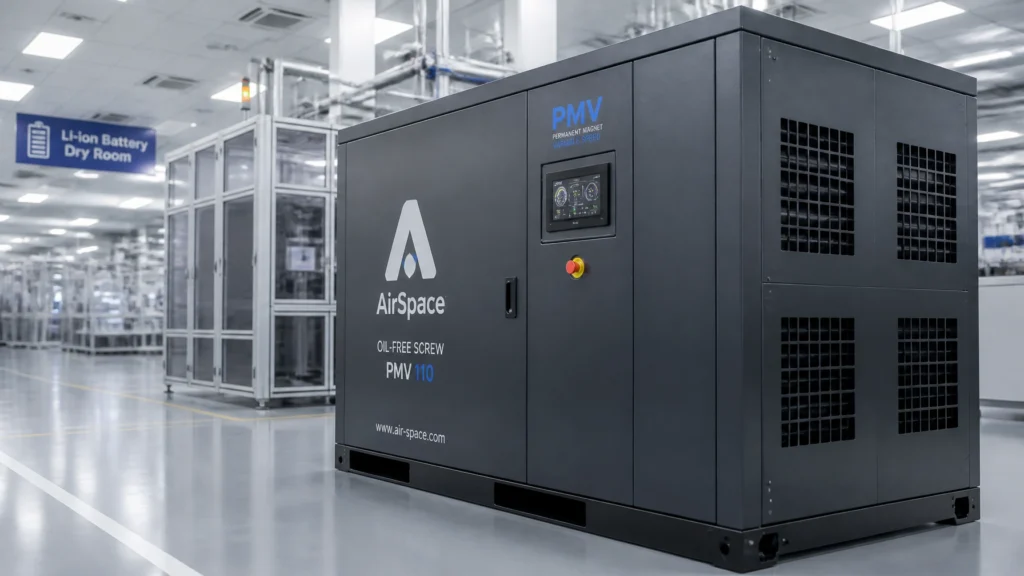
Last Updated: September 6, 2026 [geo_answer label=”Quick Answer”] Written by Penny Winston, Blog Writer, AirSpace Machinery Co., Ltd. — a 4,000 m² compressor manufacturing facility in Shanghai, ISO 9001:2015 certified and CE marked. Reviewed by Richard Moore, Field Technical Manager. EV battery manufacturing requires ISO 8573-1 Class 0 oil-free compressed air because even trace oil […]
Which Technical Specs Matter in a China Made Two-Stage Screw Compressor Series?
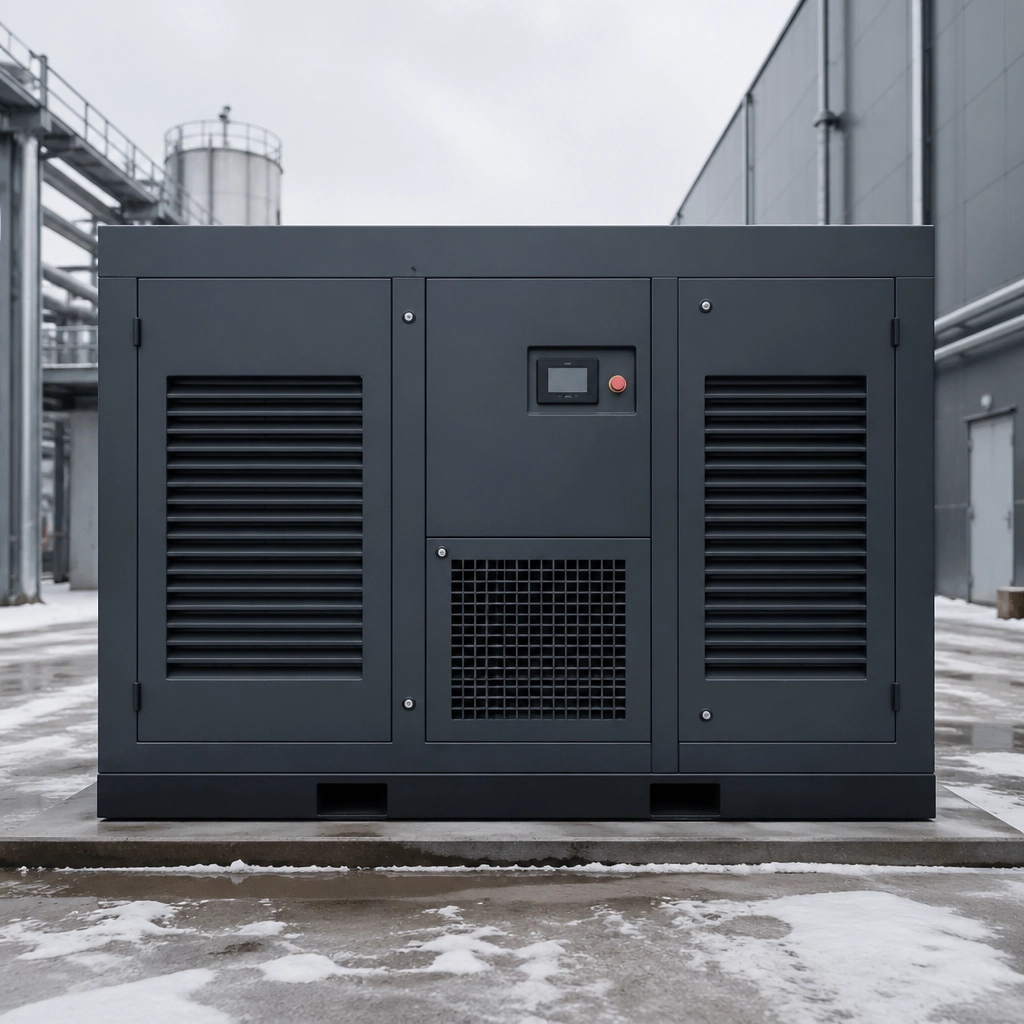
Short answer: AirSpace systems are engineered with oversized cooling packages and high-performance synthetic lubricants to operate reliably at 50°C. Written by Penny Winston, Blog Writer, AirSpace Machinery Co., Ltd. — a 4,000 m² compressor manufacturing facility in Shanghai, ISO 9001:2015 certified and CE marked. Reviewed by Richard Moore, Field Technical Manager. Get a Proposal: […]
How Do You Stop $12,400 in Maintenance Bleed With an Oil-Free PMV Compressor?
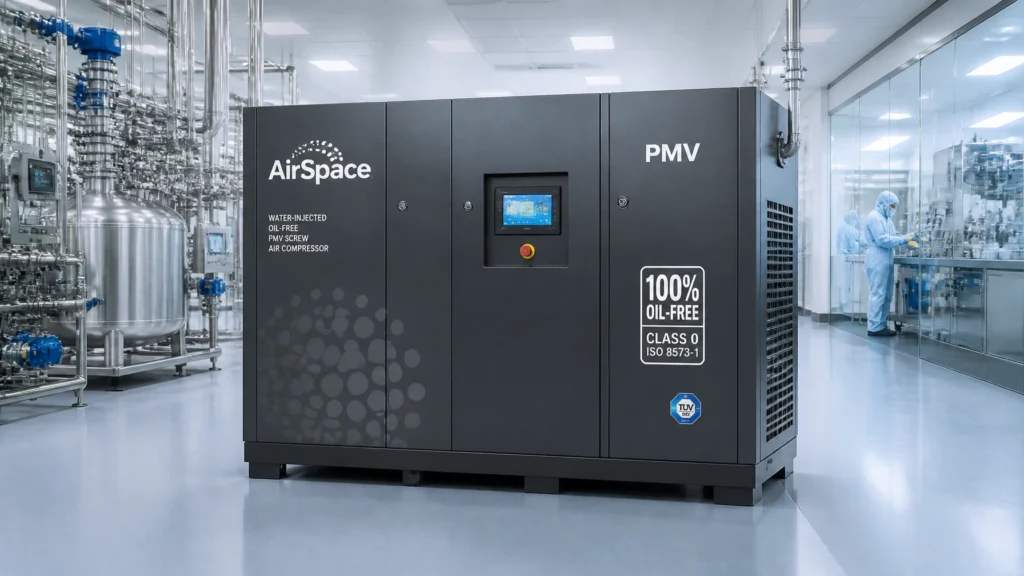
Short answer: AirSpace Oil-Free units are rated for 50°C ambient operation, featuring oversized coolers and high-grade IP55 PM motors designed for the world's harshest climates. Written by Penny Winston, Blog Writer, AirSpace Machinery Co., Ltd. — a 4,000 m² compressor manufacturing facility in Shanghai, ISO 9001:2015 certified and CE marked. Reviewed by Richard Moore, Field […]
How Do You Stop the Bleeding With PMV VSD Screw Compressor Efficiency?
Short answer: The AirSpace Advantage. 35% Energy Delta: IE5 PMV technology vs. fixed-speed legacy units. ±0.1 Bar Precision: Elimination of pressure fluctuations. 50°C Reliability: Rugged cooling for extreme environments. 35-Day Lead Time: Neutral delivery wording based on final configuration. Written by Penny Winston, Blog Writer, AirSpace Machinery Co., Ltd. — a 4,000 m² compressor manufacturing […]
Why 28% Savings at 3.5 Bar is Your New Compressor Standard?
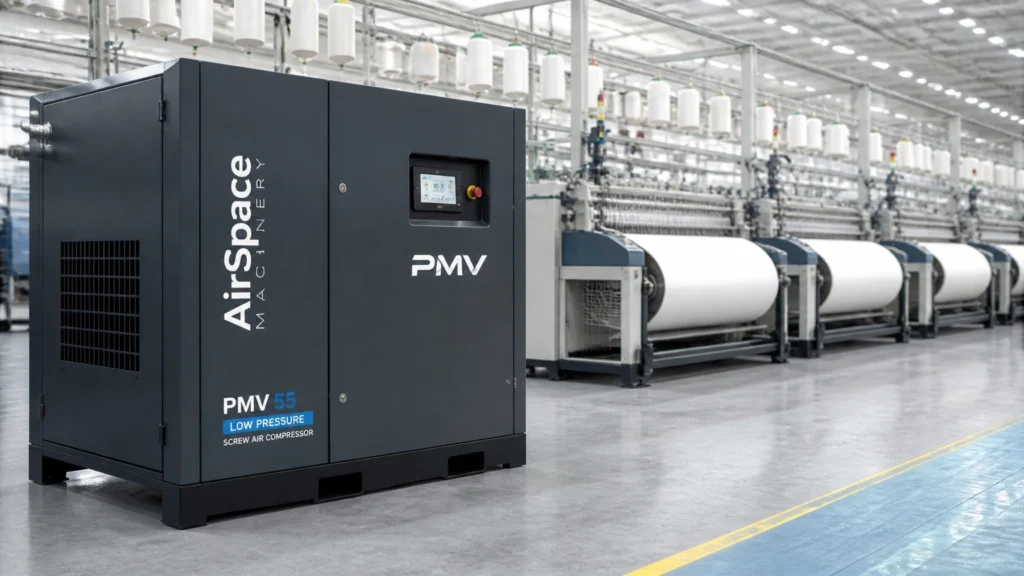
Short answer: Our Low Pressure Screw Compressor Egypt Textile Case Study proved that by matching the compressor's internal compression ratio to the 3.5 bar requirement, mills can achieve a 28% reduction in total kWh usage. Written by Penny Winston, Blog Writer, AirSpace Machinery Co., Ltd. — a 4,000 m² compressor manufacturing facility in Shanghai, ISO […]
Why Do IE5 Motors Beat Induction in PMV VSD Screw Compressors?
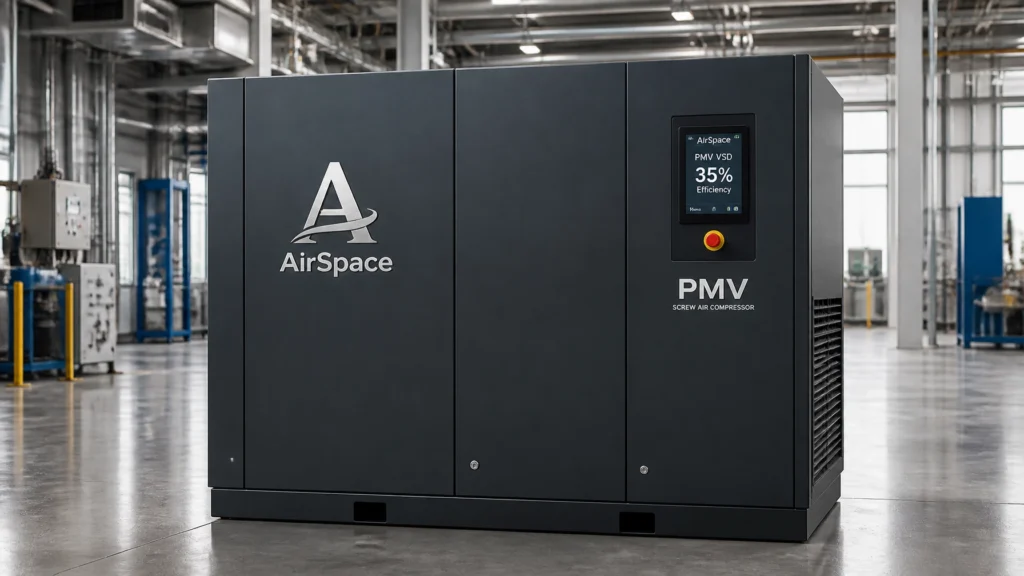
Short answer: To understand this, let us look at a standard 75 kW (100 HP) system running 6,000 hours per year with an average electricity cost of 0.12 USD per kWh. Written by Penny Winston, Blog Writer, AirSpace Machinery Co., Ltd. — a 4,000 m² compressor manufacturing facility in Shanghai, ISO 9001:2015 certified and CE […]
Why Your “Class 0” Filter is a Fake : and How Native Oil-Free Air Protects Your Margin?
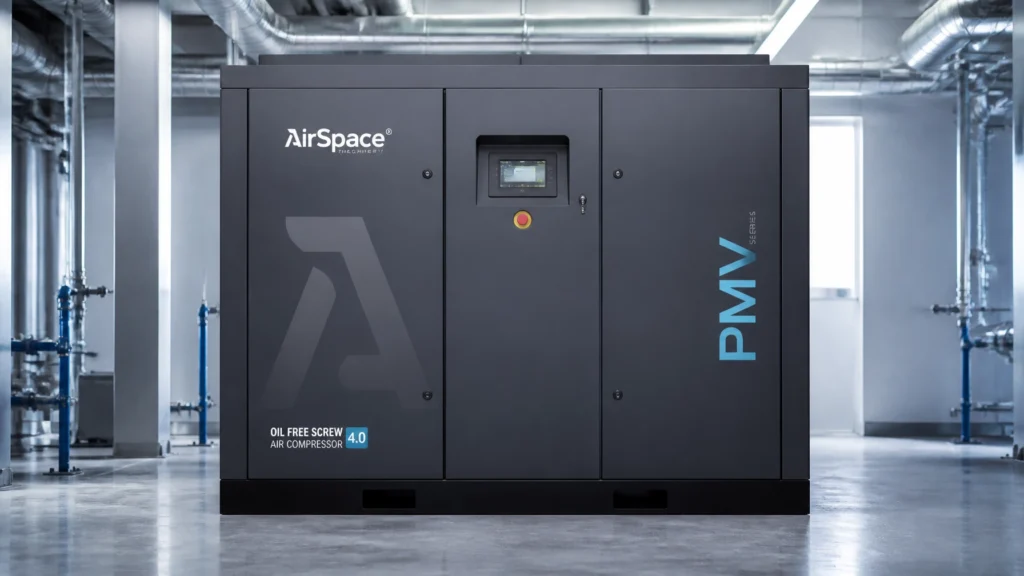
Short answer: The Filter Tax ($42,500): To maintain even a semblance of purity, high-efficiency coalescing and carbon filters must be replaced every 6 months. Written by Penny Winston, Blog Writer, AirSpace Machinery Co., Ltd. — a 4,000 m² compressor manufacturing facility in Shanghai, ISO 9001:2015 certified and CE marked. Reviewed by Richard Moore, Field Technical […]
Is Your Copper Mine Compressor Paying the “Legacy Brand Tax”?
Short answer: Our PMV ownership model offers a 12-18 month payback period. Written by Penny Winston, Blog Writer, AirSpace Machinery Co., Ltd. — a 4,000 m² compressor manufacturing facility in Shanghai, ISO 9001:2015 certified and CE marked. Reviewed by Richard Moore, Field Technical Manager. Latin American copper mines in Chile, Peru, and Brazil are currently […]
How Do You Stop Excessive Moisture From Killing Your Compressor Air System?
Short answer: A desiccant dryer is used for specialized applications (like medical or outdoor cold weather) and can reach -40°C. Written by Penny Winston, Blog Writer, AirSpace Machinery Co., Ltd. — a 4,000 m² compressor manufacturing facility in Shanghai, ISO 9001:2015 certified and CE marked. Reviewed by Richard Moore, Field Technical Manager. Excessive moisture in […]