Textile mills are among the most air-hungry manufacturing facilities on the planet. They are also the most frequently overcharged. For decades, factory managers have been sold standard 7-bar or 10-bar air compressors for applications that only require 3.5 bar at the loom. This “Over-Compression Tax” is costing medium-sized mills upwards of $82,000 per year in wasted electricity.
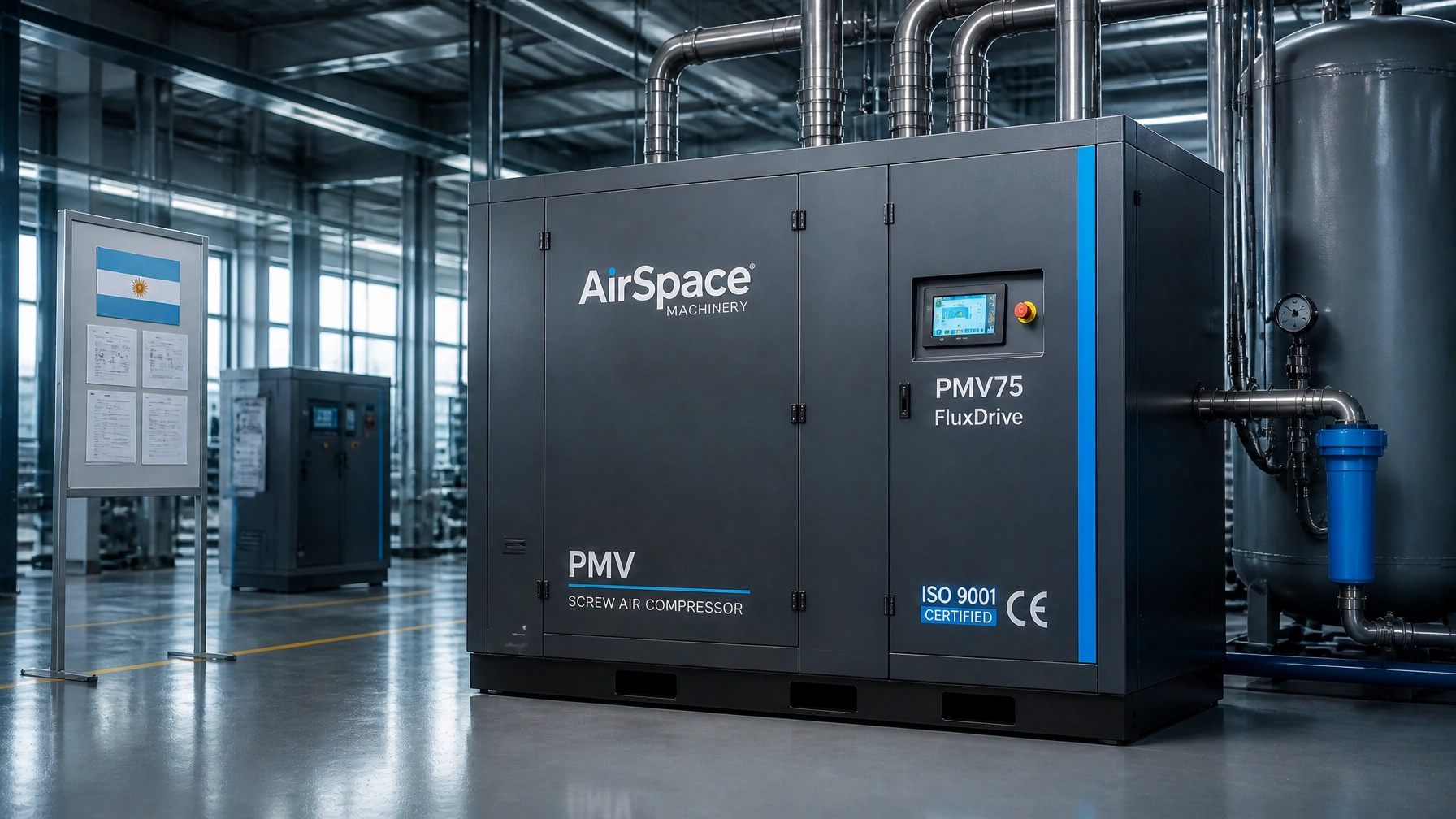
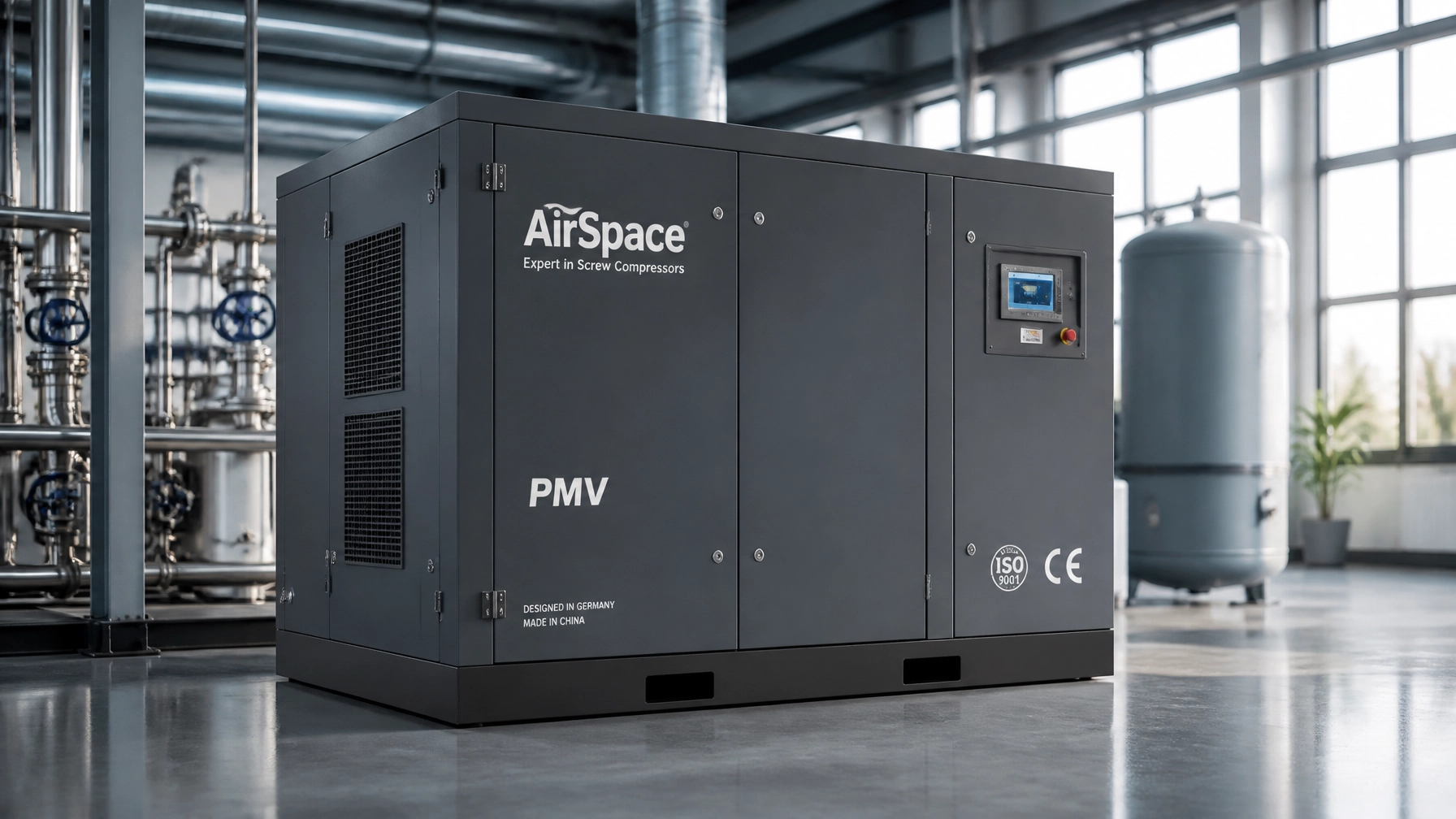
At AirSpace Machinery, we have redefined the textile air standard. By utilizing Permanent Magnet Variable Frequency (PMV) technology specifically engineered for low-pressure environments (2.5 to 5 bar), we have demonstrated a 28% energy delta compared to legacy fixed-speed systems.
The Low Pressure Opportunity: Why 3.5 Bar is the Sweet Spot
Most air-jet looms, such as those from major global manufacturers, require a supply pressure between 2.5 and 3.5 bar at the main nozzle. However, because standard industrial compressors are built to deliver 7-10 bar, mills are forced to compress air to a high pressure only to “throttle it down” through regulators at the loom.
This is a thermodynamic disaster. The engineering math is simple: every 1 bar (14.5 psi) of over-compression equals a 7% increase in energy consumption. If your compressor is pushing 7 bar but your loom only needs 3.5 bar, you are effectively throwing away 24.5% of your power bill before the air even reaches the machine.
Our Low Pressure Screw Compressor Egypt Textile Case Study proved that by matching the compressor’s internal compression ratio to the 3.5 bar requirement, mills can achieve a 28% reduction in total kWh usage. We don’t just regulate the air; we optimize the entire air-end for low-pressure high-flow performance.
The 28% Energy Delta vs. Legacy Brand Claims
While some budget suppliers and industry giants claim 20% or even 25% savings, AirSpace Machinery hits a 28% benchmark through three specific engineering advantages:
- Optimized Airend Volume Ratio: Standard compressors use rotors designed for high-pressure ratios. When run at 3.5 bar, they operate outside their efficiency curve. AirSpace low-pressure rotors are physically larger with a specific length-to-diameter ratio tuned for high-volume, low-pressure flow.
- IE5 Permanent Magnet Motors: We utilize ultra-efficient PM motors that maintain 96%+ efficiency even at partial loads. Legacy induction motors drop off significantly when the mill isn’t running at 100% capacity.
- The Unload Tax Elimination: Traditional fixed-speed compressors continue to consume 30-40% of their full power even when they aren’t producing air (the “Unload Tax”). Our PMV systems stop the motor or slow it down instantly, effectively zeroing out this waste.

Tropical Resilience: The 55°C Ambient Rating
Textile mills in Southeast Asia, Egypt, and India face a unique challenge: the “Heat Tax.” Most standard compressors are rated for 40°C ambient temperatures. In a humid textile mill where the ambient temperature often hits 45°C, those compressors must derate their performance by 15-20% or face frequent thermal shutdowns.
AirSpace Machinery systems are engineered with a 55°C ambient rating. We use oversized coolers and high-grade synthetic lubricants to ensure that your “Fourth Utility”: compressed air: remains stable even in the most extreme equatorial climates. This ensures 99.9% uptime, preventing the costly “thread breakage” events that occur when a compressor trips and pressure drops.
Fabric Quality and Pressure Stability
In textile manufacturing, pressure fluctuation is the enemy of fabric consistency. A swing of ±0.5 bar in the air line can lead to inconsistent yarn tension, weft insertion errors, and high reject rates.
Our PMV technology offers ±0.1 bar pressure stability. By continuously adjusting the motor speed in milliseconds, the system reacts to the opening and closing of thousands of loom nozzles simultaneously. This precision ensures that every meter of fabric produced meets ISO quality standards without the need for massive, expensive air receiver tanks.
35-Day Delivery vs. The 20-Week Industry Wait
In the current global supply chain, “Legacy Brands” often quote lead times of 12 to 20 weeks for specialized low-pressure units. For a mill manager, every week of waiting is another week of “Energy Robbery.”
AirSpace Machinery offers a 35-day factory-direct delivery for units up to 180HP. Combined with our 100 million yuan annual manufacturing capacity, we ensure that your ROI clock starts ticking months earlier than the competition. In many cases, the energy savings alone pay for the entire machine in less than 12 months.
Comparing the Real Costs
| Feature | Legacy Fixed-Speed (7 Bar) | Competitor VSD (5 Bar) | AirSpace PMV (3.5 Bar) |
|---|---|---|---|
| Annual Energy Cost | $285,000 | $228,000 | $203,000 |
| Energy Savings | 0% (Baseline) | 20% | 28% |
| Pressure Stability | ±0.7 Bar | ±0.3 Bar | ±0.1 Bar |
| Heat Tolerance | 40°C (Derates) | 45°C | 55°C |
| Payback Period | N/A | 18-24 Months | <12 Months |
For a deeper dive into the math, see our PMV vs Fixed Speed Real Cost Comparison.
Conclusion: Secure Your Energy Future
The textile industry is shifting toward “The Fourth Utility” concept: where air is treated with the same financial scrutiny as electricity and water. If you are still running 7-bar compressors for 3.5-bar looms, you are paying an “Unload Tax” and an “Over-Compression Tax” that is bleeding your bottom line.
By switching to a dedicated AirSpace low-pressure PMV system, you don’t just buy a machine; you secure a 28% energy delta that remains a competitive advantage for the next 15 years.
Get a Proposal
Textile mill managers can request a free energy assessment and a tailored PMV proposal by contacting our engineering team today. Lead times vary by configuration; standard 3.5 bar units typically ship within 35 days.
Author: Penny Winston
Penny Winston is a Technical Writer at AirSpace Machinery, specializing in “The 35% Energy Delta,” “The Fourth Utility Concept,” and ISO 8573-1 Class 0 Integrity. She helps industrial buyers navigate the transition from legacy fixed-speed systems to high-efficiency PMV technology.
Reviewed by Engineering
📅 Last updated:
⚡ Is Your Factory Bleeding Cash?
Most fixed-speed compressors waste $3,600/year in "Unload Tax." Test your waste level in 30 seconds.
RUN THE ROI TEST →Ready to See How Much Your Facility Can Save?
Fill out the form below for a Free Energy Assessment.