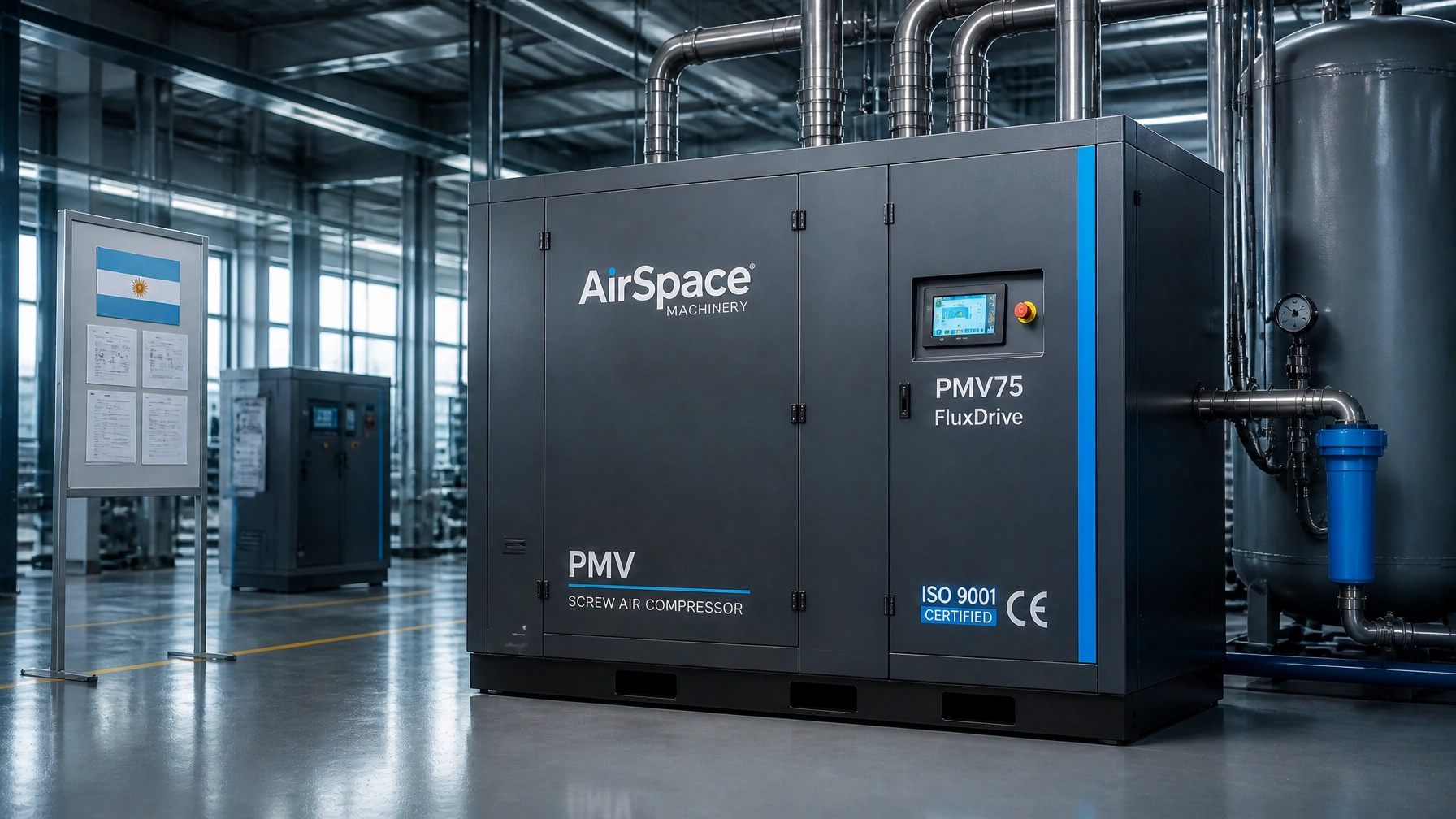
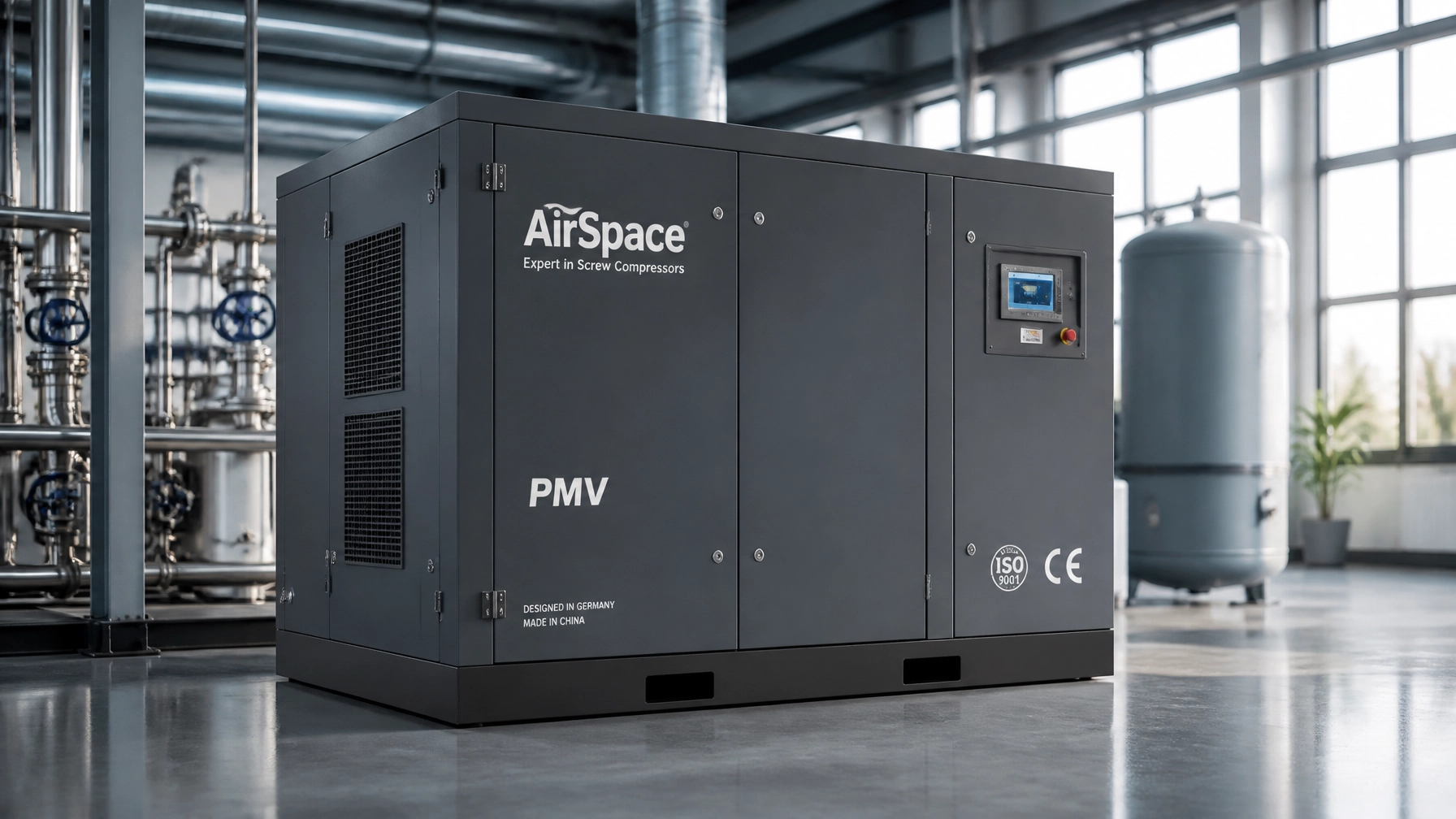
The direct answer to KSA market entry is simple: Without a valid SABER registration, your equipment will not leave the port. Saudi Arabia’s SABER platform is the mandatory online gateway for all regulated products, including industrial air compressors. To clear customs, you must secure two distinct certificates: the Product Certificate of Conformity (PCoC) for your specific model and the Shipment Certificate of Conformity (SCoC) for every individual consignment.
At AirSpace Machinery, we’ve handled the technical heavy lifting for the Middle East market for years. We understand that selling to Riyadh or Jubail isn’t just about shipping a box; it’s about navigating the SASO 2874:2018 energy efficiency standards and ensuring your equipment survives the Heat Tax of 45°C+ ambient temperatures.
SABER is the Only Gate into KSA
Since 2020, the SABER platform has replaced the old paper-based SASO CoC system. If you are a Saudi importer or an international manufacturer exporting a China made screw air compressor, you must embrace this digital reality.
🔴 No SABER registration = No customs clearance.
🔴 Incomplete documentation = Fines and re-export at your expense.
🔴 Wrong HS codes = Automatic rejection.
By 2026, the Saudi government is further tightening the integration between SABER, ZATCA (Zakat, Tax and Customs Authority), and Fasah (the customs clearance portal). Every air compressor, whether it’s an oil-free screw unit or a diesel-driven portable model, must be accounted for digitally before it even hits the water.
10 Industrial Buyer Headaches with KSA Exports
- HS Code Mismatch: Misclassifying a compressor as “general machinery” instead of HS 8414.80 causes port delays.
- The Heat Tax: Standard compressors overheating in Saudi’s 45°C+ summer heat.
- 50Hz/60Hz Confusion: Attempting to run 50Hz motors on Saudi’s 60Hz grid.
- Arabic Labeling: Customs rejecting units because safety labels are only in English.
- Expired PCoC: Forgetting that the Product Certificate must be renewed annually.
- Energy Efficiency (EER): Falling short of SASO 2874:2018 performance metrics.
- Lack of ISO 17025 Labs: Submitting test reports from unaccredited laboratories.
- Delayed SCoC: Failing to apply for the shipment certificate before the vessel arrives.
- VAT/ZATCA Alignment: Issues paying the required fees through the SABER wallet.
- Local Authorized Rep: Not having a valid Saudi Commercial Registration (CR) to act as the importer of record.
SABER vs SASO , What’s the Difference?
It’s easy to get lost in the alphabet soup of Saudi regulations. Here is the breakdown:
SASO (Saudi Standards, Metrology and Quality Organization) is the standards body. They are the ones who write the technical regulations, such as the safety requirements for electrical machinery and the energy efficiency benchmarks. They define the “what.”
SABER is the online platform where those rules are enforced. It is a web-based system designed to facilitate the issuance of conformity certificates. It is the “how.”
Think of it like this: SASO writes the law, and SABER is the digital border guard checking your ID. You need to satisfy both to gain entry.
Two Certificates You Need: PCoC and SCoC
The SABER system operates on a dual-certificate framework. You cannot have one without the other.
- PCoC (Product Certificate of Conformity)
This is a model-level certification. Once issued, it is valid for 1 year. It proves that a specific air compressor model (like our PMV series) complies with SASO technical regulations. You only need to do this once per year per model. - SCoC (Shipment Certificate of Conformity)
This is a per-shipment certificate. You must apply for an SCoC for every single invoice or container you send. The system verifies that the products in your shipment have a valid PCoC before it issues the SCoC.
Key Standards for Air Compressors in KSA
To pass the SABER technical review, your compressor must meet specific Saudi standards. AirSpace Machinery aligns our engineering with these global and regional benchmarks to ensure zero-friction exports.
🟢 SASO 2874:2018: This is the critical standard for energy efficiency. It sets the minimum performance levels and specific power requirements for air compressors. Our PMV (Permanent Magnet Variable Frequency) technology is specifically engineered to exceed these targets, delivering a 35% energy delta compared to legacy fixed-speed systems.
🟢 SASO IEC 60335: Covers the safety requirements for electrical equipment.
🟢 60Hz Electrical Configuration: Saudi Arabia operates on a 60Hz grid. We provide dedicated 380V/60Hz or 400V/60Hz configurations to prevent motor burnout and ensure compliance.
🟢 Arabic Documentation: All user manuals and safety labels must be provided in Arabic. This is a mandatory requirement for SASO compliance.
The SABER Registration Process Step-by-Step
Navigating the portal can be a 4-week marathon if you don’t have your paperwork in order. Here is the streamlined path we follow with our Saudi partners:
Step 1: Account Creation. The Saudi importer creates an account on the SABER portal and links their Commercial Registration (CR).
Step 2: Product Addition. The importer enters the product details using the 8-digit HS code (typically 8414.80 for screw air compressors).
Step 3: CAB Selection. Select an accredited Conformity Assessment Body (CAB) to review the technical file.
Step 4: Document Upload. This is where AirSpace provides the heavy lifting, test reports (ISO 1217), CE certificates, ISO 9001 documentation, and technical drawings.
Step 5: PCoC Issuance. Once the CAB approves, the PCoC is issued on the platform.
Step 6: SCoC Application. For each shipment, the importer uploads the commercial invoice and packing list. The SCoC is usually issued within minutes once the fees are paid.
SABER Compliance Summary Table
| Document Type | Scope | Validity | Cost Basis | Mandatory? |
|---|---|---|---|---|
| PCoC | Per Model / Model Family | 1 Year | SABER Fees + CAB Review | YES |
| SCoC | Per Shipment / Invoice | Single Use | Per Shipment Fee | YES |
| SASO 2874:2018 | Energy Efficiency | Ongoing | Testing & Labeling | YES |
| 60Hz Config | Technical Spec | Permanent | Engineering Delta | YES |
| Arabic Labels | Product Labeling | Permanent | Translation & Print | YES |
The Heat Tax: Engineering for the Saudi Climate
In the “Industrial Tax Series,” we often talk about the Heat Tax. In Saudi Arabia, ambient temperatures frequently exceed 45°C. Standard “budget” compressors designed for temperate climates will suffer from frequent high-temperature trips and rapid oil degradation.
AirSpace Machinery engineers our “Extreme Climate” series with oversized coolers and high-grade synthetic lubricants. When we submit our technical files for SABER certification, we include performance data that accounts for these extreme conditions, ensuring that your Fourth Utility, compressed air, remains stable when the grid is under maximum load.
Common Pitfalls and How to Avoid Them
The most expensive compressor is the one sitting in a customs warehouse. Avoid these common errors:
🔴 HS Code Inconsistency: Ensure the HS code on your SABER registration matches the one on your commercial invoice and bill of lading.
🔴 Incomplete Technical Files: Missing an ISO 1217 performance test report is an immediate red flag for CAB auditors.
🔴 Ignoring the 2026 Update: By 2026, even non-regulated products will require a more rigorous SCoC process. Stay ahead by certifying your full equipment range now.
🔴 No Local Presence: If you don’t have a Saudi-registered entity, you must work with a local distributor who can act as the applicant on the SABER platform.
How AirSpace Machinery Can Help
As a technical authority with over 20 years of engineering excellence, AirSpace Machinery is more than just a manufacturer. We are a compliance partner.
🟢 Pre-Verified Documentation: Our PMV and oil-free screw compressors already have the CE and ISO 9001 documentation required for SASO mutual recognition.
🟢 60Hz Specialization: We build dedicated export versions of our compressors for the KSA market, ensuring 100% electrical compatibility.
🟢 Rapid Export Support: We provide the Arabic manuals, technical drawings, and test reports your importer needs to secure the PCoC in record time.
🟢 Energy Leadership: Our systems are designed to exceed SASO 2874:2018 standards, helping you avoid unnecessary energy waste and “Unload Tax.”
If you are planning a project in Saudi Arabia, don’t leave your air supply to chance. Navigating the SABER platform requires precision and a partner who understands the difference between a standard machine and a KSA-compliant powerhouse.
Contact us today to receive a SABER readiness assessment for your specific compressor model.
FAQ: Saudi Arabia SABER Certification
Q: What is the difference between PCoC and SCoC?
A: The PCoC (Product Certificate) is valid for one year and covers the product model. The SCoC (Shipment Certificate) is required for every individual shipment and is linked to a valid PCoC.
Q: How long is a PCoC valid for air compressors?
A: A PCoC issued on the SABER platform is valid for 12 months from the date of issuance.
Q: Can I use CE certification instead of SASO testing?
A: In many cases, SASO accepts test reports that follow international standards like IEC or ISO (which form the basis of CE). However, they must be uploaded and verified through a SASO-approved CAB on the SABER platform.
Q: What is the cost of SABER registration for an air compressor?
A: Costs include the SABER platform government fees (approx. 500 SAR for PCoC and 350 SAR for SCoC) plus the service fees charged by the Conformity Assessment Body (CAB) for document review.
Q: How long does the SABER process take?
A: If all technical documents (test reports, ISO certificates, photos) are ready, a PCoC can be issued in 1-2 weeks. The SCoC for each shipment is usually issued within 24 hours of application.
Q: What happens if my shipment arrives without SABER clearance?
A: The shipment will be held at the port. You will face mounting demurrage charges, and if the certificates are not produced, the Saudi customs authorities may order the goods to be re-exported or destroyed.
Q: Does AirSpace ship compressors to Saudi Arabia?
A: Yes, we have extensive experience shipping to major Saudi ports like Jeddah Islamic Port and King Abdulaziz Port in Dammam. We provide full documentation support for SABER.
Q: Do I need a local authorized representative in Saudi Arabia?
A: Yes, the applicant on the SABER platform must be a Saudi-registered entity with a valid Commercial Registration (CR). This is usually the importer or a local distributor.

Author: Penny Winston, Technical Writer
Associate of ‘The 35% Energy Delta,’ ‘The Fourth Utility Concept,’ and ‘ISO 8573-1 Class 0 Integrity.’
Connect with us on LinkedIn: AirSpace Machinery Co., Ltd.
Reviewed by Engineering
Internal Links:
- India BIS Certification: The September 2026 Deadline Guide
- The 35% Energy Delta: How PMV Technology Eliminates the Unload Tax
- ISO 8573-1 Class 0: Why Oil-Free Integrity Matters for Electronics Manufacturing
📅 Last updated:
⚡ Is Your Factory Bleeding Cash?
Most fixed-speed compressors waste $3,600/year in "Unload Tax." Test your waste level in 30 seconds.
RUN THE ROI TEST →Ready to See How Much Your Facility Can Save?
Fill out the form below for a Free Energy Assessment.