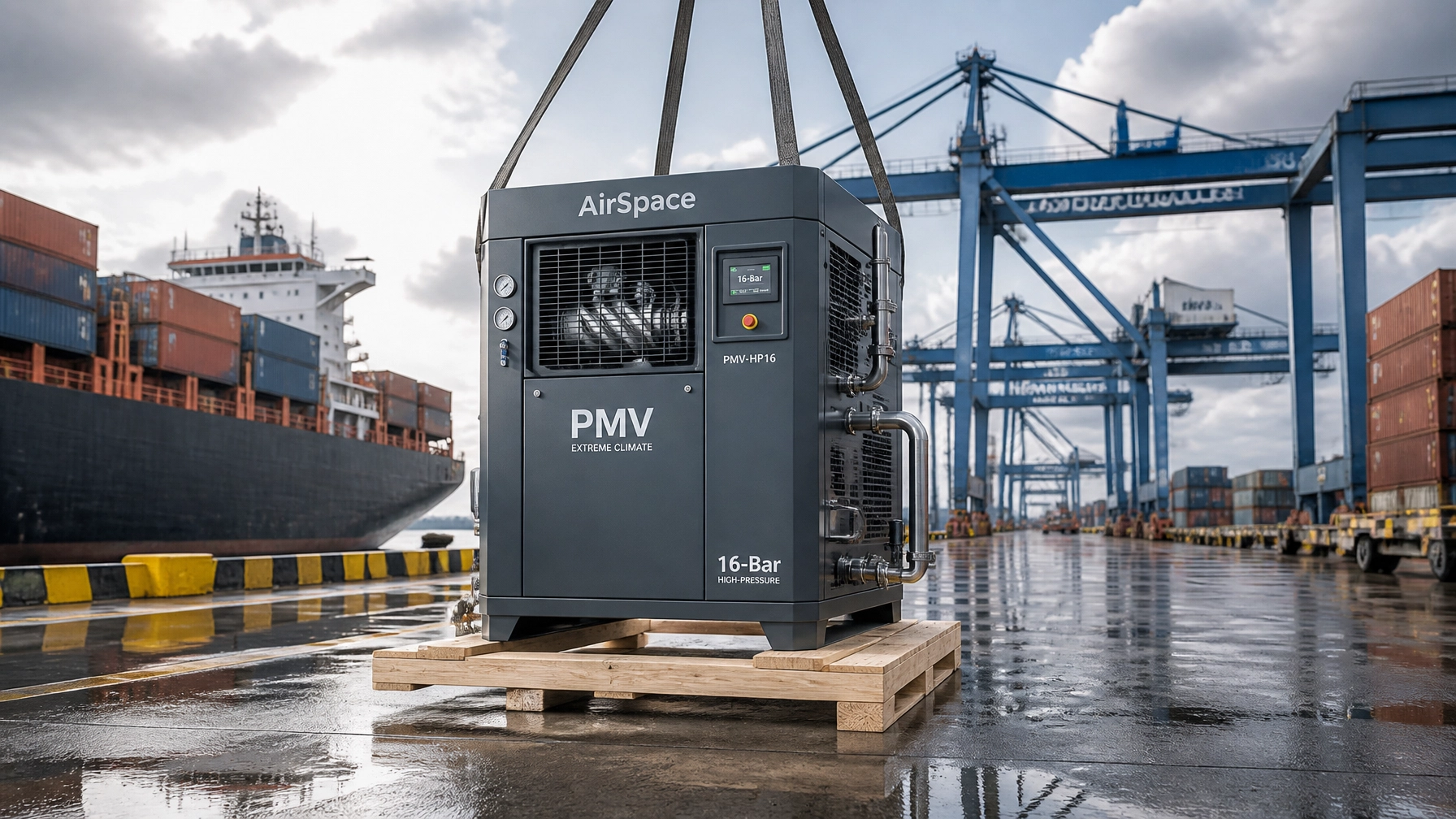
The most expensive air compressor isn't the one with the highest purchase price; it’s the one stuck in a Customs warehouse at the Port of Manaus. For factory managers in the Zona Franca de Manaus (ZFM), importing a china made screw air compressor without rigorous adherence to Portaria INMETRO nº 120/2021 and NR-13 standards is a financial gamble. Non-compliance leads to the "Supply Chain Tax", a cocktail of demurrage fees, port seizures, and operational downtime that can easily triple the original equipment cost.
Executive Summary: The Answer-First Guide to Brazilian Compliance
To bypass the "Port Trap," your china made screw air compressor must have its integrated pressure vessels (the air receiver tank and the air-oil separator) certified and registered under Portaria INMETRO nº 120/2021 before it ever leaves the factory. While NR-13 is a safety standard for the use of equipment in Brazil, INMETRO is the gatekeeper for import. At AirSpace Machinery, we eliminate the Supply Chain Tax by providing fully certified PMV screw compressors that clear customs without technical holds, backed by our 4,000m² manufacturing facility's ISO 9001 and CE-validated processes.
10 Industrial Audience Headaches: Why the Port Trap Happens
Before we dive into the technical specs, let’s look at the real-world pain points factory managers face when importing industrial air systems into Brazil:
- The Seizure Surprise: Your container arrives in Manaus, but Customs flags the internal oil separator for lacking an INMETRO registration number.
- Demurrage Bleeding: Paying $200–$500 per day in storage fees while your engineering team scrambles for design calculations the manufacturer didn't provide.
- The "Partial" Compliance Lie: A supplier claims the tank is NR-13 compliant but forgets that the oil separator is also a pressure vessel subject to federal regulation.
- Operational Paralysis: A critical production line in the ZFM sits idle because the backup compressor is being held for technical audit.
- Regulatory Whack-a-Mole: Trying to navigate the shift from the old Portaria 255/2014 to the current, stricter Portaria INMETRO nº 120/2021.
- The Documentation Gap: Receiving a manual in Chinese or English when Brazilian law (NR-13) mandates Portuguese documentation and specific safety labeling.
- ZFM Enforcement Rigor: Customs officials in Manaus are notoriously meticulous about industrial machinery NCM codes and technical certifications.
- The "Fix-it-Later" Fallacy: Discovering it is virtually impossible (and illegal) to retroactively certify a pressure vessel once it has entered Brazilian territory.
- Safety Embargoes: The Ministry of Labour (MTE) shutting down a plant during a routine inspection because a new compressor lacks the mandatory NR-13 inspection logbook.
- The Brand Risk: Damaging your reputation with the head office because a "cost-saving" import turned into a logistical nightmare.
The INMETRO/NR-13 Port Trap: Understanding the Regulation
In Brazil, compressed air safety is governed by two distinct but overlapping frameworks. Understanding the difference is the first step in avoiding the Supply Chain Tax.
Portaria INMETRO nº 120/2021 (The Import Gatekeeper)
This is a federal technical regulation (RTQ) that applies to "boilers and pressure vessels of serial production." Critically, it includes pressure vessels that are "integrated parts of rotary or reciprocating machines."
If your china made screw air compressor has an internal air-oil separator or is mounted on a tank, those components must be certified by an INMETRO-accredited body. Without this "anuência" (prior consent), the Import License (LI) will be denied, and the cargo will be seized at the port.
NR-13 (The Operational Standard)
While INMETRO gets you through the port, NR-13 keeps you running. It mandates that any pressure vessel with a $P \times V$ (Pressure x Volume) product greater than 8 (where P is in kPa and V is in m³) must be classified, inspected, and documented by a "Legally Qualified Professional" (PH).

"In the industrial world, air is the 'Fourth Utility.' You wouldn't skip the safety standards for your electricity or water, so why risk your production line on a non-compliant air system? We build AirSpace compressors to exceed Brazil's NR-13 requirements because a safe factory is a profitable factory."
, Johnny Wayne, Managing Director, AirSpace Machinery Co., Ltd.
The "Supply Chain Tax" Comparison: Compliant vs. Non-Compliant
The delta between a cheap, non-certified unit and a high-performance AirSpace PMV system isn't just about energy, it's about survival.
| Feature | AirSpace Compliant PMV Screw Compressor | Non-Certified "Cheap" Alternative |
|---|---|---|
| Import Status | Pre-registered with INMETRO/NR-13 Data | Risk of Seizure/Port Trap |
| Customs Clearing | Fast-track (Green/Yellow Channel) | High risk of Red Channel (Audit) |
| Documentation | Portuguese Manuals & Design Calcs | Basic English/Chinese manual only |
| Safety Devices | Certified Relief Valves & Gauges | Non-traceable safety components |
| Energy Efficiency | 35% Energy Delta (PMV Technology) | High "Unload Tax" (Fixed Speed) |
| Long-term Cost | Zero "Supply Chain Tax" | Potential for $10k+ in penalties |
Why AirSpace PMV Technology Bypasses the Tax
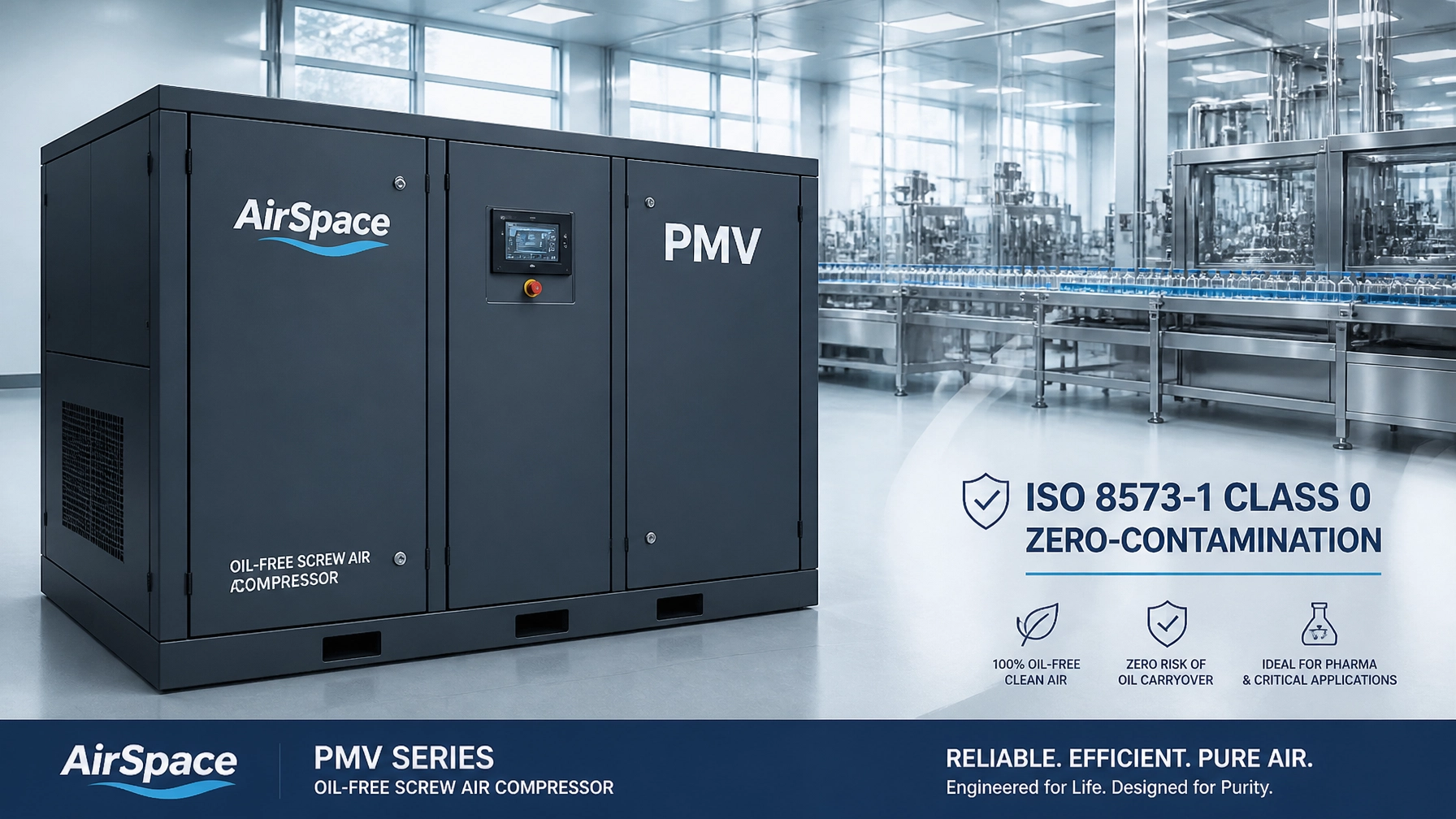
Our Permanent Magnet Variable Frequency (PMV) systems are designed for the rigors of the Brazilian industrial landscape. Whether you are dealing with The Heat Tax in the north or The Altitude Tax in the highlands, our engineering ensures ISO 8573-1 Class 0 Integrity where it matters most.
1. Built-in Regulatory Compliance
We don't just sell a compressor; we sell a compliant industrial solution. Every AirSpace unit destined for Brazil is manufactured in our 4,000m² facility with pressure vessels that meet or exceed the requirements of Portaria 120/2021. This means your technical documentation, drawings, material certifications, and hydrostatic test reports, are ready before the ship docks.
2. The 35% Energy Delta
Beyond avoiding port fees, our PMV technology addresses the "Unload Tax." Traditional fixed-speed compressors waste massive amounts of energy running at 100% capacity even when demand is low. AirSpace PMV systems adjust motor speed in real-time, delivering a 35% energy delta compared to standard systems.
3. Rugged Reliability for ZFM
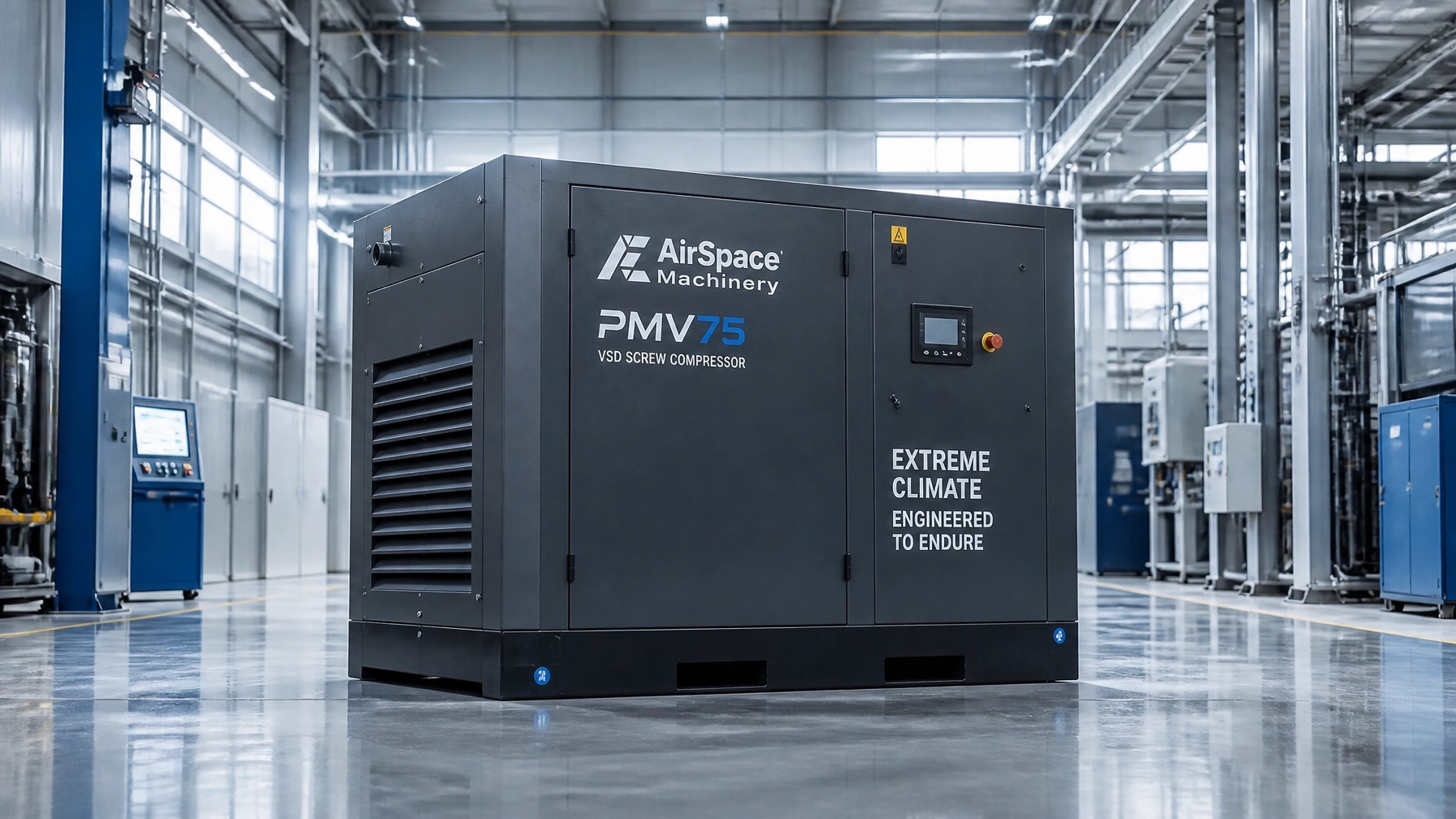
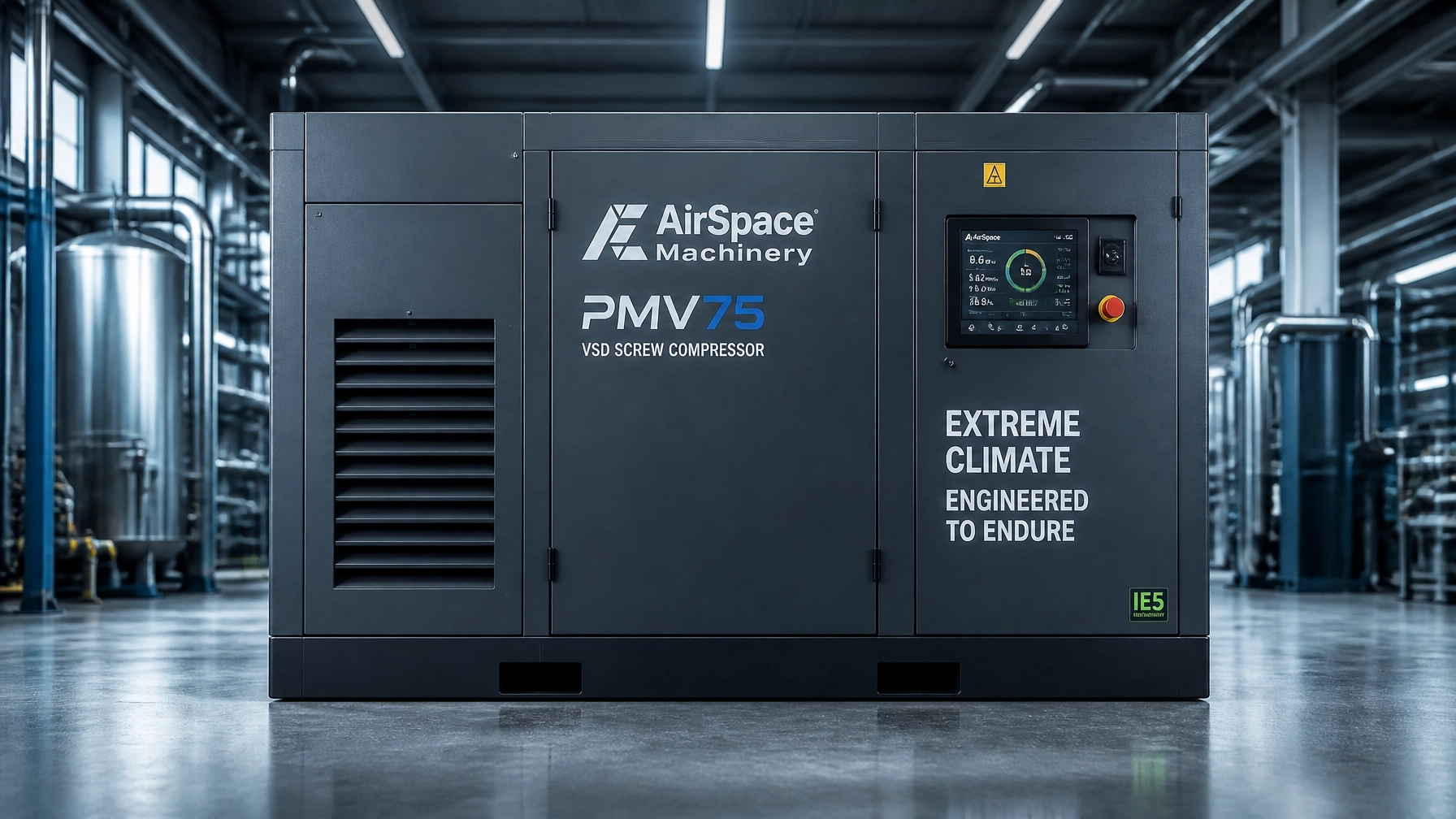
The Amazonian climate is brutal. High humidity and heat can degrade internal components. Our "Extreme Climate" rugged aesthetic isn't just for looks, it’s a dark gray matte protective coating paired with oversized cooling systems to ensure 99.9% uptime in the most demanding conditions.

FAQ: Clearing the Air on Brazilian Imports
Q: Can I certify my compressor for NR-13 after it arrives in Brazil?
A: NR-13 requires initial inspection and a "Prontuário" (data book). While a Brazilian engineer can perform the opening inspection, they cannot generate the original manufacturer’s design calculations or INMETRO registration if they weren't created during production. This often leaves the equipment legally "unusable" in a strict audit.
Q: Does the Portaria 120/2021 apply to the compressor motor?
A: No, it applies specifically to the pressure vessels (air receiver and oil separator). However, the motor must still comply with Brazilian energy efficiency standards (Portaria Interministerial n° 1/2017).
Q: How does PMV technology help with power grid stability in remote areas?
A: PMV drives have a soft-start capability, meaning they don't cause the massive current spikes associated with fixed-speed motor starts. This protects your facility's electrical infrastructure and prevents "flicker" on the grid.
Conclusion: Stop Paying the Supply Chain Tax
Importing a china made screw air compressor should be a strategic move to lower costs and increase efficiency, not a nightmare of legal fees and port delays. By choosing an AirSpace PMV system, you are investing in The Fourth Utility Concept: reliable, clean, and fully compliant compressed air that powers your growth without the hidden taxes of non-compliance.
Ready to upgrade your ZFM facility?
Get a Proposal today for a fully compliant, high-efficiency PMV solution tailored to your pressure and flow requirements.
Author: Penny Winston
Technical Writer | Frameworks: The 35% Energy Delta, The Fourth Utility Concept, ISO 8573-1 Class 0 Integrity
Reviewed by Engineering