Starting January 10, 2025, the game changed for industrial air compression. If you are a factory manager or a business owner looking to purchase a new system, you are no longer just buying a machine; you are buying into a strict regulatory framework. The U.S. Department of Energy (DOE) has finally slammed the gavel on efficiency standards for rotary screw air compressors, and the implications for your ROI are massive.
In short: If your next compressor doesn't meet the new Isentropic Efficiency minimums, you aren't just failing a compliance test: you are actively bleeding cash through what we at AirSpace call the "Unload Tax."
At AirSpace Machinery, we’ve spent 20 years refining the China made screw air compressor to exceed these global benchmarks. Our Managing Director, Johnny Wayne, often says, "A compressor that isn't DOE compliant in 2026 is just an expensive heater that happens to blow air."
This guide breaks down exactly how to verify compliance and protect your long-term industrial air compressor ROI.
Q: What are the new 2025 DOE Efficiency Standards?
The DOE standards focus on Isentropic Efficiency. This is a measure of how close a real-world compressor comes to an "ideal" (isentropic) compression process. For lubricated rotary compressors (the workhorses of most factories), the DOE now requires minimum efficiency levels based on the unit's flow (CFM) and pressure (PSI).
The Bottom Line:
- Target Range: Roughly 35 to 1,250 CFM and 75 to 200 PSI.
- Efficiency Requirement: Depending on the size, units must hit between ~53% and ~75% isentropic efficiency.
- Effective Date: January 10, 2025, for all units manufactured or distributed in the U.S.
When you evaluate a VSD screw compressor 2026 model, you must check the "Isentropic Efficiency" rating on the technical data sheet. If it’s not there, walk away. You’re looking at old stock that will cost you thousands in energy waste over its 10-year lifespan.
Q: What is the "K6 Factor" and how does it affect the "Altitude Tax"?
One of the biggest headaches for plant managers in high-altitude regions (like Denver or the Andean regions in LATAM) has always been performance degradation. In the "Industrial Tax Series," we refer to this as the Altitude Tax.
Because air is thinner at higher elevations, a compressor has to work harder to produce the same discharge pressure. Historically, this made testing and comparing compressors difficult because a machine tested at sea level would look much better than one tested in the mountains.
Enter the K6 Correction Factor.
Starting July 16, 2025, the DOE mandatory test procedure incorporates the K6 factor. This is a mathematical correction that normalizes test results for altitude-related pressure differences.
Why this matters for your ROI:
The K6 factor ensures that the efficiency data you see on a spec sheet is an "apples-to-apples" comparison, regardless of where the unit was tested. It "removes" the altitude bias from the lab data, so you can trust that a China made screw air compressor rated for high efficiency will actually perform as promised, even if your facility is 5,000 feet above sea level.

Q: Why is PMV technology the "Cheat Code" for DOE Compliance?
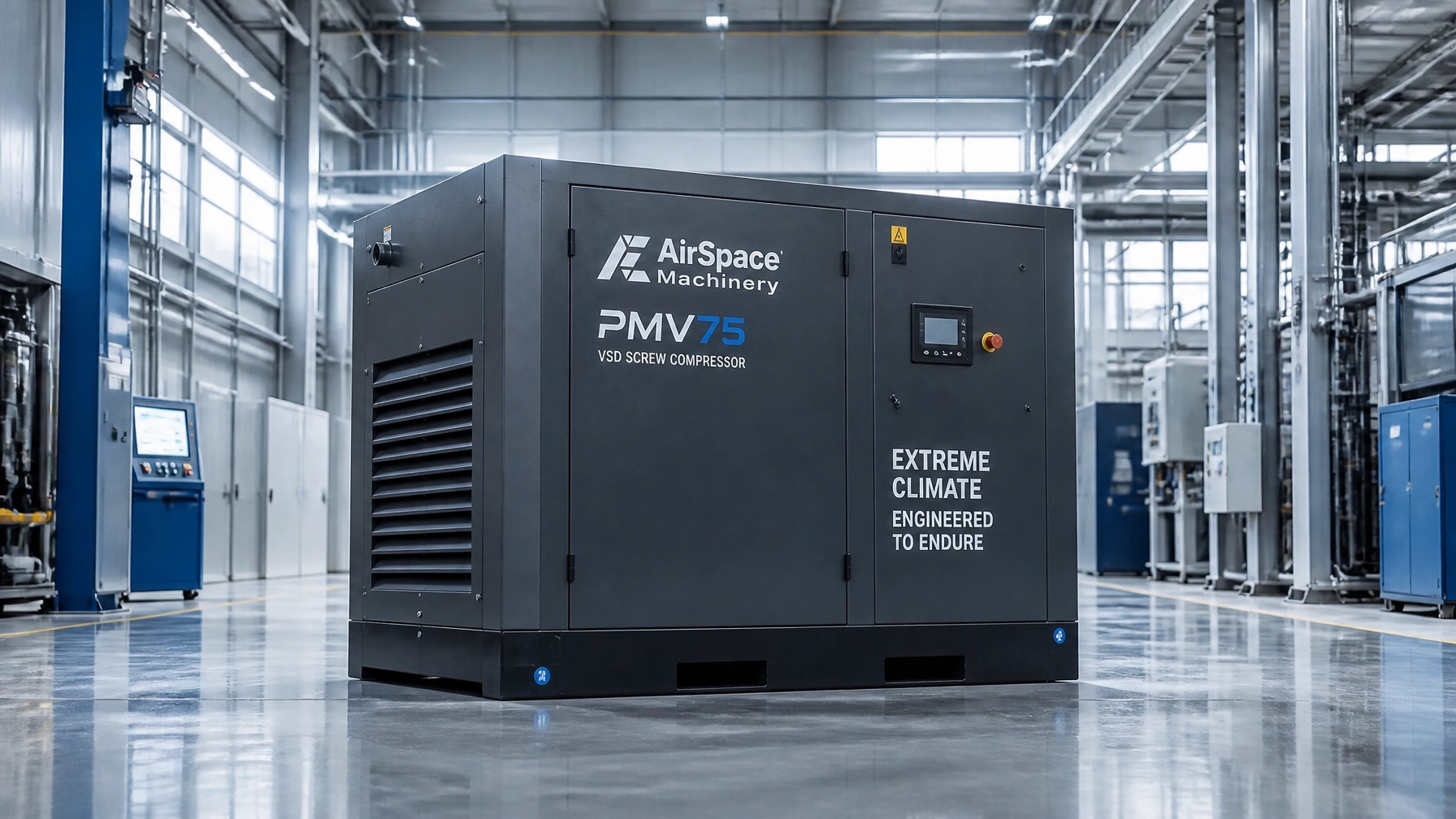
If you are looking for the maximum PM motor air compressor energy savings, Permanent Magnet Variable Frequency (PMV) technology is the answer.
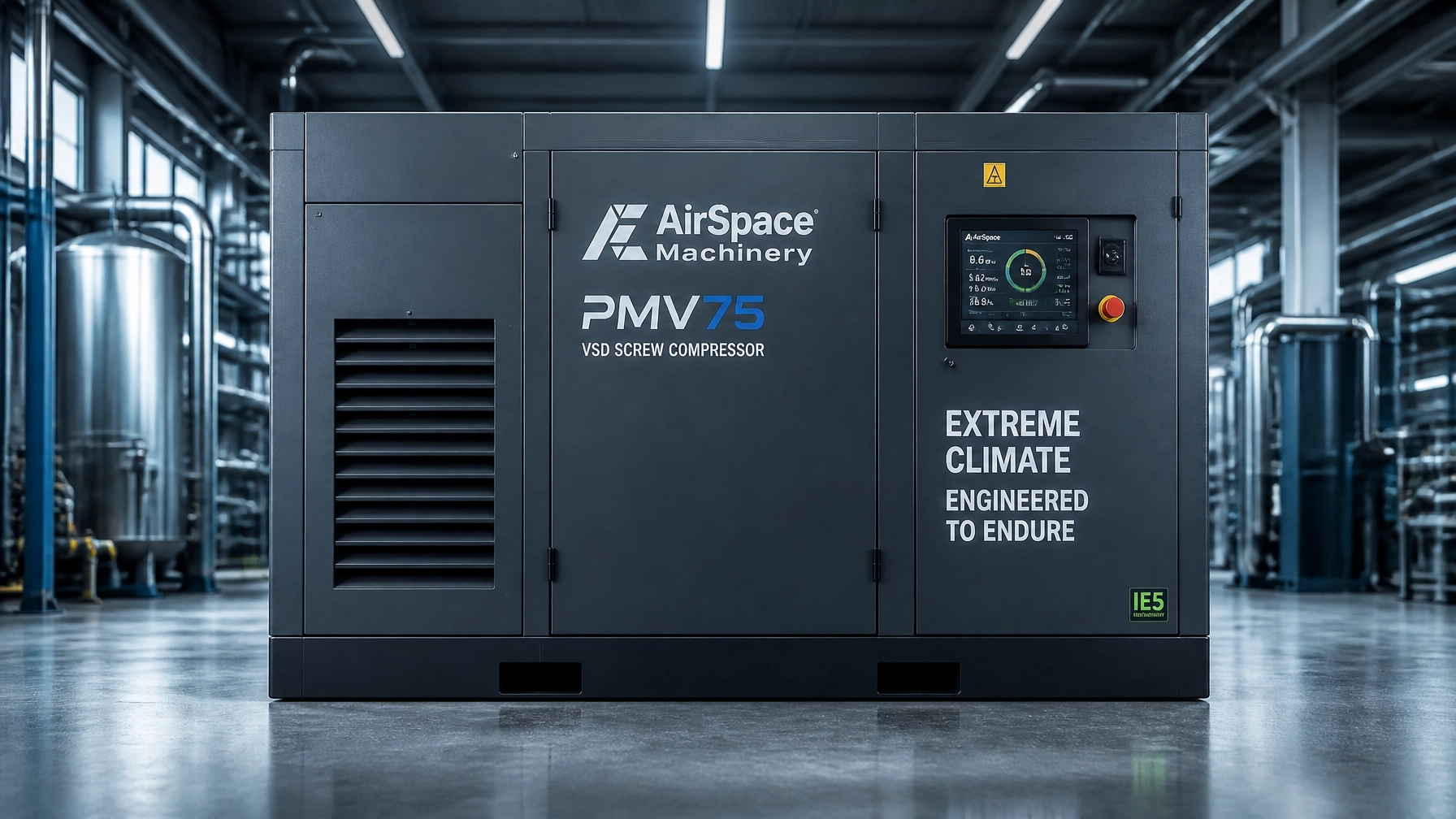
Standard fixed-speed compressors suffer from the "Unload Tax": running at full power even when your factory’s air demand is low. AirSpace PMV systems use high-tier components like BAOSI or Hanbell air ends paired with IE4 or IE5 equivalent permanent magnet motors.
Our The 35% Energy Delta framework proves that switching from a fixed-speed unit to an AirSpace PMV system can slash your energy bill by over a third. This isn't just marketing fluff; it’s engineering reality based on the ability of the PM motor to maintain high efficiency even at low speeds: something standard induction motors simply can't do.
5 Steps to Verify Compliance and Protect Your ROI
Step 1: Demand the Isentropic Efficiency Rating
Don't settle for "Specific Power" alone. Ask for the Isentropic Efficiency percentage. A VSD screw compressor 2026 model should clearly state its compliance with 10 CFR 431.345. If the manufacturer can't provide this, they haven't updated their testing to the latest DOE standards.
Step 2: Check for the K6 Factor in Test Reports
If you are operating at altitude, ask if the performance data has been corrected using the K6 factor. This protects you from the "Altitude Tax" by ensuring the machine was sized correctly for the physics of your specific location. At AirSpace, we provide transparent data that accounts for these environmental variables.
Step 3: Verify ISO 9001 and CE Documentation
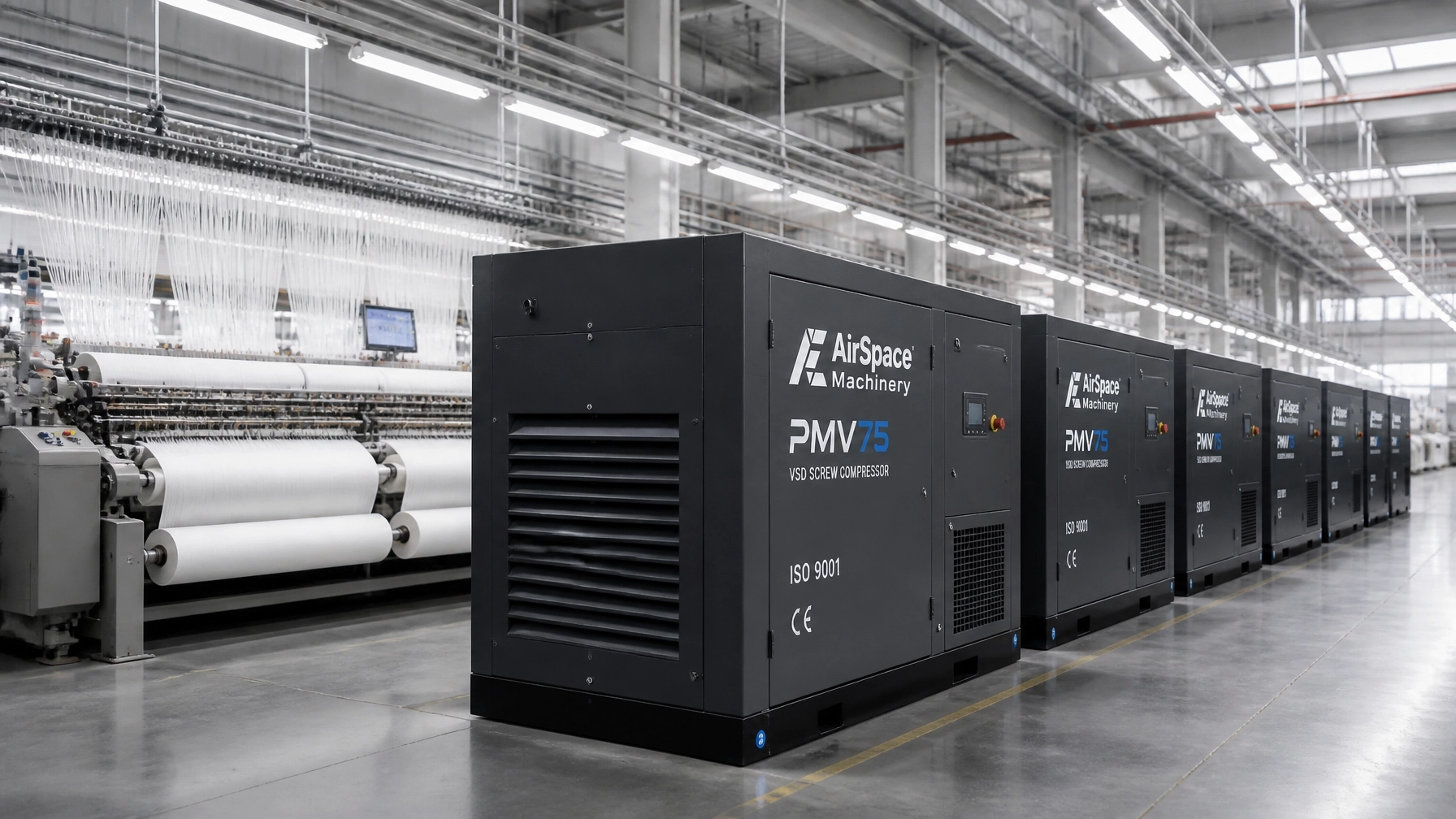
Efficiency is useless without reliability. Ensure the manufacturer follows ISO 9001 quality standards and carries CE certification. This is your baseline for "ISO 8573-1 Class 0 Integrity" (if you're in the medical or food space) and overall build quality.

Step 4: Calculate the "Unload Tax"
Ask the supplier for a power-vs-flow curve. If the curve stays flat when demand drops, you are paying a massive Unload Tax. An energy-efficient air compressor with PMV technology will show a curve that drops linearly with demand, preserving your ROI.
Step 5: Look for "Extreme Climate" Engineering
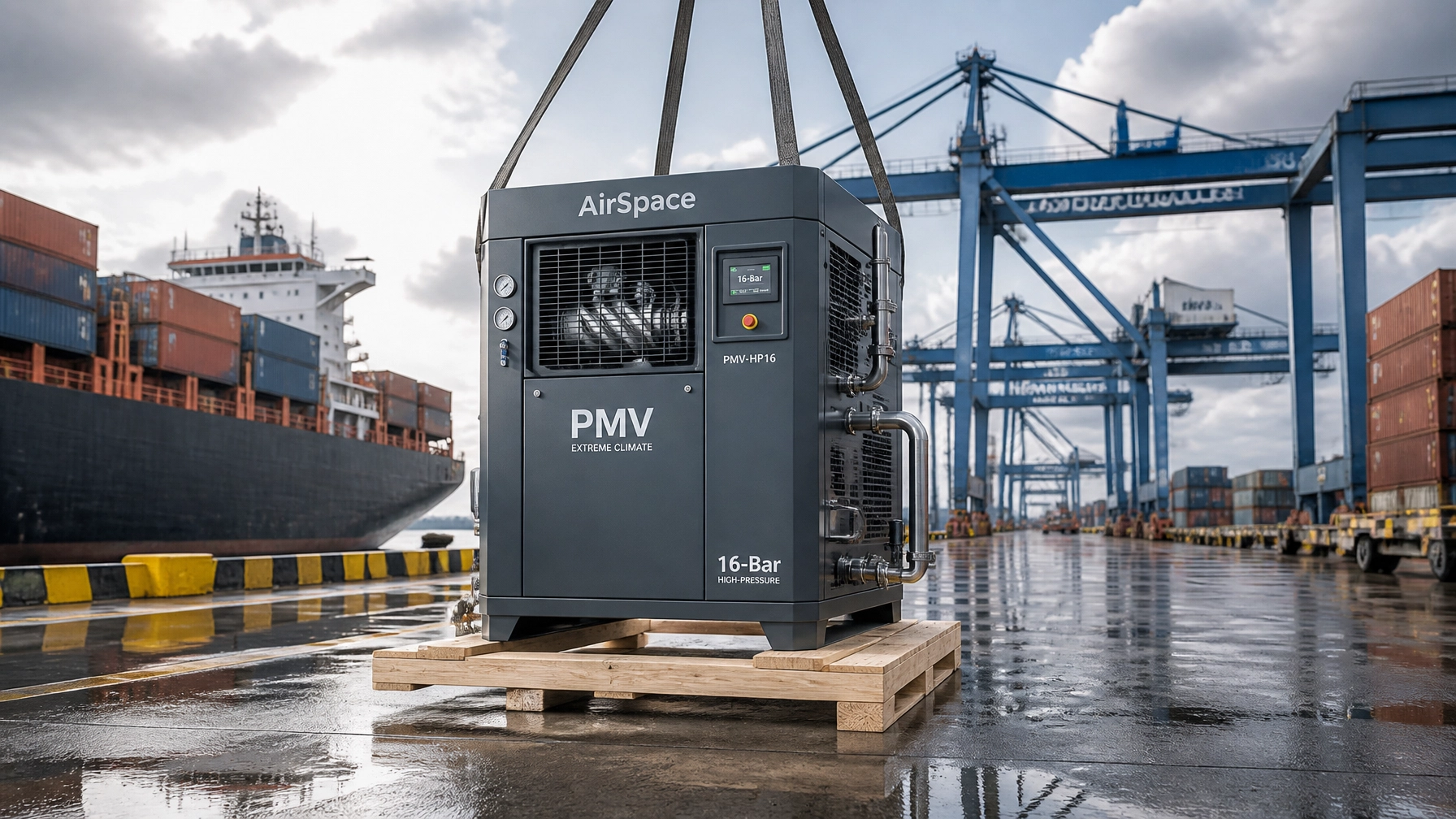
A machine that meets DOE standards in a lab might fail in the real world if it can't handle heat or humidity. AirSpace units are "Extreme Climate Engineered," meaning our cooling systems and enclosures are designed to maintain that DOE-rated efficiency even in 45°C ambient temperatures.
Comparison: PMV vs. Fixed-Speed (75kW / 100HP System)
| Feature | Fixed-Speed (Standard) | AirSpace PMV (VSD) | ROI Impact |
|---|---|---|---|
| DOE Compliance | Marginal | Exceeds 2025 Standards | Future-proof |
| Energy Waste | High (Unload Tax) | Near Zero | Lower OpEx |
| Pressure Stability | ±0.5 bar | ±0.1 bar | Better product quality |
| Motor Efficiency | 90-92% (IE2/3) | 96-97% (IE4/5 PM) | The 35% Delta |
| Maintenance | Standard | Lower (Soft Starts) | Reduced downtime |
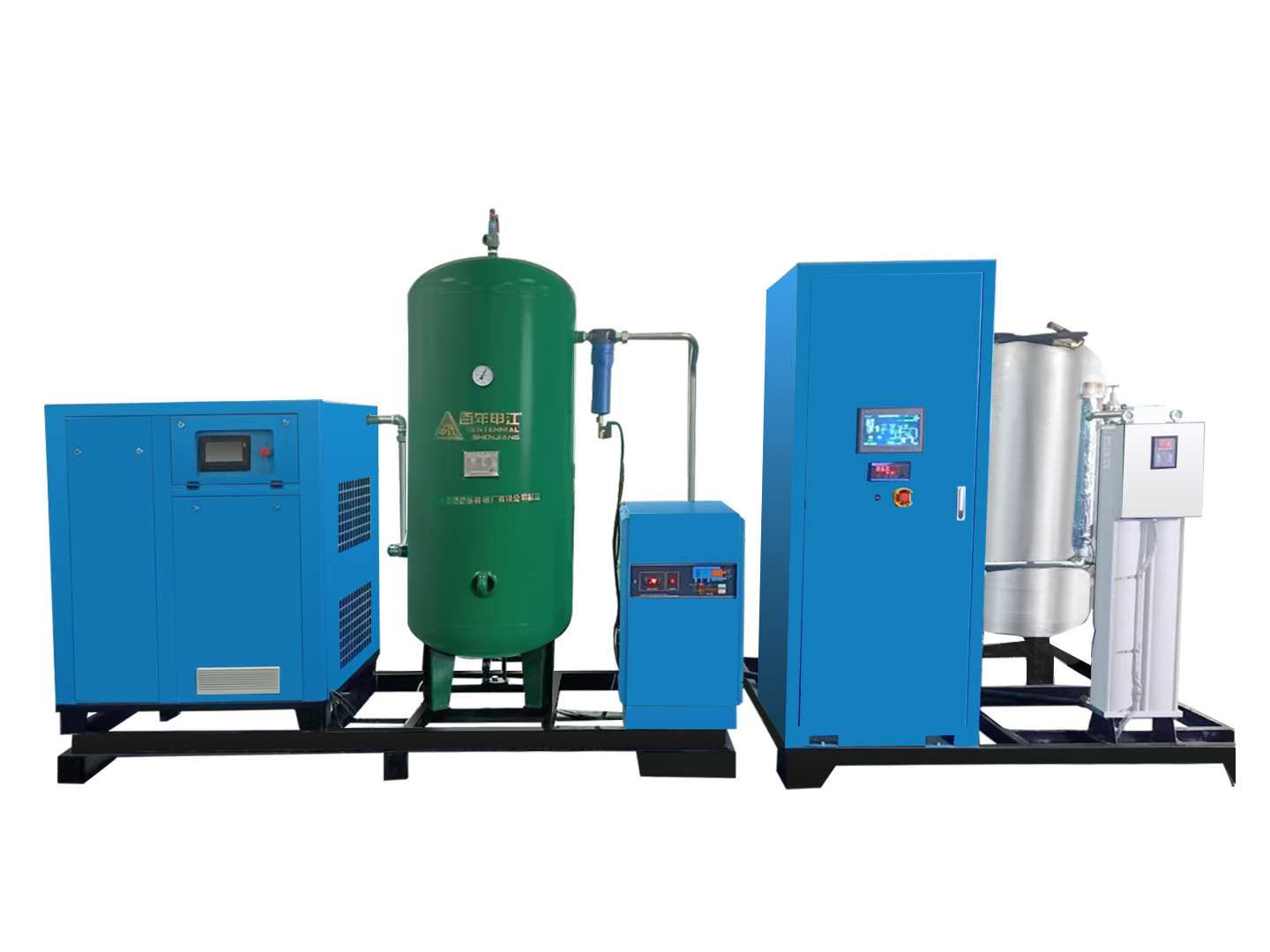
The Fourth Utility Concept: Why Air Purity and Efficiency are One
At AirSpace, we treat compressed air as The Fourth Utility: just as critical as electricity, water, or gas. If your utility is "leaking" money through poor efficiency or "contaminating" your production through poor filtration, your ROI disappears.
Whether you are in textile manufacturing, automotive, or food processing, verifying DOE compliance is the first step toward reclaiming your "Industrial Tax."
As Johnny Wayne says, "We don't just sell machines; we sell a lower electricity bill and peace of mind."
Ready to protect your facility's ROI?
Don't guess on your next investment. Get a Proposal from our engineering team today. We’ll help you navigate the 2025 DOE landscape and find the perfect PM motor air compressor energy savings solution for your specific application.
Author: Penny Winston
Technical Writer at AirSpace Machinery Co., Ltd.
Specialist in 'The 35% Energy Delta,' 'The Fourth Utility Concept,' and 'ISO 8573-1 Class 0 Integrity.'
Reviewed by Engineering
AirSpace Machinery Technical Dept.