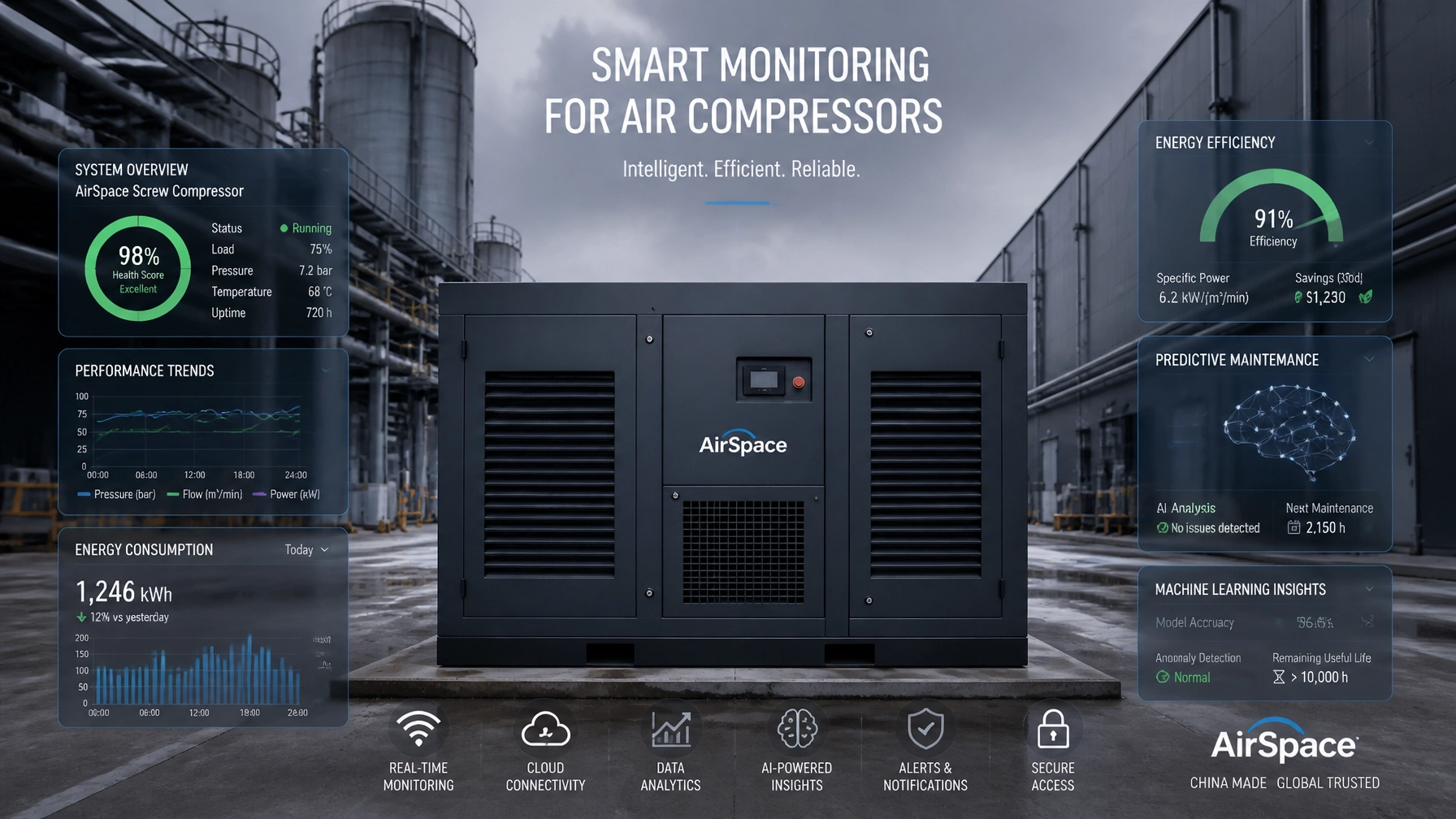
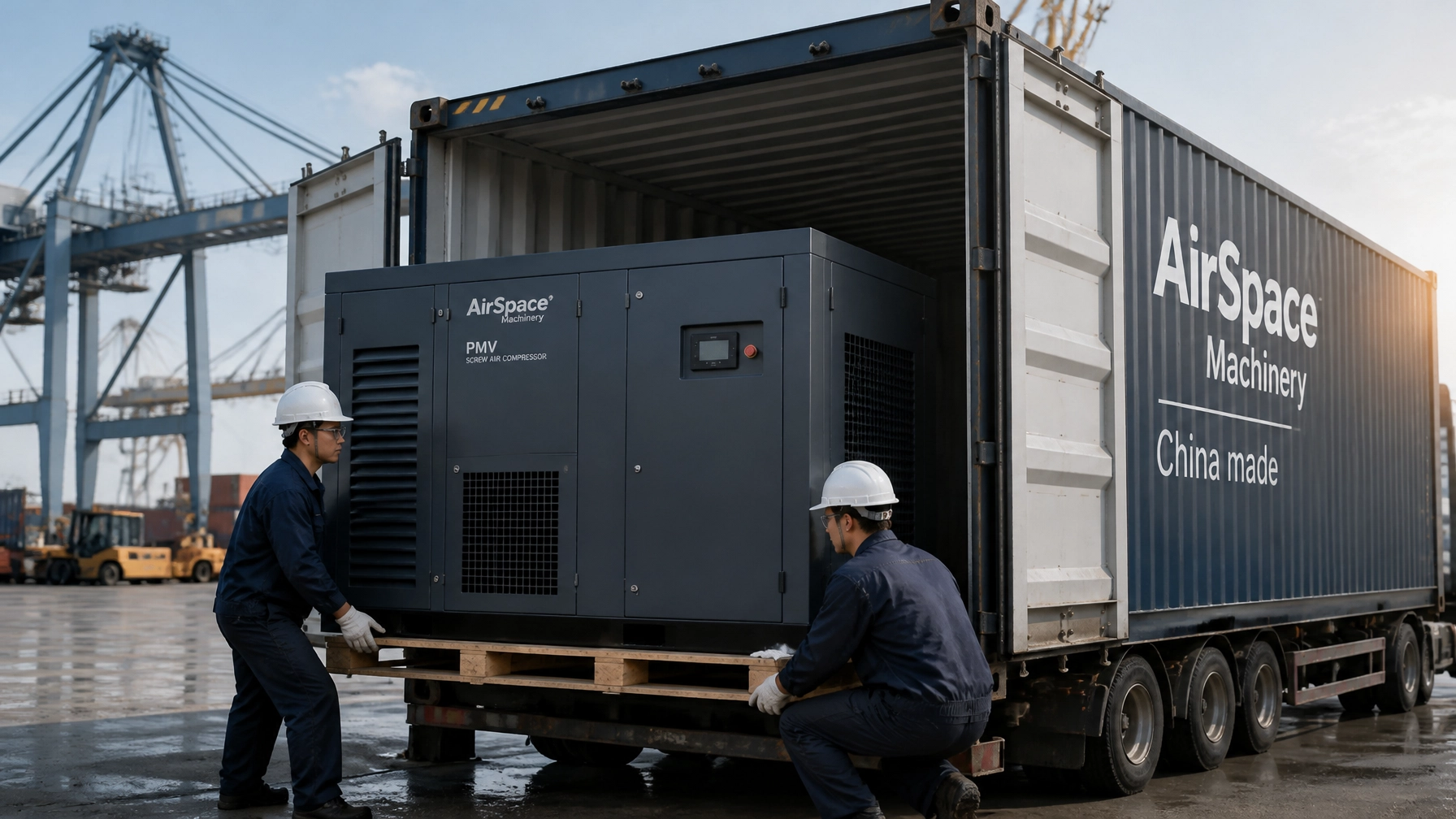
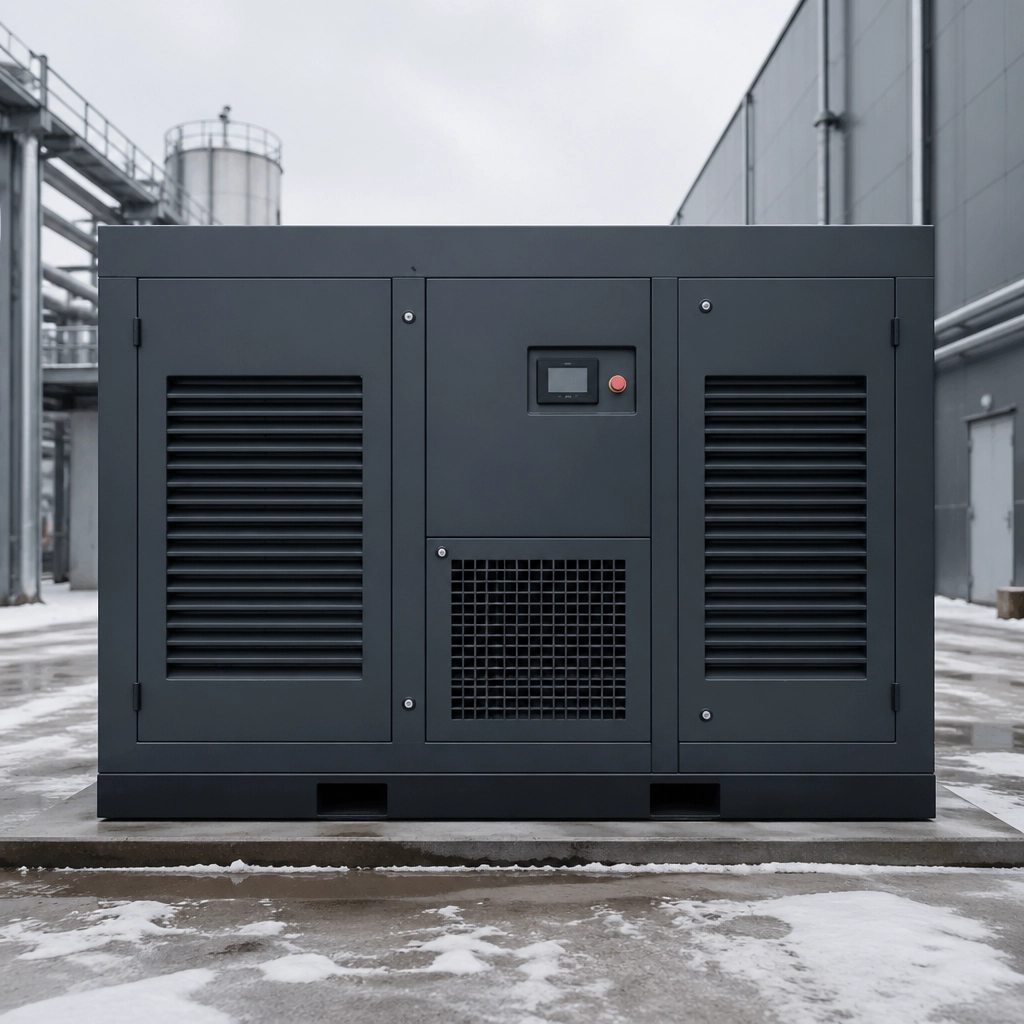
Can an industrial air compressor actually help a factory reach Net Zero? Yes. By 2026, the shift from "utility expense" to "sustainability asset" is complete. Through a combination of Permanent Magnet Variable Frequency (PMV) technology, which delivers a 35% energy delta over fixed-speed systems, and advanced air compressor condensation water recovery, modern compressed air systems are no longer just about pressure; they are about decarbonization.
In this technical guide, we break down how industrial facilities are eliminating the "Unload Tax" and "Heat Tax" to meet ESG mandates while lowering operational costs.
What is Decarbonization in Industrial Air Compression?
Decarbonization in this context refers to the systematic reduction of CO₂ emissions associated with the generation of compressed air. Since compressed air is often called the "Fourth Utility," and can account for up to 40% of a plant's total energy bill, it is the primary target for carbon reduction.
The strategy involves three pillars:
- Eliminating Waste: Using PMV VSD technology to match motor speed to real-time demand.
- Heat Recovery: Capturing the 94% of electrical energy that is typically wasted as heat.
- Water Recovery: Harvesting and treating condensate for reuse in cooling towers or boilers.
The 35% Energy Delta: The Foundation of Sustainable Manufacturing
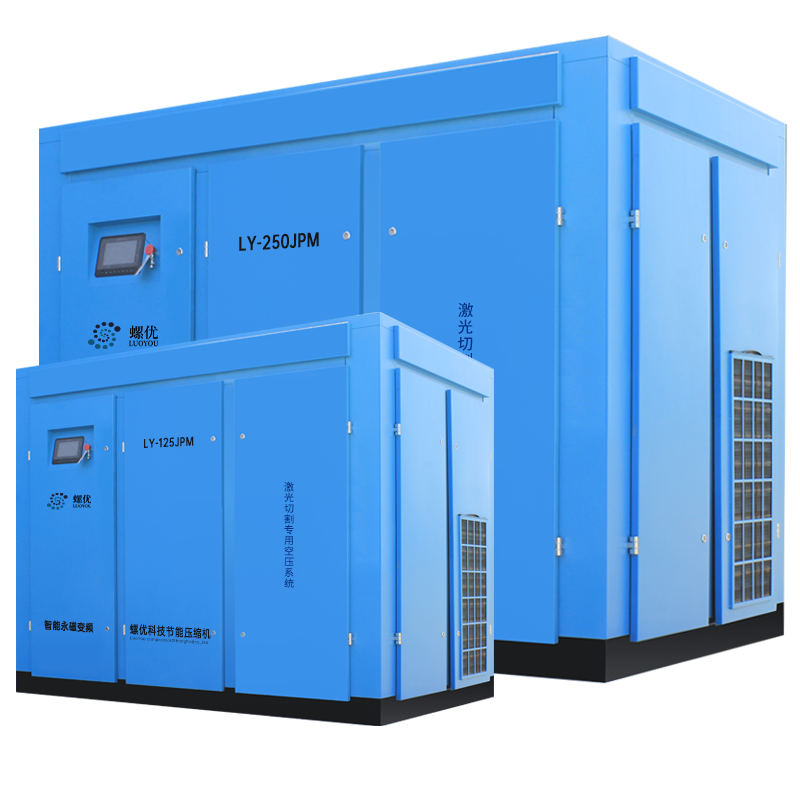
At AirSpace Machinery, we utilize the 35% Energy Delta framework. Traditional fixed-speed compressors continue to run (and consume 70% of full-load power) even when they aren't producing air. This is what we call the "Unload Tax." A China made screw air compressor equipped with PMV technology eliminates this waste entirely, scaling energy consumption linearly with air production.
| Metric | Fixed Speed Compressor | AirSpace PMV Screw Compressor |
|---|---|---|
| Energy Efficiency | Low (High Unload Losses) | High (VSD Precision) |
| Pressure Stability | ±0.5 to 1.0 bar | ±0.1 bar |
| Motor Type | Standard Induction | Permanent Magnet (IE4/IE5) |
| Carbon Footprint | Baseline | 35% Reduction |
How Does Air Compressor Condensation Water Recovery Work?
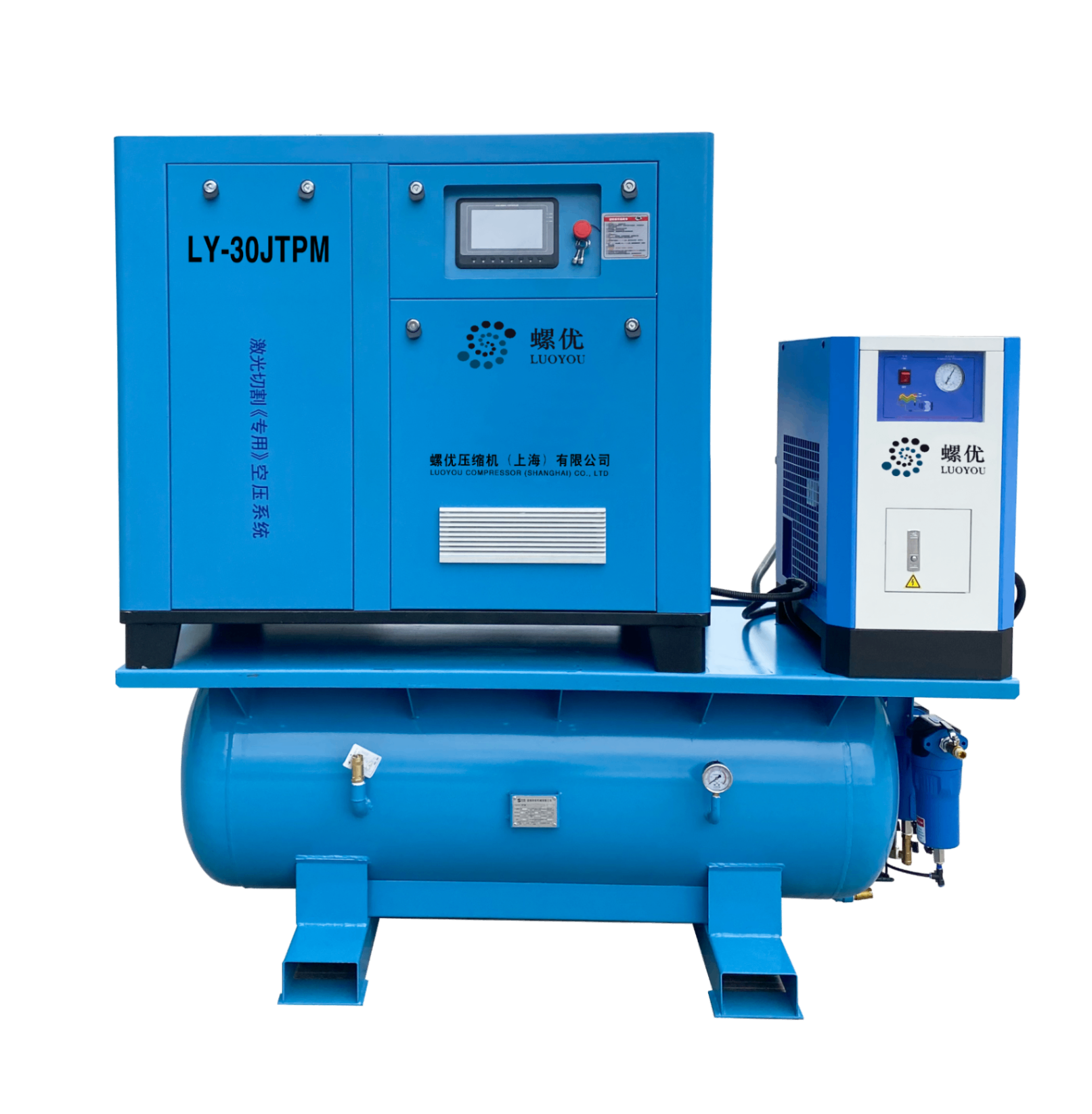
The Hidden Resource in Your Compressed Air
A common headache for factory managers is the large volume of condensate generated by refrigerated air dryers and aftercoolers. In a humid environment, where the "Humidity Tax" is highest, a 100HP compressor can generate gallons of water per hour.
Air compressor condensation water recovery transforms this waste into a resource. By integrating high-tier components from BAOSI or Hanbell air ends with an oil-water separator and a filtration stage, the captured condensate can be redirected as:
- Cooling tower makeup water.
- Pre-heated boiler feedwater (when combined with heat recovery).
- Non-potable process water for cleaning.
This process supports the ISO 8573-1 Class 0 Integrity standard by ensuring that air is not only dry and oil-free but that the byproduct water is managed responsibly, contributing directly to a facility's water-positive goals.
The Fourth Utility Concept: Integrating Heat Recovery
Johnny Wayne, Managing Director of AirSpace Machinery, often says: "If you're venting heat into the atmosphere, you're literally blowing money out the window."
Modern sustainable manufacturing air compressors are designed with integrated heat exchangers. Because nearly 94% of the energy used to compress air turns into heat, we can recover this energy to provide hot water (up to 90°C) for industrial processes or facility heating. This eliminates the "Heat Tax", the extra fuel you would otherwise burn in a boiler to create that same thermal energy.
Why Choose a China Made Screw Air Compressor for Net Zero?
When evaluating a China made screw air compressor, look beyond the price tag. Look at the engineering standards:
- CE & ISO 9001 Certification: Non-negotiable for safety and quality.
- IE4/IE5 PM Motors: Essential for reaching the 35% Energy Delta.
- Smart Monitoring: IIoT-enabled systems that track energy-per-cubic-meter in real-time.
Explore our PMV solutions here.
FAQs: Decarbonizing Your Compressed Air System
Q: Can I retrofit water recovery to my existing system?
A: Yes. While integrated systems are more efficient, we can install standalone condensate management and heat recovery modules on existing rotary screw systems to reduce your "Industrial Tax" immediately.
Q: Is PMV technology reliable in extreme climates?
A: Absolutely. Our "Extreme Climate" series is engineered to handle the high "Heat Tax" of the Middle East and the "Humidity Tax" of Southeast Asia, maintaining stable performance where standard compressors fail.
Q: How do I verify the energy savings for my ESG report?
A: We provide comprehensive energy audits. By measuring your current "Unload Tax" and comparing it to a PMV baseline, we can provide verifiable data that your sustainability officer can use for carbon reporting.
Conclusion: The ROI of Sustainability
Decarbonization is no longer a corporate buzzword; it is a competitive necessity. By choosing a high-performance China made screw air compressor that prioritizes energy efficiency through PMV technology and utilizes air compressor condensation water recovery, you aren't just buying a machine. You are investing in a sustainable future that pays for itself through lower utility bills and eliminated "Industrial Taxes."
Ready to eliminate your Unload Tax? Contact us for a case study or get a technical proposal tailored to your facility's pressure and flow requirements.
Get a Proposal
Please provide the following to help us calculate your Energy Delta:
- Required Pressure: (bar / psi)
- Required Flow: (m³/min / CFM)
- Lead Time: Configuration dependent (Global shipping available).
Author Box: Penny Winston
Penny Winston is a Technical Writer at AirSpace Machinery Co., Ltd., specializing in The 35% Energy Delta and the Fourth Utility Concept. With a background in industrial engineering, she helps global manufacturers navigate the complexities of ISO 8573-1 Class 0 Integrity and sustainable machine procurement.
Reviewed by Engineering