What is the return on investment (ROI) for smart monitoring and machine learning leak detection in industrial air systems? In 2026, the ROI for deploying smart monitoring for air compressors and compressed air leak detection machine learning typically delivers a full payback within 3 to 12 months. By shifting from reactive maintenance to AI-driven predictive insights, facilities can reduce air loss from an industry average of 30% down to less than 5%. This transition captures "The 35% Energy Delta": the measurable efficiency gap between legacy systems and modern, optimized PMV (Permanent Magnet Variable Frequency) technology.
The Fourth Utility: Why Air Compression ROI Starts with Data
In many manufacturing facilities, compressed air is the "Fourth Utility": just as essential as electricity, water, and gas, but often the most wasted. Traditional maintenance schedules rely on calendars or hour meters, which miss the invisible leaks and efficiency drifts that bleed profits daily.
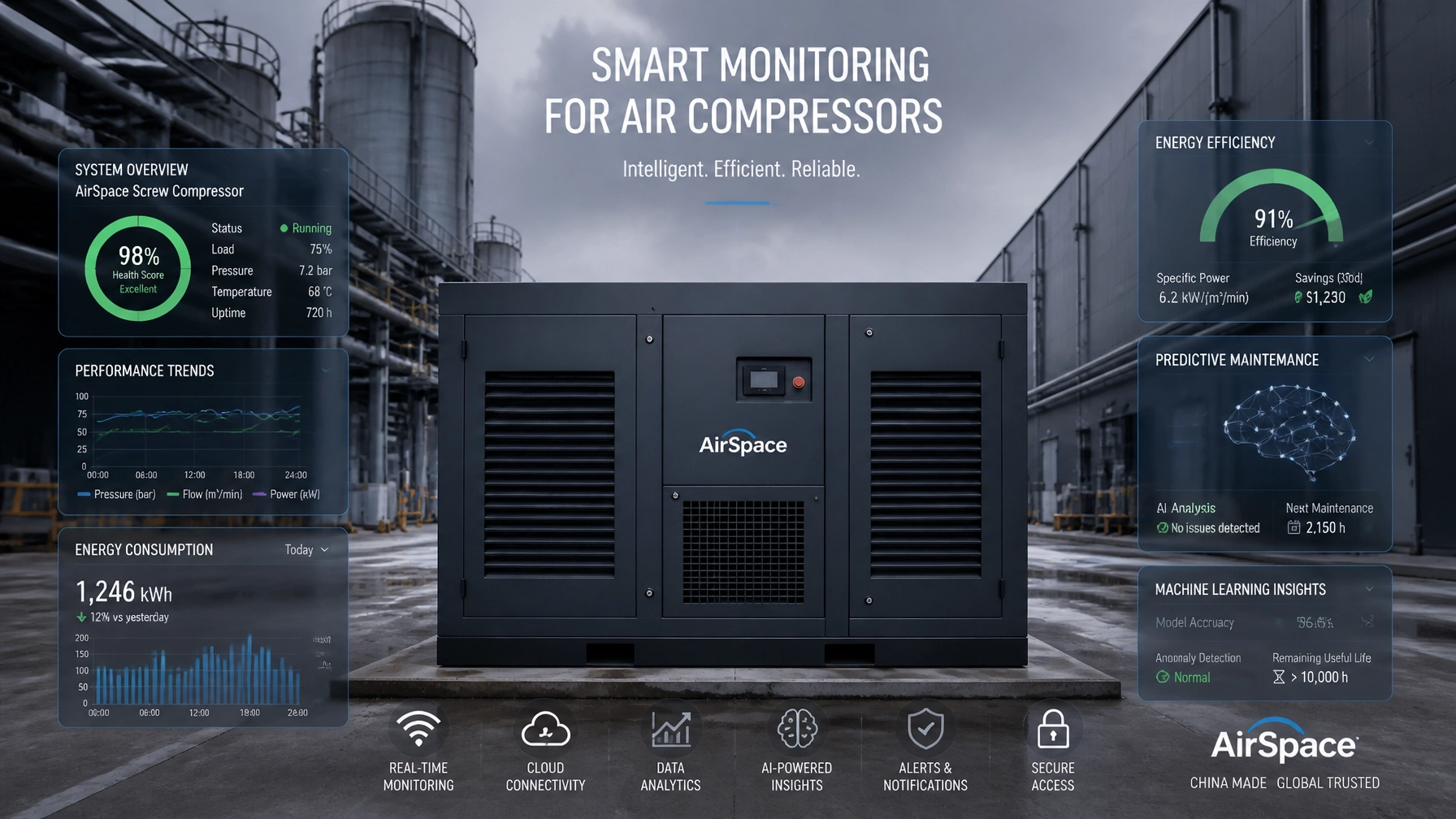
For a Managing Director (MD) or Plant Manager, the primary headache isn't just a breakdown; it’s the "Unload Tax": the energy wasted when a compressor runs but isn't producing air. By integrating smart monitoring, you treat your China made screw air compressor as a data hub, not just a mechanical box.
The Industrial Air Compressor Energy Audit: Your 2026 Baseline
Before investing in new hardware, the smartest first step is a comprehensive industrial air compressor energy audit. In the past, this was a manual process involving clipboards and guesswork. Today, an AirSpace-certified audit uses IIoT (Industrial Internet of Things) sensors to map your facility’s "false demand."
- Baseline Measurement: Identifying that a 50HP system is actually only needing 30HP of load 70% of the time.
- Leak Mapping: Pinpointing where 20-30% of your generated air is literally vanishing into thin air.
- Pressure Optimization: Reducing system pressure to the minimum stable value to avoid "over-pressurizing" waste.

Moving from Maintenance to Machine Learning
The shift to compressed air leak detection machine learning is the single biggest disruption in plant engineering this decade. Standard ultrasonic leak surveys are a snapshot in time: they are obsolete the moment a new vibration-induced crack appears in your piping.
How Machine Learning Closes the Gap
Machine learning algorithms (ML) trained on thousands of hours of acoustic and vibration data can now distinguish between the "normal" hum of a factory and the specific frequency of a high-pressure air leak. When integrated into an AirSpace PMV screw air compressor system, these models provide:
- Continuous Surveillance: 24/7 monitoring that detects new leaks within minutes, not months.
- Predictive Health Scoring: Using vibration analysis on the BAOSI or Hanbell air ends to predict bearing failure up to 6 months in advance.
- Automated ROI Tracking: Direct dashboarding of how much "The 35% Energy Delta" is being saved in real-time versus a fixed-speed system.
"We stopped looking at compressors as machines and started looking at them as energy-conversion assets," says Johnny Wayne, Managing Director of AirSpace Machinery. "If you aren't using ML to track your air, you're paying a 30% 'Ignorance Tax' every single month."
Technical Comparison: Traditional vs. ML-Driven Maintenance
| Feature | Traditional Maintenance | ML-Driven Smart Monitoring |
|---|---|---|
| Leak Detection | Manual ultrasonic (Semi-annual) | Continuous ML-Acoustic (Real-time) |
| Maintenance Trigger | Run-hours or Calendar-based | Predictive (Condition-based) |
| Energy Waste | 20-30% average air loss | <5% targeted air loss |
| Typical Payback | N/A (Maintenance is a cost) | 3-12 months (Energy savings) |
| System Visibility | Gauge-level / Local only | Cloud-based IIoT Dashboard |
| Component Focus | Reactive repair | Longevity of BAOSI/Hanbell Air Ends |

Solving the "Regional Taxes" with Smart Data
At AirSpace, we recognize that geography dictates efficiency. Our smart monitoring systems are pre-configured to help you mitigate specific environmental challenges, part of our Industrial Tax Series:
- The Humidity Tax (SEA/High-Humidity): In Southeast Asia, high moisture leads to premature dryer failure. Smart monitoring alerts you the moment the dew point drifts, protecting your ISO 8573-1 Class 0 Integrity.
- The Heat Tax (Middle East/Extreme Heat): High ambient temperatures cause thermal stress. Our ML models adjust the PMV frequency to maintain stability in the AirSpace PMV-HP16 even at 50°C.
- The Altitude Tax (LATAM/High-Altitude): Rarefied air changes the compression ratio. Smart monitoring recalibrates the system to ensure you don't lose the energy delta at 2,500 meters.
Why Your China Made Screw Air Compressor Needs Smart Monitoring
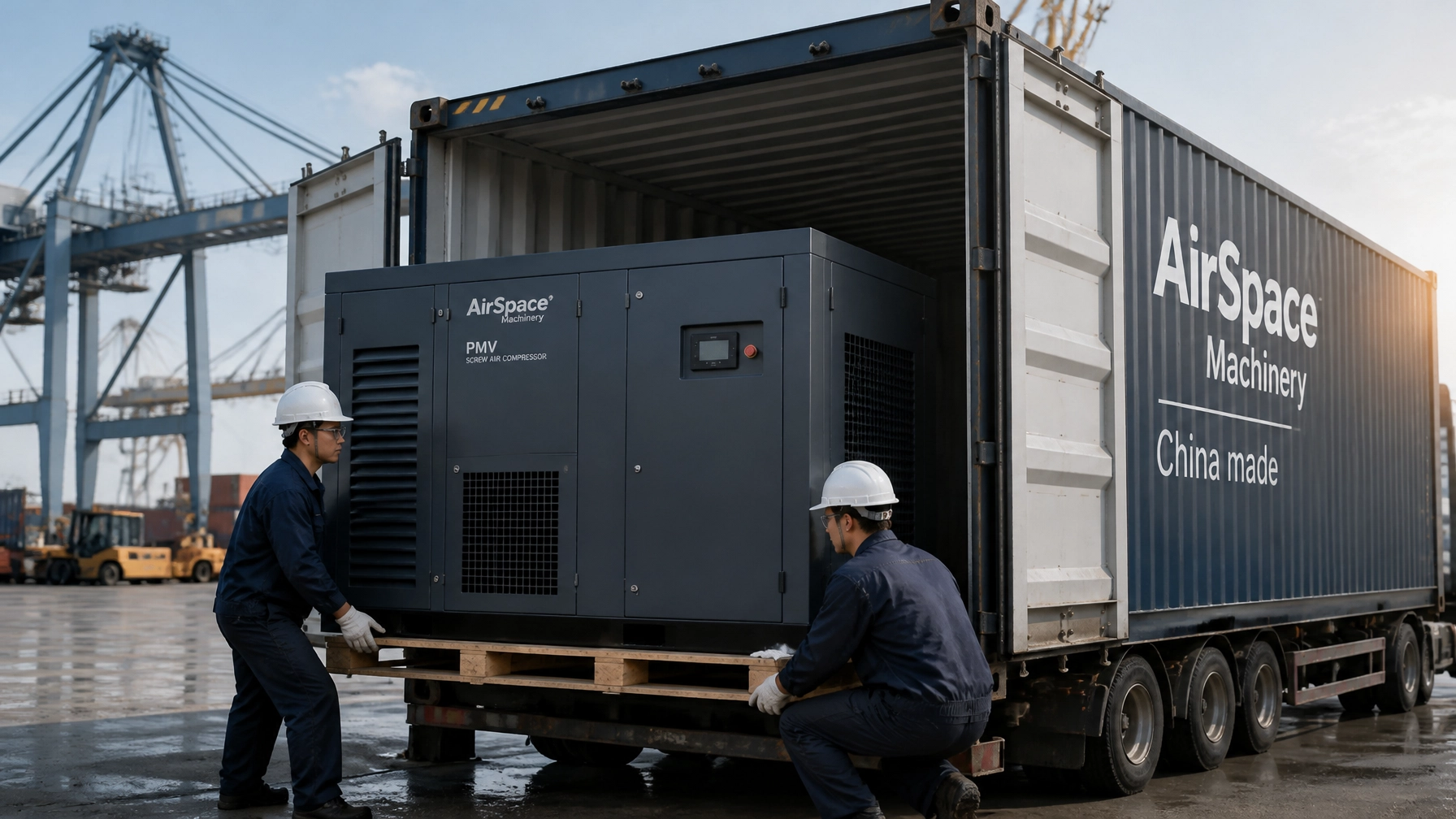
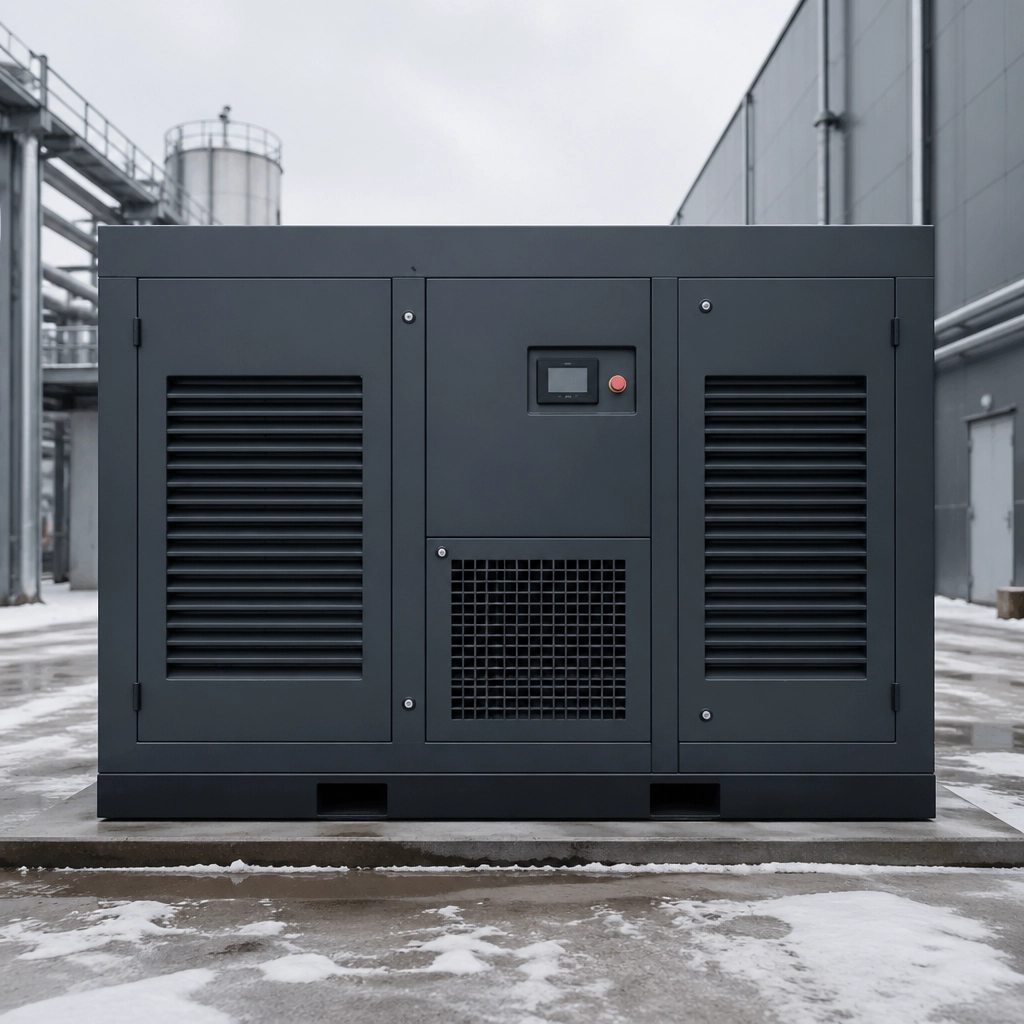
A China made screw air compressor from AirSpace Machinery is already engineered for high-tier performance, using premium BAOSI or Hanbell components. However, even the best hardware can’t fix a hole in a pipe three floors away.
By layering smart monitoring for air compressors over our PMV technology, you aren't just buying a machine; you're buying an autonomous utility. Our systems are built to CE and ISO 9001 standards, ensuring that your data security is as robust as your air pressure.

Conclusion: Start with the Data, End with the Savings
Transitioning to a smart system isn't a "tech trend": it's a financial imperative. If you are operating a fixed-speed system without monitoring, you are likely leaving 35% of your energy budget on the table.
The ROI Roadmap:
- Conduct an industrial air compressor energy audit to find your baseline.
- Deploy compressed air leak detection machine learning to eliminate the 20-30% waste.
- Upgrade to a China made screw air compressor with PMV technology to capture the energy delta.
Ready to stop paying the "Unload Tax"? Whether you are in automotive, electronics, or food processing, our engineering team is ready to design a system that pays for itself.
[Get a Proposal]
Lead time depends on configuration. All systems are CE and ISO 9001 certified.
Author Box: Penny Winston
Penny Winston is a Technical Writer at AirSpace Machinery, specializing in the intersection of IIoT and industrial fluid dynamics. She is the lead developer of 'The 35% Energy Delta' framework and an advocate for 'The Fourth Utility Concept' and 'ISO 8573-1 Class 0 Integrity' in global manufacturing.
Reviewed by Engineering