
Short answer: Our "Extreme Climate" series is designed with a high-efficiency cooling fan and oversized oil cooler specifically for ambient temperatures up to 52°C.
Written by Penny Winston, Blog Writer, AirSpace Machinery Co., Ltd. — a 4,000 m² compressor manufacturing facility in Shanghai, ISO 9001:2015 certified and CE marked.
Reviewed by Richard Moore, Field Technical Manager.
The industrial air landscape in Southeast Asia is currently facing a silent, expensive crisis. In Malaysia, Indonesia, and Thailand, factory managers are finding that their legacy brand compressors, units built for the dry, temperate climates of Western Europe, are failing at a catastrophic rate. Recent field data from major regional distributors reveals a staggering 51% of all compressor failures are bearing-related, directly attributed to unmanaged tropical humidity.
When these failures occur, the “Regional Delivery Wedge” creates a secondary crisis: a 12 to 16-week lead time for replacement parts or new units from traditional OEM supply chains. For a palm oil mill or LNG processing facility, three to four months of compromised air capacity is not just an inconvenience; it is a financial bleed that can exceed $9,000 per year in maintenance and lost efficiency alone.
AirSpace Machinery has engineered a solution to bridge this wedge. By combining Shanghai-based manufacturing (4 to 6-week lead times) with an “Extreme Climate” engineering package, we eliminate the Humidity Tax and the Delivery Wedge in one move.
10 SPECIFIC HEADACHES FOR SEA INDUSTRIAL BUYERS
- THE BEARING DEATH SPIRAL: Standard bearings in legacy units are not sealed for 90%+ humidity, leading to moisture ingress and pitting within the first 4,000 hours.
- THE 16-WEEK BLACK HOLE: Waiting 4 months for a legacy OEM unit while your current system runs on a rented, inefficient backup.
- THE HUMIDITY TAX: Paying for excess energy because your undersized moisture separators are forcing the compressor to work harder against saturated air.
- LUBRICANT EMULSIFICATION: Water mixing with oil to create a “milky” sludge that destroys airend tolerances.
- GRID INSTABILITY TRIPS: Standard electronics that cannot handle the ±15% voltage fluctuations common in regional industrial parks.
- DEW POINT DISASTERS: Integrated dryers that are rated for 20°C ambient temperatures failing instantly in 35°C Malaysian heat.
- CORROSION CREEP: Internal piping and coolers that are not treated for high-salinity coastal environments (common in LNG/Port ops).
- SPARE PART RANSOM: Paying 300% markups to regional distributors because they hold the main local stock for proprietary components.
- THE UNLOAD TAX: Fixed-speed legacy units wasting up to 40% of their energy during unloading cycles in variable-demand palm oil processing.
- LACK OF LOCALIZED SPECS: Sales engineers who recommend European standard setups that physically cannot breathe in the tropics.
THE REGIONAL DELIVERY WEDGE: A COMPARISON
Below is a direct comparison between traditional OEM supply chains (legacy brands) and the AirSpace Machinery response for the Southeast Asian market.
LEAD TIME AND RELIABILITY MATRIX
- Metric: Standard Lead Time (SEA)
- Legacy Brand Distributors: 12 – 16 Weeks
- AirSpace Machinery PMV: 4 – 6 Weeks (Configuration Dependent)
- Metric: Bearing Failure Rate (Regional)
- Legacy Brand Distributors: 51% (Attributed to Humidity)
- AirSpace Machinery PMV: < 2% (Engineered for Tropics)
- Metric: Moisture Separation
- Legacy Brand Distributors: Standard Internal Trap
- AirSpace Machinery PMV: Oversized Multi-Stage Centrifugal Separator
- Metric: Ambient Temp Rating
- Legacy Brand Distributors: 40°C Max (Standard)
- AirSpace Machinery PMV: 52°C Continuous Duty
- Metric: Energy Delta (VSD vs Fixed)
- Legacy Brand Distributors: Varies (Often Fixed Speed Stock)
- AirSpace Machinery PMV: 35% Energy Delta via PMV Technology
UNDERSTANDING THE HUMIDITY TAX IN MALAYSIA AND INDONESIA
In the palm oil and LNG sectors, air is the “Fourth Utility.” However, in SEA, that utility comes with a hidden “Humidity Tax.” When ambient humidity exceeds 85%, a standard 75kW compressor can pull in over 20 liters of water per hour. If your system is not designed to handle this, that water ends up in your oil, your bearings, and your downstream tools.
Legacy brands often provide a “one size fits all” unit. At AirSpace, we implement “Extreme Climate Engineering.” This includes:
- OVERSIZED MOISTURE SEPARATORS: We increase the volume of our centrifugal separators by 40% compared to standard designs to ensure water is dropped out of the air stream before it ever touches the primary filters.
- INTEGRATED REFRIGERATED DRYERS: Our SEA-spec units come with oversized dryers rated for higher ambient temperatures, ensuring a stable pressure dew point even when the factory floor hits 38°C.
- HUMIDITY-RESISTANT BEARINGS: We utilize specific seal configurations and high-viscosity lubricants designed to repel moisture ingress, directly addressing the 51% failure point seen in legacy competitors.
THE DELIVERY WEDGE: WHY WAITING 16 WEEKS IS A BUSINESS RISK
The “Delivery Wedge” is the gap between when your production demand spikes and when your equipment actually arrives. Legacy brands rely on centralized European or American manufacturing. When a Malaysian LNG plant needs a 180HP unit to maintain pressure, a 4-month wait time is a “money leak” that affects the bottom line every single day.
AirSpace Machinery leverages our 4,000 m² facility in Shanghai to offer a 4 to 6-week shipping window to Port Klang or Tanjung Pelepas. This isn’t just about speed; it’s about business continuity. By shrinking the delivery wedge, we allow factories to respond to growth or equipment failure without the “ransom” of long lead times.
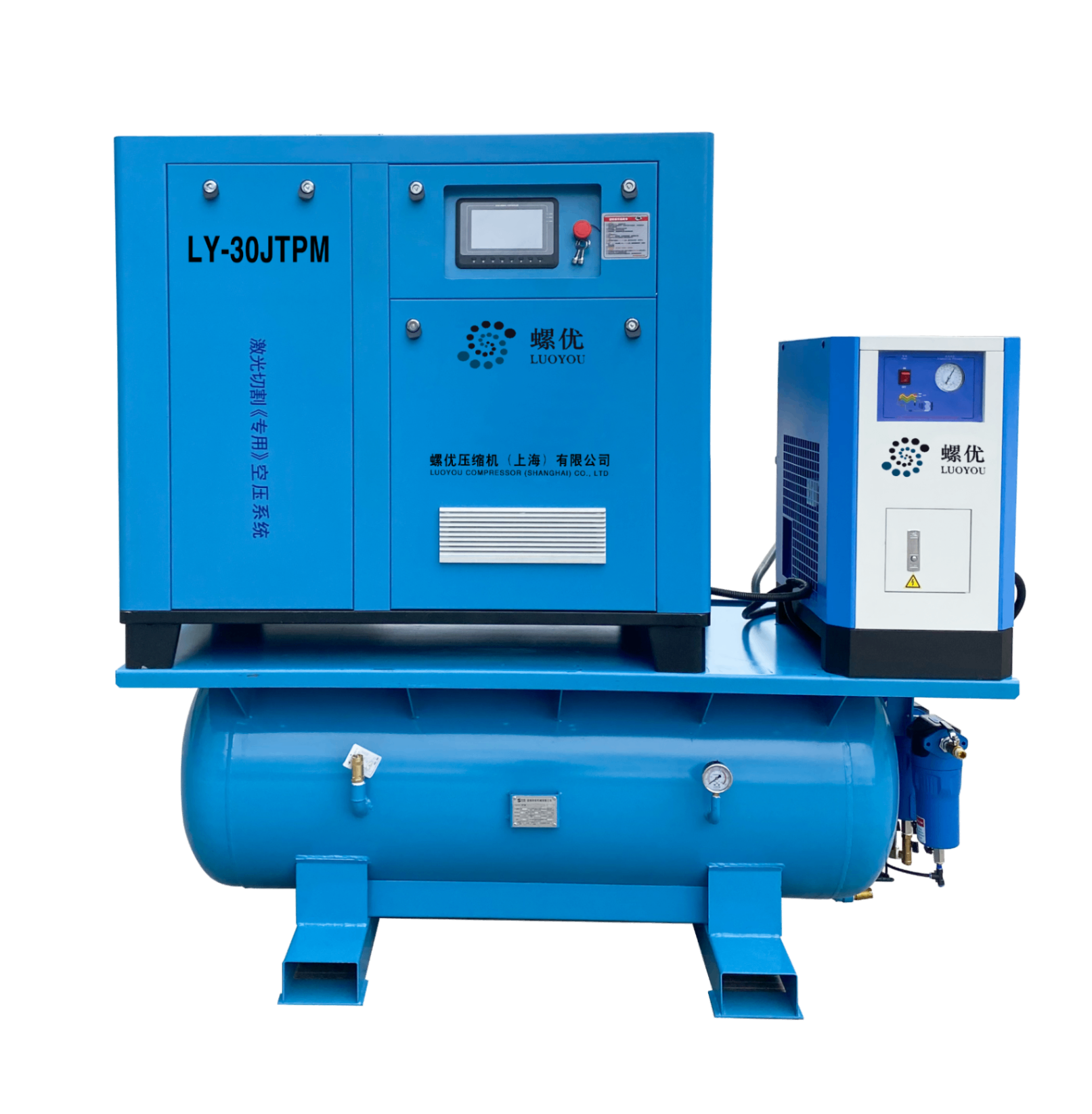
LOCALIZED SEA ENGINEERING: BEYOND THE COMPRESSOR
Operating in the SEA region requires more than just a powerful motor. It requires an understanding of regional mandates and environmental stressors:
- GRID STABILITY: Malaysian industrial parks often experience voltage sags. AirSpace PMV units (Permanent Magnet Variable Frequency) are equipped with heavy-duty inverters that can bridge minor fluctuations without tripping, ensuring 99.9% uptime.
- DEW POINT MANAGEMENT: For electronics and LNG applications requiring ISO 8573-1 Class 0 integrity, our twin-tower desiccant dryer integrations provide the “Engineering Freedom” to operate without fear of downstream contamination.
- THE 35% ENERGY DELTA: In a region where electricity costs are rising, moving from a legacy fixed-speed unit to an AirSpace PMV system typically results in a 35% reduction in power consumption. This isn’t marketing fluff; it’s the result of permanent magnet motors that don’t lose efficiency at partial loads.
FREQUENTLY ASKED QUESTIONS FOR SEA BUYERS
- Q: How do we verify your CE and ISO 9001 certifications?
- A: All AirSpace Machinery units ship with physical and digital copies of our CE and ISO 9001:2015 documentation. These are verifiable via the issuing accreditation bodies and are standard with every export project.
- Q: What logistics support is available for Malaysia/Indonesia?
- A: We provide full export support, including CO (Certificate of Origin) documentation which can often reduce regional import duties. We work with established SEA freight forwarders to ensure door-to-port or door-to-factory delivery.
- Q: Can your PMV technology handle the heat of a non-air-conditioned compressor room?
- A: Yes. Our “Extreme Climate” series is designed with a high-efficiency cooling fan and oversized oil cooler specifically for ambient temperatures up to 52°C.
- Q: What is the lead time for a 30HP PMV unit to Port Klang?
- A: Standard configuration units typically ship within 4 weeks. Custom configurations (high pressure or specific filtration) may take up to 6 weeks.
THE BOTTOM LINE
Don’t pay the Humidity Tax. If you are operating in the Malaysian Palm Oil, LNG, or general manufacturing sectors, the 16-week lead times and 51% bearing failure rates of legacy brands are a choice, not a necessity. By choosing AirSpace Machinery, you close the Delivery Wedge and secure an industrial air system built for the reality of the tropics.
INTERNAL KNOWLEDGE LOOP
To further your understanding of industrial air efficiency and maintenance, explore our technical guides:
- Learn about the 35% Energy Delta in PMV systems and how it stabilizes factory overhead.
- Compare our Extreme Climate specs against standard industrial builds.
- Understand the ISO 8573-1 Class 0 Integrity requirements for sensitive Malaysian electronics manufacturing.
⚡ Is Your Factory Bleeding Cash?
Most fixed-speed compressors waste $3,600/year in "Unload Tax." Test your waste level in 30 seconds.
RUN THE ROI TEST →Ready to See How Much Your Facility Can Save?
Fill out the form below for a Free Energy Assessment.


