The 13.8 Bar Starvation: How Your Fiber Laser is Bleeding $18,500/Year in Scrap — and Why 16 Bar PMV Fixes It
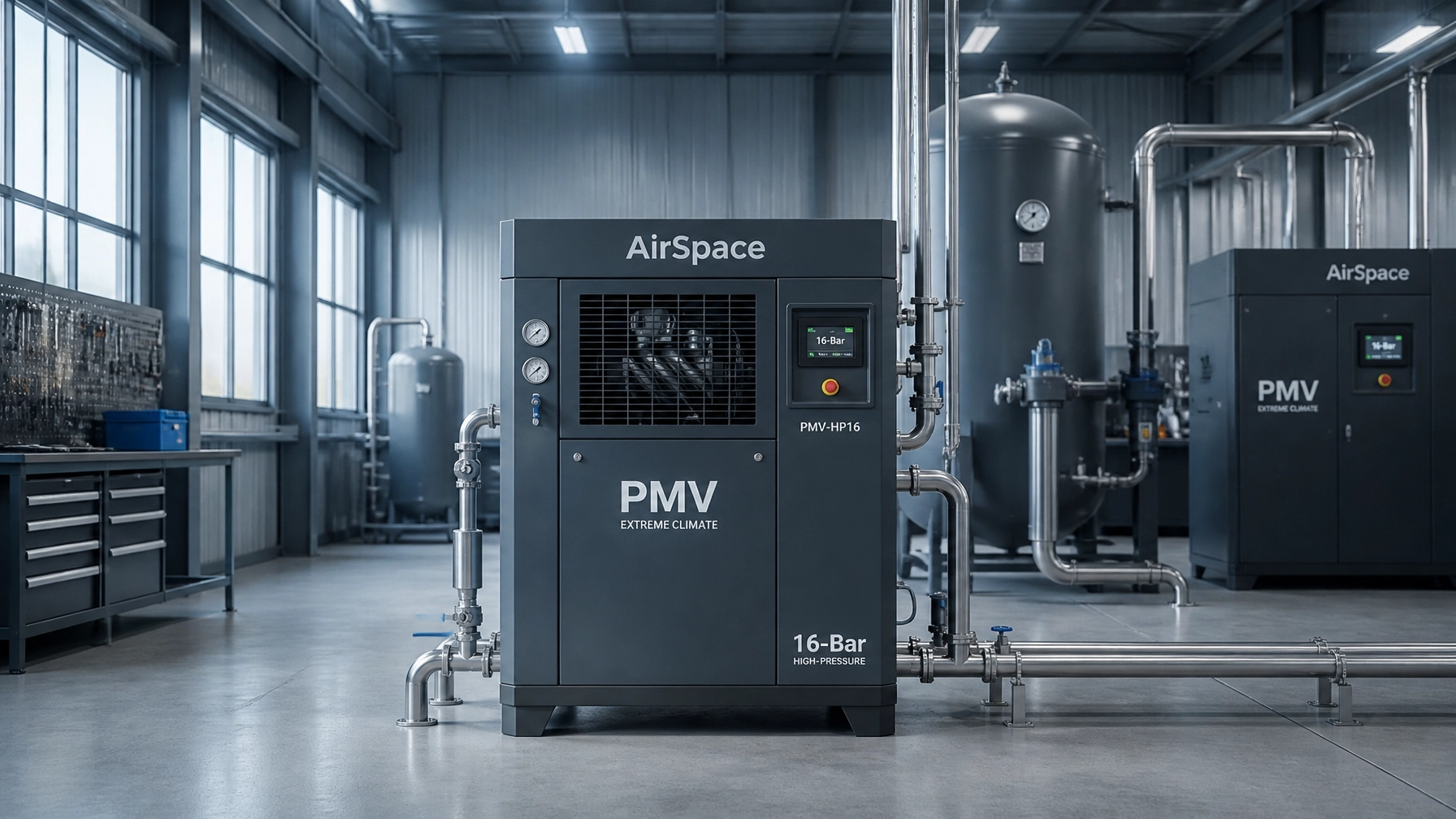
The short answer to why your fiber laser is producing dross and rough edges is simple: Pressure Starvation. While 13.8 bar (200 psi) is the industry standard for general shop air, high-power fiber lasers (6kW to 15kW+) are engineered to run at 16 bar (232 psi) for optimal performance. When you starve a 12kW laser with 13.8 bar, the assist gas lacks the mechanical force to clear molten material from the kerf. This leads to secondary grinding, high scrap rates, and thousands of dollars in wasted nitrogen. Upgrading to a 16-bar Permanent Magnet Variable Frequency (PMV) system like the AirSpace PMV-HP16 provides the ±0.1 bar stability needed to turn air into a precision cutting tool.
Every day, fabrication shop owners in the US, Brazil, Vietnam, and Indonesia lose money because they are treating compressed air as an afterthought. In the world of high-speed fiber lasers, compressed air isn’t just “shop air”, it is the Fourth Utility. If that utility is unstable or under-pressured, your profit margin is the first thing the laser cuts through.
Is your 13.8 bar compressor actually a bottleneck?
Yes. If you are cutting stainless steel over 4mm or aluminum over 6mm, 13.8 bar is often insufficient to eject the melt. Think of it like trying to clear a leaf-clogged gutter with a garden hose instead of a pressure washer. At 13.8 bar, the gas velocity in the nozzle is just below the threshold required for a “clean cut.” The result is “dross”, that jagged, hardened slag on the bottom of the plate that requires manual grinding.
Beyond the pressure itself, legacy fixed-speed compressors fluctuate by as much as ±0.5 bar. In laser cutting, a 0.5 bar drop during a pierce or a complex corner is a death sentence for cut quality. AirSpace PMV technology holds pressure dead-steady at ±0.1 bar, ensuring the laser beam and the assist gas work in perfect synchronization from the first millimeter to the last.
How much is the Nitrogen Tax costing your shop?
If you are running a 12kW laser on two shifts, you are likely paying a “Nitrogen Tax” of approximately $24,000 per year. Many shops believe they must use bottled nitrogen to get a clean, oxide-free edge on stainless steel. However, with the right filtration and 16 bar of clean, dry air, you can achieve professional-grade cuts on stainless steel up to 10mm and mild steel up to 16mm.
By switching to on-site 16-bar compressed air, most shops pay for their new AirSpace compressor in under 14 months through nitrogen savings alone. This is what we call Engineering Freedom, the ability to stop being a slave to gas delivery schedules and price hikes.
The 13.8 Bar vs. 16 Bar Performance Comparison
| Parameter | 13.8 Bar Fixed-Speed | 16 Bar AirSpace PMV-HP16 |
|---|---|---|
| Pressure Stability | ±0.5 bar | ±0.1 bar |
| Max Clean Cut (Stainless) | 4mm | 10mm |
| Nitrogen Required? | Yes (beyond 4mm) | No (up to 10mm) |
| Energy Waste (Idle) | 25-40% unload | <2% PMV ramp |
| Annual Nitrogen Cost | $24,000 | $0 |
| Annual Energy Cost (15kW laser) | $32,000 | $20,800 (35% savings) |
| Total Annual Operating Cost | ~$56,000 | ~$20,800 |
| ROI Period | N/A | <14 months |
Visualizing the Starvation Zone
Imagine a chart of metal thickness. From 1mm to 4mm, 13.8 bar and 16 bar look similar. This is the Safe Zone. However, as you cross the 5mm threshold, the 13.8 bar line enters the Starvation Zone. The mechanical force of the gas drops below the melting point’s resistance. The 16 bar line, however, remains in the Sweet Spot up to 10mm. This 2.2 bar difference is the difference between a part that goes straight to shipping and a part that goes to the scrap bin.
Why is the Integrated System critical for lasers?
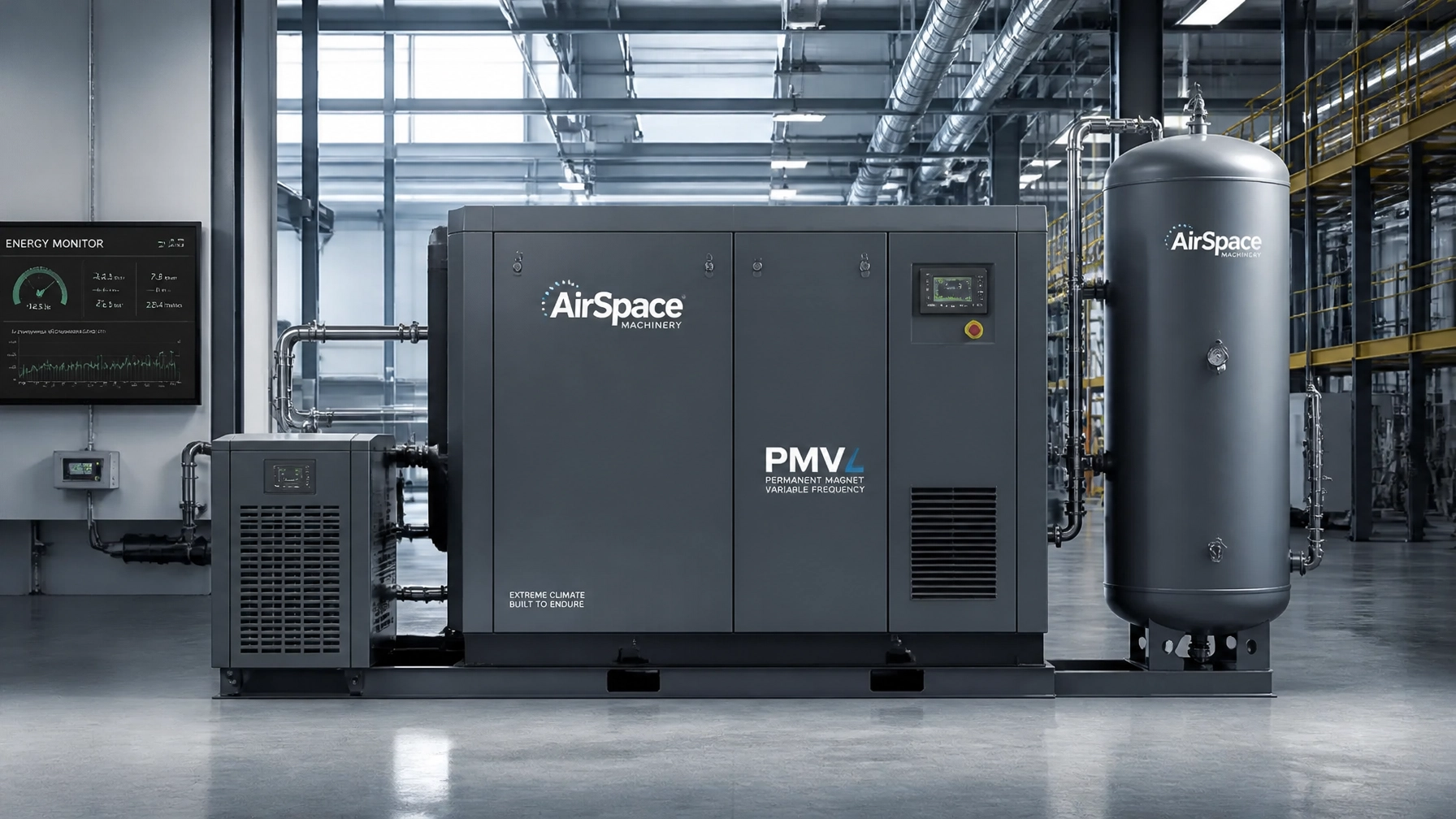
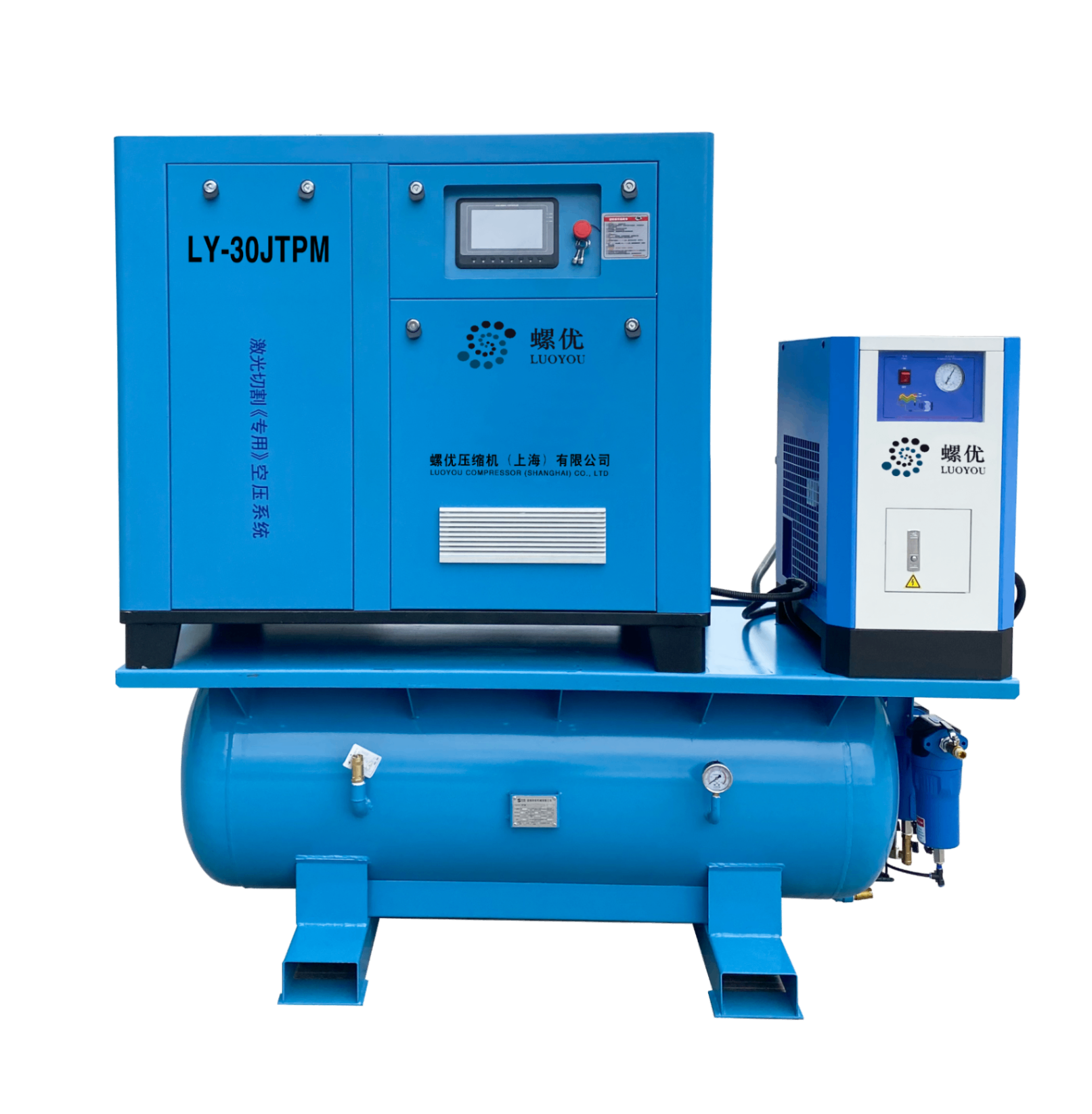
A fiber laser is a sensitive piece of optical equipment. If a single drop of oil or moisture reaches the laser head, you are looking at a $10,000 to $30,000 repair bill. This is why the AirSpace PMV-HP16 is offered as a turnkey integrated config: PMV Compressor + Refrigerated Dryer + 4-Stage Filtration + Receiver Tank.
By housing everything in one footprint, we eliminate the pressure drops and leak points associated with external piping. You get ISO 8573-1 Class 1-2-2 air quality directly at the nozzle. It is a plug-and-play solution that protects your optics while boosting your output.
Regional Challenges: The Industrial Tax Series
Depending on where your factory is located, you are likely paying a hidden tax on your air production.
- Vietnam and Indonesia (The Humidity Tax): High ambient moisture in Southeast Asia is the enemy of laser cutting. Without high-tier integrated drying, condensation forms in the assist lines. This water vapor doesn’t just ruin the cut; it can fog the protective window of the laser. Our extreme-climate engineered systems are built to handle 90% humidity without breaking a sweat.
- Brazil (The Altitude Tax): In higher elevation regions of LATAM, air is thinner. A standard 13.8 bar compressor loses effective mass flow at altitude. A 16-bar system provides the necessary overhead to compensate for this Altitude Tax, ensuring your laser still “feels” the pressure required to clear the kerf.
- United States (The Efficiency Tax): With rising energy costs, the 35% Energy Delta of PMV technology is no longer a luxury, it is a necessity. While your laser is loading, unloading, or nesting, a fixed-speed compressor is still spinning, wasting 25-40% of its full-load power. The AirSpace PMV ramps down to near zero during these idle periods, putting that cash back into your pocket.

How does PMV technology deliver the 35% Energy Delta?
Traditional compressors use induction motors that run at a constant speed. To regulate pressure, they “unload”, meaning the motor keeps spinning but produces no air. This is like sitting at a red light with your foot floored on the gas pedal.
AirSpace uses Permanent Magnet motors paired with a Variable Frequency Drive. The motor only spins as fast as the laser demands. If the laser stops, the compressor stops. This precision control is why we can guarantee significant energy savings compared to legacy brands that rely on outdated “load/unload” cycles.
Common Questions from Shop Owners
Question: Can I just turn up the pressure on my current 13.8 bar compressor to 16 bar?
Answer: No. Most standard 8-13 bar compressors are not mechanically rated for 16 bar. Over-pressuring a standard unit will lead to catastrophic air-end failure, motor burnout, and safety valve blowouts. You need a dedicated high-pressure screw air compressor designed for 16-bar continuous duty.
Question: Is a China made screw air compressor reliable for 24/7 laser operations?
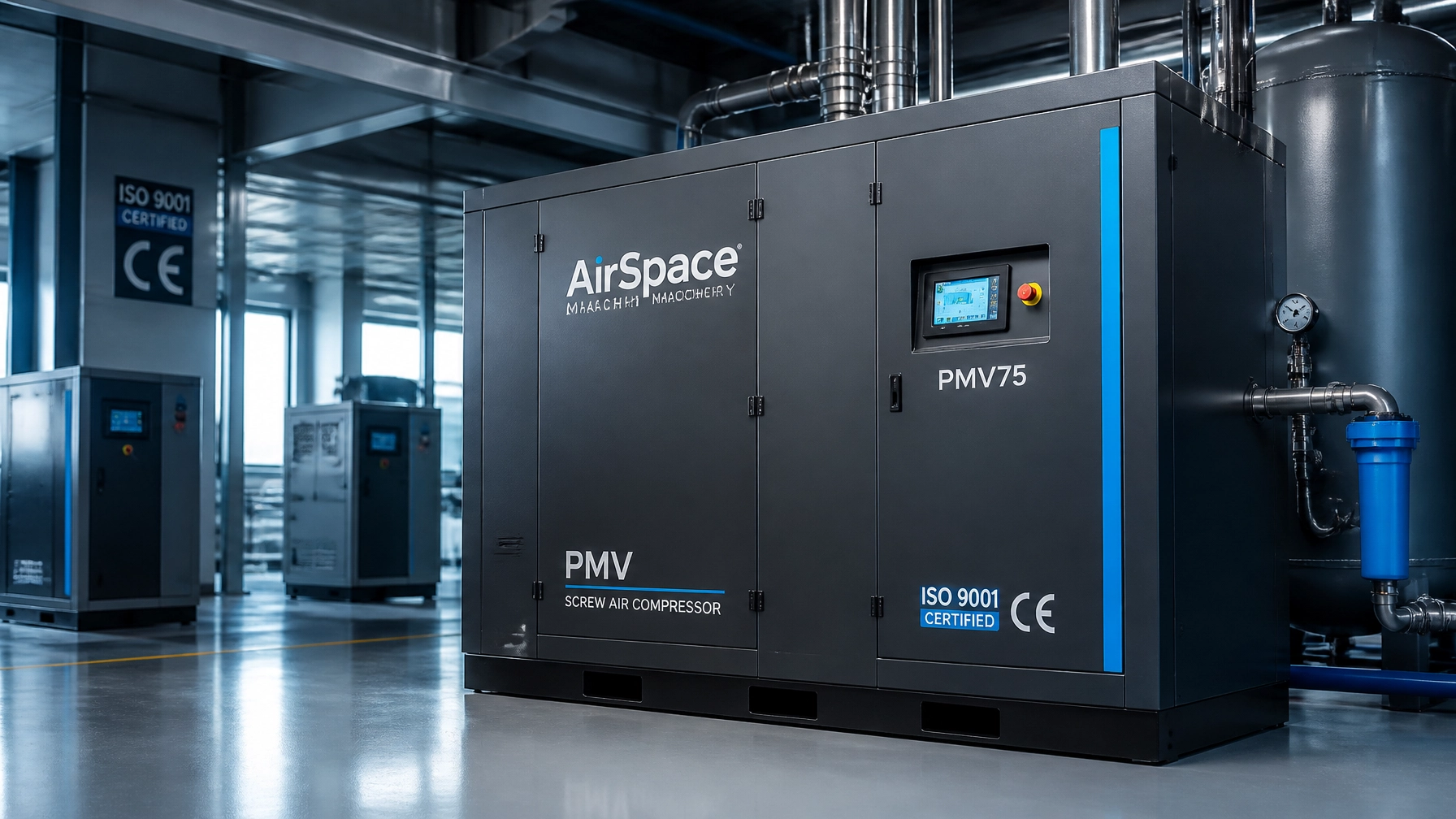
Answer: AirSpace Machinery follows strict CE and ISO 9001 quality standards. Our 4000m² facility produces systems that power some of the largest fabrication hubs in Asia and South America. With 100 million yuan in annual sales, our reliability is proven in the field, not just on a spec sheet.
Question: Does the integrated dryer really eliminate the need for an external one?
Answer: Yes. Our integrated refrigerated dryers are sized specifically for the flow of the 16-bar air-end. This ensures the dew point remains stable, even during peak summer temperatures.
Conclusion: Stop Bleeding, Start Cutting
Your fiber laser is likely the most expensive machine in your shop. Don’t let a sub-par air system turn it into a scrap-making machine. By moving from 13.8 bar starvation to 16 bar PMV stability, you eliminate dross, kill the nitrogen tax, and capture the 35% energy delta.
To see how an AirSpace system can be configured for your specific 6kW-15kW laser, visit our internal guides on the Integrated vs Modular debate, explore the PMV VSD Secrets, or learn how to turn your compressor into a Profit Powerhouse.
Ready to eliminate the Nitrogen Tax?
Get a Proposal
Author: Penny Winston
The 35% Energy Delta | The Fourth Utility Concept | ISO 8573-1 Class 0 Integrity
Reviewed by Engineering
⚡ Is Your Factory Bleeding Cash?
Most fixed-speed compressors waste $3,600/year in "Unload Tax." Test your waste level in 30 seconds.
RUN THE ROI TEST →Ready to See How Much Your Facility Can Save?
Fill out the form below for a Free Energy Assessment.