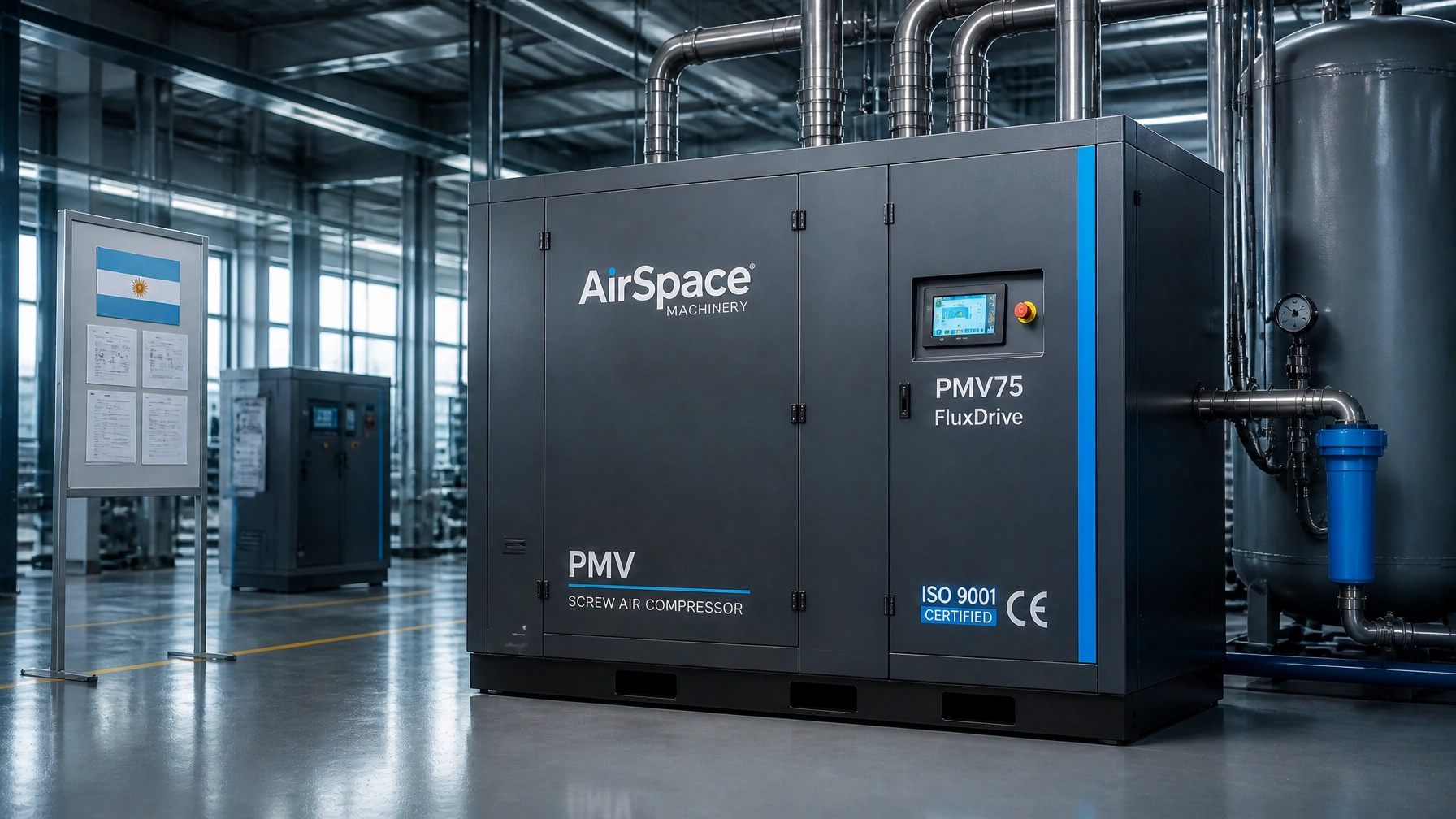
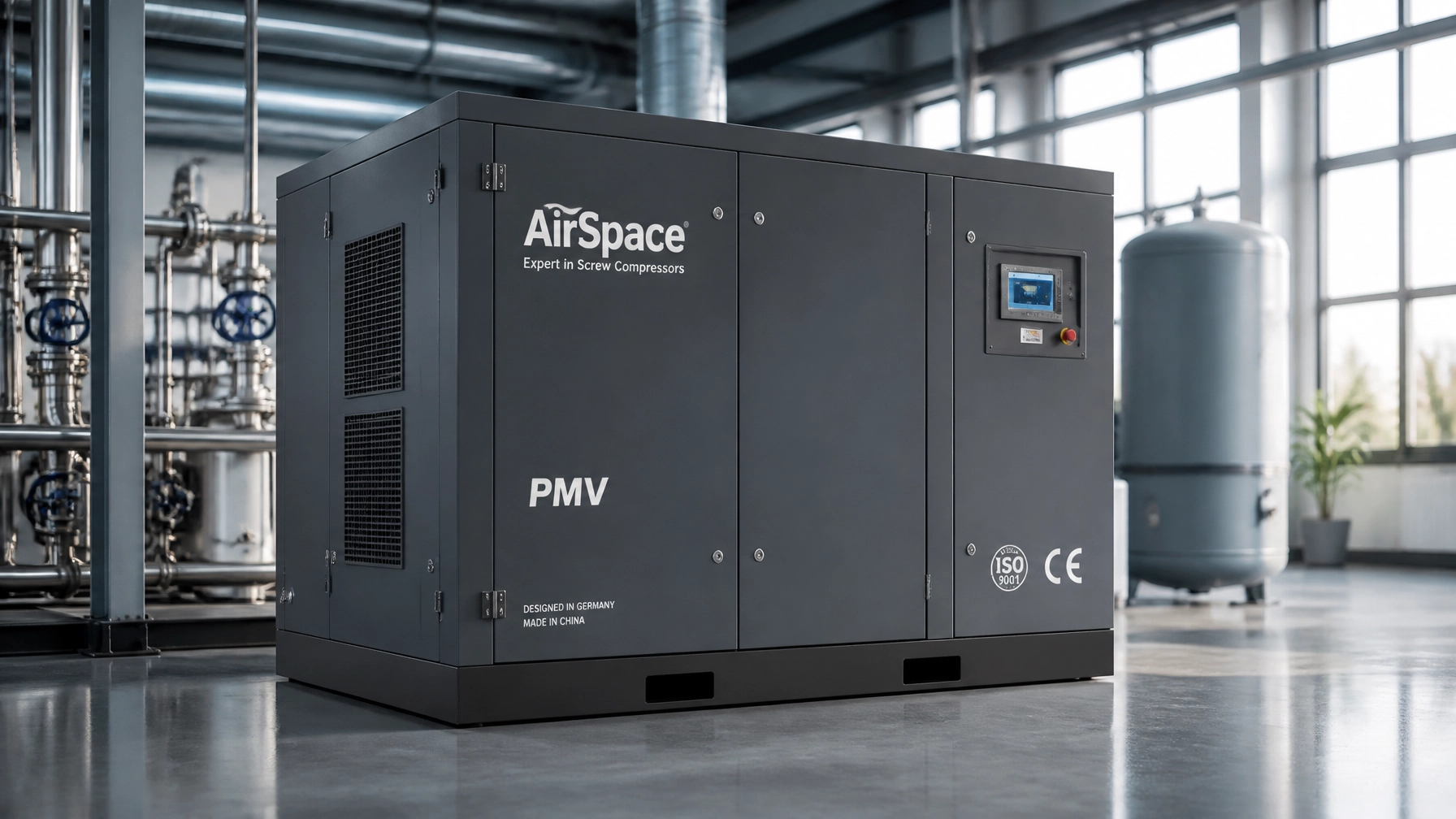
Yes, if you are operating in the pharmaceutical or biotech industry, a pharmaceutical grade oil-free air compressor is a non-negotiable requirement. To meet the stringent ISO 8573-1 Class 0 standard and comply with FDA or EMA regulations, your compressed air must be completely free of oil aerosols, vapors, and liquids. Using an oil-lubricated compressor, even with high-end filtration, risks catastrophic product contamination, expensive batch recalls, and legal liability.
At AirSpace Machinery Co., Ltd., we have spent over 20 years perfecting air compression technology. Operating out of our 4,000m² specialized facility with an annual sales volume exceeding 100 million yuan, we understand that for pharmaceutical manufacturers, “clean enough” is never actually enough.
Is “Oil-Free” just a marketing buzzword, or is there a technical difference?
There is a massive technical difference. In a standard screw compressor, oil is injected into the compression chamber to seal, lubricate, and cool the air. In a high-efficiency oil-free screw compressor, the compression chamber is entirely dry. The rotors never touch, thanks to high-precision timing gears, and special coatings ensure they can operate without a drop of oil in the air stream.
When we talk about a “pharmaceutical grade” system, we aren’t just talking about the compressor itself. We are talking about the entire air treatment chain, dryers, stainless steel piping, and specialized filtration, designed to ensure that zero oil ever comes into contact with your medicine, packaging, or lab equipment.
What does ISO 8573-1 Class 0 actually mean for my factory?
ISO 8573-1 is the international standard that categorizes air purity. “Class 0” is the most stringent category. It does not mean “zero contamination” (which is physically impossible), but it means that the oil concentration (including vapor) is lower than what is allowed in Class 1.
Typically, Class 0 is specified by the equipment manufacturer or the end-user and must be cleaner than Class 1 (which allows <0.01 mg/m³ of oil). For pharmaceutical buyers, achieving Class 0 is the only way to satisfy auditors that you have taken every possible precaution against cross-contamination.
Why can’t I just use an oil-injected compressor with very high-quality filters?
This is a question we hear a lot from companies trying to save on initial capital expenditure. Here is the reality: filters can fail.
- Vapor Bypass: Standard coalescing filters are great at catching liquid oil, but they struggle with oil vapor. If the ambient temperature rises, oil vapor can pass straight through your filters and condense inside your product piping.
- Single Point of Failure: If a separator element ruptures or a filter bypass valve sticks, your entire production line is instantly contaminated with liters of lubricating oil.
- Pressure Drop: Pushing air through multiple layers of “super-fine” filters creates a massive pressure drop. Your compressor has to work harder, consuming more electricity, just to overcome the resistance of those filters.
Using a high-efficiency oil-free screw compressor removes the source of the risk entirely.
How does PMV technology help in a pharmaceutical setting?
Permanent Magnet Variable Frequency (PMV) technology is a game-changer for energy savings. Pharmaceutical processes often have fluctuating air demands, sometimes you are running a full bottling line, and other times you are just running basic lab ventilation.
A Permanent Magnet Variable Frequency (PMV) Screw Air Compressor adjusts its motor speed in real-time to match your exact air usage. This prevents “unloaded” running time, where a traditional compressor stays powered on but produces no air. Our PMV systems can reduce energy bills by up to 35% compared to fixed-speed units. When you consider that electricity accounts for about 70% of the total cost of owning a compressor over ten years, the PMV upgrade pays for itself very quickly.
Are these machines durable enough for 24/7 pharmaceutical production?
Absolutely. Because oil-free rotors operate at high speeds and high temperatures, the engineering requirements are much stricter than for standard machines. At AirSpace Machinery, we utilize 20 years of engineering excellence to ensure our rotor coatings and cooling jackets are built for continuous operation.
We put every unit through a rigorous testing phase in our facility before it is crated for export. We know that in the pharmaceutical world, downtime isn’t just an inconvenience; it can mean the loss of a multi-million dollar batch of temperature-sensitive biologicals.
What are the regional considerations for buyers in SEA or LATAM?
If you are buying for a facility in Southeast Asia (SEA), humidity is your biggest enemy. High ambient moisture can lead to excessive condensate in the air system. For these markets, we recommend integrated refrigerated dryers with oversized heat exchangers to ensure a stable dew point, even in tropical conditions.
For our clients in Latin America (LATAM), grid stability is often a concern. Fluctuations in voltage can fry sensitive electronics. We equip our export-grade industrial compressors with robust electrical components and phase-protection relays to handle “dirty” power without tripping or damaging the PMV inverter.
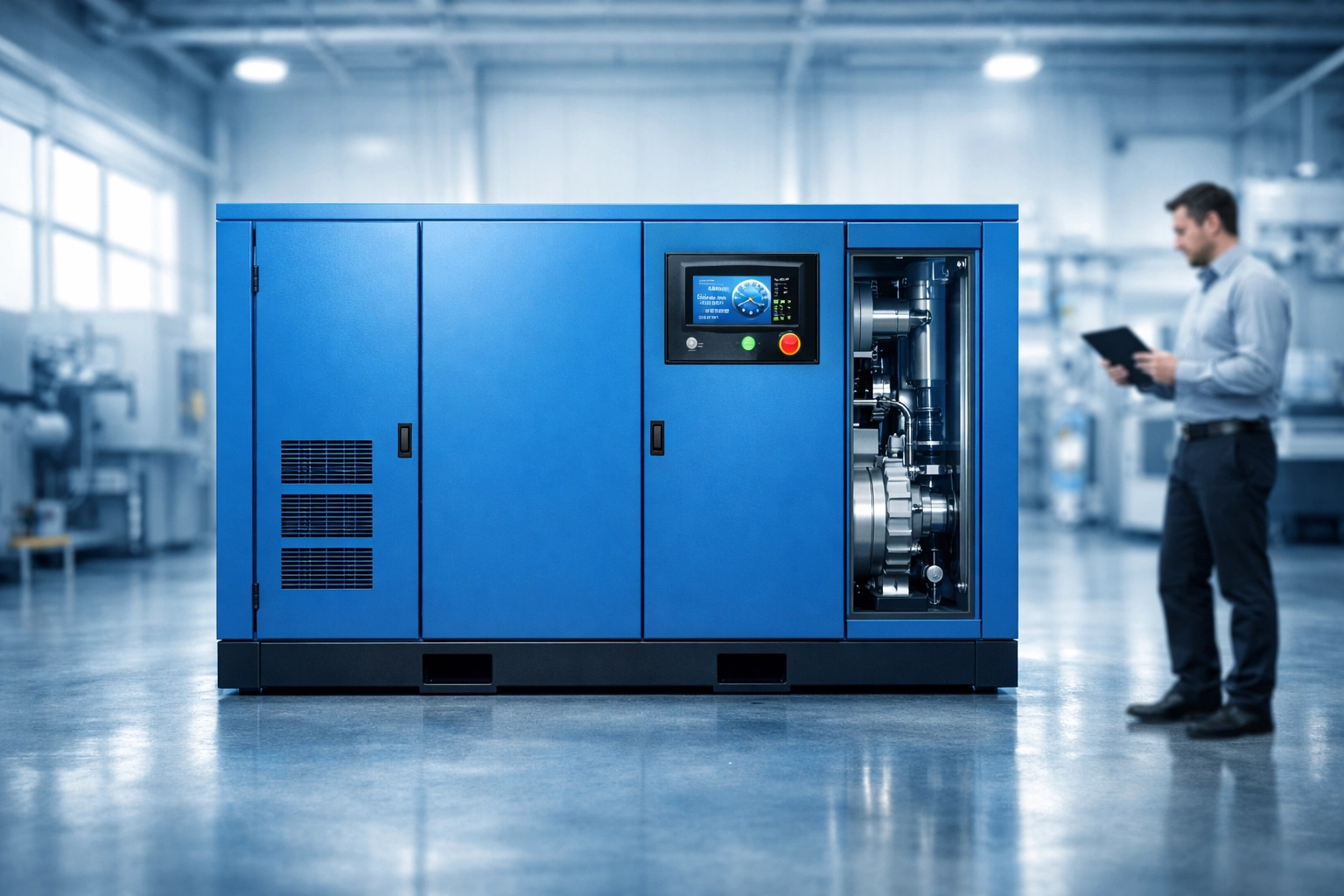
How can I verify the CE and ISO 9001 documentation for an international order?
When importing machinery from China, transparency is key. Every AirSpace compressor comes with a verifiable CE certificate and our factory operates under ISO 9001 quality management standards.
When you request a proposal, we provide the specific serial numbers and certification copies that match your equipment. We also provide full export support, including detailed packing lists and sea freight coordination, ensuring that the machine that arrives at your dock is exactly what was tested in our 4,000m² facility.
Can a single unit handle both the packaging line and the cleanroom?
While it is possible, many of our clients prefer a “zoned” approach. You might use a large 180hp efficient screw air compressor for the main plant utility air and dedicated oil-free scroll compressors for point-of-use application in the cleanroom. However, for most modern pharmaceutical plants, a centralized oil-free screw system is the most cost-effective and easiest to maintain.
Summary: The Economic Truth
The “truth” mentioned in the title is this: A pharmaceutical grade oil-free air compressor has a higher upfront cost, but it is the cheapest insurance policy you will ever buy. Between the energy savings of PMV technology and the total elimination of oil-contamination risk, the Return on Investment (ROI) is undeniable.
If you are looking to upgrade your facility or are designing a new production line, don’t leave your air quality to chance.
Get a Proposal
To provide an accurate quote, please specify your required pressure (bar/psi) and flow rate (m³/min or CFM). Lead times vary based on specific configurations and voltage requirements.
Sources & Standards
- ISO 8573-1:2010: Compressed air : Part 1: Contaminants and purity classes. (Standard for Class 0 requirements).
- FDA CFR Title 21: Guidelines on Good Manufacturing Practice (GMP) for pharmaceutical products.
- CE (Conformité Européenne): Mandatory conformity marking for products sold within the European Economic Area.
Author: Penny Winston
Penny is a technical writer at AirSpace Machinery Co., Ltd., specializing in energy-efficient industrial solutions and global manufacturing standards. With a background in industrial engineering, she helps B2B buyers navigate the complexities of air compression technology.
Reviewed by Engineering
This article has been reviewed by the AirSpace Engineering Department to ensure technical accuracy regarding PMV technology and ISO compliance.
📅 Last updated:
⚡ Is Your Factory Bleeding Cash?
Most fixed-speed compressors waste $3,600/year in "Unload Tax." Test your waste level in 30 seconds.
RUN THE ROI TEST →Ready to See How Much Your Facility Can Save?
Fill out the form below for a Free Energy Assessment.