
Short answer: Compressor efficiency often drops after 24 months in high-growth Saudi industrial zones because real operating conditions are harsher than factory test conditions.
Written by Penny Winston, Blog Writer, AirSpace Machinery Co., Ltd. — a 4,000 m² compressor manufacturing facility in Shanghai, ISO 9001:2015 certified and CE marked.
Reviewed by Richard Moore, Field Technical Manager.
Compressor efficiency often drops after 24 months in high-growth Saudi industrial zones because real operating conditions are harsher than factory test conditions. Heat, dust loading, long duty cycles, and fast capacity expansion can reduce actual air output by 10% to 15% while energy consumption stays flat or rises. The fix is practical: choose high-performance industrial air compression systems built for longevity, prioritize Permanent Magnet Variable Frequency (PMV) screw air compressors with proper filtration and cooling, and verify performance against ISO 1217 Annex C/E test methods rather than brochure curves. AirSpace Machinery Co., Ltd. brings 20 years of engineering excellence to this problem, with designs focused on long-term efficiency, not just day-one numbers.
What is the “Zero-Hour Performance Trap” in Industrial Manufacturing?
The Zero-Hour Performance Trap is the discrepancy between a compressor’s laboratory-tested efficiency and its operational performance after the initial break-in period. Manufacturers often promote “high-grade” Specific Power ratings (kW/m³/min) that are only achievable when the machine is brand new.
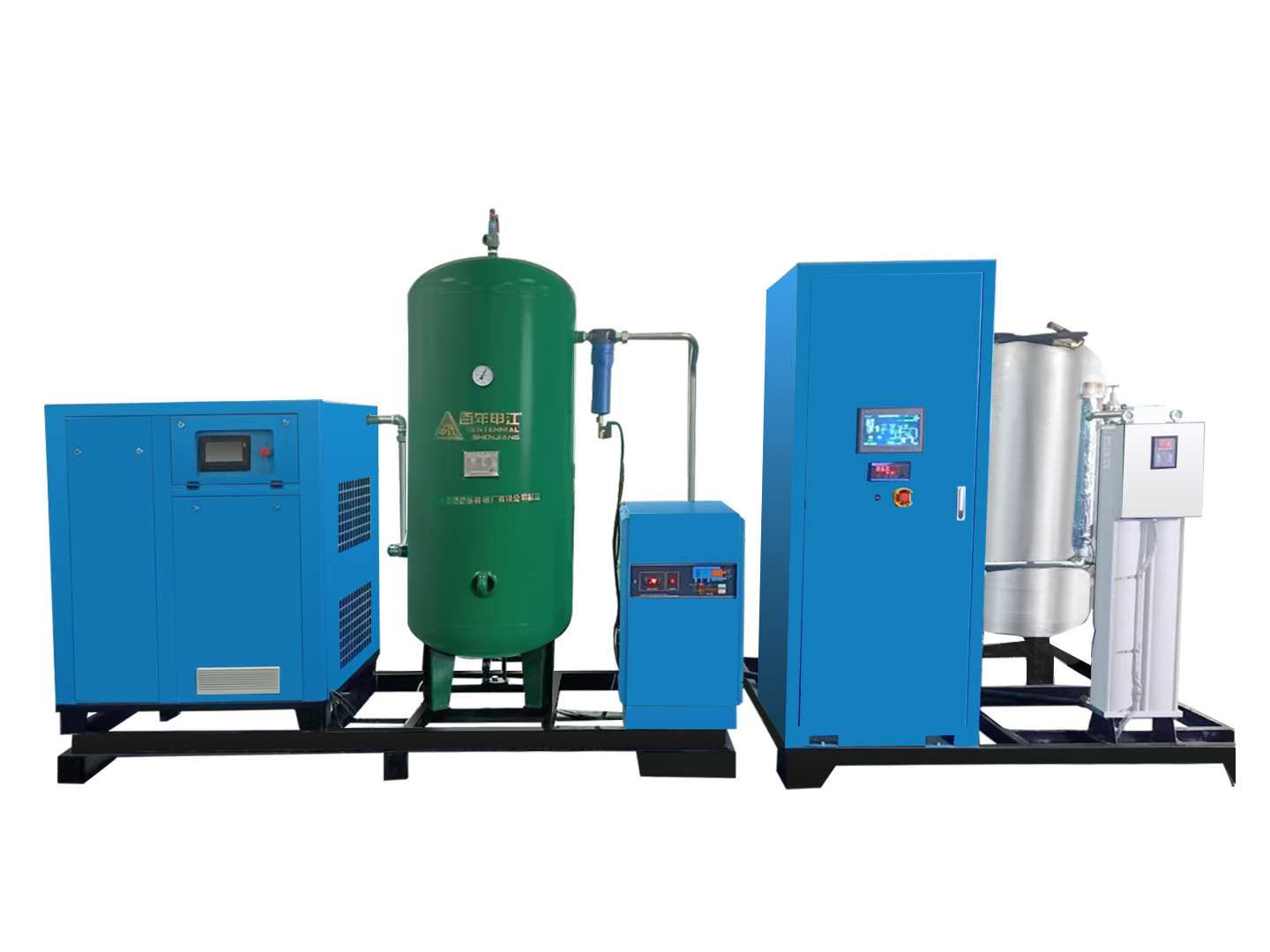
In reality, the first two years of operation are the most volatile for efficiency. For instance, in many oil-free screw compressors, the Teflon or specialized polymer coatings on the rotors begin to erode due to atmospheric particulates and thermal cycling. Once these clearances widen, even by a fraction of a millimeter, internal air “slip” or leakage occurs. This means the screw has to spin faster or work longer to deliver the same volume of air, causing your electricity bill to climb while your CFM drops.
Why Do Rotor Clearances Degrade So Fast?
Efficiency loss is primarily driven by the physical degradation of the compression element and the accumulation of thermal stress on the drive system. In a standard screw compressor, the “sweet spot” for efficiency is a tight clearance between the male and female rotors.
- Coating Erosion: In dry-running (oil-free) units, the coating is the main thing maintaining the seal. After 10,000+ hours (roughly two years of 24/7 operation), these coatings thin out.
- Bearing Wear: Minor axial play in bearings, often caused by poor lubrication or high-heat environments, allows the rotors to shift. This alters the discharge port timing and reduces volumetric efficiency.
- Particulate Sandblasting: Even with standard intake filters, sub-micron particles enter the chamber. At high velocities, these act like sandpaper on the rotor profiles.
Does Permanent Magnet Variable Frequency (PMV) Technology Prevent Efficiency Loss?
Yes, PMV technology mitigates long-term efficiency drops by maintaining high motor efficiency across a wide speed range and eliminating the mechanical losses associated with belts or gears. Unlike standard induction motors that lose significant efficiency when running at partial loads, a Permanent Magnet motor stays within 95%+ efficiency even at 25% load.
AirSpace Machinery Co., Ltd. utilizes advanced PMV technology in our 180hp/132kw fixed speed and variable units to ensure that the “drive” side of the equation doesn’t contribute to the Zero-Hour trap. By using rare-earth magnets that resist thermal demagnetization, the motor’s performance remains stable long after traditional motors begin to show heat-related resistance increases.
How Do High-Growth Saudi Industrial Zones Accelerate Efficiency Loss?
Saudi industrial growth creates a tough operating environment for compressed air systems. In fast-expanding industrial zones, compressors often face high ambient temperatures, airborne dust, longer operating hours, and frequent load variation as new lines come online. Those conditions push cooling systems, intake filtration, and motor protection harder than standard factory test assumptions.
Heat is the first problem. Elevated ambient temperature reduces cooling efficiency and raises discharge temperatures, which increases thermal stress on bearings, seals, lubricants, and motor components. Dust is the second problem. Fine particulates load intake filters faster and can contribute to premature wear if maintenance intervals are not adjusted to site conditions. The third problem is growth itself: when air demand rises faster than the original system design, compressors spend more time outside their optimal operating window, which hurts specific power and reliability.
This is where 20 years of engineering excellence matters. Long-life PMV screw air compressors built for high-performance industrial air compression use robust cooling paths, stable permanent magnet drive systems, and tighter control logic to maintain efficiency under sustained industrial duty. For Saudi buyers, the smart move is to size for current demand plus realistic expansion, confirm site temperature assumptions, and match filtration and dryer selection to dust and moisture conditions.
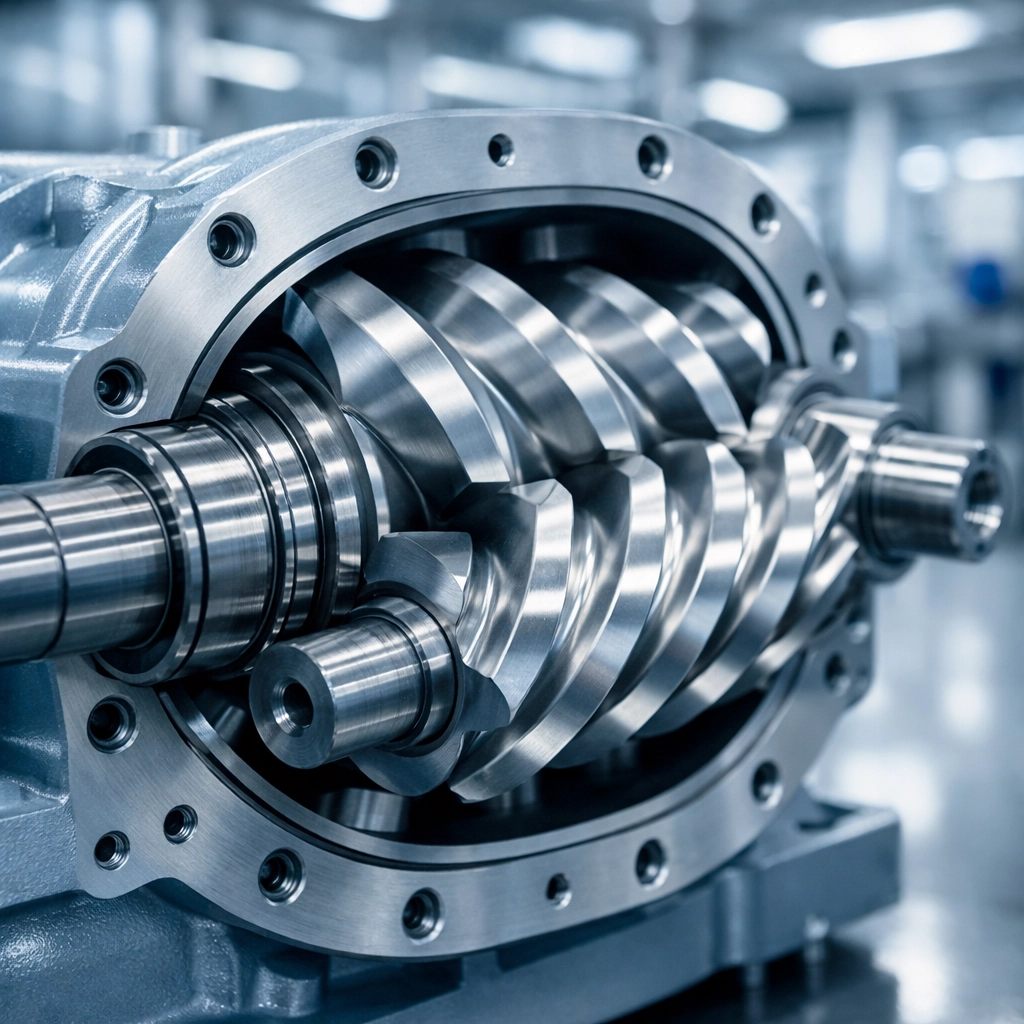
Comparison: Zero-Hour vs. Real-World Performance (2 Years Post-Install)
| Metric | Factory New (Zero-Hour) | Standard Screw (2 Years) | AirSpace PMV Screw (2 Years) |
|---|---|---|---|
| Specific Power | 6.2 kW/m³/min | 7.1 kW/m³/min | 6.4 kW/m³/min |
| Volumetric Efficiency | 98% | 88% | 96% |
| Motor Efficiency | 94% (IE3) | 91% (Due to heat) | 96% (IE4/IE5 PM) |
| Maintenance Cost | Low | High (Wear & Leaks) | Medium (Predictive) |
How Can Saudi Buyers Verify Long-Term Engineering Reliability?
Don’t just compare upfront price. Check whether the supplier can support long service life in demanding regional conditions. In Saudi industrial zones, that means verifying documents, confirming thermal design assumptions, and making sure the machine is built for expansion, not just startup phase demand.
- Verify CE and ISO 9001 Documentation: Request the actual CE Declaration of Conformity and ISO 9001 certificate, not a sales summary. Confirm the manufacturer name, scope, and validity dates match the supplier and product category.
- Factory Scale and Engineering Depth: A manufacturer like AirSpace, with a 4,000 m² facility and 20 years of engineering excellence, has the production and R&D depth to engineer for service life, not just zero-hour performance.
- Annual Sales and Manufacturing Stability: Our 100M yuan annual sales supports investment in precision machining, process control, and test capability. Better tolerances and better validation usually mean better long-term efficiency retention.
- Controls and Drive Quality: Look for integrated VFD control, sensible layout, and serviceable electrical architecture. Control quality matters in high-temperature, high-duty applications because unstable operation increases energy waste and wear.
- Export and Logistics Support: Ask what export documents, packing support, and shipment coordination are available for your region. Global buyers should confirm documentation support before purchase, especially for customs clearance and project timelines.
Purchasing Encyclopedia: Frequently Asked Questions
Q: Why is my compressor running hotter after two years?
A: This is usually due to “fouling” of the heat exchangers (coolers) or a slight increase in internal friction. As the oil degrades or the air-end wears, more energy is converted into heat rather than compressed air.
Q: Does air quality affect compressor efficiency?
A: Absolutely. If your filtration doesn’t meet ISO 8573-1 standards, you are essentially “sandblasting” your rotors from the inside. We recommend integrated systems like our all-in-one laser cutting compressors which include high-efficiency dryers and filters to protect the air end.
Q: How do I know if I’m losing money on energy?
A: Conduct an air audit. If your “unloaded” time is high, or if your compressor is cycling frequently, your efficiency is plummeting. Transitioning to a Variable Frequency model can save up to 35% in energy costs by matching output to actual demand.
The Engineering Truth About Maintenance
Maintenance isn’t just about changing oil; it’s about preserving the original “Zero-Hour” clearances. For example, using non-genuine filters might save you $50 today, but if they allow 5-micron particles through, the resulting rotor wear could cost you $5,000 in extra electricity over the next 24 months.
At AirSpace Machinery, we design our PMV screw air compressors with easy-access steel enclosures. This isn’t just for looks: it’s to ensure that your maintenance team actually performs the service because it isn’t a chore.
Technical Standards Summary
- ISO 1217: The international standard for displacement compressor acceptance tests.
- ISO 8573-1:2010: Defines air purity classes for particles, water, and oil.
- CE Marking: Ensures compliance with EU health, safety, and environmental protection standards.
- ISO 9001: Quality management system certification ensuring consistent product quality.
Focus Keyword
- High-performance industrial air compression
Get a Proposal
Ready to stop the efficiency bleed? Our engineering team can help you select a PMV screw compressor tailored to your specific pressure and flow requirements.
- Pressure Required: [Minimum 5 Bar / 72 PSI – Maximum 16 Bar / 232 PSI]
- Flow Required: [Specify m³/min or CFM]
- Lead Time: Neutral (Typically 15-45 days depending on configuration and voltage requirements).
- Certifications: CE and ISO 9001 verified.
Industrial Copywriter & Manufacturing Analyst at AirSpace Machinery Co., Ltd.This article has been technically vetted for accuracy regarding rotor dynamics, thermal magnet stability, and ISO compliance.
⚡ Is Your Factory Bleeding Cash?
Most fixed-speed compressors waste $3,600/year in "Unload Tax." Test your waste level in 30 seconds.
RUN THE ROI TEST →Ready to See How Much Your Facility Can Save?
Fill out the form below for a Free Energy Assessment.


