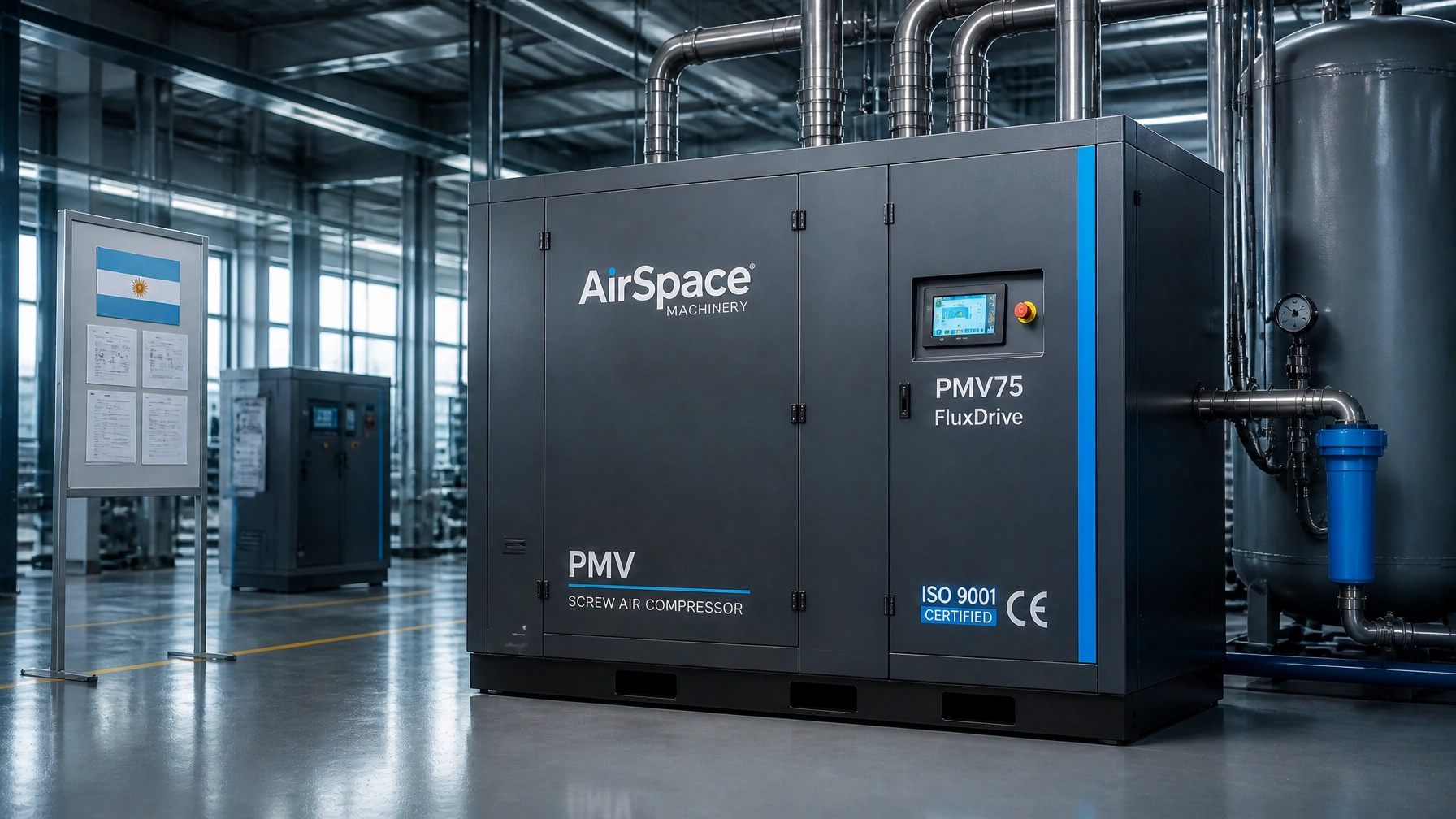
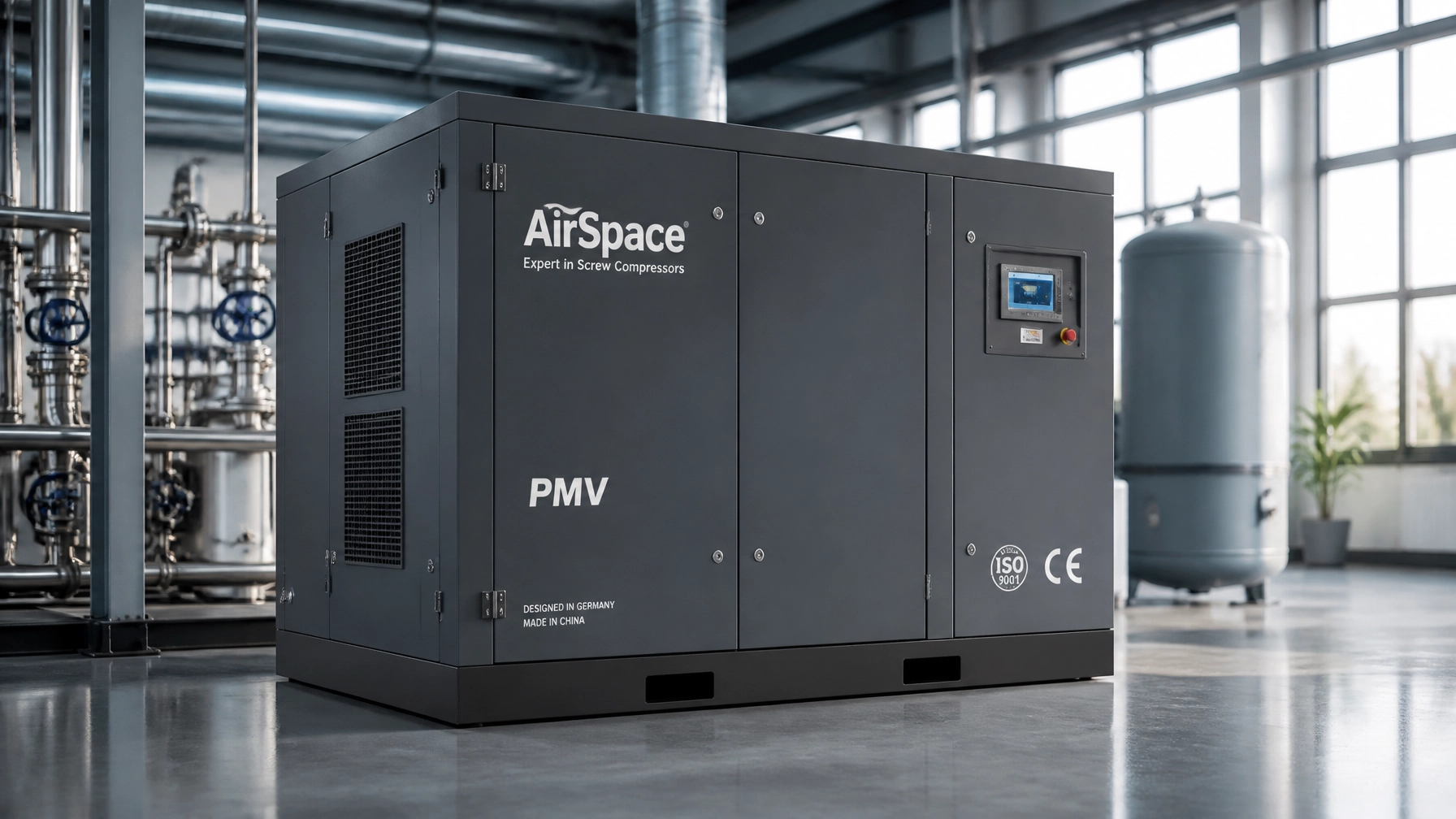
The short answer: Most industrial facilities lose up to 30% of their energy through improper system sizing, neglected leaks, and inefficient piping layouts. The most effective fix is transitioning to high-performance Permanent Magnet Variable Frequency (PMV) screw air compressors, which automatically adjust output to match demand, combined with a rigorous leak-detection program and optimized distribution design.
At AirSpace Machinery Co., Ltd., we’ve spent 20 years perfecting the art of industrial air. With a 4000m² state-of-the-art manufacturing facility and annual sales exceeding 100M yuan, we’ve seen every mistake in the book. If your energy bills are skyrocketing or your tools are losing pressure, you’re likely falling into one of these seven common traps.
1. Buying Based on “Horsepower” Instead of Flow (CFM/m³/min)
How do I properly size an industrial air compressor?
Stop looking at the motor’s horsepower (HP) and start looking at the actual air delivery (Flow) at your required pressure (PSI/bar). Sizing a system based on HP is a legacy mistake that leads to either undersized units that struggle during peak demand or oversized units that “short-cycle,” wasting massive amounts of energy.
The Fix:
Conduct a thorough air audit. Calculate the total CFM (Cubic Feet per Minute) or m³/min required by all your tools operating simultaneously. Always choose an energy-efficient air compressor with Permanent Magnet Variable Frequency (PMV) technology. Unlike fixed-speed units, PMV screw air compressors adjust their motor speed in real-time, ensuring you only pay for the air you actually use.
2. Neglecting the “Silent Killer”: Air Leaks
How much money am I losing to compressed air leaks?
In an unmaintained system, leaks can account for 20% to 30% of total air consumption. A single 1/4-inch leak at 100 PSI can cost a factory thousands of dollars annually in wasted electricity. If your compressor is running when no tools are in use, you have a leak problem.
The Fix:
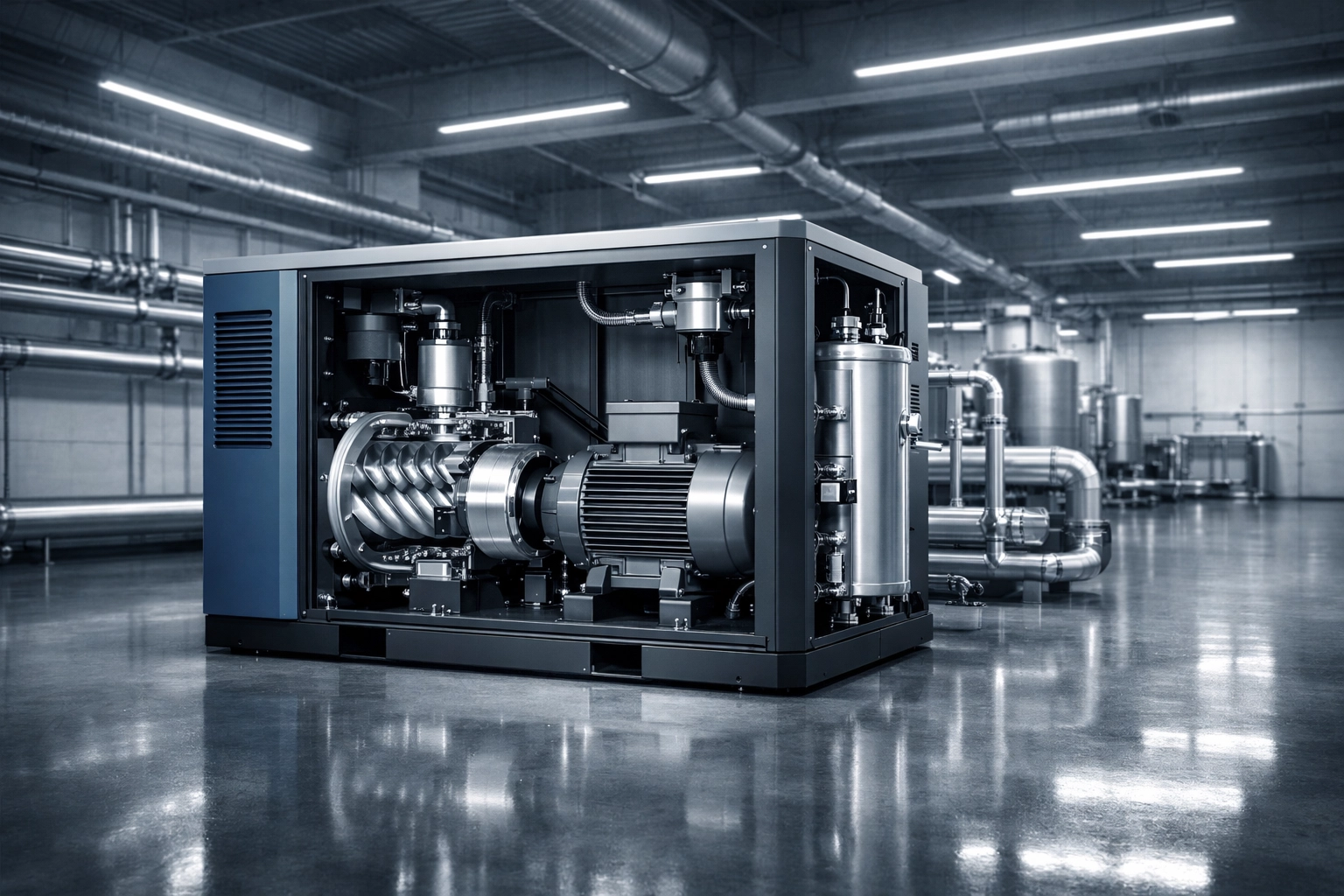
Implement a quarterly leak detection walk-through using ultrasonic acoustic detectors. Focus on couplings, hoses, tubes, and fittings. At AirSpace, we design our high-performance industrial air compression systems with high-quality modular components to minimize connection points where leaks typically start.
3. The “Higher Pressure is Better” Myth
Does increasing system pressure improve tool performance?
Rarely. In fact, for every 2 PSI (approx. 0.14 bar) you increase your system pressure, your energy costs rise by roughly 1%. Running your system at 125 PSI when your tools only require 90 PSI is essentially throwing money out the window.
The Fix:
Determine the minimum pressure required by your most demanding application. Set your compressor to that level, plus a small margin for piping pressure drop. Use a PMV screw air compressor to maintain a steady, constant pressure without the wide “deadband” fluctuations common in older machines.
4. Poor Piping Layout and Undersized Lines
Why is there a pressure drop at the end of my air line?
If your compressor says 100 PSI but your tool only sees 80 PSI, your piping is the culprit. Sharp 90-degree elbows, “T” junctions, and undersized pipe diameters create massive turbulence and friction.
The Fix:
Use a “loop” piping system rather than a “dead-end” header. This allows air to flow in two directions to any point of use, effectively doubling the pipe capacity and halving the pressure drop. Avoid sharp bends; use long-radius elbows and ensure the pipe diameter is sized for the maximum flow of the compressor, not just the average.
5. Ignoring Moisture and Air Quality Standards
Why is there water in my air lines?
Compressed air naturally generates heat and moisture. If you don’t have a dedicated refrigerated air dryer and moisture separators, that water will travel into your expensive pneumatic machinery, causing rust, scale, and premature tool failure.
The Fix:
Follow the ISO 8573-1:2010 international standard for air quality. For most industrial applications, a Class 4 or 5 moisture rating is sufficient, requiring a refrigerated dryer. If you are in high-precision manufacturing, you may need Class 1 or 2. Ensure your integrated-compressor-system includes high-efficiency filtration to remove oil aerosols and particulates.
6. Overlooking Regional Environmental Conditions
How do I protect my air compressor in extreme climates?
A compressor that works in a dry European climate might fail in the humidity of Southeast Asia or the freezing temperatures of Russia.
- SEA (Southeast Asia): High humidity leads to excessive condensate. You need oversized moisture separators and high-ambient-temperature refrigerated dryers.
- LATAM (Latin America): Grid instability is common. Use PMV compressors with robust internal frequency converters that can handle voltage fluctuations.
- Russia/CIS: Cold-weather “winterization” is key. Without heaters or proper lubricants, the oil will thicken, preventing the screw from turning on startup.
The Fix:
At AirSpace, we customize our machines for global export. We provide specific configurations for high-humidity and low-temperature environments, ensuring our CE and ISO 9001 certified units perform regardless of local weather.
7. Skipping Routine Maintenance and Filtration
What happens if I don’t change my air compressor filters?
A clogged air intake filter forces the compressor to work harder to pull in air, reducing efficiency. A clogged oil separator increases internal pressure drop, wasting energy and potentially leading to oil carryover into your production line.
The Fix:
Stick to a strict maintenance schedule.
- Weekly: Check oil levels and drain condensate.
- Monthly: Inspect air filters.
- Every 2000-4000 Hours: Replace oil, oil filters, and separators.
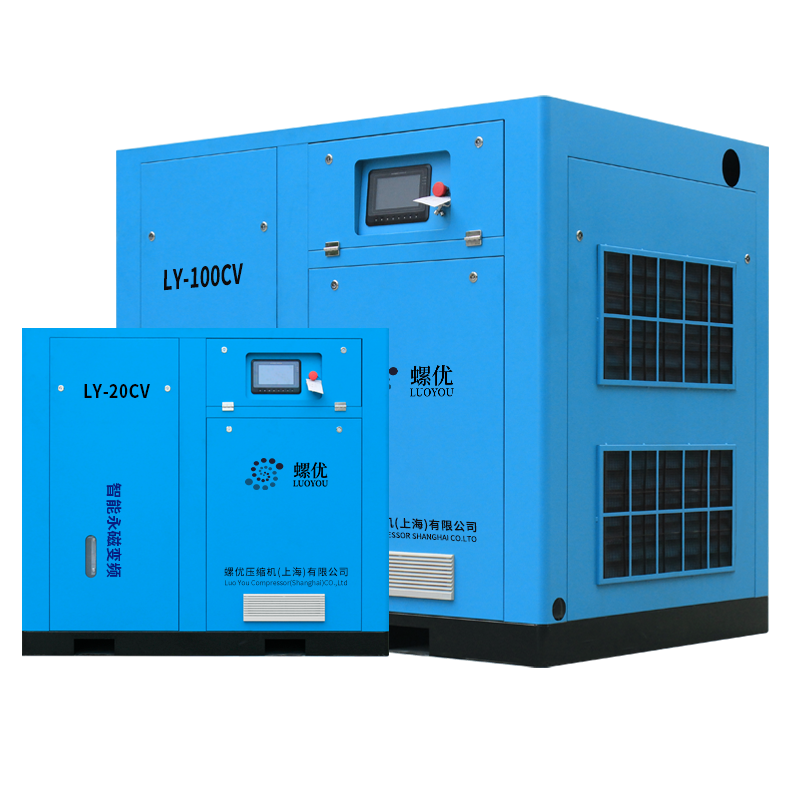
Our LY-series PMV compressors feature intelligent control panels that alert you exactly when service is due, taking the guesswork out of maintenance.
Comparison: Fixed-Speed vs. PMV Screw Compressors
| Feature | Fixed-Speed Screw | AirSpace PMV Screw |
|---|---|---|
| Energy Consumption | High (Runs at 100% or Off) | Ultra-Low (Matches Demand) |
| Pressure Stability | +/- 10-15 PSI | +/- 1.5 PSI |
| Startup | High Current Peak (Hard Start) | Soft Start (No Power Spikes) |
| Maintenance | Standard | Reduced (Optimized Load) |
| Lifespan | Moderate | Long (Permanent Magnet Motor) |
Q&A: Common Buyer Questions
Q: How can I verify your CE and ISO 9001 documentation?
A: Every AirSpace shipment includes a complete documentation pack. You can also request digital copies via our contact page for verification against international registries before your order leaves our facility.
Q: What kind of logistics support is available for international shipping?
A: We handle the entire export process. From sea freight to rail (for Russia/CIS), we ensure the machines are crated in export-grade plywood to prevent damage during transit.
Q: Why choose a screw compressor over a piston compressor?
A: For industrial use, screw compressors offer 100% duty cycle (continuous run), lower noise levels, and significantly better energy efficiency. At AirSpace, we focus exclusively on screw technology because it provides the reliability our global partners demand.
Get a Proposal for Your Facility
Don’t let inefficient air compression eat your profits. Whether you’re upgrading an existing plant or building a new facility, AirSpace Machinery Co., Ltd. provides the technical precision and engineering excellence required for modern manufacturing.
To receive a tailored proposal, please provide your requirements below:
- Required Pressure: (Specify in bar or psi)
- Required Flow Rate: (Specify in m³/min or CFM)
Note: Lead times vary based on specific configurations and regional voltage requirements.
Author: Penny Winston, Technical Writer
Penny Winston is a technical specialist at AirSpace Machinery Co., Ltd., focusing on the intersection of energy efficiency and industrial automation. With a background in mechanical engineering communications, she helps global buyers navigate the complexities of compressed air systems.
Reviewed by Engineering
Sources & Technical Standards
- ISO 8573-1:2010: Compressed air : Part 1: Contaminants and purity classes.
- ISO 9001:2015: Quality management systems.
- CE Marking: Compliance with EU health, safety, and environmental protection standards.
- Energy Efficiency Claims: Based on internal testing of AirSpace PMV vs. Standard Fixed-Speed models under 70% average load conditions.
📅 Last updated:
⚡ Is Your Factory Bleeding Cash?
Most fixed-speed compressors waste $3,600/year in "Unload Tax." Test your waste level in 30 seconds.
RUN THE ROI TEST →Ready to See How Much Your Facility Can Save?
Fill out the form below for a Free Energy Assessment.