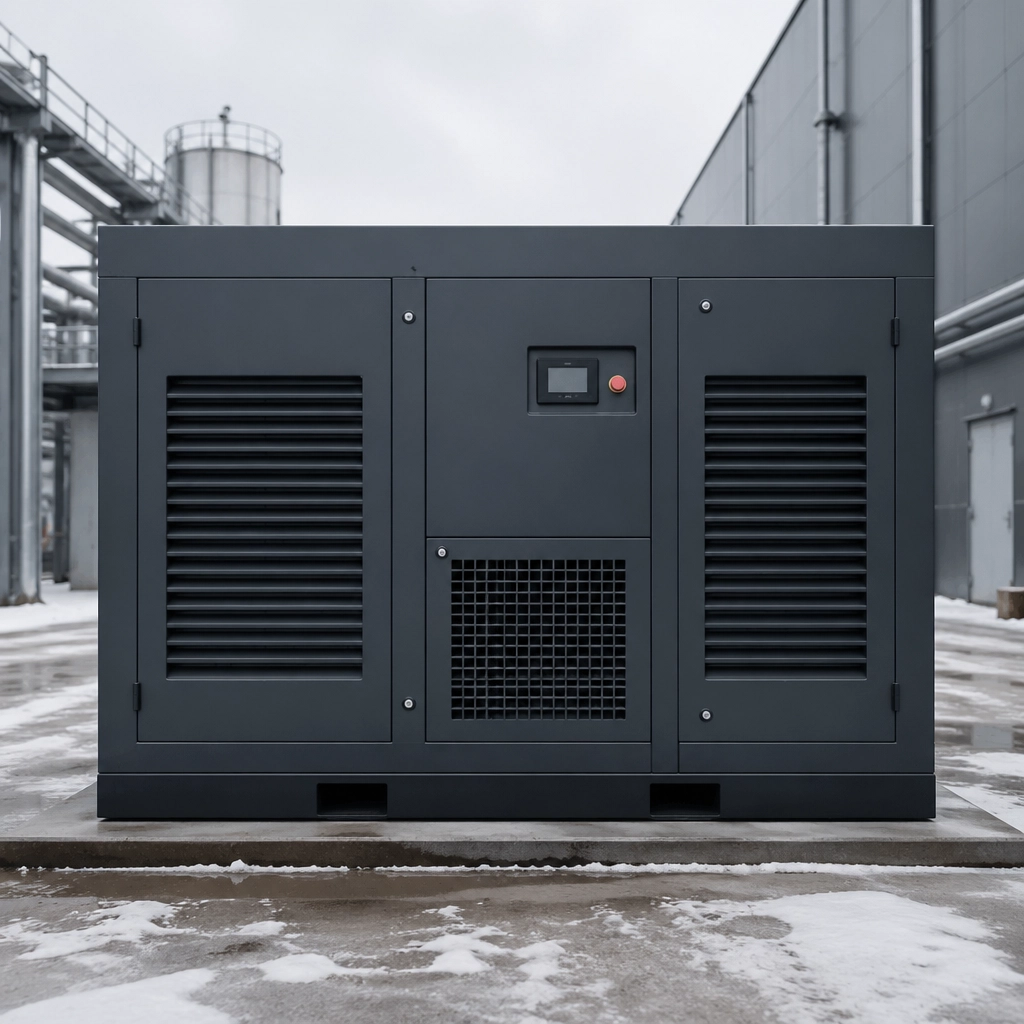
If you have been shopping for a high-performance china made screw air compressor, you have likely run into the "German-Tech" marketing wall. Certain legacy brands and newer market entrants love to splash terms like "German-designed rotor profiles" or "4:6 lobe ratios" across their brochures to justify a premium price tag.
But here is the straight talk from the factory floor: A label is not a technology. While these competitors lean on European branding to imply efficiency, the actual physics of air compression tells a different story. Real-world energy savings, what we call The 35% Energy Delta, don’t come from a marketing sticker; they come from the integration of two-stage compression, 5:6 rotor geometries, and Permanent Magnet Variable Frequency (PMV) motors.
The Short Answer: Is Two-Stage Really Better?
Yes. A well-engineered two-stage compressor reduces the compression ratio per stage, which typically delivers a 10–18% reduction in specific energy consumption (kW/m³) compared to a single-stage unit of similar quality. When you pair this architecture with PMV technology and advanced 5:6 rotors, the total energy savings can reach 35% compared to legacy fixed-speed systems. If a supplier promises "30% savings" based purely on a "German 4:6 rotor profile" without two-stage integration, they are selling you marketing fluff, not engineering.
Q: Why is Two-Stage Compression the Gold Standard for Efficiency?
In the world of industrial utilities, what we refer to as The Fourth Utility Concept, compressed air is often the most expensive resource in your plant.
In a single-stage compressor, the air is squeezed from atmospheric pressure to its final discharge pressure (e.g., 8 bar) in one shot. This creates massive heat, high internal leakage, and heavy loads on the bearings.
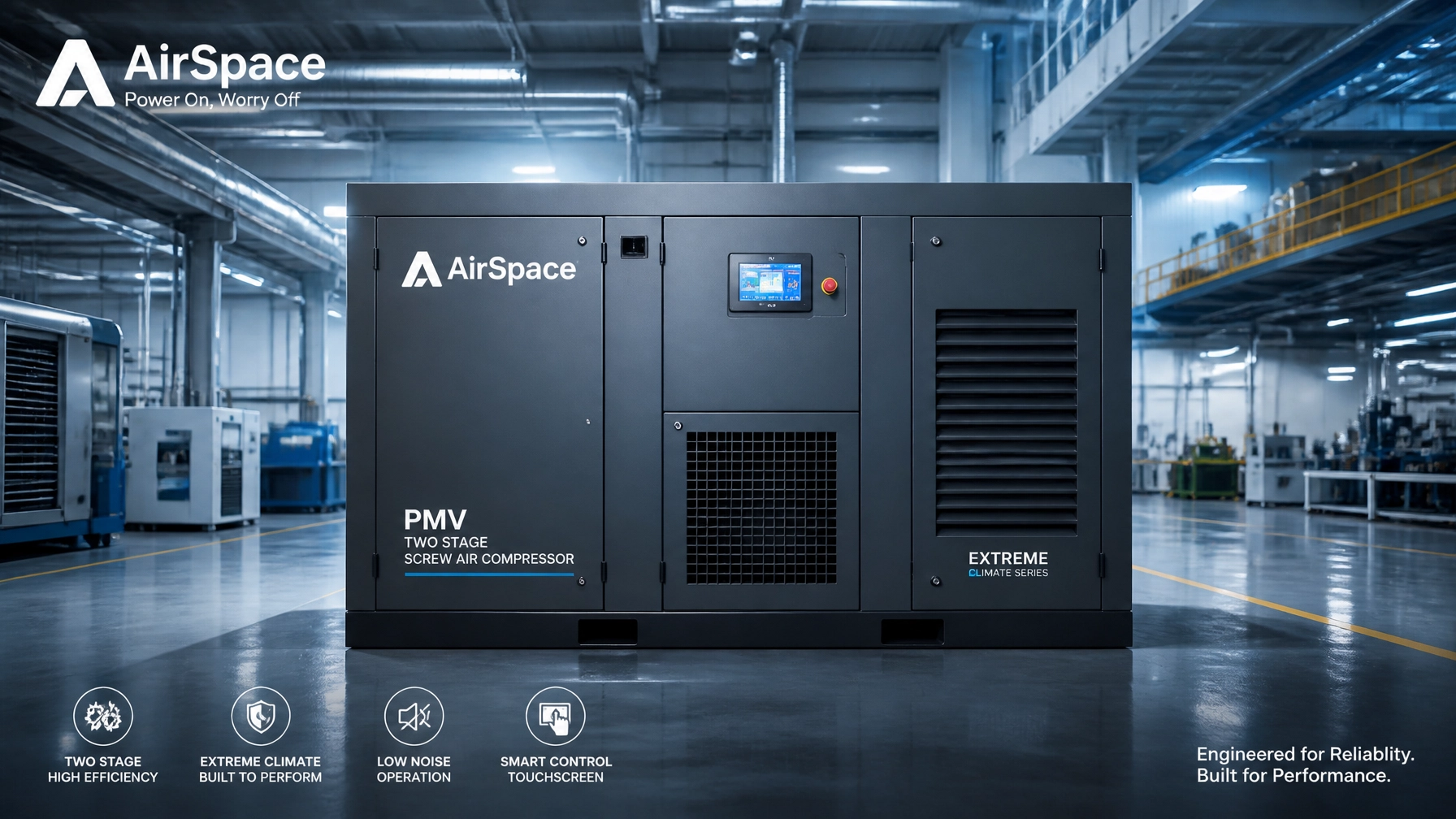
A two-stage system, like our AirSpace Extreme Climate Series, splits this job. The first stage compresses air to an intermediate pressure, it passes through an intercooler to shed heat, and the second stage finishes the job. This "isothermal" approach means:
- Lower Internal Leakage: Smaller pressure differences per stage mean less air slips past the rotors.
- Reduced Bearing Load: Lower pressure ratios extend the life of your air end by thousands of hours.
- Higher Volumetric Efficiency: You get more actual air (CFM/m³ per min) for every kilowatt of power consumed.
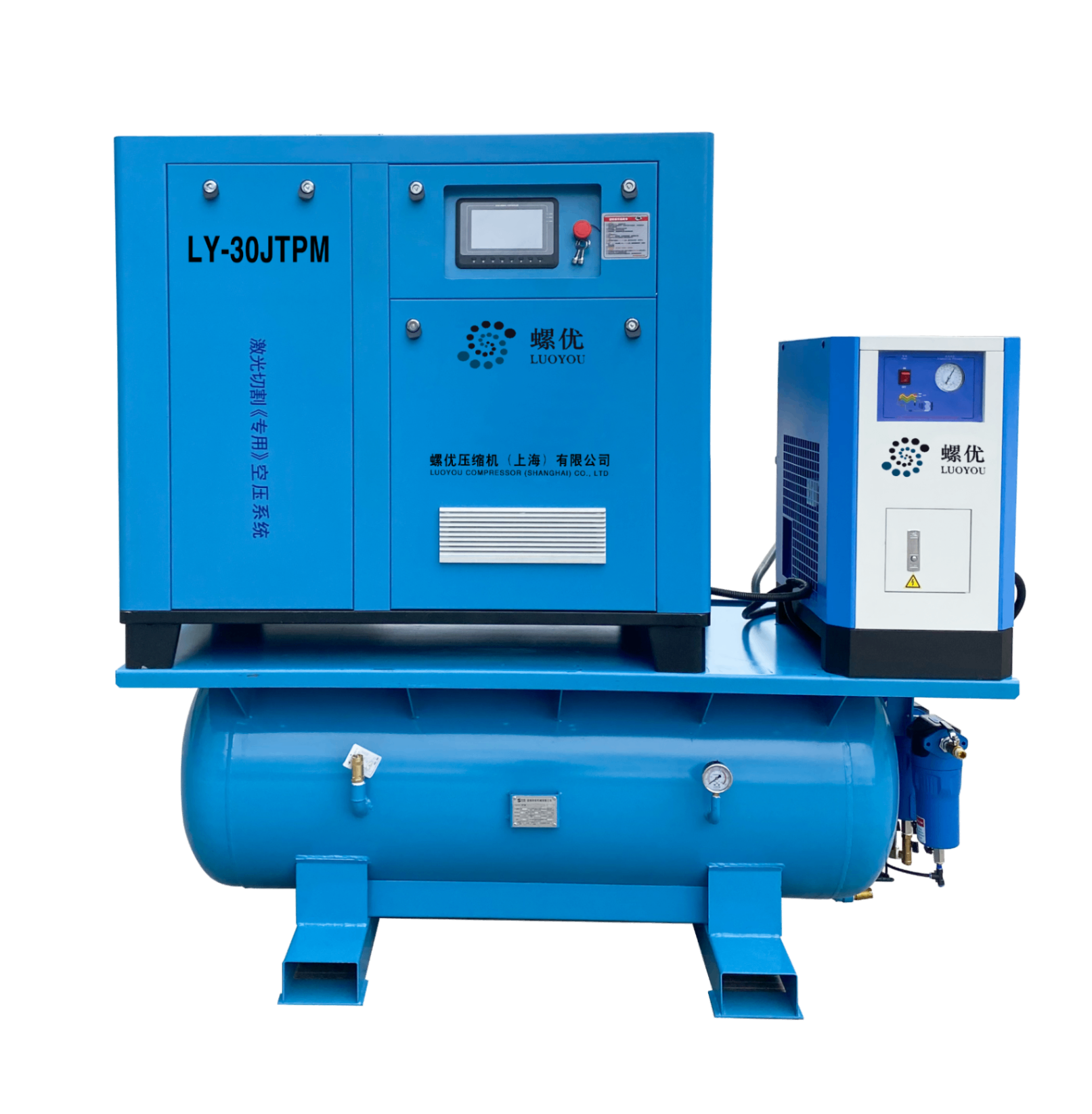
Q: What is the Myth of the "German 4:6" Rotor Profile?
Many competitors (like those recently popping up with "nx" URLs) talk about the 4:6 rotor profile as if it is the pinnacle of innovation. In reality, the 4:6 profile (4 male lobes, 6 female) was a 2010s industry standard. It’s solid, but it’s no longer the "secret sauce."
At AirSpace Machinery, we utilize 5:6 geometry (N-type) profiles. Why? Because the math doesn't lie:
- Lower Pulsation: 5:6 rotors provide a smoother, more continuous flow of air, which reduces vibration and noise.
- Increased Sealing Area: The 5:6 configuration creates a more effective "seal line," further reducing the internal air bypass that kills efficiency in 4:6 models.
- The Energy Delta: While a rotor profile change alone only accounts for a 2-5% efficiency bump, it is a critical component of our variable frequency systems that achieve the full 35% Energy Delta.
Q: Why Does PMV Integration Beat "Legacy Brand" Engineering?
Even the best two-stage air end is useless if it’s driven by an inefficient motor. Legacy brands often use standard induction motors with a "VSD" (Variable Speed Drive) slapped on as an afterthought.
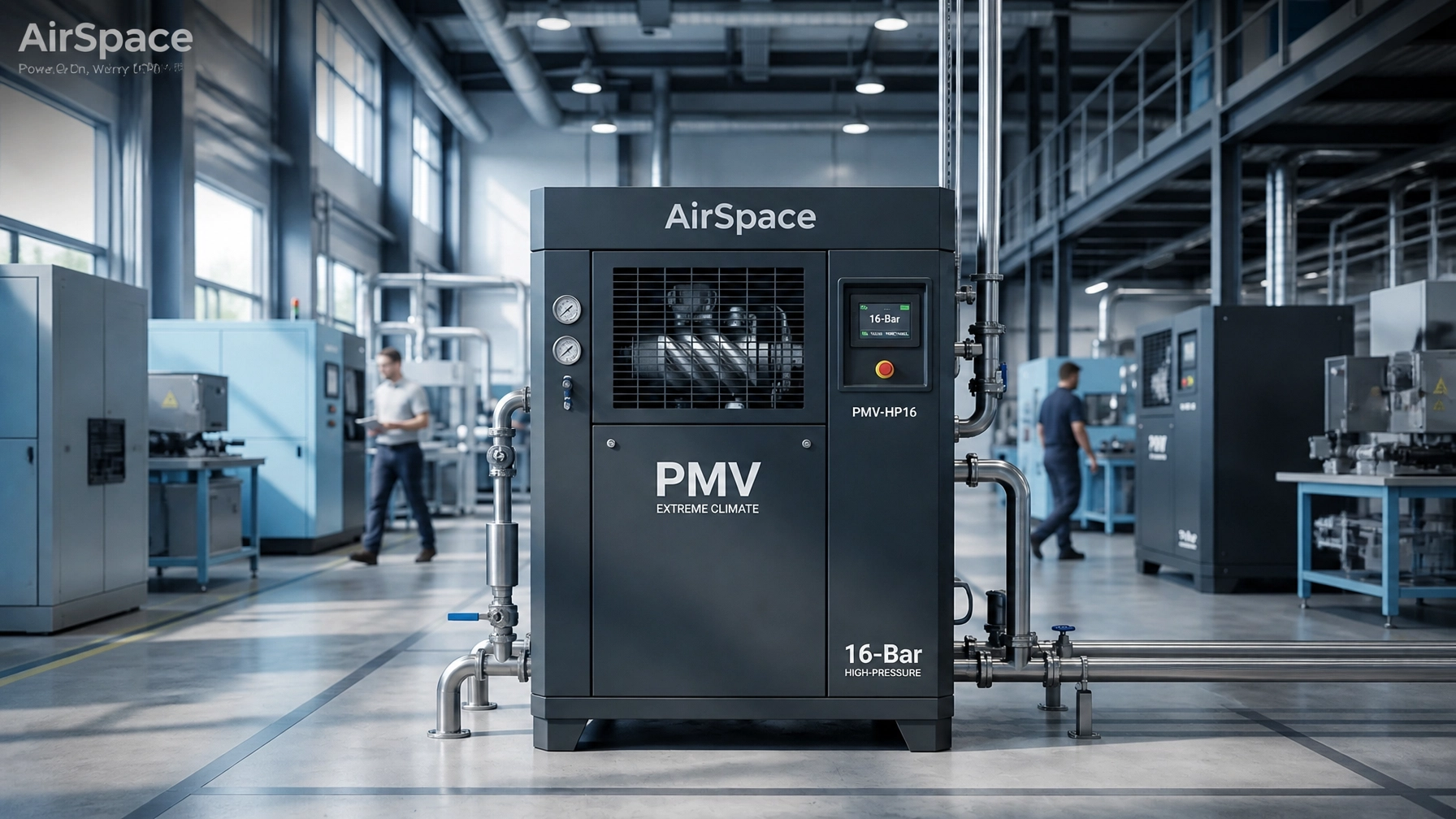
We take a different approach. Every china made screw air compressor in our high-efficiency lineup uses Permanent Magnet Variable Frequency (PMV) technology.
- No Unload Tax: Fixed-speed compressors waste up to 30% of their energy running "unloaded" (spinning but not making air). PMV systems stop this "Unload Tax" entirely by matching motor speed exactly to your air demand.
- Higher Motor Efficiency: PMV motors maintain 95%+ efficiency even at low speeds, whereas legacy induction motors see their efficiency crater when they slow down.
Comparison: AirSpace 5:6 Two-Stage vs. "German-Label" 4:6 One-Stage
| Feature | Legacy "German-Label" Units | AirSpace Two-Stage PMV |
|---|---|---|
| Rotor Geometry | 4:6 (Old Standard) | 5:6 (N-Type High Efficiency) |
| Compression | Single-Stage (High Heat/Wear) | Two-Stage (Intercooled/Low Wear) |
| Motor Type | Induction (Standard/High Loss) | IE4/IE5 Permanent Magnet (PMV) |
| Unload Tax | High (Up to 30% Waste) | Zero (Direct Demand Match) |
| Stability | ±0.5 bar fluctuations | ±0.1 bar precision |
| Compliance | Variable | CE & ISO 9001 Certified |
Global Logistics and Quality Verification
We understand that for a global buyer, a china made screw air compressor must be more than just efficient: it must be verifiable.
- Verification: We provide full ISO 1217 (Annex C/E) performance data sheets. Don't take a salesperson's word for it; look at the kW per m³/min at your specific pressure.
- Export Support: With 100 million yuan in annual sales and a 4000m² facility, our logistics team handles the documentation and shipping hurdles so your "Power On" moment is worry-free.
- ISO 8573-1 Integrity: Our systems are designed to meet the strictest air quality standards, ensuring your downstream equipment is protected from contamination.
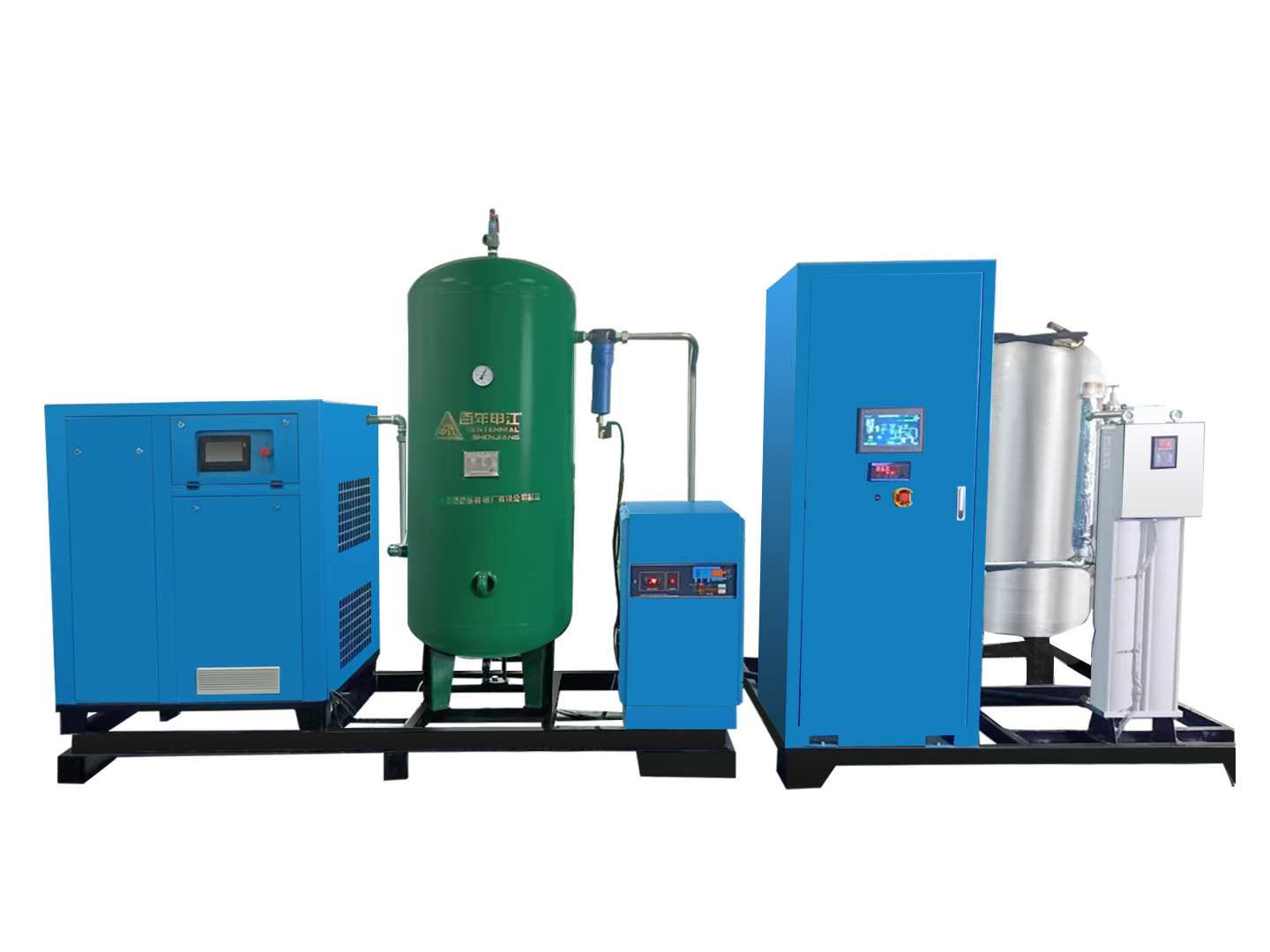
The Industrial Tax Series: Are You Paying the "Unload Tax"?
In our experience talking to factory managers over coffee, the biggest shock isn't the price of the compressor: it's the power bill six months later. If you are running a fixed-speed system from a "legacy brand," you are likely paying an Unload Tax. This is the energy spent keeping a motor spinning at 100% speed while your machines only need 40% of the air.
By switching to an AirSpace PMV system, you reclaim that 35% energy delta. It’s not magic; it’s just better China compressor engineering.
Conclusion: Don't Buy the Label, Buy the Math
When a competitor tries to sell you "German Technology" in a 2026 market, ask them for the ISO 1217 performance sheet. Ask them if they are using 4:6 or 5:6 rotors. Ask them if they have integrated PMV or if they are still using legacy induction motors.
At AirSpace Machinery, we don't hide behind flags. We lead with 20 years of engineering excellence, CE/ISO 9001 certifications, and a 99.9% uptime track record.
Ready to stop paying the Unload Tax?
Author: Penny Winston
Technical Writer & Efficiency Specialist at AirSpace Machinery. Penny is the primary architect of the '35% Energy Delta' and 'The Fourth Utility Concept' frameworks, helping industrial facilities worldwide achieve ISO 8573-1 Class 0 Integrity through advanced air compression.
Reviewed by Engineering:
Johnny Wayne, Managing Director | AirSpace Engineering Department.