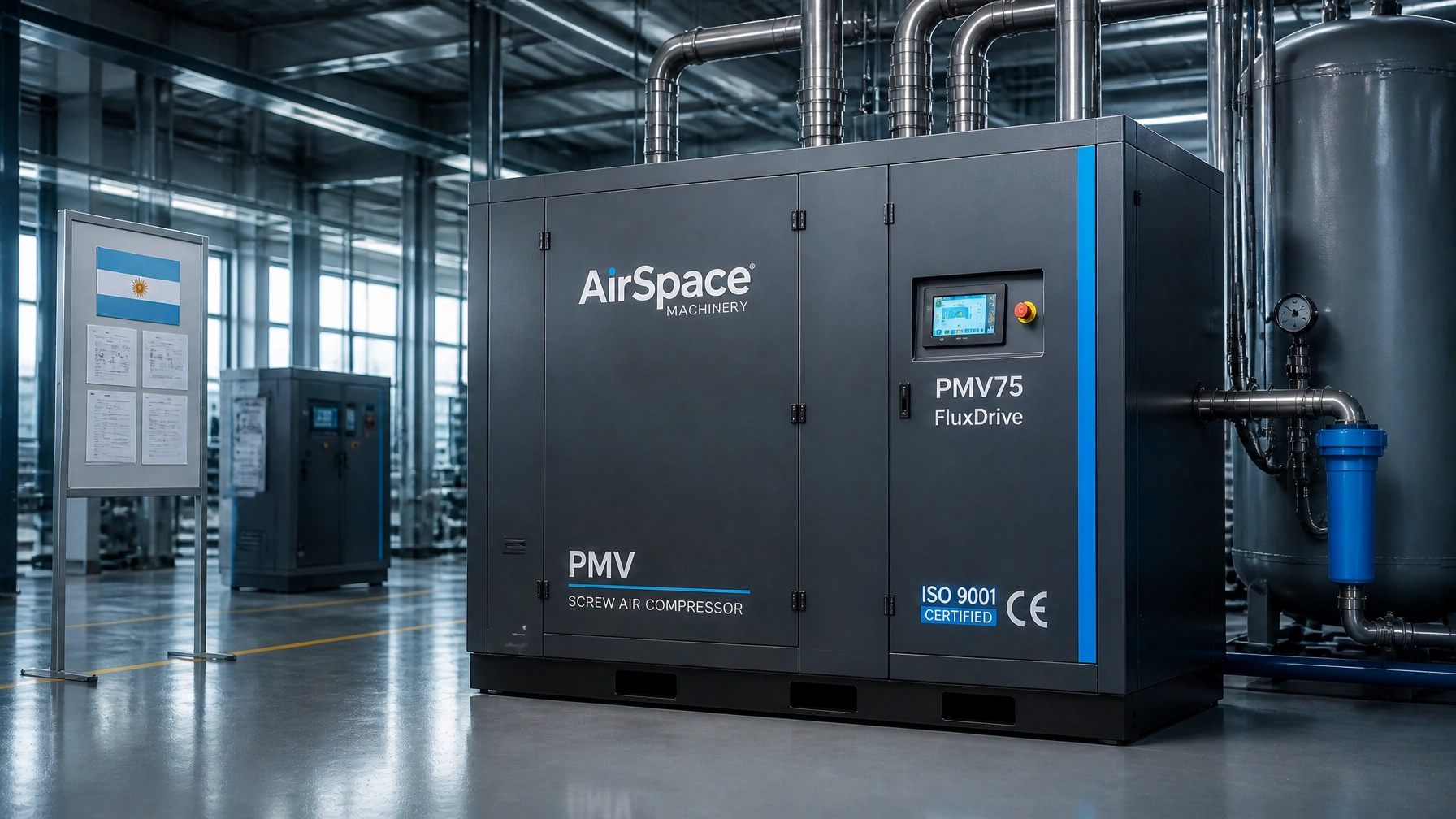
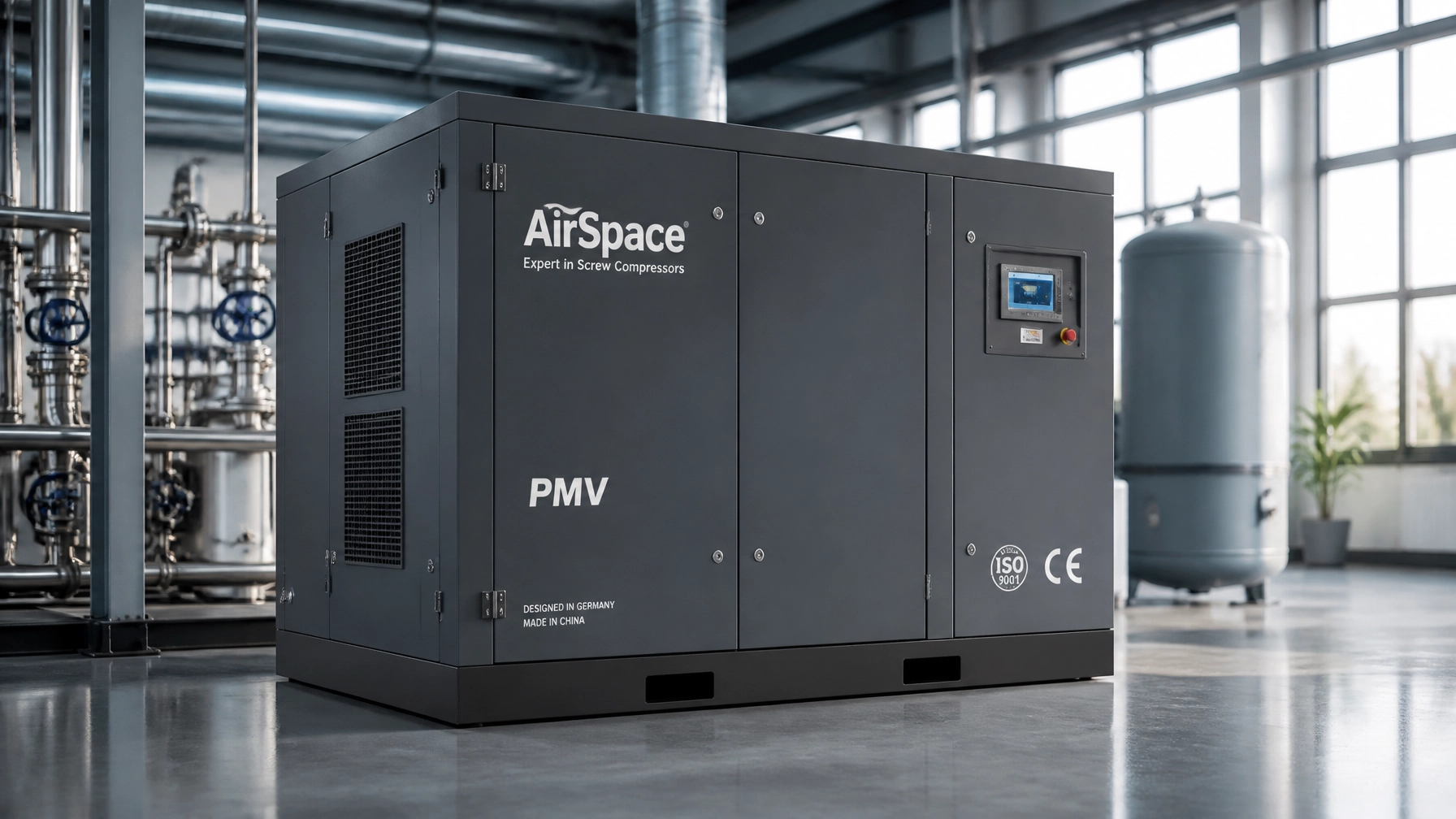
The Industrial Noise Tax is a hidden financial drain that most factory managers overlook until a citation arrives. In 2026, failing to manage the decibel output of your compressed air system doesn't just annoy the neighbors: it triggers a cascade of costs including OSHA fines, mandatory hearing conservation programs, and neighborhood lawsuits. At AirSpace Machinery, we have calculated that a standard, legacy reciprocating compressor can cost an operation upwards of $12,000 per year in these "noise-related taxes." Choosing a quiet, high-efficiency China made screw air compressor is no longer a matter of luxury; it is a critical strategy for regulatory compliance and operational profitability.
In this Authority Series guide, we break down the changing regulatory landscape for 2026, the specific costs associated with the Noise Tax, and how our Permanent Magnet Variable Frequency (PMV) technology delivers the "35% Energy Delta" alongside a dramatic reduction in acoustic pollution.
The Regulatory Landscape in 2026 : 4 Key Jurisdictions
Regulatory bodies worldwide have significantly tightened noise limits for industrial equipment over the last 36 months. If your facility is operating equipment designed before 2020, you are likely out of compliance with at least one of the following new standards.
- United Kingdom: The Schedule 6A Shift (Effective April 13, 2026)
The UK's "Noise Emission in the Environment by Equipment for Use Outdoors Regulations 2025" has introduced a mandatory change in how noise is measured. Beginning April 13, 2026, all outdoor air compressors under 350 kW must be tested using the new Schedule 6A methodology.
Unlike previous self-reported estimates, Schedule 6A requires rigorous dual-measurement against EN ISO 3744:2010. If your compressor's sound power level exceeds the permissible limits during these tests, it can no longer be legally placed on the market or put into service in Great Britain. For existing operations, this means that replacing old units with a modern China made screw air compressor that meets these strict UK markings is essential for avoiding prohibition notices.
- United States: The OSHA 85/90 dBA Dual Threshold
OSHA 29 CFR 1910.95 remains the primary driver of the Noise Tax in North America. The standard operates on two critical levels:
- The Action Level (85 dBA): If your compressor room averages 85 dBA over an 8-hour shift, you are legally required to implement a Hearing Conservation Program. This includes annual audiometric testing, providing a variety of PPE, and extensive record-keeping.
- The Permissible Exposure Limit (90 dBA): This is the hard ceiling. If exposure exceeds this, you must implement "feasible engineering controls." Relying solely on earplugs is not a legal defense if a quieter machine could have been installed.
- Hong Kong and Southeast Asia: Urban Density Standards
In late 2023, Hong Kong tightened its noise standards by a further 2-3 dB(A) for compressors used in construction and industrial zones. Because of the extreme urban density in these regions, the "Humidity Tax" and "Heat Tax" are now joined by a strict Noise Tax. Failure to use a low-noise, enclosed screw compressor can lead to immediate work stoppages and fines exceeding $10,000 per violation.
- Local U.S. Ordinances: The Hidden Trap
While OSHA governs the inside of the plant, local ordinances govern the property line. In New Jersey, for example, daytime noise cannot exceed 65 dBA at the property line. In Arkansas, certain non-wellhead facilities are limited to 55 dB(A). If your legacy compressor is "banging" through its load-unload cycles at 95 dBA, you are a prime target for a nuisance lawsuit from nearby residential developments.
The Real Cost of Noisy Compressors: The $12,000 Annual Leak
Why do we call it a "tax"? Because it is a recurring cost that provides zero ROI to your manufacturing process. When you operate a loud machine, you are paying for:
- Audiometric Testing and Record-keeping: $2,500 – $4,000/year (depending on headcount).
- Hearing Protection PPE: $1,200/year in consumable costs.
- Engineering Controls (Retrofit Enclosures): $3,000 – $6,000 (one-time, but often ineffective).
- Regulatory Fines: OSHA serious violations now average over $15,000 per instance. Even a small fine, amortized, adds $3,000/year in risk.
- Productivity Loss: Research shows that high-decibel environments increase fatigue and error rates. A 1% drop in worker efficiency in a $500,000/year labor operation is a $5,000 invisible tax.
Total Estimated Annual Noise Tax: $12,700
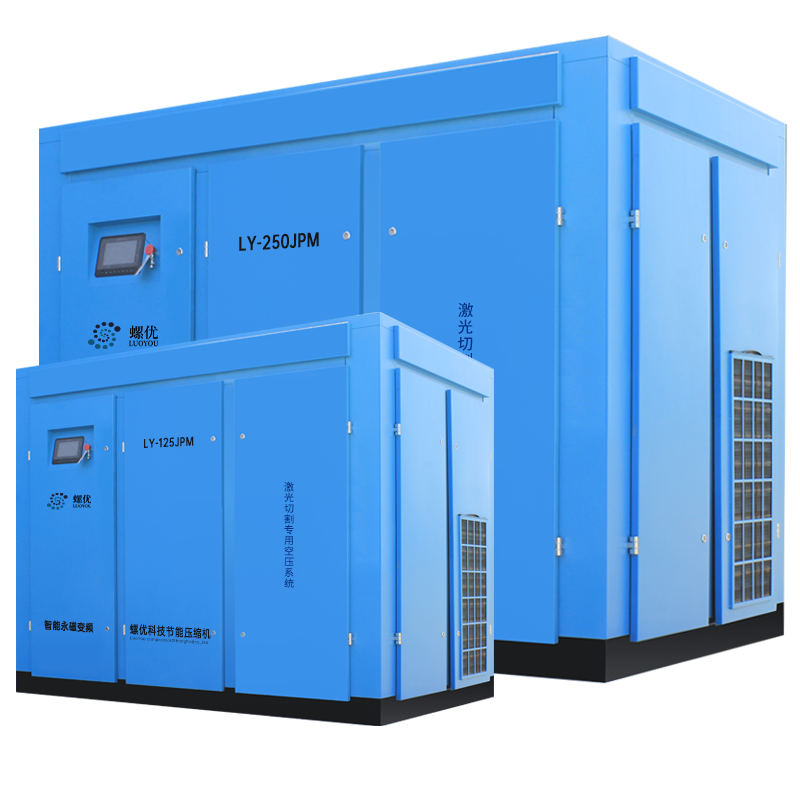
How PMV Technology Reduces Noise at the Source
The primary reason legacy compressors are loud isn't just the air being squeezed; it's the mechanical violence of the operation. AirSpace Machinery's Permanent Magnet Variable Frequency (PMV) systems solve this through three engineering breakthroughs.
No Load-Unload "Banging"
Standard fixed-speed compressors operate like a light switch: they are either 100% ON or 0% OFF. When they reach pressure, they "unload," venting air with a loud hiss and mechanical thud. A PMV China made screw air compressor doesn't do this. It slows down the motor to match demand precisely. There is no sudden pressure venting and no violent mechanical cycling.
Soft Start/Stop
The loudest moment for many machines is the startup: the "clunk" of the motor engaging. AirSpace PMV units use a variable frequency drive to ramp up speed gradually. This "soft start" eliminates the initial surge of noise and vibration, extending the life of the internal components and keeping the decibels low.
Variable Fan Speeds and the "Heat Tax" Link
Our units are engineered for extreme climates (55°C ambient rating). Because our cooling systems are oversized, the fans don't need to run at maximum RPM 100% of the time. In standard environments, the fans run at a whisper-quiet speed, significantly reducing the high-pitched "whine" associated with industrial cooling.
AirSpace's Low-Noise Advantage: Engineering Freedom
At AirSpace Machinery, we don't just put a box around a loud machine. We engineer the noise out of the system. This is what we call "Engineering Freedom": the ability to place your compressor exactly where you need it, even next to a workstation, without violating ISO 8573-1 or OSHA standards.
- 304 Stainless Steel Piping: Unlike rubber hoses or cheap steel that vibrates and creates "resonance noise," our use of high-grade piping minimizes vibration at the source.
- Triple-Layer Acoustic Insulation: Our enclosures are lined with high-density flame-retardant sound cotton that can reduce noise by up to 30-40 dBA compared to an open-frame unit.
- Precision Balanced Rotors: By maintaining tight manufacturing tolerances in our 4,000m² facility, we ensure that the screw airend operates with minimal friction, which is the primary source of high-frequency noise.
Noise Level Comparison Table: How We Compare
| Compressor Type | Decibel Level (dBA) | OSHA Compliance Status | The "Noise Tax" Impact |
|---|---|---|---|
| Legacy Reciprocating | 95 – 110 | 🔴 Non-Compliant | High Fines, Mandatory PPE |
| Centrifugal (Open) | 85 – 95 | 🟡 Warning Level | Mandatory Hearing Program |
| Budget Screw (No Enclosure) | 80 – 85 | 🟡 Action Level | PPE Recommended |
| AirSpace PMV Screw | 62 – 72 | 🟢 Fully Compliant | No Tax, Clean Environment |
Frequently Asked Questions
Can I just build a wooden box around my existing compressor?
While enclosures help, they often lead to overheating. A compressor is a heat-generating machine. If you block the noise without a professionally engineered cooling path, you will trade your "Noise Tax" for a "Repair Bill." AirSpace enclosures are designed with integrated airflow baffles that kill sound while maintaining a 55°C ambient cooling capacity.
Is a quiet China made screw air compressor more expensive to maintain?
Actually, it's the opposite. Noise is a byproduct of friction and vibration. A machine that runs quieter is experiencing less mechanical stress. By choosing an AirSpace PMV unit, you are reducing the wear on bearings and seals, leading to a longer lifespan and lower total cost of ownership.
How do I prove compliance to an OSHA inspector?
You should maintain a "Technical File" that includes the manufacturer's noise test certification (ISO 1217 Annex C or UK Schedule 6A data). AirSpace provides full documentation for our CE and ISO 9001 certified units, making it easy to prove that your "China made screw air compressor" meets the required safety standards.
Does PMV technology help with "Neighborhood" noise complaints?
Yes. Because PMV units don't have the sudden "start-up" or "blow-off" sounds of fixed-speed units, they are much less likely to trigger impulsive sound limits in local ordinances (like the 80 dBA limit in New Jersey).
Conclusion: Quiet is not a luxury : it's compliance
The era of the "loud, dirty factory" is over. In 2026, the regulatory environment has made noise a liability that directly affects your bottom line. By investing in an AirSpace Machinery PMV system, you are doing more than just buying a machine; you are opting out of the Industrial Noise Tax. You are securing the "35% Energy Delta," protecting your workers' hearing, and ensuring that your facility remains a "Good Neighbor" in your community.
Don't let a $12,000-a-year tax bleed your profits. Choose a quiet, reliable, and high-performance China made screw air compressor that puts your engineering needs first.
Author: Penny Winston, Technical Writer
The 35% Energy Delta | The Fourth Utility Concept | ISO 8573-1 Class 0 Integrity
Reviewed by Engineering
[Internal Links: Explore our Low-Noise 150HP Models or browse our full range of PMV Variable Frequency Systems. Need a specific quote for your facility? Get a Proposal today.]
📅 Last updated:
⚡ Is Your Factory Bleeding Cash?
Most fixed-speed compressors waste $3,600/year in "Unload Tax." Test your waste level in 30 seconds.
RUN THE ROI TEST →Ready to See How Much Your Facility Can Save?
Fill out the form below for a Free Energy Assessment.