Last Updated: September 6, 2026
This comprehensive guide covers everything electronics manufacturers need to know about selecting oil-free compressed air solutions for high-precision production environments in 2026. Whether you operate a semiconductor fabrication facility, PCB assembly line, or component manufacturing operation requiring ISO 8573-1 Class 0 air purity, this post explains the technology, certification requirements, energy efficiency considerations, and critical features that determine system performance and total cost of ownership.
The Direct Answer: What Electronics Manufacturers Need to Know About Oil-Free Compressed Air
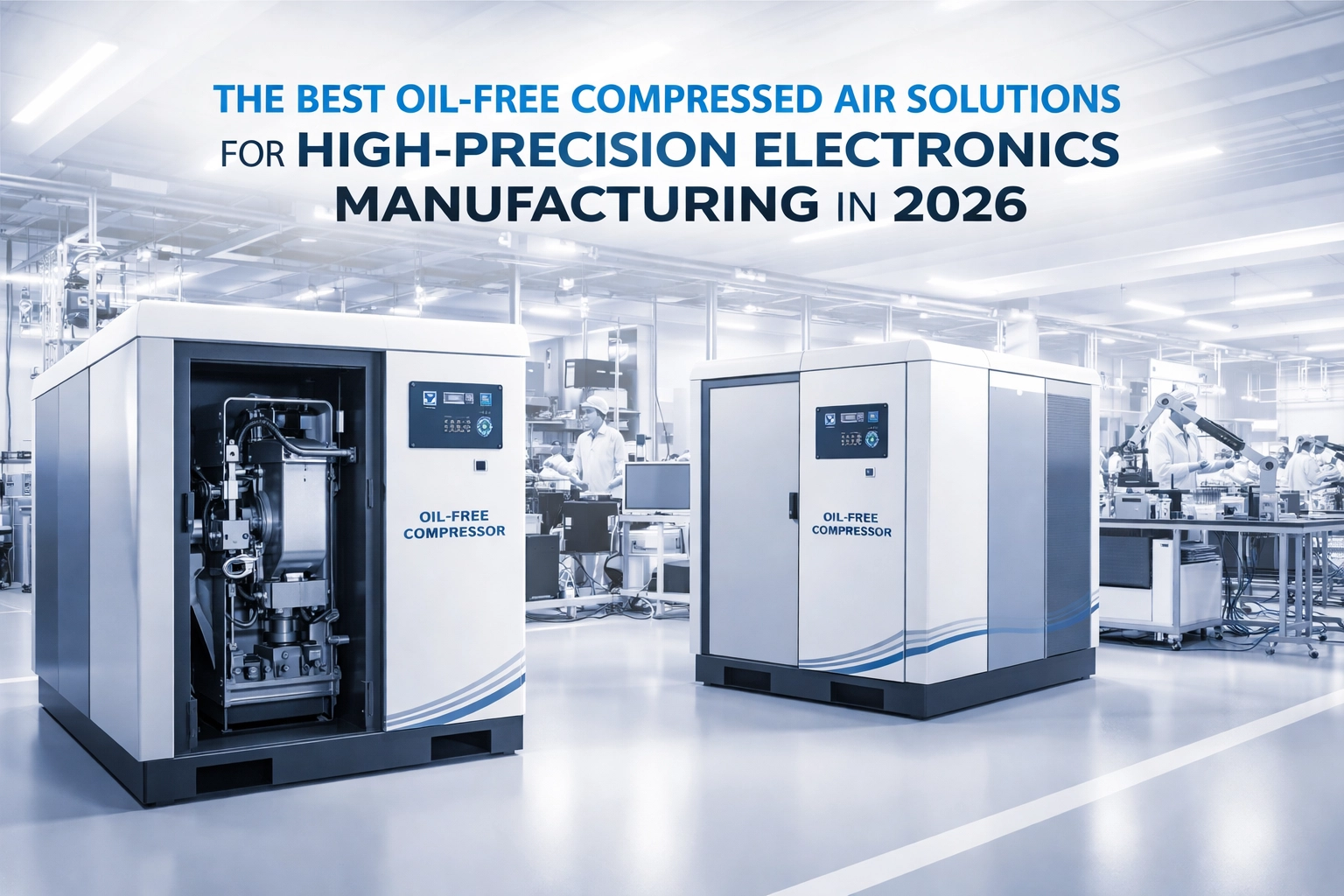
Oil-free rotary screw compressor with ISO 8573-1 Class 0 certification represent the industry standard for high-precision electronics manufacturing in 2026. These systems deliver complete elimination of oil contamination while meeting strict cleanroom requirements essential for semiconductor fabrication, PCB assembly, and component placement operations.
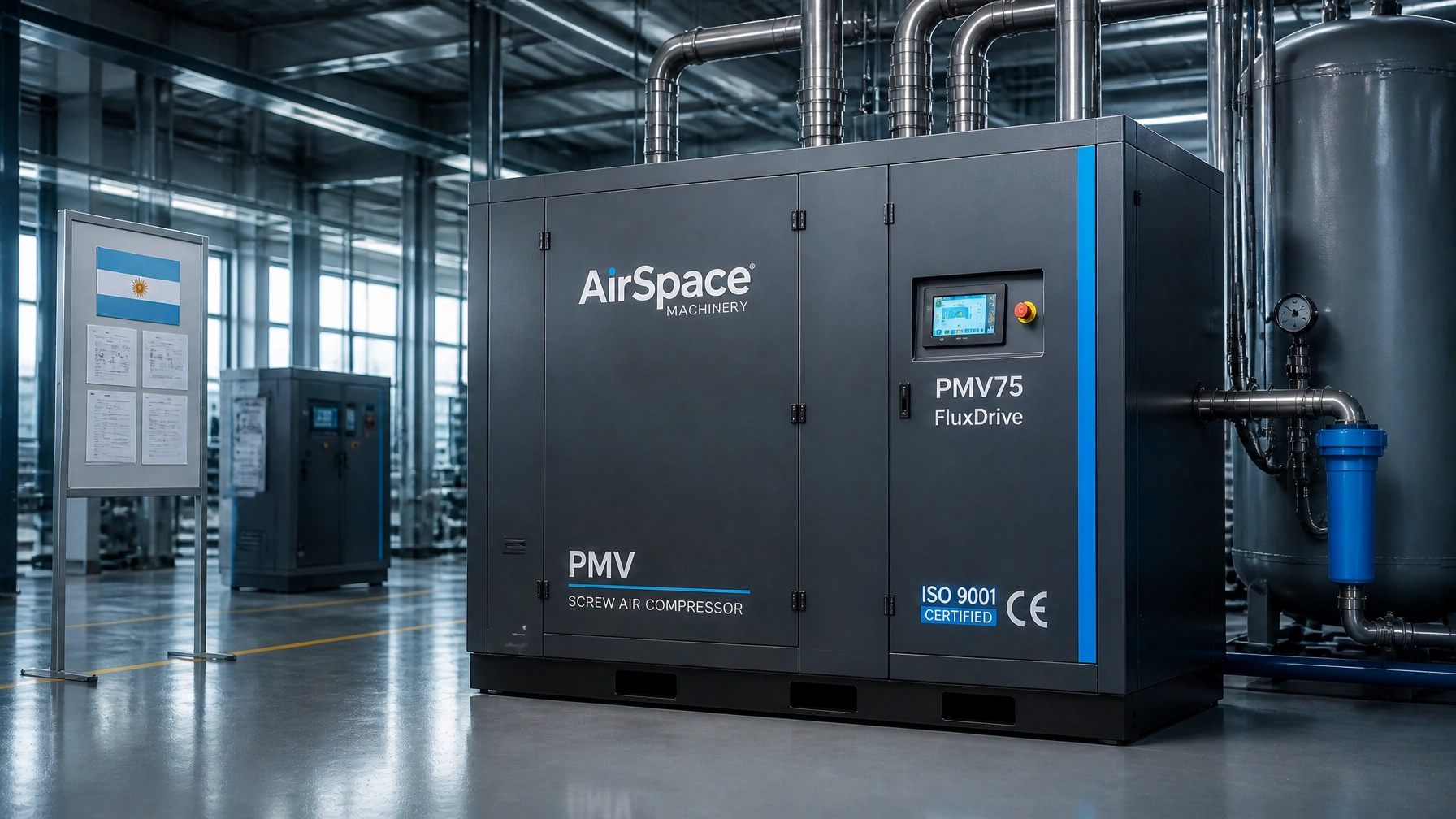
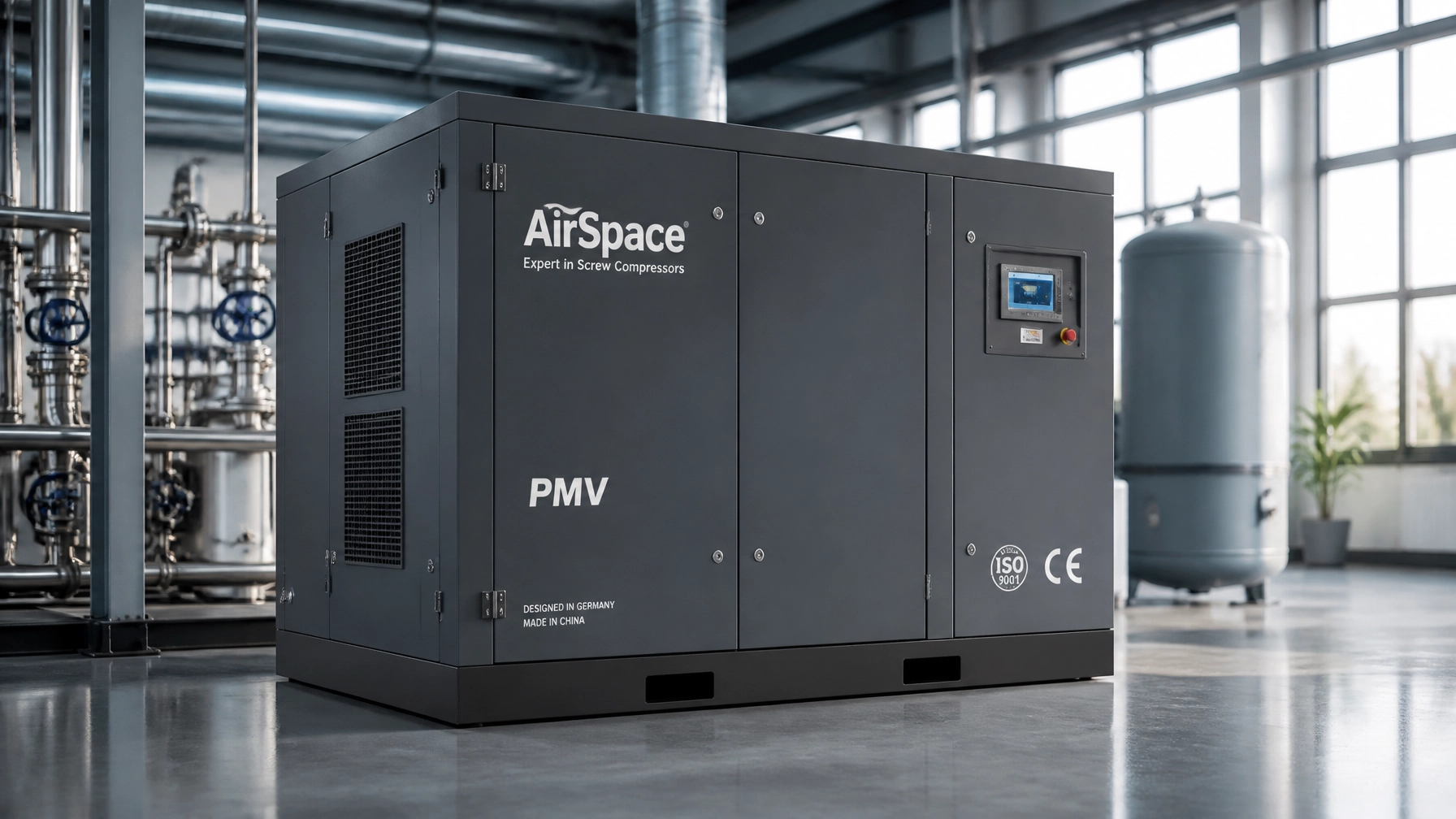
AirSpace Machinery Co., Ltd. manufactures energy-efficient air compressor systems designed specifically for industries where air purity determines product quality. With 20 years of engineering excellence and a 4000m² manufacturing facility producing equipment valued at over 100M yuan annually, the company provides oil-free compressed air solutions that meet the exacting standards of global electronics producers.
What Is Class 0 Oil-Free Air and Why Does It Matter for Electronics Manufacturing?
Class 0 oil-free air, as defined by ISO 8573-1, represents the highest air purity classification available. This standard certifies that compressed air contains zero detectable oil content, including aerosols, liquids, and vapors. For electronics manufacturing, this classification is not optional but essential.
The ISO 8573-1 standard establishes measurable thresholds for contaminants in compressed air. Class 0 certification requires testing under conditions more stringent than Class 1, confirming that the compressor system delivers air purity beyond what standard filtration can achieve. Manufacturers seeking this certification must demonstrate that their equipment produces genuinely oil-free air at the source, rather than relying on downstream filtration to remove oil introduced by the compression process.
Electronics manufacturing facilities require Class 0 air because even microscopic oil particles can compromise production quality. A single oil droplet measuring just a few microns can disrupt PCB soldering consistency, contaminate semiconductor wafers, or trigger static discharge that damages sensitive components.
According to the Compressed Air and Gas Institute (CAGI), contaminated compressed air accounts for approximately 30% of quality-related production losses in electronics manufacturing facilities that rely on oil-lubricated compression systems without adequate filtration.
The Hidden Costs of Oil Contamination in Electronics Production Environments
Oil contamination in compressed air systems creates multiple failure points throughout electronics manufacturing operations. Understanding these risks helps facility managers justify investment in genuine oil-free technology.
Surface contamination represents the most immediate concern. Oil residue on PCB surfaces prevents proper solder adhesion, creating cold joints that fail under thermal stress. In semiconductor fabrication, oil particles settling on wafers during photolithography processes cause defects that render entire batches unusable. The cost of a single contaminated production run often exceeds the price difference between oil-free and oil-lubricated compressor systems.
Product reliability suffers when oil contamination occurs during assembly. Components placed using pneumatic pick-and-place equipment may develop long-term adhesion problems if oil films interfere with bonding processes. These defects frequently escape quality control testing but manifest as field failures months or years later, damaging brand reputation and triggering warranty claims.
Cleanroom certification requires documented air quality compliance. Facilities using oil-lubricated compressors must implement extensive filtration systems and regular testing protocols to maintain certification. Oil-free screw compressors eliminate this compliance burden by producing clean air at the source.
How AirSpace Machinery Delivers Certified Oil-Free Performance for Global Electronics Manufacturers
AirSpace Machinery manufactures oil-free screw air compressor systems engineered for industries where contamination is unacceptable. The company’s approach combines proven compression technology with energy-efficient air compressor design principles that reduce operating costs without compromising air purity.
The engineering team at AirSpace Machinery designs oil-free compression systems using water-lubricated or dry screw elements that physically separate lubricating fluids from the compression chamber. This fundamental design choice eliminates oil contamination at the source, rather than attempting to filter oil from air after compression occurs.
Production takes place in a 4000m² facility equipped with precision manufacturing equipment and quality testing systems. Every compressor undergoes performance verification before shipping, with air quality testing confirming compliance with stated purity specifications. The facility operates under ISO 9001 quality management certification, providing documented process controls that international buyers can verify.
CE certification confirms that AirSpace Machinery products meet European safety and electromagnetic compatibility requirements. For global buyers, this certification simplifies import procedures and provides assurance that equipment meets recognized international standards. Documentation packages include test reports and certificates that customs authorities and facility auditors can verify directly.
Permanent Magnet Variable Frequency Technology for Maximum Energy Efficiency
Energy consumption represents the largest operating cost for industrial compressed air systems, typically accounting for 70 to 80 percent of total lifecycle expenses. Permanent Magnet Variable Frequency (PMV) screw air compressors address this cost driver through precise motor speed control that matches air output to actual demand.
Traditional fixed-speed compressors operate at full capacity whenever running, wasting energy during periods of reduced demand. PMV technology uses permanent magnet motors with variable frequency drives to adjust compressor speed continuously, delivering only the air volume required at any moment. Under typical demand profiles with significant load variation, PMV systems reduce energy consumption by 25 to 40 percent compared to fixed-speed alternatives.
For electronics manufacturing facilities operating multiple shifts, these energy savings compound into substantial annual cost reductions. A 75kW PMV screw air compressor operating 6,000 hours annually with average 70 percent loading can reduce electricity costs by the equivalent of 15,000 to 25,000 kWh per year compared to fixed-speed operation. Actual savings depend on local electricity rates, demand patterns, and system configuration.
AirSpace Machinery integrates PMV technology across its energy-efficient air compressor product line, including oil-free models designed for contamination-sensitive applications. The combination of oil-free compression with variable speed operation delivers both air purity and operating cost advantages.
Critical Features for Electronics Manufacturing Compressed Air Applications
Effective oil-free compressed air systems for electronics production incorporate several essential capabilities beyond basic compression. Facility managers evaluating equipment should confirm that proposed solutions address each requirement.
Integrated air treatment systems provide drying and filtration immediately downstream of compression. Ultra-low dew points, typically minus 40 degrees Celsius or lower, prevent moisture condensation in distribution piping and at point-of-use equipment. Particle filtration removes solid contaminants that could damage pneumatic components or contaminate products.
Variable Speed Drive technology matches air production to demand, reducing energy waste during partial-load operation. This capability proves particularly valuable in electronics facilities where production schedules create variable air demand throughout shifts.
Remote monitoring systems enable real-time performance tracking and early identification of maintenance needs. Modern compressor controls provide data connections for integration with facility management systems, allowing centralized oversight of multiple units and automated alerting when parameters drift outside normal ranges.
Compact footprints accommodate installation in manufacturing facilities where floor space carries premium value. Integrated receiver tanks and treatment equipment reduce the installation footprint compared to separate component systems.
Verifying Certifications and Documentation for International Equipment Purchase
Global buyers importing industrial equipment require verification that certifications and documentation are authentic and applicable to specific products being purchased. AirSpace Machinery provides complete documentation packages with every shipment, including CE certificates, ISO 9001 quality system documentation, and performance test reports.
Buyers can verify CE certification by requesting the Declaration of Conformity, which identifies the specific standards applied and the responsible party making the declaration. ISO 9001 certification can be confirmed through the issuing certification body, whose contact information appears on the certificate.
Export support services include documentation preparation for customs clearance, shipping coordination through established logistics partners, and technical support for installation planning. Lead times depend on configuration and current production schedules, with specific timelines provided during the proposal process.
Request Your Customized Oil-Free Compressor Proposal
Electronics manufacturing facilities seeking oil-free compressed air solutions can request detailed proposals from AirSpace Machinery by submitting technical requirements through the company inquiry system. Provide your required pressure (bar or psi) and flow rate (cubic meters per minute or CFM) to receive equipment recommendations matched to your specific application.
Get a Proposal: Visit https://www.chinacompressor.org/contact-us to submit your requirements and receive a customized recommendation from the AirSpace Machinery engineering team.
Sources and Standards Referenced
ISO 8573-1:2010 – Compressed air quality classification, including Class 0 oil-free certification requirements.
Energy savings percentages for PMV technology based on typical industrial demand profiles with 50 to 80 percent average loading. Actual results vary based on specific operating conditions.
Market projections reference industry analyst reports indicating global oil-free air compressor market growth toward 18.55 billion USD by 2030.
About the Author
Penny Winston is a technical content specialist at AirSpace Machinery Co., Ltd., focusing on compressed air solutions for manufacturing industries requiring precise air quality control.
Reviewed by Engineering
Frequently Asked Questions About Oil-Free Compressors for Electronics Manufacturing
What is the difference between Class 0 and Class 1 oil-free compressed air certification?
Class 0 certification under ISO 8573-1 represents the most stringent air purity standard, requiring zero detectable oil content under testing conditions more rigorous than Class 1. While Class 1 permits trace amounts of oil (up to 0.01 mg/m³), Class 0 certification confirms that the compressor produces genuinely oil-free air at the source, making it essential for semiconductor fabrication and other high-precision electronics manufacturing applications.
How much energy can PMV oil-free compressors save compared to fixed-speed models?
Permanent Magnet Variable Frequency (PMV) oil-free compressors typically reduce energy consumption by 25 to 40 percent compared to fixed-speed alternatives under typical industrial demand profiles. For a 75kW compressor operating 6,000 hours annually at 70 percent average loading, this translates to savings of 15,000 to 25,000 kWh per year. Actual savings depend on your facility’s specific demand patterns, electricity rates, and system configuration.
Why do electronics manufacturers specifically need oil-free compressed air systems?
Electronics manufacturing processes are extremely sensitive to contamination, where even microscopic oil particles can cause PCB soldering defects, semiconductor wafer contamination, and static discharge damage to sensitive components. Oil-free compressors eliminate contamination at the source rather than relying on filtration, ensuring consistent product quality and maintaining cleanroom certification compliance.
What certifications should I verify when purchasing oil-free compressors from international suppliers?
Key certifications to verify include ISO 8573-1 Class 0 for air purity, CE marking for European safety and electromagnetic compatibility compliance, and ISO 9001 for quality management systems. Request the Declaration of Conformity for CE certification and confirm ISO certifications through the issuing certification body. AirSpace Machinery provides complete documentation packages with every shipment for customs clearance and facility audits.
What dew point specification is required for electronics manufacturing compressed air systems?
Electronics manufacturing applications typically require pressure dew points of minus 40 degrees Celsius (-40°C/-40°F) or lower to prevent moisture condensation in distribution piping and at point-of-use equipment. Ultra-low dew points protect sensitive components from moisture-related damage and ensure consistent pneumatic equipment performance in cleanroom environments.
How do I determine the correct compressor size for my electronics manufacturing facility?
Proper sizing requires calculating your total air demand in cubic meters per minute (m³/min) or cubic feet per minute (CFM) at your required operating pressure (bar or psi), including allowances for future expansion and demand variation. Contact AirSpace Machinery at https://www.chinacompressor.org/contact-us with your specific requirements to receive a customized equipment recommendation from the engineering team.
What is the typical lead time for oil-free compressor orders from AirSpace Machinery?
Lead times for oil-free compressor systems depend on the specific configuration, capacity requirements, and current production schedules at the 4000m² manufacturing facility. Standard configurations typically ship faster than custom-engineered solutions. Contact the AirSpace Machinery team with your technical requirements to receive accurate lead time estimates along with your customized proposal.
📅 Last updated:
⚡ Is Your Factory Bleeding Cash?
Most fixed-speed compressors waste $3,600/year in "Unload Tax." Test your waste level in 30 seconds.
RUN THE ROI TEST →Ready to See How Much Your Facility Can Save?
Fill out the form below for a Free Energy Assessment.