A buyer importing or installing an industrial air compressor in Saudi Arabia in 2026 faces three moving parts at once: a new SABER product-labeling rule, a tightening local distribution race, and a regional exhibition season. This guide answers what changed, who it affects, and what to verify before you commit budget.
Short answer: As of 1 October 2026, products covered by the SABER program must carry the Saudi importer’s or supplier’s name and commercial registration (CR) number on the product or its marking. For compressor packages that include an air receiver, that receiver is a pressure vessel and must already meet SASO requirements before a PCoC/SCoC can be issued. Verify the supplier’s CR number and the certificate chain before purchase; a missing or mismatched label can block customs clearance. The competitive picture is also shifting — one major supplier announced a Saudi distribution partnership in early October 2026 and confirmed attendance at COmVac ASIA 2026 — so compare local support, not just unit price.
Key takeaways
- From 1 October 2026, SABER-covered products must show the supplier name and commercial registration number on the product or its marking.
- An air receiver is a pressure vessel; SASO conformity (PCoC and SCoC) is required before it enters the Saudi market.
- Verify the supplier’s CR number and the full certificate chain during procurement, not after shipment.
- The Saudi channel is consolidating: a major supplier’s FAZ Arabian Holding partnership and COmVac ASIA 2026 presence raise the bar for local service.
- AirSpace Machinery supports KSA access with CE documentation, ISO 9001 scope, and model-specific air-quality test reports.
What changed on SABER on 1 October 2026
The SABER platform is Saudi Arabia’s product-safety and conformity program. From 1 October 2026, covered products must be labeled with the supplier’s name and the supplier’s commercial registration number. In practice this means the Saudi importer or authorized supplier — not only the overseas manufacturer — must be identifiable on the product and its accompanying documents.
This is a marking and traceability rule, not a new performance standard. It does not replace the existing conformity steps (Product Certificate of Conformity and Shipment Certificate of Conformity). It does mean that a compressor or receiver arriving without a clear supplier name and CR number is exposed to clearance delays.
From the field: in shipments we support, the most common clearance delay is a document-and-label mismatch — the certificate names one entity while the product marking names another. Aligning the three (certificate, supplier, and physical label) before dispatch prevents most of these holds.
Who is affected: air receivers and compressor packages
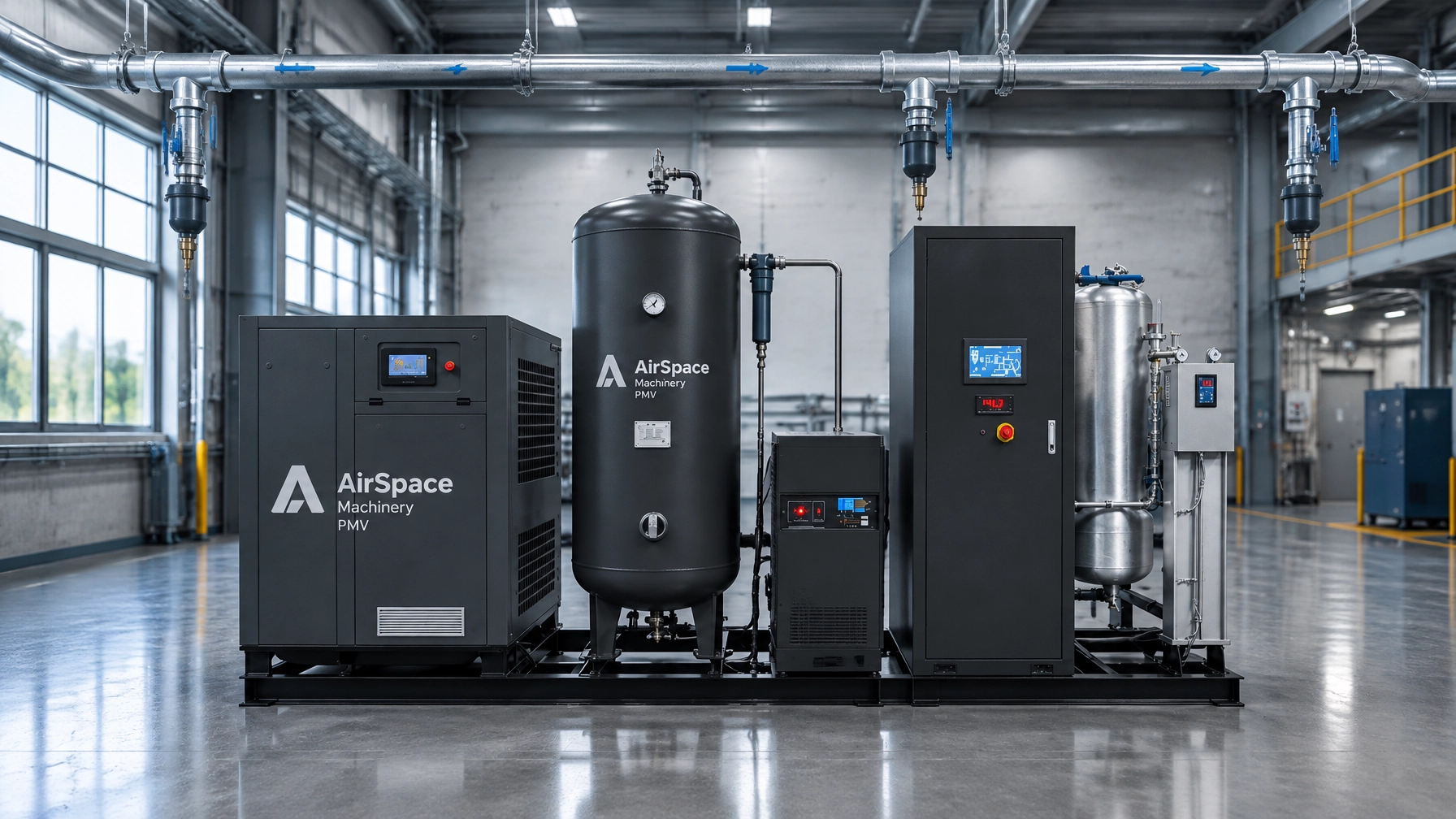
A compressor package that includes an air receiver contains a pressure vessel. Under SASO rules, pressure equipment requires conformity assessment before a PCoC is issued, and the SCoC is issued per shipment. The 1 October labeling rule layers on top: the receiver and the package must show the supplier name and CR number.
If you are specifying equipment for a Saudi site, confirm:
- The receiver has a valid SASO conformity path and the model is the one listed on the certificate.
- The supplier named on the SABER record matches the name and CR number on the equipment.
- Air-quality claims (for example ISO 8573-1 Class 0) are backed by a model-specific test report, not a generic statement.
The SCR–FAZ Arabian Holding partnership and COmVac ASIA 2026
Market access is not only regulatory; it is also about who can service you locally. In early October 2026, SCR — an established compressor supplier — announced a distribution partnership with FAZ Arabian Holding Co for the Saudi market and confirmed it will exhibit at COmVac ASIA 2026. These are normal competitive moves, but they change the buying calculus: a supplier with a local holding-company partner can offer faster response and a clearer compliance hand-off.
For the buyer, the practical question is the same regardless of brand: can the supplier show a valid CR number, a complete certificate chain, and a service channel that will still answer after commissioning? Price alone does not answer that.
How AirSpace Machinery supports Saudi compliance
AirSpace Machinery prepares KSA-bound packages with documentation that matches the physical label:
- CE documentation and the manufacturer’s ISO 9001 certificate, with scope and validity checked during procurement.
- Model-specific test reports where an air-quality class is claimed.
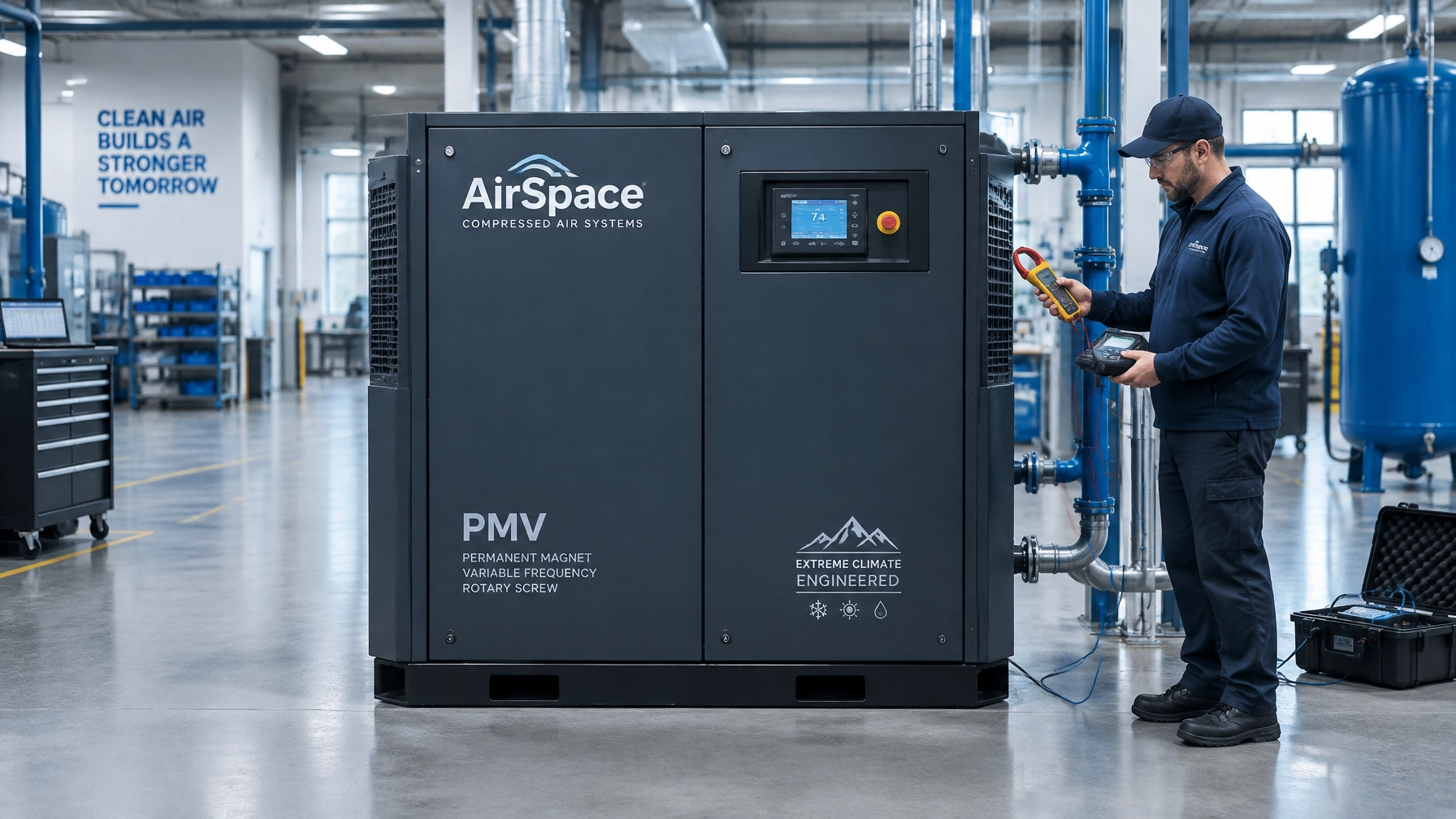
- Low-pressure and PMV configurations selected against measured pressure, flow and duty — see the low-pressure compressor series and the solutions overview.
- A deeper walk-through of SASO, PCoC and SCoC is in our SABER certification guide for KSA market access.
Buyer checklist before you commit
- Confirm the exact model and receiver volume on the SASO certificate.
- Verify the supplier name and CR number that will appear on the equipment and SABER record.
- Request the PCoC before shipment and the SCoC per shipment.
- Match any air-quality class claim to a model-specific test report.
- Confirm local service and spare-parts access for the operating life, not only the commissioning period.
Frequently Asked Questions
Does the 1 October 2026 SABER rule change technical specifications?
No. It is a labeling and traceability rule: covered products must show the supplier name and commercial registration number. It does not alter the underlying SASO conformity or performance requirements.
Is an air receiver treated differently from the compressor?
Yes. The receiver is a pressure vessel and follows SASO conformity before a PCoC is issued. The 1 October labeling rule applies to the package and the receiver. Treat the receiver’s certificate and marking as a separate check, not an afterthought.
Can a supplier without a Saudi CR number still sell into KSA?
No — not compliantly. The SABER record and the product marking must identify a Saudi importer or authorized supplier with a commercial registration number. A supplier that cannot show this exposes the shipment to clearance risk.
What documents should I match before dispatch?
Three: match the certificate entity, the named supplier, and the physical product label. Most clearance delays we see come from a mismatch among those three, not from missing test data.
Sources and standards
- Saudi Standards, Metrology and Quality Organization (SASO): SABER conformity program and product certificates (PCoC/SCoC). See saber.sa.
- ISO 8573-1: specify required air quality by class; limit Class 0 claims to models with supporting test reports.
- ISO 1217: use the applicable acceptance-test method and conditions when comparing compressor FAD and performance.
- AirSpace Machinery Downloads Center for current technical catalogs and model documentation.
Author: Johnny Wayne, Managing Director, AirSpace Machinery. Reviewed by Engineering.
⚡ Is Your Factory Bleeding Cash?
Most fixed-speed compressors waste $3,600/year in "Unload Tax." Test your waste level in 30 seconds.
RUN THE ROI TEST →Ready to See How Much Your Facility Can Save?
Fill out the form below for a Free Energy Assessment.