Author: Penny Winston
Introduction: Why Procurement Engineers Are Prioritizing the Oil Free Air Compressor in 2026
When evaluating compressed air infrastructure for high-purity manufacturing, selecting the correct oil free air compressor is no longer just a technical checkbox: it is a critical financial and operational safeguard. In sensitive industrial sectors such as pharmaceuticals, microelectronics, and food processing, even microscopic oil carryover can trigger catastrophic batch contamination, resulting in losses exceeding $72,000 per event. As industrial facilities face stricter regulatory mandates and escalating energy expenses, plant managers are moving away from legacy lubricated systems.
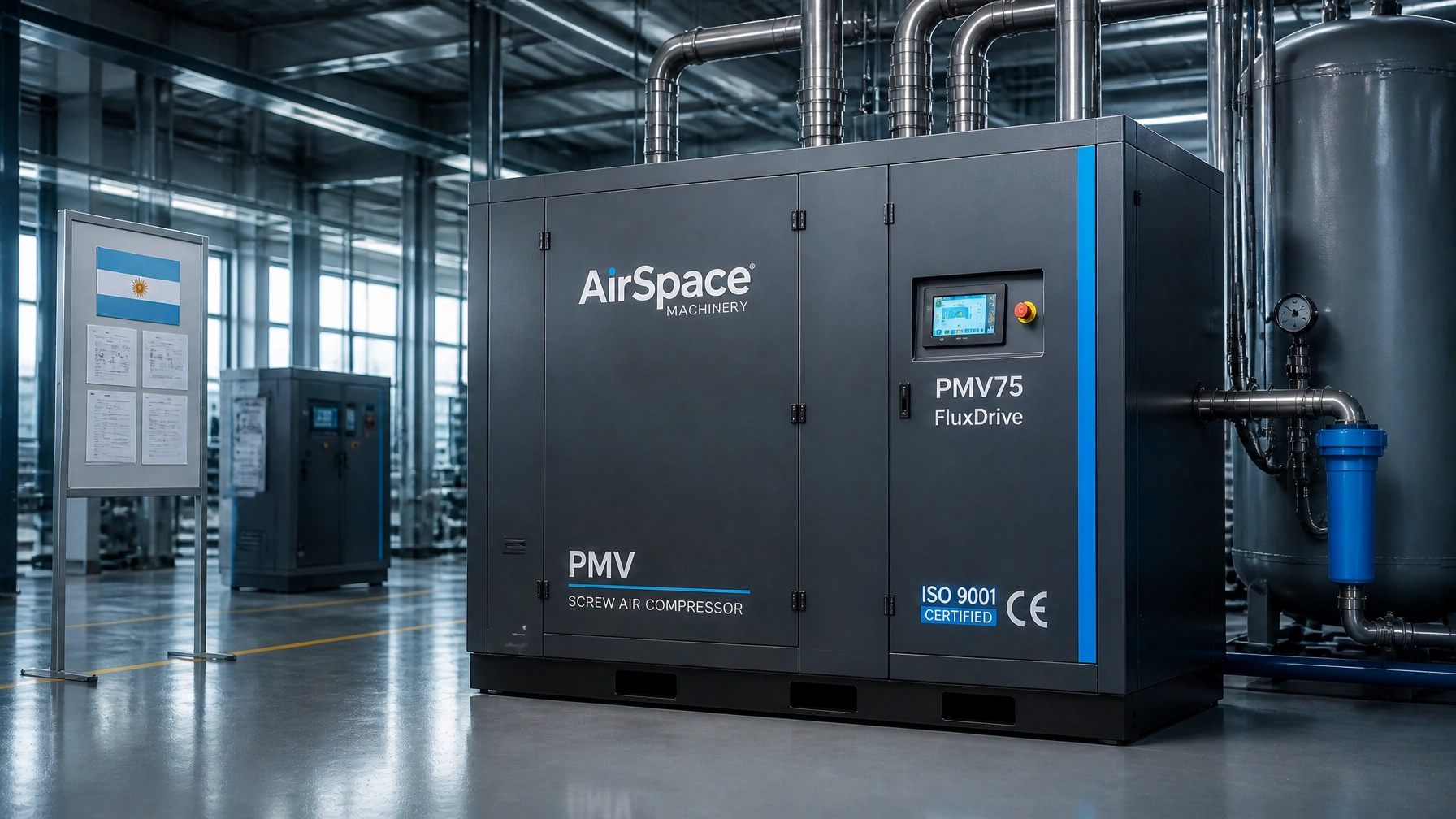
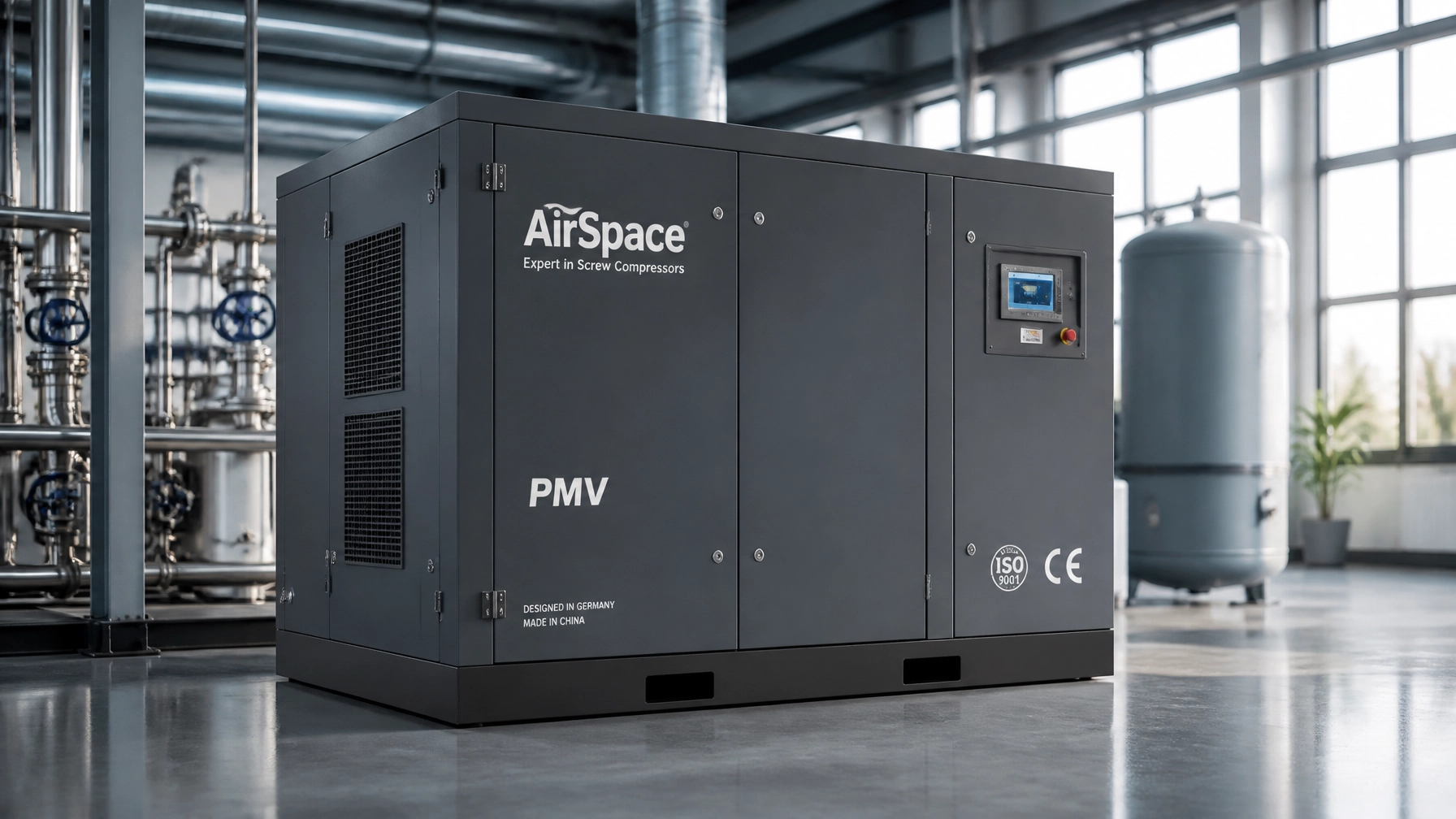
At AirSpace Machinery, our engineering approach centers on the 35% energy delta achieved through Permanent Magnet Variable (PMV) frequency technology combined with true oil-free compression. This comprehensive procurement and ROI guide explores technology classifications, total cost of ownership (TCO) models, ISO 8573-1 Class 0 standards, and technical specifications designed to help procurement engineers make data-driven investment decisions.
What Is an Oil Free Air Compressor? Understanding True Class 0 Technology
To understand why an oil free air compressor is essential for contamination-sensitive facilities, one must first distinguish between true oil-free compression and “technically oil-free” lubricated setups.
True oil-free compression utilizes dry screw, scroll, or centrifugal airends where zero lubricating oil enters the compression chamber. The rotors synchronize via precision timing gears, requiring no oil seal barriers inside the air path. Conversely, lubricated compressors flood the compression chamber with oil for cooling and sealing, relying on downstream multi-stage coalescing filters to remove oil vapor. Over time, filter degradation introduces oil carryover risks into the compressed air network.
Procurement engineers prioritize the true oil free air compressor because it eliminates the risk of catastrophic filter breakthrough, guaranteeing absolute product integrity and compliance with international purity standards.

The Contamination Tax: Total Cost of Ownership : Oil Free vs. Lubricated
When calculating the real cost of a compressed air system over a 10-year operational lifecycle, initial capital expenditure (CapEx) accounts for only 15% to 20% of total expenses. The remaining 80% is driven by energy consumption, maintenance, and the hidden costs of contamination: what we term the Contamination Tax.
| Cost Component | Lubricated Compressor with Filtration | AirSpace PMV Oil-Free Screw Compressor |
|---|---|---|
| Initial Capital Cost | Lower upfront | Premium engineering, rapid ROI |
| Annual Energy Consumption | High (Fixed speed / constant unload waste) | 35% lower energy consumption (PMV VSD) |
| Oil Changes & Disposal | $600 – $1,200 / year | Zero compressor chamber oil |
| Filter Replacements | Frequent high-efficiency oil separator changes | Minimal maintenance (no oil-removal filters needed) |
| Contamination Risk | High ($72,000+ per batch loss exposure) | Zero risk (ISO 8573-1 Class 0 certified) |
| 10-Year TCO | High cumulative operating cost | Optimized via the AirSpace ROI Calculator |
By integrating high-efficiency Permanent Magnet Variable frequency motors, AirSpace systems deliver a verified 35% energy delta compared to legacy fixed-speed units, ensuring that the initial investment in an oil free air compressor is rapidly offset by recurring energy savings.
Dry Screw vs. Water-Injected vs. Scroll: Which Oil Free Air Compressor Technology Wins?
Choosing the right compression mechanism depends heavily on facility scale, duty cycle, and ambient operating conditions.
Dry Screw Compressors (AirSpace Standard)
Engineered for continuous 24/7 duty in demanding industrial environments (30 HP to 180 HP), dry screw units utilize symmetrical or asymmetrical rotors with specialized coatings. They offer robust performance, high free air delivery (FAD), and exceptional reliability across diverse pressure requirements.
Water-Injected Compressors
While water-injected systems maintain lower discharge temperatures, they introduce significant maintenance overhead regarding water treatment, mineral scaling, and severe freeze risks in colder climates or unheated plant rooms.
Scroll Compressors
Ideal for small-scale applications under 10 HP with intermittent duty cycles and compact footprints, scroll compressors lack the heavy industrial FAD output required for large manufacturing lines.
For heavy industrial use, the dry oil free air compressor remains the undisputed technical winner for continuous, contamination-free operations.

ISO 8573-1 Class 0: The Definitive Standard for Oil Free Air Compressors
Regulatory compliance in food, pharmaceutical, and medical manufacturing requires strict adherence to air purity classifications defined under ISO 8573-1.
- Class 1 to Class 5: Permitted residual oil aerosol, liquid, and vapor concentrations ranging from 0.01 mg/m³ up to 5.0 mg/m³. These are vulnerable to filter saturation failures.
- Class 0: The gold standard. User-defined and strictly verified at less than 0.003 mg/m³ for total oil (aerosol, liquid, and vapor combined).
AirSpace manufacturing standards ensure that every oil free air compressor undergoes rigorous third-party auditing to guarantee true Class 0 integrity, protecting sensitive production batches from micro-droplet migration.
AirSpace Oil-Free PMV Series: Technical Specifications Comparison
To out-position legacy incumbents, AirSpace Machinery provides industry-leading performance metrics backed by CE and ISO 9001 quality certifications. Below is the specification comparison across our primary commercial models:
| Model | Power (kW/HP) | FAD (m³/h) | Max Pressure (bar) | Noise dB(A) | Motor Efficiency | Ambient Rating | Startup Type |
|---|---|---|---|---|---|---|---|
| AS-30OFPMV | 22 kW / 30 HP | 3.6 m³/min | 8 – 10 bar | 62 dB(A) | IE5 PM VSD | 55°C Rated | Soft / VFD |
| AS-55OFPMV | 37 kW / 50 HP | 6.2 m³/min | 8 – 10 bar | 64 dB(A) | IE5 PM VSD | 55°C Rated | Soft / VFD |
| AS-75OFPMV | 55 kW / 75 HP | 9.4 m³/min | 8 – 10 bar | 65 dB(A) | IE5 PM VSD | 55°C Rated | Soft / VFD |
| AS-110OFPMV | 90 kW / 120 HP | 15.2 m³/min | 8 – 10 bar | 67 dB(A) | IE5 PM VSD | 55°C Rated | Soft / VFD |
| AS-180OFPMV | 132 kW / 180 HP | 24.5 m³/min | 8 – 10 bar | 68 dB(A) | IE5 PM VSD | 55°C Rated | Soft / VFD |
For additional configuration data, review our complete equipment lineup at our About Us portal.
Industries That Require an Oil Free Air Compressor
Modern industrial standards mandate contamination-free pneumatic power across several critical sectors:
- Pharmaceutical Manufacturing: Strict GMP compliance requires sterile air for tablet pressing, coating, and pneumatic conveying.
- Food & Beverage Processing: HACCP protocols prohibit oil vapor in aseptic bottling, packaging, and direct food-contact mixing.
- Electronics & Semiconductor: Microchip fabrication demands ultra-clean environments to prevent microscopic wafer defects.
- Medical Device Production: Cleanroom pneumatics rely on Class 0 air for assembly and surgical tool calibration.
- Textile Processing: High-speed spinning and weaving machines require clean air to prevent discoloration and fabric rejection.
Oil Free Air Compressor Applications: Where Class 0 Air Is Non-Negotiable
Beyond industry categorization, specific unit-level applications make an oil free air compressor indispensable:
- Sterile Blister Packaging: Protecting pharmaceutical products from chemical leaching during heat sealing.
- Fermentation Air: Supplying sterile oxygen to bioreactors in biotech and brewing operations.
- Instrument Air for Critical Sensors: Preventing calibration drift caused by oily residue accumulation in automated control valves.
- Direct Product Contact: Any pneumatic operation where compressed air touches the end product directly.

How to Buy an Oil Free Air Compressor: 2026 Procurement Checklist
When drafting a Request for Proposal (RFP) for your facility, ensure your procurement team verifies the following parameters:
- Verify ISO 8573-1 Class 0 Certification: Demand third-party audit reports rather than manufacturer self-declarations.
- Check Ambient Temperature Ratings: Ensure the airend and electronics are rated for 55°C ambient conditions to prevent thermal derating in hot climates (Middle East, Southeast Asia, Latin America).
- Confirm Motor Efficiency: Insist on IE5 Permanent Magnet motors to capture the 35% energy delta over fixed-speed alternatives.
- Evaluate Airend Engineering: Partner with manufacturers utilizing precision-engineered rotors from industry leaders like BAOSI and Hanbell.
- Request FAD Curves at Operating Pressure: Avoid nominal displacement ratings; verify actual Free Air Delivery under load.
- Validate Compliance Standards: Confirm CE, ISO 9001, and regional import certifications.
Oil Free Air Compressor: Frequently Asked Questions
What is the primary advantage of an oil free air compressor over a lubricated model?
The primary advantage is 100% elimination of oil in the compression chamber, ensuring ISO 8573-1 Class 0 certified air that completely prevents batch contamination and eliminates oil filtration maintenance costs.
How does PMV technology reduce energy costs?
Permanent Magnet Variable frequency drives match motor speed directly to plant air demand, eliminating the unloader power waste inherent in legacy fixed-speed compressors and delivering up to 35% energy savings.
What maintenance is required for a dry screw oil-free unit?
Maintenance is simplified compared to lubricated units: no oil separator filter replacements, no oil disposal fees, and only routine scheduled checks of air intake filters and cooling circuits.
Can an oil free air compressor operate in extreme ambient temperatures?
Yes. AirSpace oil-free systems are engineered with robust cooling architecture rated for ambient temperatures up to 55°C without performance degradation.
What is the typical lifespan of an AirSpace oil-free screw airend?
When maintained according to engineering schedules, AirSpace precision airends deliver over 100,000 hours of continuous, trouble-free operation with 99.9% uptime.
How do I verify true Class 0 air quality compliance?
True Class 0 compliance is verified through accredited third-party laboratory air sampling tests measuring total oil aerosol, liquid, and vapor to be below <0.003 mg/m³.
Who should I contact for custom industrial air system design and pricing?
You can reach our senior engineering team directly via WhatsApp at +86-131-2-247-8324 or email johnnywayne@chinacompressor.org for prompt proposal generation.
Conclusion: Secure Your Facility with AirSpace Machinery’s Certified Oil Free Air Compressors
Investing in a reliable oil free air compressor is the definitive step toward operational security, regulatory compliance, and long-term energy optimization. By eliminating the Contamination Tax and leveraging advanced PMV technology, AirSpace Machinery empowers industrial facilities worldwide to achieve peak efficiency and uninterrupted production uptime.
Ready to optimize your plant’s compressed air infrastructure? Contact our engineering team today or submit your requirements below to receive a detailed technical proposal.
Phone: +86-131-A-AIRTECH
WhatsApp: +86-131-2-247-8324
Email: johnnywayne@chinacompressor.org
Website: chinacompressor.org
Reviewed by Engineering
📅 Last updated:
⚡ Is Your Factory Bleeding Cash?
Most fixed-speed compressors waste $3,600/year in "Unload Tax." Test your waste level in 30 seconds.
RUN THE ROI TEST →Ready to See How Much Your Facility Can Save?
Fill out the form below for a Free Energy Assessment.