Is a containerized air compressor station really a “plug-and-play” solution, or is it a high-priced shipping crate that complicates your maintenance?
For many industrial facilities, the allure of a “compressed air room in a box” is strong. Vendors promise a ready-to-use system that bypasses civil works and building permits. However, at AirSpace Machinery, we have seen industrial buyers pay an average “Convenience Premium” of $28,000 for a containerized setup that actually delivers lower long-term reliability than a standard modular skid-mounted system. Unless you are operating in a remote mining site or an offshore oil rig, you are likely overpaying for a structure that restricts ventilation and doubles your maintenance labor costs.
What is a containerized air compressor station?
A containerized air compressor station is a complete compressed air system, including the compressor, refrigerated air dryer, filtration, and receiver tank, installed inside a standard ISO shipping container or a purpose-built steel enclosure. It is designed to be shipped as a single unit and dropped onto a level surface, requiring only power and air line connections to begin operation.
Why are containerized stations often considered a “Money Leak” for factory owners?
While the convenience is real, the financial and operational trade-offs are significant. Here are the core reasons why the “container tax” can rob your facility of efficiency:
1. The Non-Performance Capital Outlay
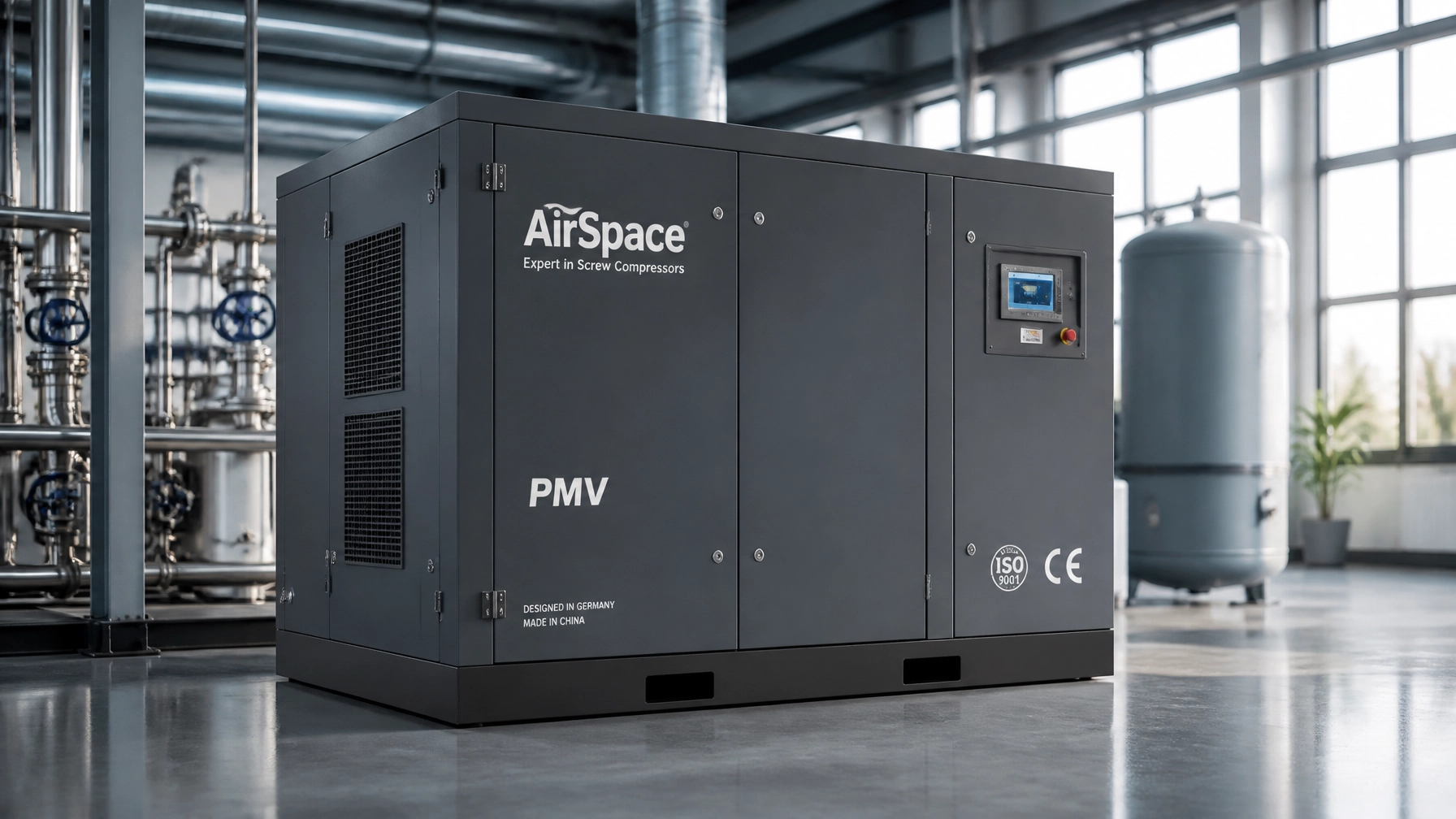
When you buy a containerized system, approximately 20% to 35% of your investment goes toward the container itself, structural modifications, lighting, and internal HVAC. None of these components produce compressed air. For a typical 75HP (55kW) system, this can add $15,000 to $28,000 to the purchase price compared to a high-performance china made screw air compressor on a modular skid.
2. The Ventilation and Heat Trap
Screw compressors generate immense heat. In a standard factory setting, heat is dissipated into a large volume of air or vented through ducting. In a shipping container, heat is concentrated in a confined space. Even with exhaust fans, internal temperatures often run 10-15 degrees Celsius higher than ambient plant temperatures. This “Heat Tax” can reduce the lifespan of your lubricants and electronic components by as much as 30%.
3. Restricted Maintenance Access
Standard containers are only 2.4 meters wide. Once you install a large compressor, a dryer, and a tank, the remaining space for technicians is minimal. Major repairs, such as an air-end swap or a motor replacement, often require specialized rigging or even removing the equipment from the container entirely, turning a 4-hour job into a 2-day ordeal.

How do containerized systems compare to modular skid-mounted solutions?
For most indoor manufacturing applications, a modular, skid-mounted system offers superior ROI. Below is a breakdown of the key differences:
FEATURE: Containerized Station | Modular Skid-Mounted (AirSpace)
Initial Hardware Cost: High ($20k+ Premium) | Optimized for Equipment Value
Ventilation Efficiency: Poor (Confined Heat) | Excellent (Open Airflow)
Maintenance Access: Cramped / Limited | 360-Degree Access
Lead Time: Longer (Custom Build) | Neutral (Config Dependent)
Equipment Lifespan: Reduced by Heat Stress | Optimized (99.9% Uptime)
Floor Space: Large Footprint | Flexible / Modular
When does a containerized air compressor station actually make sense?
We are not saying containerized systems never work. They are a “Solution Provider” for very specific scenarios:
- Remote Sites: Mining or construction projects where no building exists.
- Outdoor Installations: When plant floor space is at 100% capacity and the system must sit in the yard.
- Rental Fleets: Where portability and protection during transport are the primary requirements.
- Extreme Climates: High-altitude or desert operations where a pressurized, climate-controlled box is the only way to protect the internal china made screw air compressor from sand or thin air.
The 35% Energy Delta: Why Technology Matters More Than the Box
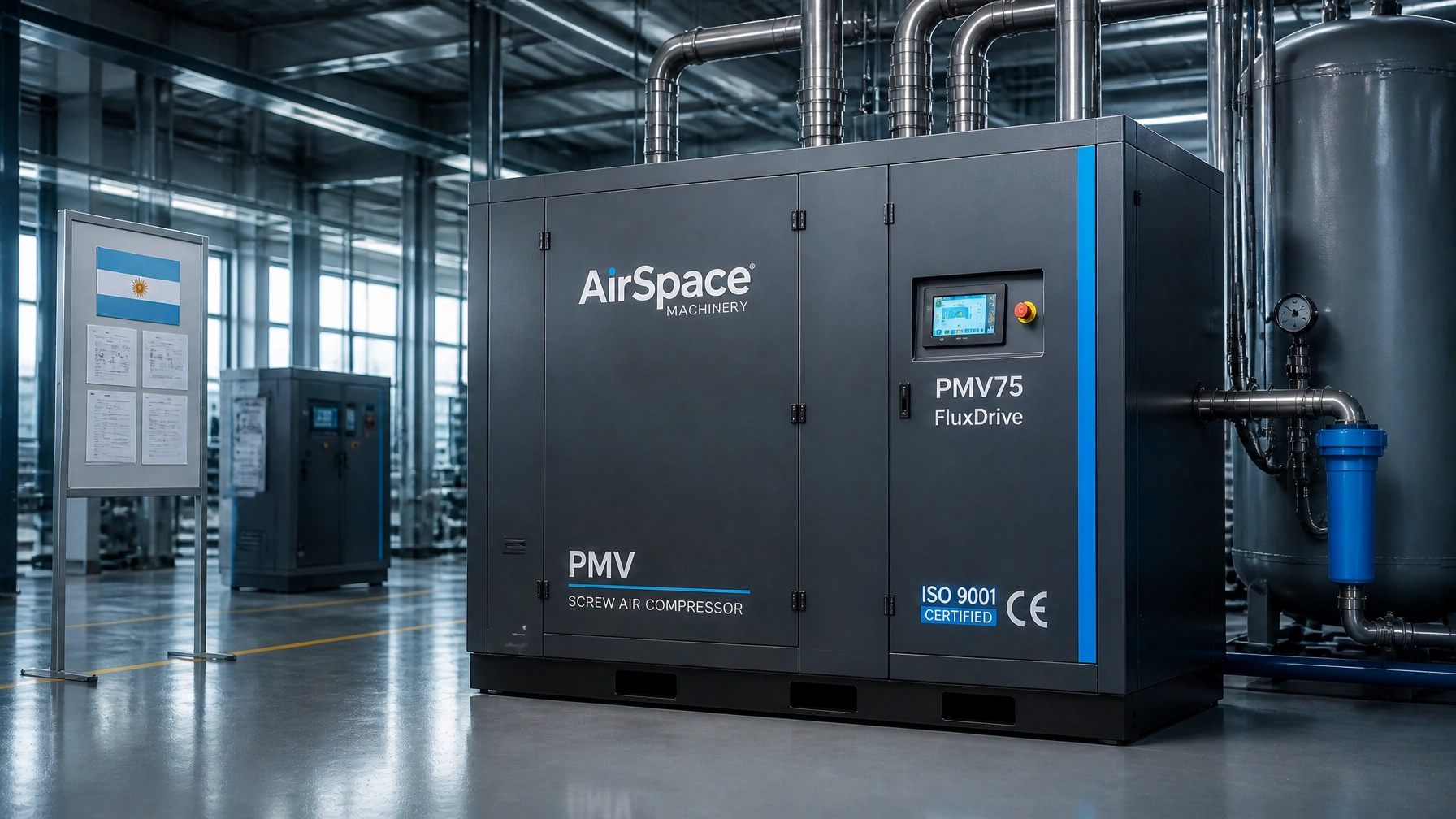
Regardless of whether you choose a container or a skid, the technology inside the cabinet determines your long-term costs. Many containerized units use legacy fixed-speed compressors because they are easier to package. However, at AirSpace Machinery, our Permanent Magnet Variable Frequency (PMV) technology provides a 35% energy delta compared to fixed-speed units.
By moving from a fixed-speed system (the “Unload Tax”) to an AirSpace PMV system, you are not just saving on the container premium; you are plugging the annual energy leak that costs most factories thousands in wasted electricity. Our systems follow strict ISO 9001 quality standards and are built for 20 years of engineering excellence.
Frequently Asked Questions (Q&A) for Industrial Buyers
Can I install a standard compressor outdoors without a container?
Yes, provided you use an appropriate outdoor-rated enclosure or a simple lean-to shelter to protect the unit from direct rain and sun. This is often $10,000 cheaper than a full ISO container.
How does a container affect my compressor’s warranty?
Poor ventilation inside a container is a leading cause of warranty claim denials. If the internal ambient temperature exceeds the manufacturer’s specification, the buyer is often held responsible for component failure.
What is the best alternative for a “plug-and-play” feel?
A modular skid-mounted system. These are pre-piped and pre-wired at our factory, providing the same “connect and run” experience without the ventilation and access drawbacks of a shipping container. You can view our integrated solutions like the 50HP PMV system here: https://www.chinacompressor.org/product/50hp-37kw-fixed-speed-efficient-low-noise-screw-air-compressor
Is it harder to export a containerized system?
Actually, ISO containers can simplify shipping logistics, but the added weight and volume often increase ocean freight costs significantly compared to a crated modular skid.

Conclusion: Evaluate the “Convenience Tax” Carefully
Before signing a proposal for a $60,000 containerized station, ask yourself: “Do I have 15 square meters of space inside my building?” If the answer is yes, you can save nearly $30,000 by choosing a modular, high-efficiency PMV system. That is capital that could be reinvested in production machinery or higher-quality air treatment.
AirSpace Machinery specializes in clean-room engineering and high-performance industrial air systems. Whether you need an oil-free solution for pharmaceutical use or a rugged 180HP unit for heavy manufacturing, we focus on the “Fourth Utility” concept: making your air as reliable and cost-effective as your electricity.
About the Author
Penny Winston is a Technical Writer at AirSpace Machinery, specializing in “The 35% Energy Delta” and “The Fourth Utility Concept.” With a focus on ISO 8573-1 Class 0 Integrity, she helps industrial buyers navigate the complex landscape of compressed air procurement.
Reviewed by Engineering
📅 Last updated:
⚡ Is Your Factory Bleeding Cash?
Most fixed-speed compressors waste $3,600/year in "Unload Tax." Test your waste level in 30 seconds.
RUN THE ROI TEST →Ready to See How Much Your Facility Can Save?
Fill out the form below for a Free Energy Assessment.