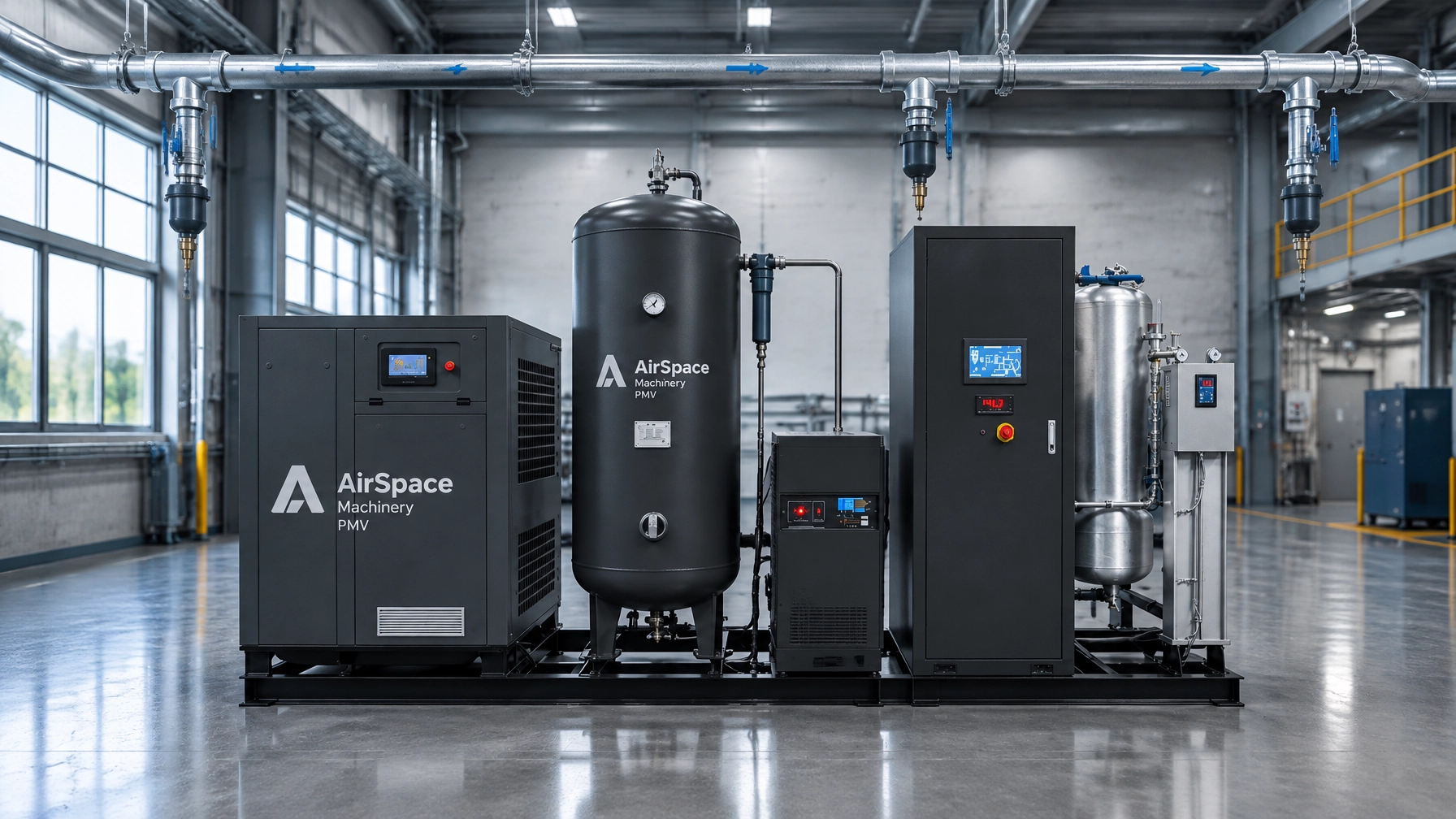
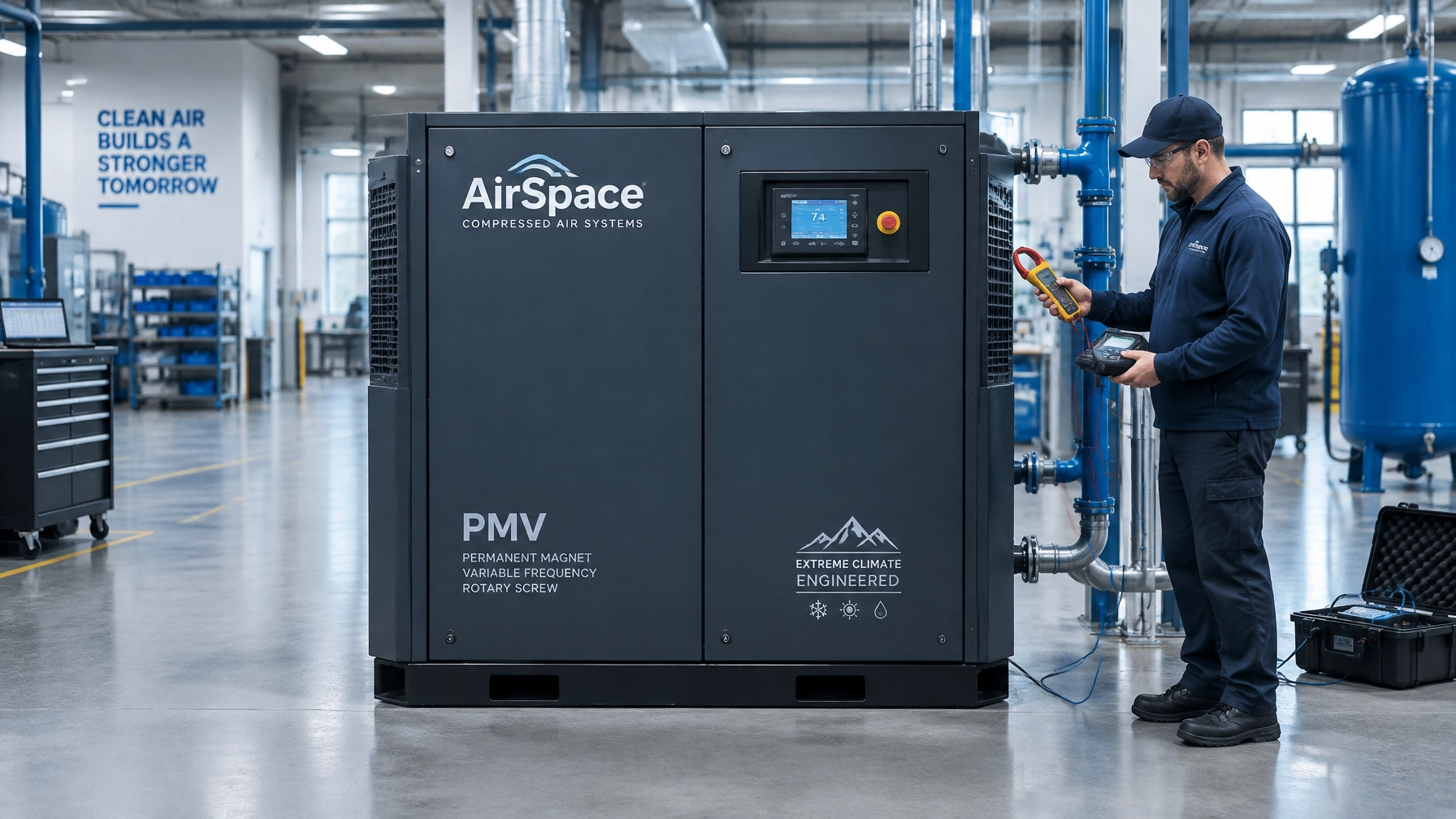
Most compressor-room problems are designed in before the first bolt is tightened. The machine is rarely the cause; the room around it is. This answer-first guide lists the four mistakes we see most often and the fix for each.
Short answer: The four most common compressed air room design problems are (1) undersized ventilation that lets intake air heat up, (2) poor maintenance access that turns a 10-minute task into a shutdown, (3) condensate drains that leak air or clog, and (4) too little receiver storage, which forces the compressor to chase every demand spike. Fix them in that order: cool clean intake air, clear service clearance, reliable condensate removal, and a receiver sized to the event — not to a rule of thumb.
Key takeaways
- Draw intake air that is as cool and clean as practical; hot, dusty intake air lowers density and can push the package beyond its rated condition.
- Plan service clearance and lift access before the foundation is poured, not after.
- Use zero-loss condensate drains and route condensate to a safe drain, not onto the floor.
- Size the receiver around a defined demand event; insufficient storage triggers extra compressor starts.
- Room design and the equipment audit belong together — see the system design blueprint and the energy audit checks.
1. Undersized ventilation and hot intake air
A compressor pulls air from the room it sits in. If that air is hot or dirty, density drops and the package operates off its rated point, which raises specific power. The cheapest energy saving in a compressor room is often a cooler, cleaner intake.
Design the intake to draw outside air from a shaded, dust-controlled location and duct it to the compressor, isolated from the hot discharge plume. Keep the room air change rate sufficient so the compressor does not recirculate its own heat. Avoid locating the intake near exhausts, dryers, or steam sources.
From the field: in one plant we reviewed, re-routing the intake away from a hot corridor and adding make-up air cut the apparent “undersized compressor” complaint without any new capacity. The machine was fine; the room was not. On site, we audited three rooms where the only fault was recirculated heat and a missing drain — none needed a bigger compressor. In our experience, the room is the cheapest place to recover energy.
2. Poor maintenance access
A compressor room planned only for installation — not service — becomes expensive. Filters, separators, belts, and couplings need clearance; a receiver needs a manhole and lift access; the dryer needs front access for media changes.
Before the foundation is poured, mark the service envelope: door width, crane or hoist path, and a clear floor space in front of every serviceable face. For example, confirm the heaviest component can be removed without dismantling unrelated equipment. A 10-minute filter change that requires a half-day shutdown is a design error, not a maintenance one.
3. Condensate mismanagement
Compressed air cooling drops moisture, and that condensate has to leave the system without leaking air. Manual drains left cracked open waste air continuously; blocked drains flood the room and corrode the floor; poorly located drains freeze or clog.
Specify automatic zero-loss drains at every low point — after the aftercooler, at receiver bottoms, and ahead of the dryer. Route condensate to a trapped, safe drain. Confirm the drain capacity matches the expected moisture load at the site’s worst-case humidity, not the catalog average.
4. Too little receiver storage
A receiver is not a luxury; it is the buffer that lets a compressor respond to demand without starting another machine. Sizing it from a rule of thumb such as “one gallon per CFM” ignores the actual event duration and pressure swing.
Calculate storage around a defined event: required flow, event duration, available pressure differential, and atmospheric pressure. Place primary storage near the compressor room and secondary storage near a large intermittent user. Correct storage can stop a short spike from starting a second compressor and lets the lead machine run a more stable cycle. For treatment sizing, see the desiccant vs refrigerated dryer guide.
Putting the room and the audit together
Room design and equipment selection are one decision. A system design blueprint sets the distribution and pressure-drop targets; a five-check energy audit shows whether the room is wasting capacity before you buy. PMV control can help where demand varies — the PMV sizing guide treats the 35% Energy Delta as a planning benchmark, not a guaranteed saving.
Frequently Asked Questions
How much ventilation does a compressor room need?
Typically, enough air change to keep the intake air within a few degrees of the outdoor air while removing the compressor’s rejected heat. The exact rate depends on room volume, compressor heat rejection, and ambient conditions; calculate it from those, do not guess a fixed air change per hour.
Should the air receiver be inside or outside the room?
Either location can work, but typically the receiver stays indoors for protection and drainage. The deciding factors are safe pressure-vessel access, drainage, and protection from temperature extremes. The receiver must remain serviceable and its drains must reach a safe drain regardless of location.
Do zero-loss drains really save air?
Yes. A continuously cracked manual drain leaks compressed air whenever the system is pressurized. Zero-loss drains release only condensate, so the saving is the air that would otherwise escape — measurable, not theoretical, once the drain capacity matches the site’s moisture load.
Can better room design defer a compressor upgrade?
Often yes. Hot intake air, poor storage, and leaks can make a correctly sized compressor look undersized. Correct those first, then re-measure; an upgrade may become unnecessary.
Sources and standards
- U.S. DOE, Improving Compressed Air System Performance: A Sourcebook for Industry, Third Edition — ventilation, storage, and system assessment.
- ISO 1217: use the applicable acceptance-test method when comparing compressor FAD and power.
- ISO 8573-1: specify required air quality by class; limit Class 0 claims to models with supporting test reports.
- AirSpace Machinery Downloads Center and Solutions for configuration and catalog data.
Author: Johnny Wayne, Managing Director, AirSpace Machinery. Reviewed by Engineering.
⚡ Is Your Factory Bleeding Cash?
Most fixed-speed compressors waste $3,600/year in "Unload Tax." Test your waste level in 30 seconds.
RUN THE ROI TEST →Ready to See How Much Your Facility Can Save?
Fill out the form below for a Free Energy Assessment.