Executive Summary: Which Oil-Free Technology Wins in 2026?
When procurement engineers evaluate oil-free compressed air systems for contamination-sensitive facilities, the decision boils down to three primary architectures: dry screw, water-injected screw, and scroll compressors. The direct answer is that water-injected screw technology currently delivers the lowest thermal stress and highest energy efficiency for mid-to-large industrial loads (often saving 15 percent to 34 percent in energy compared to traditional dry screws or scroll packages), while dry screws remain unmatched for massive, continuous 24/7 heavy industrial throughput, and scroll compressors excel exclusively in low-flow, point-of-use laboratory or medical settings.
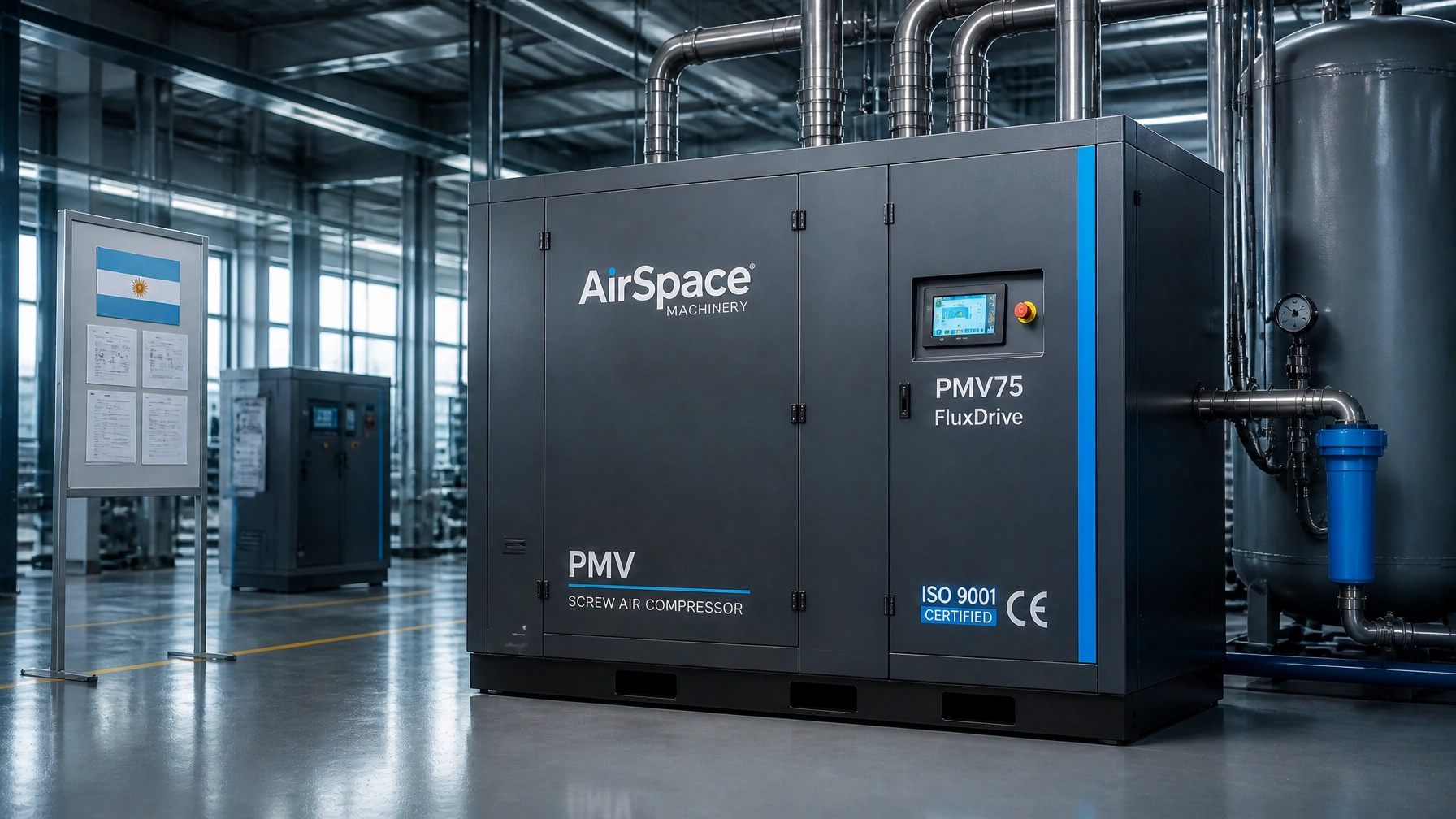
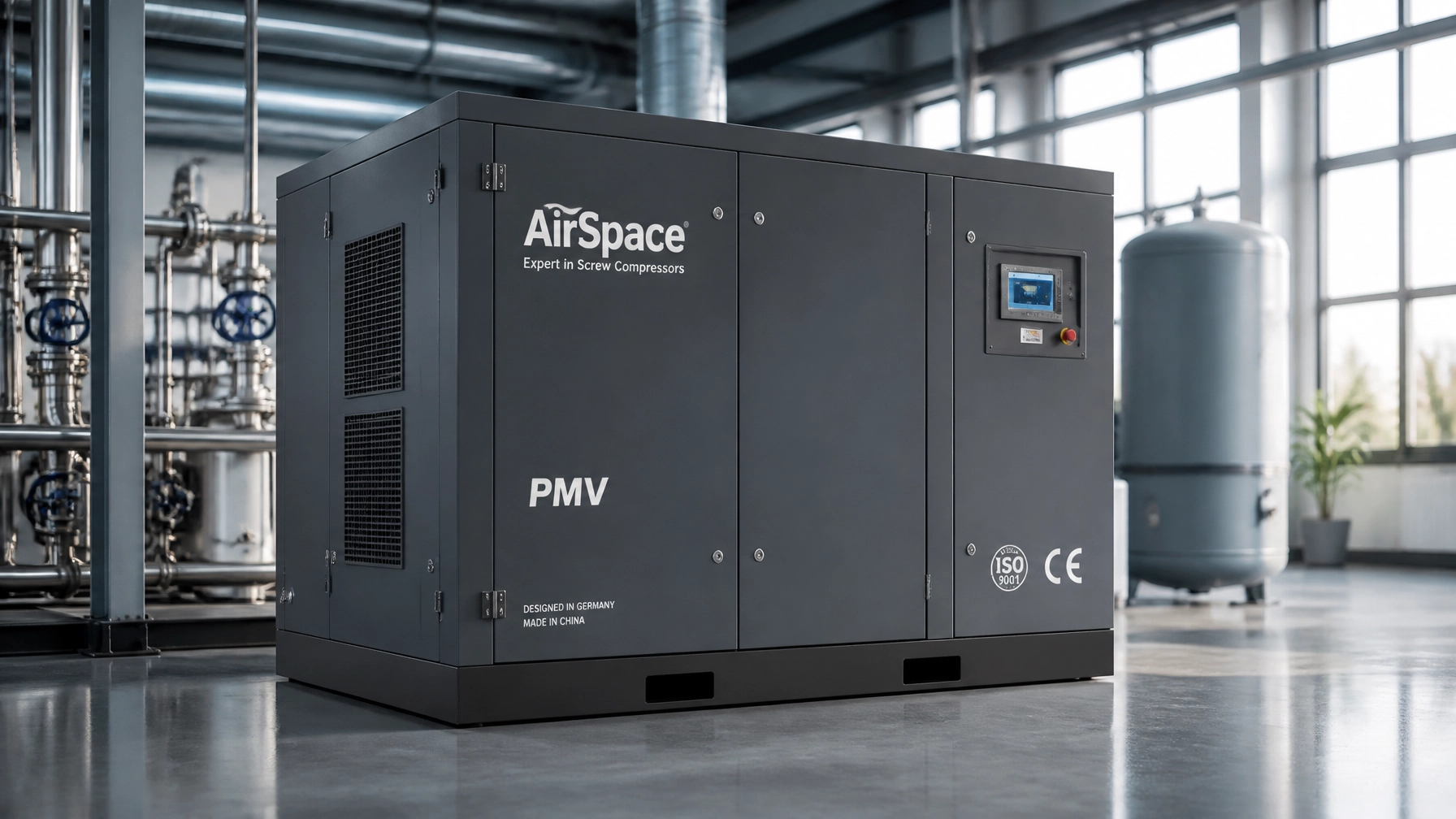
In 2026, achieving ISO 8573-1 Class 0 air purity is mandatory across pharmaceutical manufacturing, semiconductor fabrication, food processing, and precision textile plants. A single trace of hydrocarbon contamination can ruin million-dollar production batches, triggering massive financial losses and regulatory penalties. At AirSpace Machinery, we engineer a comprehensive portfolio of oil-free and Permanent Magnet Variable Frequency (PMV) systems ranging from 10HP to 540HP, certified under CE and ISO 9001 standards. This guide breaks down the engineering mechanics, real-world energy costs, and ideal application fits for all three technologies so you can eliminate hidden energy waste and maximize your capital return.
Understanding the Three Oil-Free Paths
Before comparing financial and operational metrics, let us examine how each technology achieves zero-oil delivery without compromising air purity.
- Dry Oil-Free Screw Compressors: Two intermeshing rotors rotate within the compression chamber without oil or water lubrication. High-precision timing gears outside the compression zone keep the rotors synchronized. Sealing relies on extremely tight mechanical clearances and specialized rotor coatings (such as PTFE or PEEKs). While the air path remains entirely oil-free, the high rotor speeds and lack of direct cooling in the compression chamber cause discharge temperatures to soar between 180 degrees Celsius and 200 degrees Celsius, requiring heavy-duty intercoolers and aftercoolers.
- Water-Injected Oil-Free Screw Compressors: Utilizing a similar twin-screw geometry, this design injects de-ionized water directly into the compression chamber. The water acts as an immediate coolant, lubricant, and volumetric seal. Because water absorbs the heat of compression instantly, operating temperatures remain remarkably low (typically below 50 degrees Celsius to 55 degrees Celsius), enabling near-isothermal compression. The water is subsequently separated and filtered, leaving 0 mg/m3 hydrocarbon residue and delivering certified Class 0 air with superior energy efficiency.
- Oil-Free Scroll Compressors: Consisting of one fixed scroll and one orbiting scroll, this technology traps and compresses air in progressively smaller pockets as the orbiting scroll moves. There is no oil in the compression chamber; sealing relies on polymer tip seals. Multi-scroll packages combine several small pumping elements to achieve higher flow rates with built-in redundancy, making them exceptionally quiet and compact.
Technical Comparison Matrix
To evaluate these systems objectively, procurement engineers must look beyond initial purchase prices and analyze operating parameters. The comparison table below outlines the core technical metrics for industrial-grade installations.
| Feature | Dry Oil-Free Screw | Water-Injected Oil-Free Screw | Oil-Free Scroll |
|---|---|---|---|
| Air Purity Standard | ISO 8573-1 Class 0 | ISO 8573-1 Class 0 | ISO 8573-1 Class 0 |
| Discharge Temperature | High (180 degrees C to 200 degrees C) | Low (Below 55 degrees C) | Moderate (70 degrees C to 90 degrees C) |
| Energy Efficiency | Moderate to High (impacted by high-temp leakage) | Extremely High (near-isothermal compression) | Lower at scale; efficient only under micro-flows |
| Typical Power Range | 45 kW to 350 kW (Medium to Large) | 22 kW to 300 kW (Medium to Large) | 2.2 kW to 30 kW (Small / Point-of-Use) |
| Noise Level | High (78 dB(A) to 85 dB(A)) | Low to Moderate (65 dB(A) to 72 dB(A)) | Very Low (55 dB(A) to 65 dB(A)) |
| Maintenance Complexity | High (Timing gears, rotor coatings, complex cooling) | Moderate (Water filtration, resin replacement, filters) | Minimal (Air filters, tip seal replacement) |
| Best Application Fit | Continuous 24/7 heavy industrial processing | Energy-sensitive purity plants & continuous duty | Small laboratories, medical clinics, dental offices |
10-Year Total Cost of Ownership and Energy Cost Analysis
When evaluating industrial compressors, electricity accounts for over 80 percent of a system's total lifecycle cost over a 10-year period. Energy waste, often compounded by fixed-speed operation or high thermal discharge losses, creates a persistent financial drain on facility budgets.
Consider a standard 100HP (75kW) industrial plant operating 6,000 hours annually at an electricity rate of $0.12 per kWh. The table below illustrates the projected 10-year operating and ownership expenditure across the three oil-free technologies, benchmarked against advanced PMV frequency-controlled integration.
| Cost Component | Dry Oil-Free Screw (100HP Fixed) | Water-Injected Screw (100HP PMV) | Oil-Free Scroll (Multi-Bank 100HP Equivalent) |
|---|---|---|---|
| Initial Capital Investment (CAPEX) | $65,000 – $85,000 | $70,000 – $90,000 | $95,000 – $120,000 |
| Annual Electricity Consumption | $58,320 (4,860,000 kWh / 10 yrs) | $46,656 (3,888,000 kWh / 10 yrs) | $64,152 (5,346,000 kWh / 10 yrs) |
| 10-Year Energy Cost ($0.12/kWh) | $583,200 | $466,560 | $641,520 |
| Overhaul & Maintenance (10 Yrs) | $32,000 (Coatings, gears, coolers) | $18,000 (Water treatment, filters) | $45,000 (Frequent tip seal overhauls) |
| Estimated 10-Year TCO | $680,200 | $554,560 | $781,520 |
As demonstrated by the hard data, the water-injected screw equipped with Permanent Magnet Variable Frequency (PMV) technology yields a staggering $116,640 savings over a 10-year lifecycle compared to traditional dry screws, and over $226,000 compared to multi-bank scroll setups. This efficiency stems from eliminating the "Unload Tax" and leveraging water's superior specific heat capacity to compress air isothermally, preventing thermal energy loss. For more insights into calculating long-term plant ROI, read our industrial air compressor ROI calculator guide.
Application Fit: Which Technology Should You Choose?
Matching the right oil-free architecture to your facility requirements prevents premature equipment failure and catastrophic efficiency drops.
- Choose Dry Screw If: Your plant runs continuous 24/7 heavy industrial processes (such as large-scale chemical processing or massive automotive assembly lines) where water loops are impractical, and you have dedicated utility teams to handle periodic rotor coating inspections and gearbox maintenance.
- Choose Water-Injected Screw If: Your facility demands strict ISO 8573-1 Class 0 purity, high continuous flow, and aggressive energy reduction. Water-injected systems are the premier choice for textile air-jet looms, pharmaceutical compounding, and food packaging where low operating temperatures (<55 degrees C) and reduced noise levels significantly improve factory floor ergonomics. Explore our detailed breakdown on stopping maintenance bleeding in oil-free systems.
- Choose Scroll If: You operate a decentralized facility requiring small-scale, point-of-use air (under 30HP total). Laboratories, hospital dental wings, and optical cleanrooms benefit immensely from scroll compressors due to their near-silent operation and minimal maintenance footprint.
Industry-Specific Recommendations for 2026 Buyers
Different sectors face unique operational challenges that dictate technology selection:
- Pharmaceutical Manufacturing: Requires absolute sterile air. Water-injected and dry screw compressors paired with twin-tower desiccant air dryers ensure zero moisture and zero oil, protecting active pharmaceutical ingredients from contamination.
- Textile Processing: Air-jet looms require continuous, high-volume, pulsation-free air at moderate pressures (7 to 8 bar). Water-injected PMV screw compressors prevent thermal shutdowns during peak summer months while cutting energy consumption by up to 35 percent.
- Food and Beverage Packaging: Direct contact between compressed air and food items demands Class 0 certification under ISO 8573-1 to prevent rancidity and bacterial growth.
Frequently Asked Questions (FAQ)
Q: Can water-injected screw compressors truly achieve ISO 8573-1 Class 0 air purity?
A: Yes. Because the compression chamber uses pure de-ionized water rather than hydrocarbon-based lubricants, the delivered compressed air contains 0 mg/m3 oil content. When paired with appropriate filtration and desiccant dryers, these systems fully comply with ISO 8573-1 Class 0 standards.
Q: What is the main maintenance difference between dry screws and water-injected screws?
A: Dry screws rely on complex timing gears and specialized PTFE or ceramic rotor coatings that wear down over time, requiring expensive factory overhauls. Water-injected screws utilize stainless steel rotors and a closed-loop water treatment system where maintenance is limited to routine water filter and de-ionizing resin replacement.
Q: Does AirSpace Machinery offer custom system sizing for specific plant airflow requirements?
A: Yes. AirSpace manufactures a versatile product range from 2HP to 180HP (with expanded industrial configurations up to 540HP), covering dry screw, water-injected screw, and PMV variable frequency technologies backed by CE and ISO 9001 quality certifications.
Conclusion and Next Steps
Selecting the right oil-free compressor technology in 2026 is no longer just about meeting basic air purity standards: it is a critical financial decision that dictates your plant's energy consumption and operating overhead for the next decade. While dry screws serve heavy legacy continuous loads and scroll units handle quiet point-of-use duties, water-injected Permanent Magnet Variable Frequency (PMV) screw compressors represent the gold standard for energy efficiency, thermal stability, and low lifecycle costs.
Ready to eliminate hidden energy taxes and optimize your facility's compressed air infrastructure? Contact AirSpace Machinery today to Get a Proposal tailored to your exact pressure, flow, and purity specifications.
Author: Penny Winston
Reviewed by Engineering Team, AirSpace Machinery Co., Ltd.
📅 Last updated:
⚡ Is Your Factory Bleeding Cash?
Most fixed-speed compressors waste $3,600/year in "Unload Tax." Test your waste level in 30 seconds.
RUN THE ROI TEST →Ready to See How Much Your Facility Can Save?
Fill out the form below for a Free Energy Assessment.