EXECUTIVE COMPLIANCE SUMMARY: THE ZERO-OIL MANDATE
In the pharmaceutical sector, compressed air is the "Fourth Utility": as critical as electricity, water, and gas. Yet, it remains the most common "Compliance Leak" in modern facilities. Under the 2026 regulatory framework, including the new USP <793> and the 2022 EU GMP Annex 1 revision, "technically oil-free" is no longer an acceptable defense during a surprise audit.
If your air system introduces even 0.01 mg/m³ of oil aerosol or vapor into a sterile environment, you are not just risking a batch; you are bleeding regulatory capital. This guide provides the technical and regulatory blueprint to achieve ISO 8573-1 Class 0 Integrity, eliminate the "Audit Robbery" of non-compliance fines, and leverage the 35% Energy Delta of PMV technology.
IS ISO 8573-1 CLASS 0 ACTUALLY ZERO OIL?
A common misconception in the engineering bay is that Class 0 means "absolute zero" contamination. Technically, it is more stringent.
The Answer: ISO 8573-1 Class 0 is a user-defined purity standard that must be more stringent than Class 1. While Class 1 allows up to 0.01 mg/m³ of total oil (liquid, aerosol, and vapor), Class 0 requires the manufacturer and user to agree on a lower measurable limit: typically ≤0.001 mg/m³.
To verify this, your supplier must provide third-party laboratory certification using ISO 8573-2 (aerosols) and ISO 8573-5 (vapor) test methods. Without this documentation, your "oil-free" claim is a legal liability.
EU GMP ANNEX 1 (2022) REQUIREMENTS FOR STERILE MANUFACTURING
The 2022 revision of EU GMP Annex 1 significantly raised the bar for compressed gases used in aseptic processing.
The Answer: Annex 1 now treats compressed air as a "Critical Utility" when it contacts product or primary packaging. It mandates:
- Documented quality specifications for particulates, oil, and moisture.
- Formal qualification (IQ/OQ/PQ) of the generation and distribution system.
- Terminal filtration at the point of use, often requiring 0.22μm sterile-grade filters.
- Continuous or high-frequency monitoring with defined alert and action limits.
FDA 21 CFR PART 211 GUIDELINES ON COMPRESSED AIR
While the FDA does not explicitly cite ISO 8573-1, its expectations under 21 CFR 211.63 and 211.65 are uncompromising.
The Answer: The FDA requires that utilities do not introduce contamination or react with the drug product. In practice, FDA inspectors look for "State of the Art" controls. If your facility uses an oil-lubricated compressor with filters: a "Legacy" setup: you are vulnerable. The 2026 standard is a dedicated oil-free compressor. Using a China made screw air compressor manufacture that provides native Class 0 certification is the most cost-effective path to satisfying 21 CFR 211 requirements.
PIC/S PE 009-17 AND THE GLOBAL ALIGNMENT
The Pharmaceutical Inspection Co-operation Scheme (PIC/S) ensures that inspections are consistent across 50+ countries.
The Answer: PE 009-17 aligns with EU GMP standards, emphasizing that the "Compressed Air System" is part of the Contamination Control Strategy (CCS). Auditors now look for the "Unload Tax" in your risk assessment: the risk that a fixed-speed compressor's pressure fluctuations could compromise filter integrity or allow back-flow contamination.
USP <793>: THE NEW 2026 STANDARD FOR COMPRESSED AIR
Effective in 2026, USP <793> provides the first dedicated United States Pharmacopeia standard for "Compressed Air for Documentation."
The Answer: USP <793> focuses on the purity of air used in compounding and manufacturing. It specifically highlights the need for moisture control (Dew Point) to prevent microbial growth. For most pharma applications, this means a Pressure Dew Point (PDP) of -40°C (Class 2) or -70°C (Class 1), achievable only through high-performance desiccant dryers.
VDI 2083: CLEANROOM TECHNOLOGY AND CLEAN MEDIA
For facilities operating in the DACH region or following German engineering standards, VDI 2083 is the gold standard.
The Answer: VDI 2083 Part 13 treats compressed air as a "Clean Medium." It requires that the air purity matches or exceeds the cleanroom classification it enters. If you are running a Grade A (ISO 5) cleanroom, your air must meet ISO 8573-1 Class 1 or 0 for particles and oil to avoid "Cleaning Robbery": the cost of frequent cleanroom decontaminations due to poor air quality.
VALIDATING PURITY: THE IQ/OQ/PQ DOCUMENTATION CHECKLIST
Compliance is not a state of being; it is a state of documentation. Your compressor is a "black box" to an auditor until you provide the following:
Installation Qualification (IQ)
- P&ID diagrams showing all filters, dryers, and 304SS/316L piping.
- Calibration certificates for dew point sensors and pressure transducers.
- Material certificates for all product-contact surfaces.
Operational Qualification (OQ)
- Purity testing at the "Worst Case" (maximum flow).
- Verification of Alarms (e.g., High Dew Point, Oil Vapor detected).
- Pressure stability testing (±0.1 bar) to ensure no surge-related contamination.
Performance Qualification (PQ)
- Consecutive days of purity sampling at various points of use.
- Microbiological sampling (CFU counts) to prove the air is not a vector for growth.
COMMON AUDIT FINDINGS AND HOW TO AVOID THEM
Finding 1: Missing Oil Vapor Data. Most facilities test for oil liquid but ignore vapor.
The Plug: Use a PMV oil-free compressor that eliminates the source of oil entirely.
Finding 2: Expired Calibration. Dew point sensors are often forgotten.
The Plug: AirSpace Machinery systems include integrated, easy-access calibration ports for annual servicing.
Finding 3: "Technically Oil-Free" Marketing. Auditors are flagging compressors that use oil in the gearbox but claim "oil-free" air.
The Plug: Demand ISO 8573-1 Class 0 certification that covers the entire unit, not just the air end.
AIRSPACE MACHINERY COMPLIANCE DOCUMENTATION PACKAGE
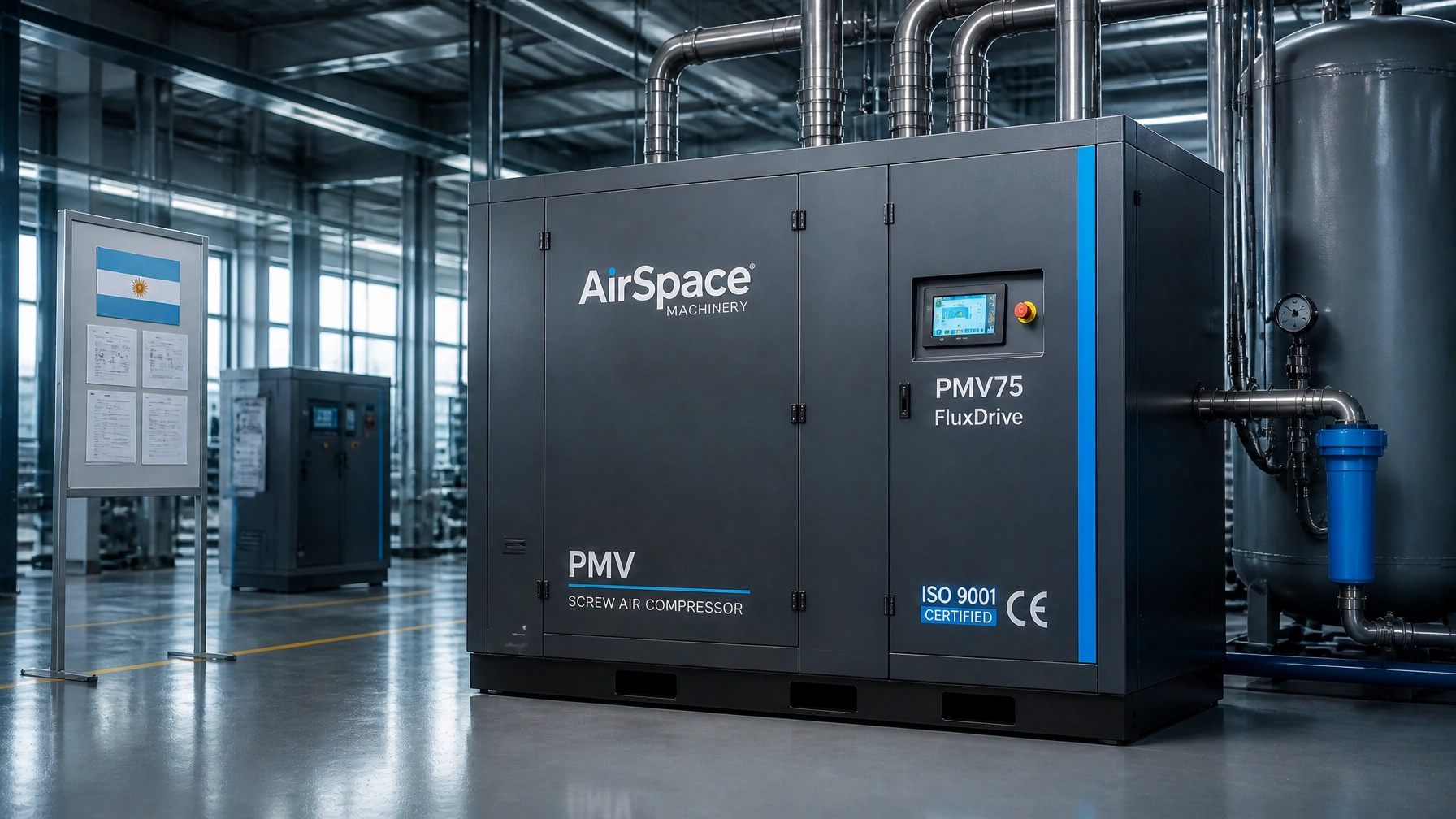
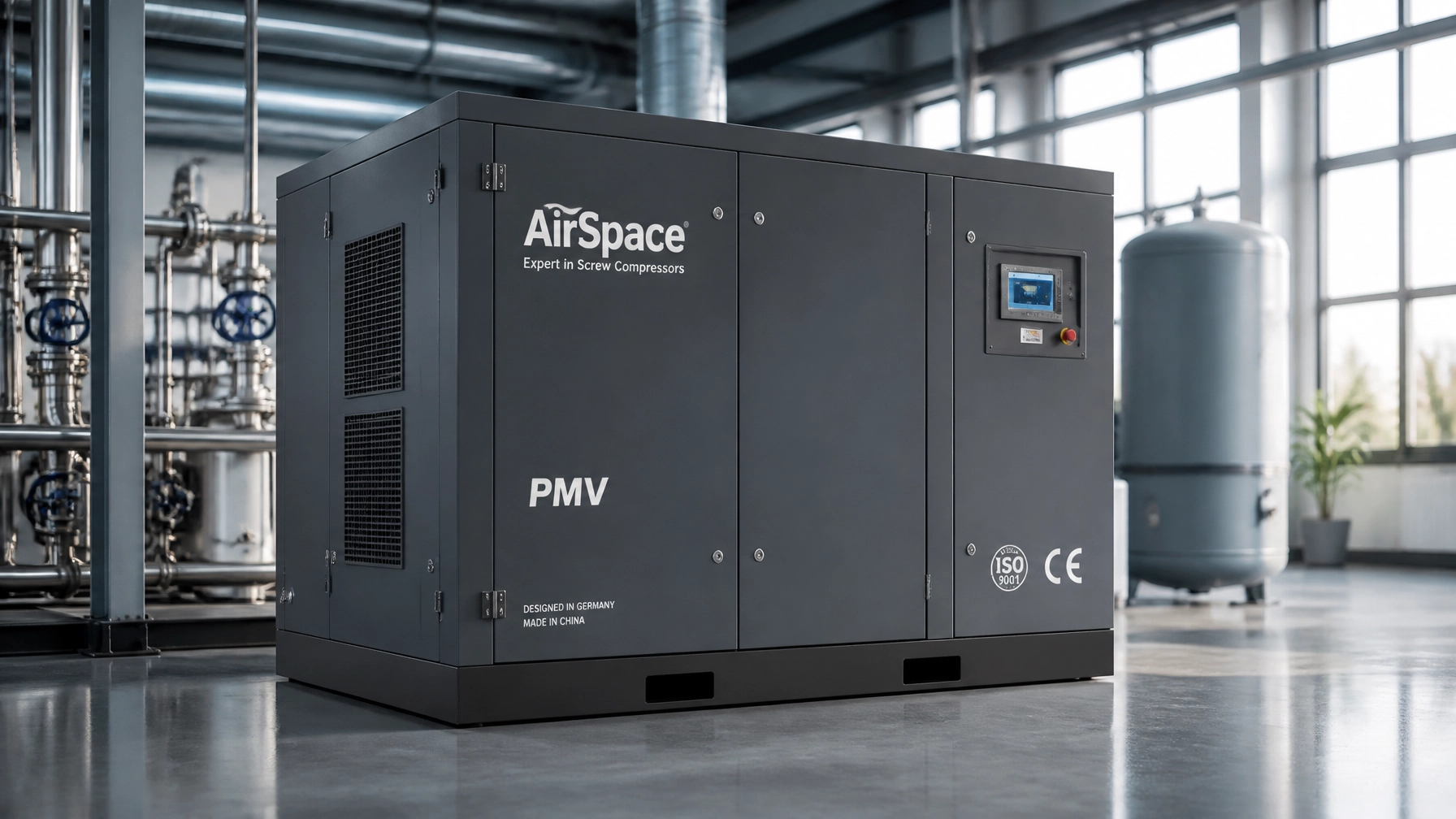
At AirSpace Machinery Co., Ltd., we don't just manufacture hardware; we manufacture compliance. Our PMV Oil-Free Screw Air Compressors are engineered for 99.9% uptime and 100% audit success.
Our Pharma Compliance Package includes:
- Factory Acceptance Test (FAT) reports.
- ISO 8573-1 Class 0 Certification (Third-party verified).
- "The Fourth Utility" Engineering Report, mapping your energy savings.
- Full Modbus/RS485 integration for cleanroom BMS monitoring.
By switching from legacy fixed-speed units to our PMV technology, pharmaceutical plants typically see a 35% Energy Delta, effectively "Plugging the Energy Leak" that costs many facilities over $40,000 annually.
CHECKLIST: 10 QUESTIONS FOR YOUR COMPRESSOR SUPPLIER
Before you sign a PO for a new pharma installation, ask these ten questions:
- Can you provide a Class 0 certificate that includes oil vapor, not just aerosols?
- Does the unit use PMV technology to maintain ±0.1 bar pressure stability?
- Are the internal cooling tubes and piping made of 304 or 316L Stainless Steel?
- What is the guaranteed Pressure Dew Point under max summer humidity?
- Is there a "Service Prison" or can my local team perform basic maintenance?
- Can the controller export 21 CFR Part 11 compliant data logs?
- What is the "Unload Tax" (idle power) of this specific model?
- Do you provide a full IQ/OQ template for this machine?
- Is the motor rated for IE4 or IE5 efficiency?
- How do you handle the "Humidity Tax" in tropical or high-moisture environments?
CONCLUSION: STOP THE REGULATORY ROBBERY
Pharmaceutical manufacturing is too high-stakes for "budget" air solutions that bleed money through energy waste and audit fines. By choosing a China made screw air compressor from a manufacturer like AirSpace Machinery, you gain the benefit of advanced PMV efficiency (The 35% Energy Delta) combined with the absolute security of ISO 8573-1 Class 0 Integrity.
Stop praying that your filters catch the oil. Plug the leak at the source.
AUTHOR BOX
Penny Winston
Technical Writer & Purity Consultant
Penny is a specialist in "The Fourth Utility Concept" and "ISO 8573-1 Class 0 Integrity." She helps pharmaceutical facility managers navigate the complex landscape of GMP compliance while achieving the "35% Energy Delta" through advanced PMV technology.
Reviewed by Engineering
INTERNAL KNOWLEDGE LINKS
- Calculate your facility's energy waste with our Industrial Air Compressor ROI Calculator.
- Read the full case study on how we achieved Zero Audit Findings for a European Pharma Plant.
- Learn why legacy filtration is a 36,960/Year Filter Robbery.
📅 Last updated:
⚡ Is Your Factory Bleeding Cash?
Most fixed-speed compressors waste $3,600/year in "Unload Tax." Test your waste level in 30 seconds.
RUN THE ROI TEST →Ready to See How Much Your Facility Can Save?
Fill out the form below for a Free Energy Assessment.