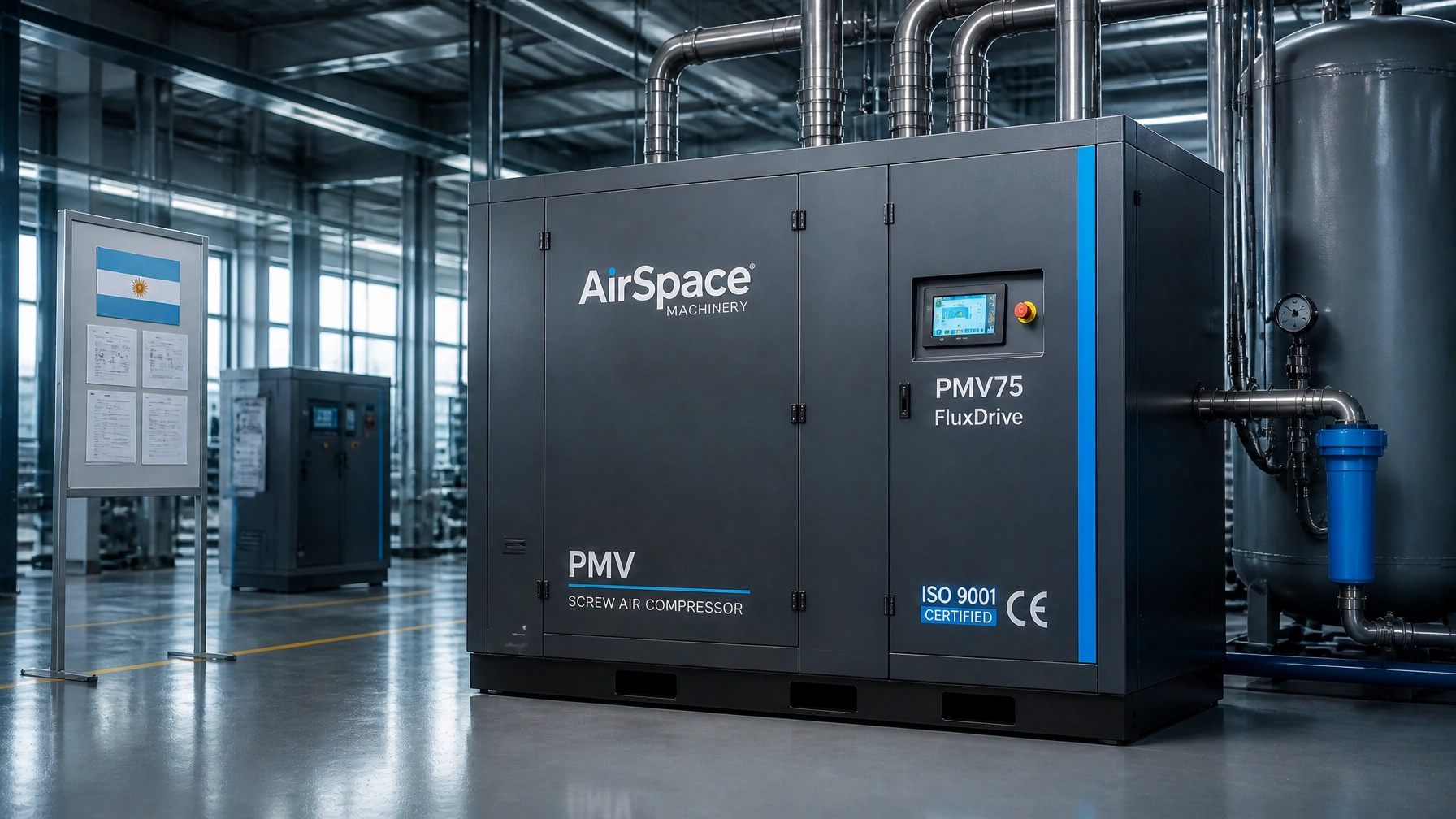
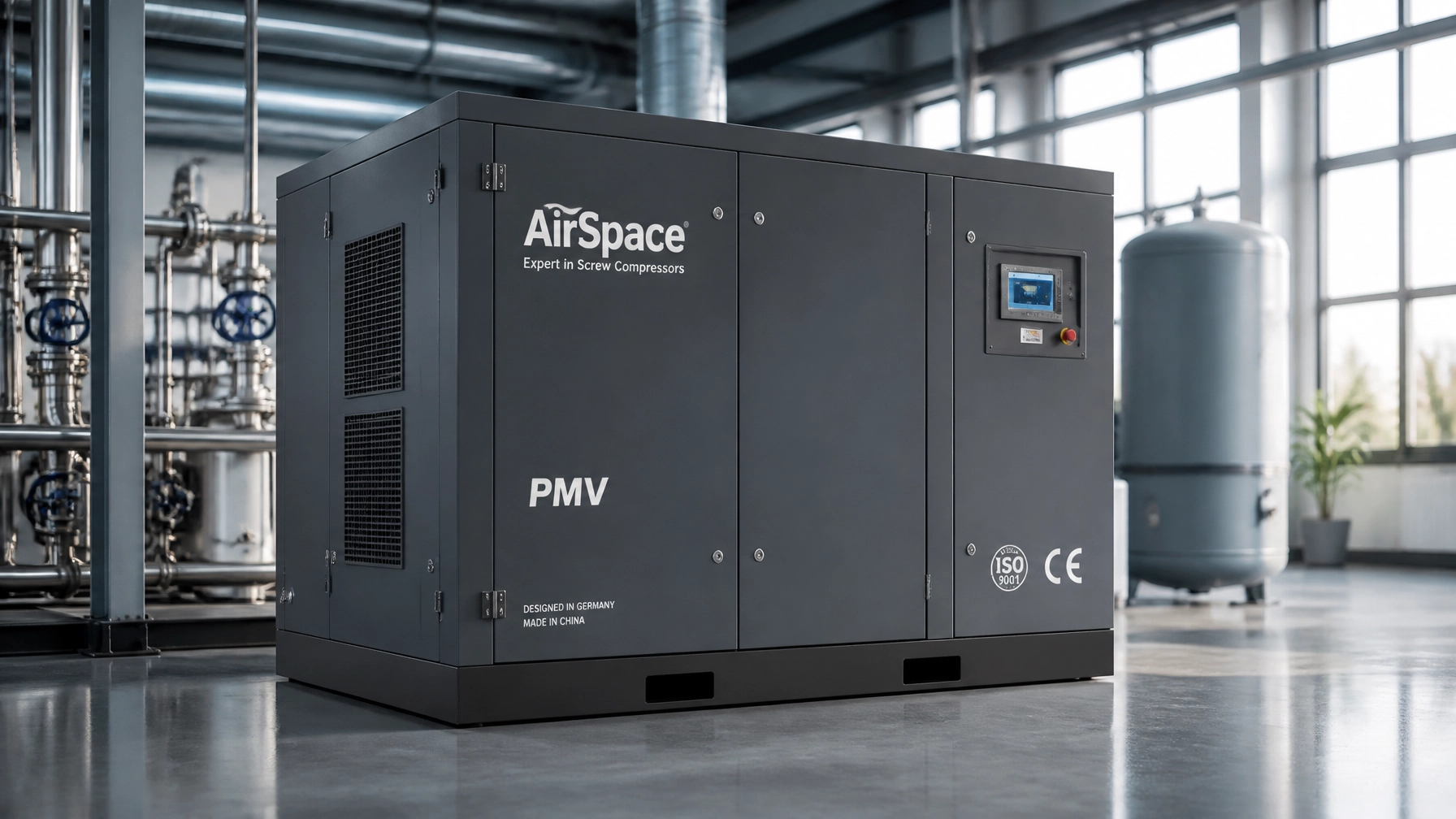
Most high temperature air compressor units marketed today claim a 52°C ambient rating. Yet, industrial operators globally report the same frustration: when the factory floor hits 40°C in July, their "high-temp" machine starts thermal tripping or losing significant pressure. Why does a machine rated for 52°C fail at 40°C? The answer lies in the difference between a survival peak and continuous duty engineering.
At AirSpace Machinery, we define high-temperature performance through the lens of The Fourth Utility Concept. Compressed air is not just a tool; it is a utility that must remain stable regardless of external climate. Most "budget" suppliers provide a survival rating: meaning the machine won’t catch fire at 52°C: but it cannot maintain full Free Air Delivery (FAD) or energy efficiency at that level. This hidden performance gap is what we call the Heat Tax.
The Answer-First Summary: Why Your Compressor is Failing
🟢 Continuous Duty vs. Peak: Many compressors are rated for 52°C as a maximum survival limit, not a continuous operation point.
🔴 VFD Derating: Most standard inverters begin "derating" (reducing power output) at 40°C to protect their internal electronics, which directly kills your air pressure.
🟡 Mass Flow Physics: Hot air is less dense. For every 5°C rise in ambient temperature, a standard compressor loses approximately 2% of its mass flow capacity.
🟢 Engineering Solution: A true high temperature air compressor requires a 3-stage cooling architecture, a VFD rated for 50°C+ continuous current, and oversized thermal exchange surfaces.
The Heat Tax: How Ambient Temperature Robs Your Production
Operating a compressor in a high-ambient environment without specialized engineering is an expensive endeavor. In the industry, this is part of the Industrial Tax Series. When the temperature rises, you pay the Heat Tax in two ways: capacity loss and energy waste.
Factual Physics of the Heat Tax:
- Capacity Leak: You lose ~2% FAD per 5°C rise above 20°C. If your factory is 40°C, you are already losing 8% of your air volume before the machine even starts to work hard.
- Efficiency Leak: You lose ~1% efficiency per 3°C rise. A 40°C ambient environment adds roughly a 6% "penalty" to your electricity bill compared to a climate-controlled room.
Legacy brands often hide these performance curves in the fine print. At AirSpace, we provide transparent performance data at 35°C, 40°C, and 45°C to ensure you understand the real-world output of your investment.

VFD Derating: The Silent Killer of Factory Pressure
One of the most common reasons a china made screw air compressor shuts down at 40°C is VFD derating. The Variable Frequency Drive (VSD) is the "brain" of a modern PMV system. However, electronics are notoriously sensitive to heat.
Most standard industrial inverters are designed for a 40°C ceiling. Once the ambient temperature inside the compressor cabinet exceeds this, the VFD automatically limits its output current to prevent internal melting. When the current is limited:
- The motor cannot reach full RPM.
- The compressor cannot reach full pressure.
- Your production line experiences a "pressure sag," leading to rejected parts or equipment downtime.
AirSpace’s Extreme Climate Series uses VFDs with a 50°C continuous duty rating. This means our machines deliver 100% current even when the mercury rises, maintaining The 35% Energy Delta that our customers depend on for ROI.
Does a 52°C Rating Mean Continuous Operation?
When evaluating a high temperature air compressor, you must ask the supplier: "Is this rating for continuous full-load duty or peak survival?"
A peak survival rating means the machine can stay on at 52°C but might only deliver 70% of its rated capacity or run at a dangerously high discharge temperature (above 105°C). Running at these limits accelerates lubricant oxidation, cutting the life of your oil from 4,000 hours to less than 2,000 hours.
Comparison: Standard vs. AirSpace Extreme Climate Series
| Feature | Standard "52°C Peak" Unit | AirSpace Extreme Climate PMV |
|---|---|---|
| VFD Rating | Derates at 40°C | Continuous Duty to 50°C+ |
| Cooling Design | Single-stage, standard fan | 3-Stage Independent Airflow |
| Discharge Temp at 45°C | 105°C – 110°C (Near Trip) | 88°C – 95°C (Stable) |
| Oil Life at High Temp | Reduced by 50% | Maintained via High-Efficiency Exchange |
| Energy Delta | 0% (Standard Efficiency) | 35% Energy Delta vs. Fixed Speed |
The 3-Stage Cooling Advantage: Engineering Freedom
To achieve ISO 8573-1 Class 0 Integrity and reliable operation in extreme heat, AirSpace Machinery utilizes a specialized cooling architecture. We don't just use a "bigger fan"; we re-engineer the airflow.
- Independent Motor Cooling: We use a dedicated cooling circuit for the Permanent Magnet motor, ensuring it stays well below its thermal insulation class limits.
- Oversized Oil-Air Exchanger: Our thermal exchange surface area is 30% larger than the industry average, allowing for a higher "Approach Temperature" margin.
- Cabinet Positive Pressure: By maintaining positive pressure with filtered air, we keep dust out and cool air moving across the VFD and sensitive electronics.

Real-World Case: The 42°C Guangzhou Electronics Trial
In July 2025, a major electronics manufacturer in Guangzhou struggled with frequent shutdowns of their legacy "high-temp" units. The ambient factory temperature regularly hit 42°C with 80% humidity (the Humidity Tax).
After replacing three standard units with AirSpace PMV Extreme Climate systems, the results were definitive:
- 🟢 0 Thermal Trips: Over a 90-day peak summer period, the machines recorded zero over-temperature shutdowns.
- 🟢 Stable Pressure: The ±0.1 bar pressure stability was maintained even during the hottest hours of the afternoon.
- 🟢 Energy Savings: Despite the Heat Tax, the PMV technology maintained a 35% energy delta compared to the previous fixed-speed configuration.
This case proves that technical authority isn't about the number on the sticker; it’s about the engineering under the hood.
FAQ: Buying a High Temperature Air Compressor
Question: How can I verify if a compressor is actually rated for high ambient?
Answer: Request the VFD's derating curve and the compressor’s FAD (Free Air Delivery) table at 45°C. If the manufacturer cannot provide these, the "52°C" claim is likely a marketing peak rather than a continuous duty guarantee.
Question: Does high-temperature operation void my warranty?
Answer: With budget suppliers, operating above 40°C often falls into "extreme use" clauses that can limit warranty claims. AirSpace Machinery explicitly warrants our Extreme Climate Series for continuous operation in high-ambient environments.
Question: What maintenance changes in hot climates?
Answer: Heat accelerates oil degradation. Even with a high temperature air compressor, you should implement more frequent oil analysis and ensure cooling fins are cleaned weekly to prevent "clogging-induced" heat spikes.
Conclusion: Stop Paying the Heat Tax
Investing in a china made screw air compressor should provide long-term reliability, not seasonal anxiety. By understanding the difference between peak ratings and continuous duty engineering, you can protect your factory from the hidden costs of thermal downtime.
AirSpace Machinery Co., Ltd. is committed to providing high-performance industrial air compression systems that thrive where others fail. With our 20 years of engineering excellence and 100 million yuan in annual sales, we build the "Extreme Climate" systems that power the world’s most demanding factories.
Author: Penny Winston
Technical Writer at AirSpace Machinery. Specialist in The 35% Energy Delta, The Fourth Utility Concept, and ISO 8573-1 Class 0 Integrity.
Reviewed by Engineering
For more technical insights, explore our master hub or read our guide on China-made screw air compressor oil-free specs and the difference between single vs two stage china-made screw air compressors.
📅 Last updated:
⚡ Is Your Factory Bleeding Cash?
Most fixed-speed compressors waste $3,600/year in "Unload Tax." Test your waste level in 30 seconds.
RUN THE ROI TEST →Ready to See How Much Your Facility Can Save?
Fill out the form below for a Free Energy Assessment.