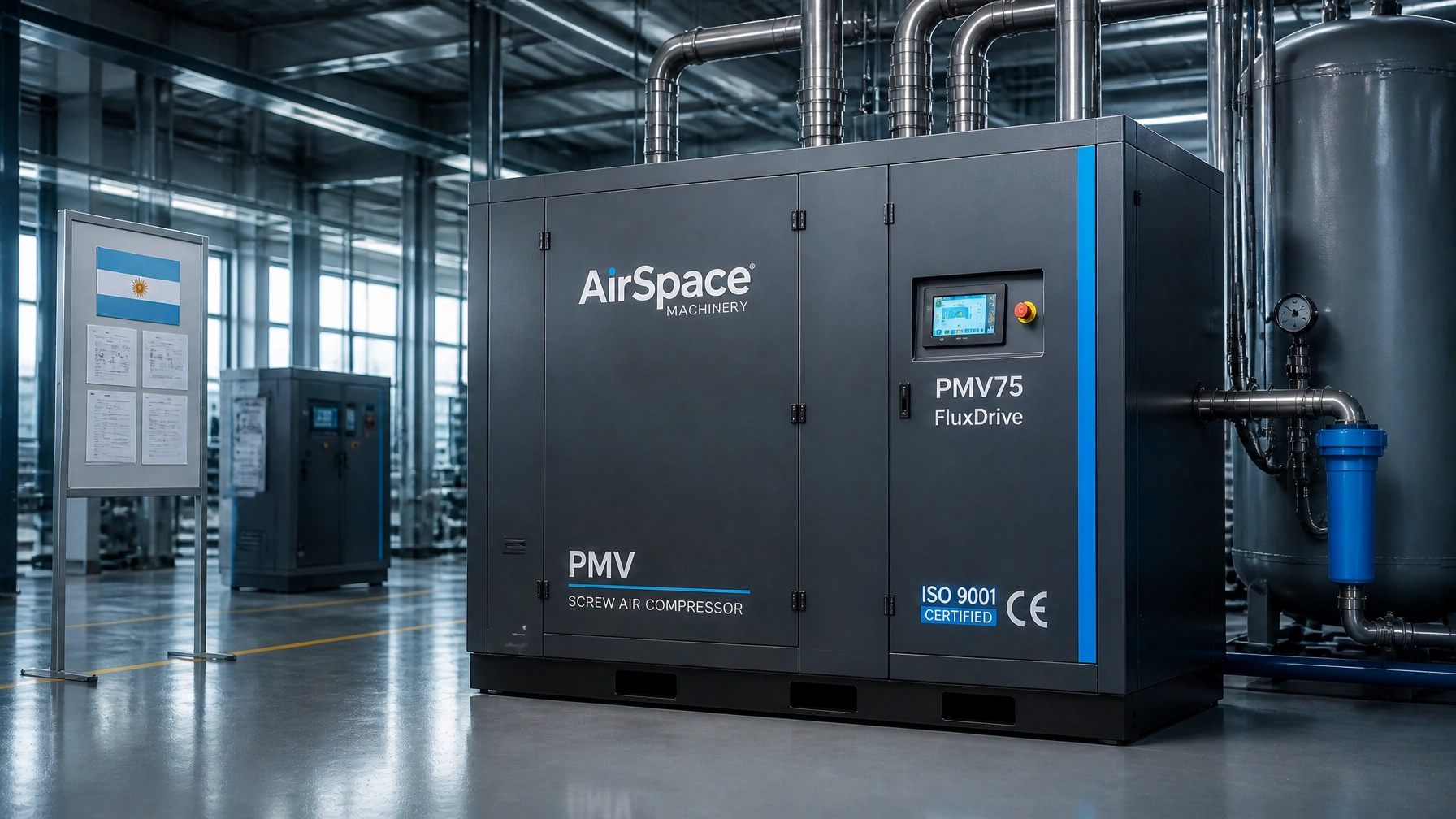
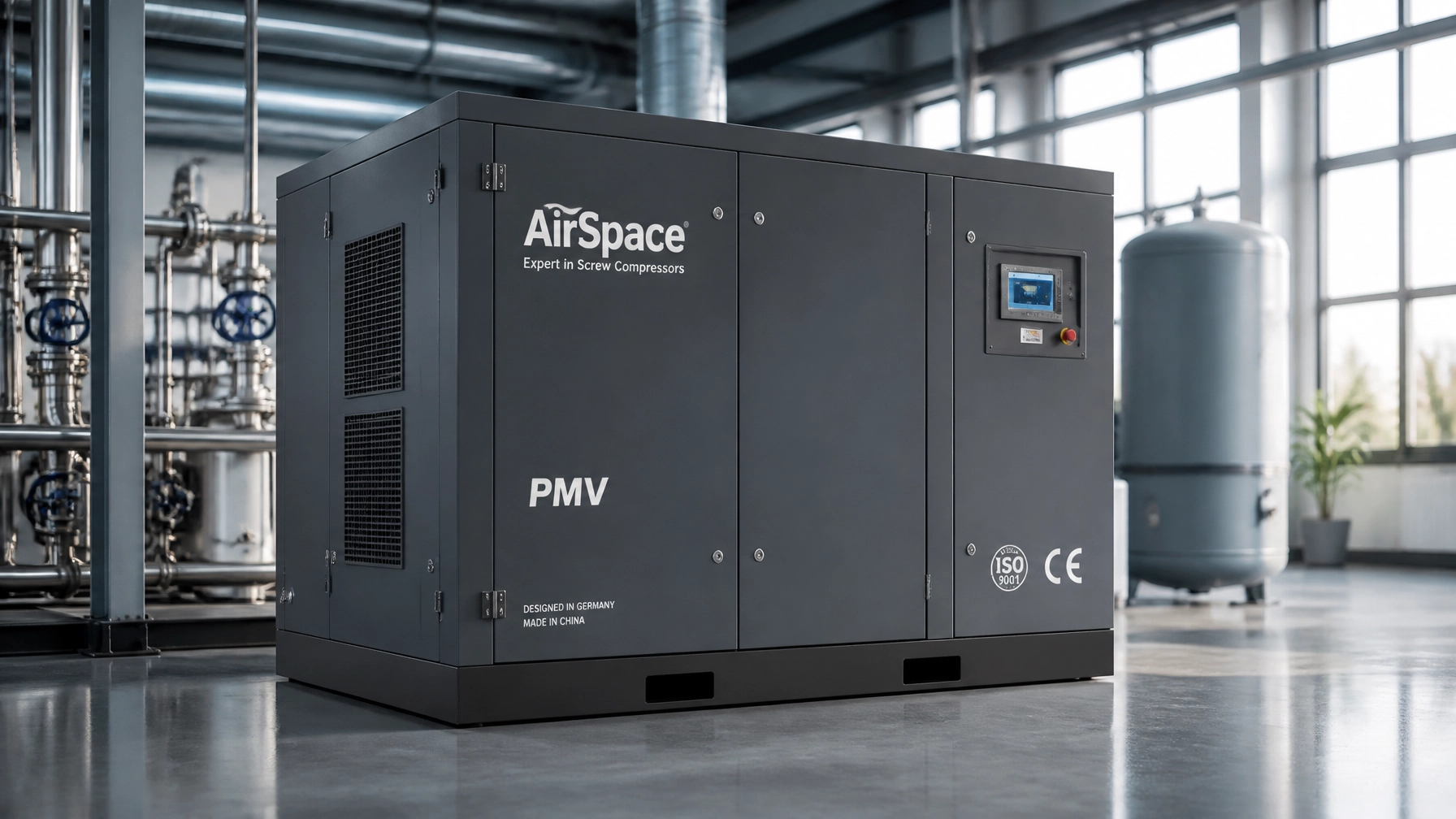
The short answer: Fixed-speed compressors are relics of a cheap-energy era. In the 2026 manufacturing landscape, they bleed cash through "unloaded" running, rigid pressure bands, and massive starting spikes. Upgrading to a PMV (Permanent Magnet Variable Frequency) system typically delivers a 35% energy delta, paying for itself in as little as 12 to 24 months.
If you’re still running a fixed-speed screw air compressor in 2026, you aren't just behind the curve, you’re actively subsidizing your local utility company. While a fixed-speed machine was the "safe" industrial choice a decade ago, today's volatile energy markets and tighter margin requirements have turned them into ROI killers.
At AirSpace Machinery, we’ve seen the shift firsthand. Whether you're managing a textile mill in Vietnam or a precision electronics line in Mexico, the data is clear: The 35% Energy Delta is the difference between a profitable year and a budget crisis.
Here are the 10 reasons your fixed-speed unit is draining your bottom line and why a PM motor air compressor is the only logical path forward.
1. The "Ghost" Consumption of Unloaded Running
A fixed-speed compressor is either "on" or "off." When your factory needs 50% air, a fixed-speed unit doesn't run at 50% power; it runs at 100% speed, then "unloads." During this unloaded state, it still consumes roughly 25-40% of its full-load power while producing zero air. You’re paying for the lights to stay on in an empty room.
2. Rigid Pressure Bands Bleed 1% Energy per 0.14 Bar
Fixed-speed units operate on a "load/unload" cycle. They pump up to a high setpoint (e.g., 8 bar) and wait to drop to a lower setpoint (e.g., 7 bar) before kicking in again. PMV technology maintains a rock-steady ±0.1 bar pressure. Because every 0.14 bar (2 psi) of excess pressure requires 1% more energy, the wide bands of fixed-speed units waste approximately 7-10% of your power right out of the gate.
3. The Low-Efficiency Induction Motor
Most fixed-speed compressors use standard induction motors. PMV systems use Permanent Magnet (PM) motors (often from top-tier brands like BAOSI or Hanbell). These motors maintain high efficiency even at low speeds, whereas induction motors see their efficiency crater when they aren't running at peak RPM.
4. Massive Inrush Current Spikes
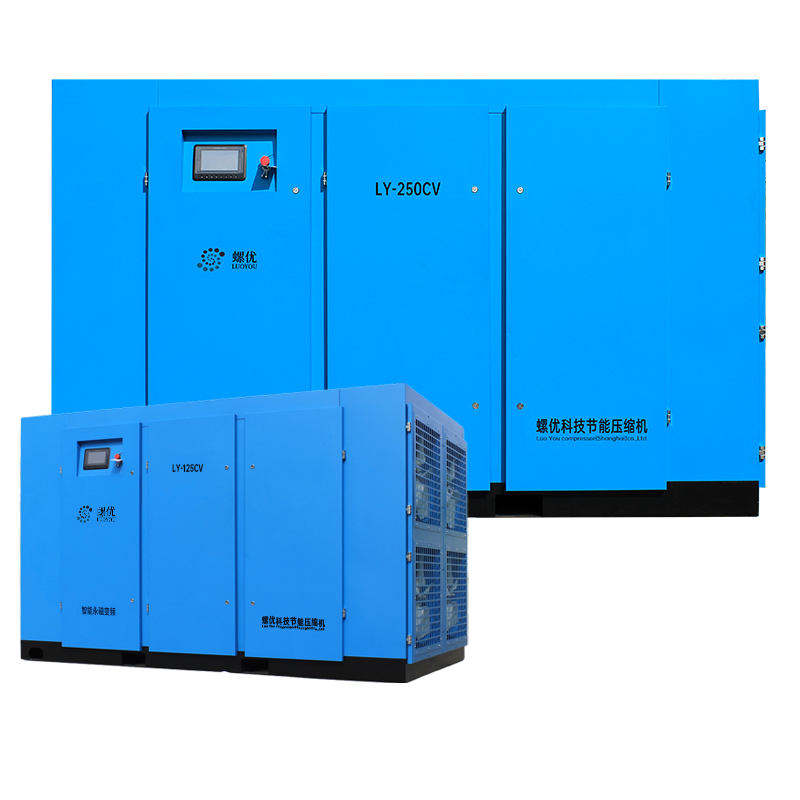
Starting a fixed-speed motor is like punching your electrical grid. The "star-delta" start still draws 3 to 5 times the rated current. In many regions, peak demand charges are based on these spikes. A PMV VSD compressor features a "soft start," ramping up from 0 Hz to the required speed without any current surge.
5. Non-Existent Adaptability to Multi-Shift Variances
Does your demand drop during the night shift? A fixed-speed unit doesn't care. It will cycle relentlessly, wearing out contactors and wasting energy. PMV units are built for the 2026 Industrial Efficiency & Purity Handbook standard, automatically slowing down to match the exact CFM required by your tools.
6. Higher Maintenance Costs due to Mechanical Stress
The constant "clack-clack" of loading and unloading creates mechanical shock throughout the drive train. PMV systems offer a smoother, continuous operation that reduces wear on valves, hoses, and the air end itself. This isn't just about electricity; it's about 99.9% uptime.
7. Failure to Meet Modern Mandates
In 2026, ISO 50001 (Energy Management) and regional green ROI targets are no longer optional for top-tier suppliers. Using an inefficient fixed-speed unit can disqualify you from "Green Factory" certifications or government energy rebates available in SEA and LATAM markets.
8. Poor Power Factor
Fixed-speed induction motors often have a poor power factor when not fully loaded. This leads to reactive power charges on your utility bill. PMV drives inherently correct the power factor, keeping it near 0.95 or higher, which keeps the grid (and your accountant) happy.
9. The "Fourth Utility" Concept Misalignment
We treat compressed air as the "Fourth Utility" (after electricity, water, and gas). You wouldn't leave a water tap running full blast just because you might need a glass of water later. Fixed-speed compressors do exactly that with air. PMV aligns with the Fourth Utility Concept by delivering only what is consumed.
10. The 2026 Competitiveness Gap
If your competitor is using an AirSpace PMV system and saving 35% on their air costs, their cost-per-unit-produced is lower than yours. Over a year of 24/7 operation, that "Industrial air compressor ROI" gap becomes a chasm.
Comparison: Fixed-Speed vs. AirSpace PMV (37kW / 50HP Unit)
| Feature | Fixed-Speed Screw | AirSpace PMV Screw |
|---|---|---|
| Motor Type | Induction (IE2/IE3) | Permanent Magnet (IE4/IE5) |
| Control | Load/Unload | Variable Speed Drive (VSD) |
| Energy Waste | High (Unloaded Running) | Near Zero |
| Pressure Stability | ±0.5 to 1.0 bar | ±0.1 bar |
| Starting Current | 300-800% | <100% (Soft Start) |
| Estimated Annual Savings | Baseline | 35% – 50% |
Q&A: Is a PMV Compressor Worth the Extra Cost?
Q: How much more does a PMV unit cost upfront?
A: Typically, a PMV unit is 15-25% more expensive than a standard fixed-speed unit. However, this "premium" is usually recovered through energy savings within the first 6-9 months of operation.
Q: Can I just add a VFD to my old fixed-speed compressor?
A: You can, but it’s a half-measure. Standard induction motors aren't designed to run at low speeds for long periods, they overheat. A true PMV system uses a motor specifically designed for variable frequencies, ensuring ISO 8573-1 Class 0 Integrity (if paired with our oil-free solutions) and long-term reliability.
Q: What about extreme climates?
A: AirSpace units are engineered for the "Extreme Climate" rugged aesthetic. Whether it’s the humidity of Southeast Asia or the cold-weather winterization needs of the Russia-CIS region, our PMV systems maintain stability where Luoyou alternatives might struggle with thermal management.
The Bottom Line: Get a Proposal
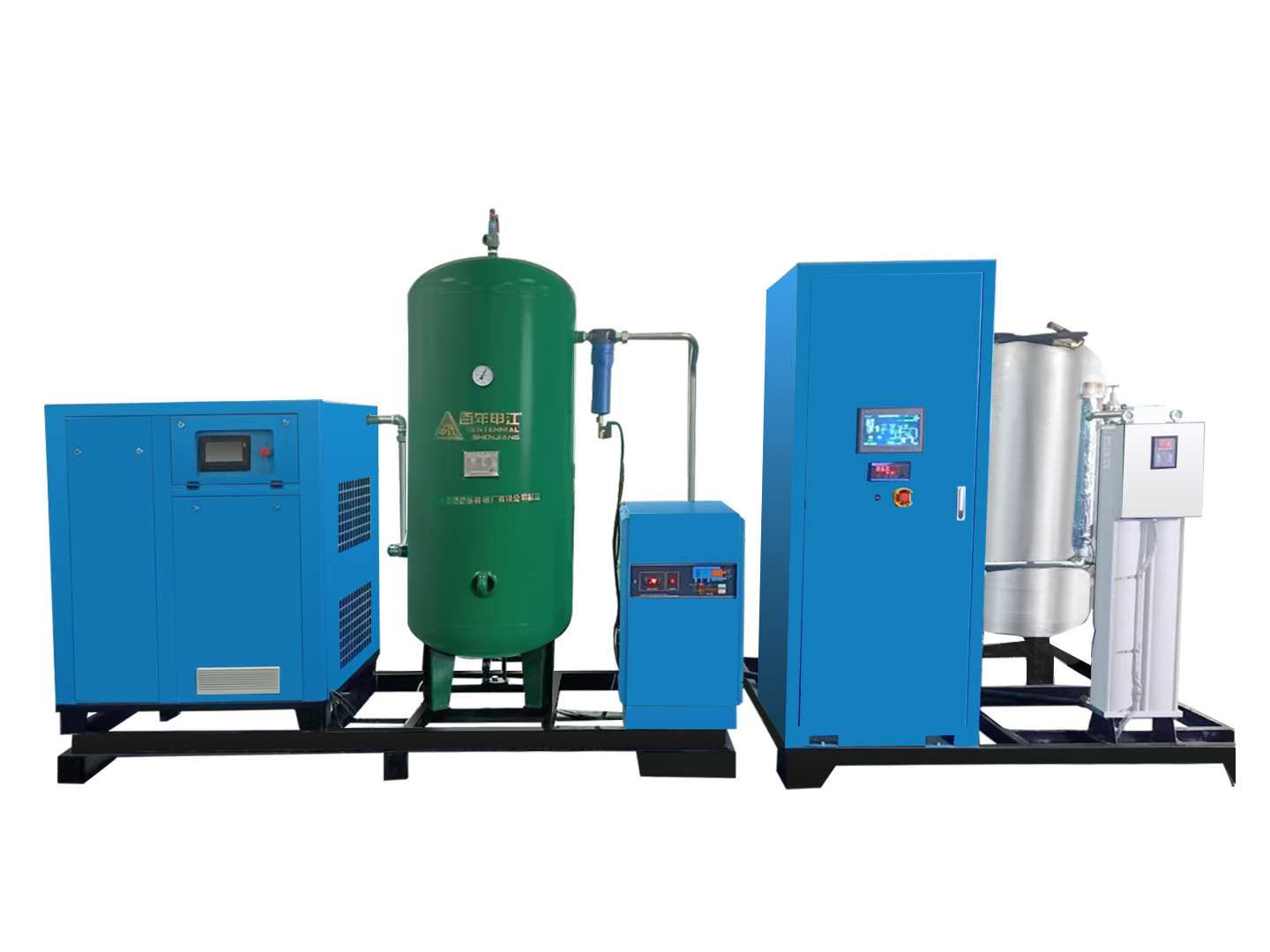
Stop letting your old equipment dictate your profit margins. The transition to Energy-efficient air compressors is the single fastest way to improve your 2026 factory operating budget.
Author: Penny Winston
Technical Writer | Specialist in The 35% Energy Delta & The Fourth Utility Concept
Reviewed by Engineering
AirSpace Machinery Co., Ltd.
Ready to see the math for your specific facility?
Get a Proposal
Note: Lead times depend on configuration and regional logistics. Please specify your required Pressure (bar/psi) and Flow (m³/min or CFM) in your inquiry.
📅 Last updated:
⚡ Is Your Factory Bleeding Cash?
Most fixed-speed compressors waste $3,600/year in "Unload Tax." Test your waste level in 30 seconds.
RUN THE ROI TEST →Ready to See How Much Your Facility Can Save?
Fill out the form below for a Free Energy Assessment.