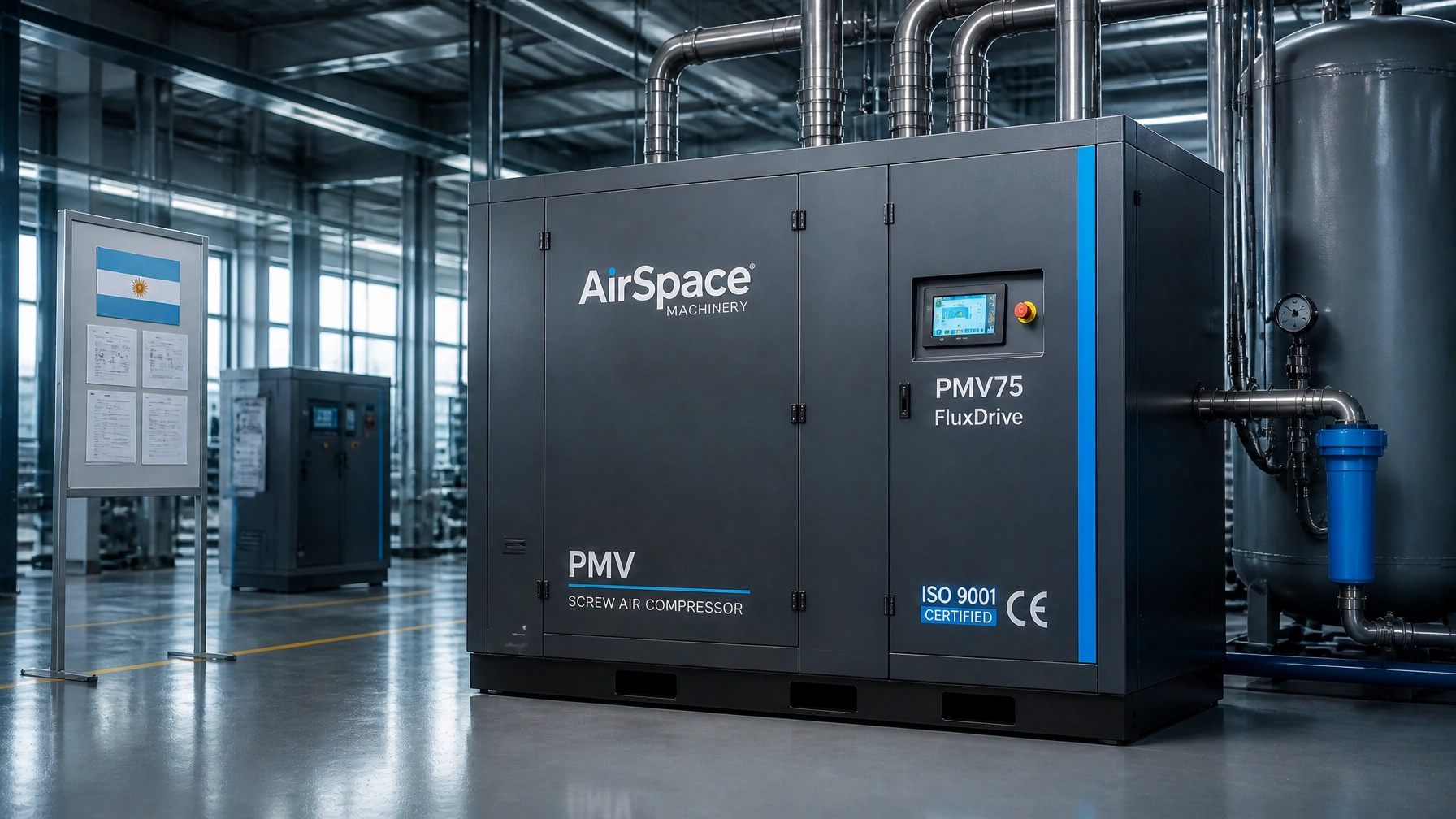
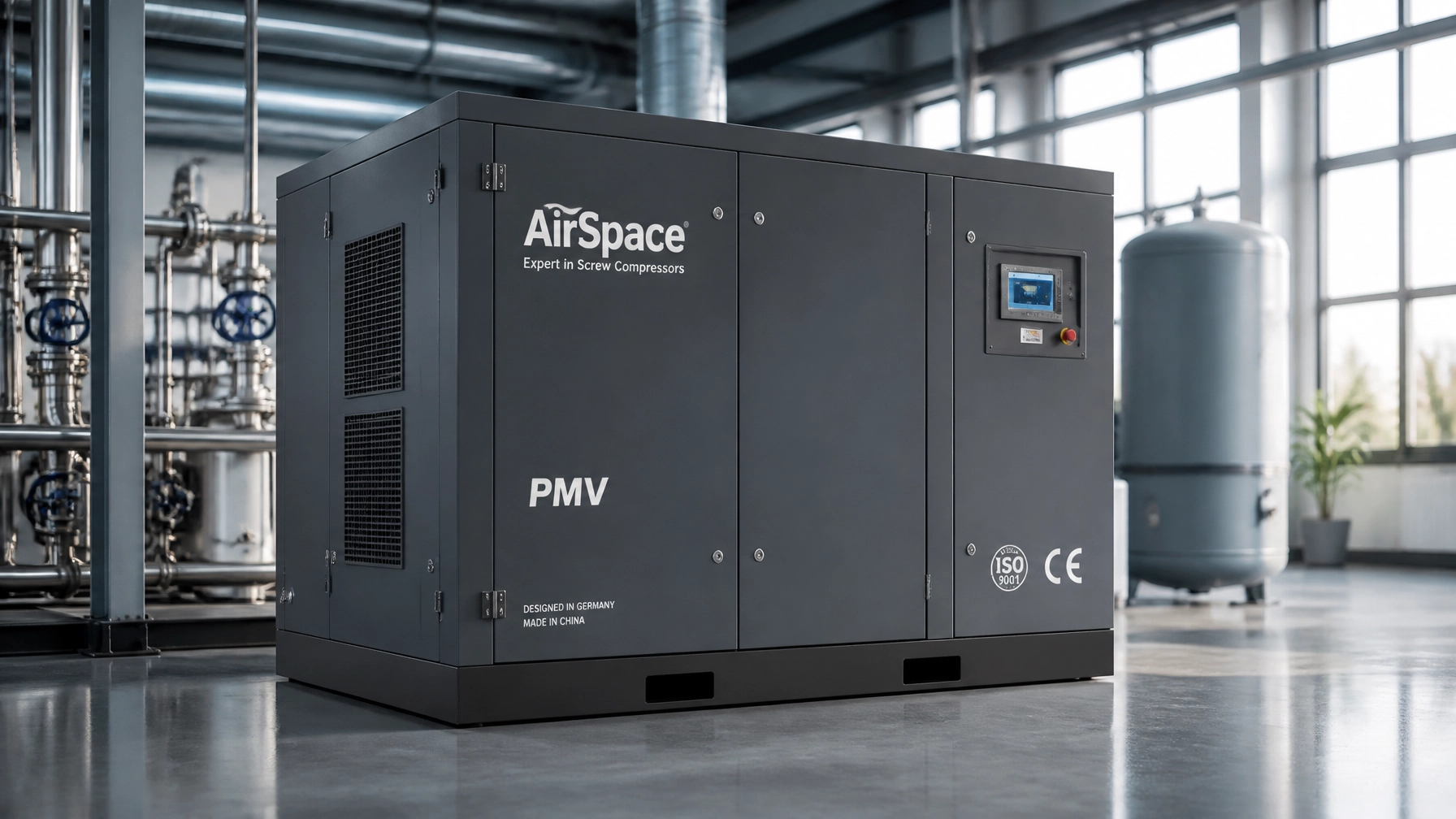
Yes. In a typical automotive painting environment, switching from a traditional fixed-speed system to a Permanent Magnet Variable Frequency (PMV) screw compressor consistently delivers a 35% energy delta. This reduction is achieved by eliminating the “idle” waste inherent in fixed-speed motors and maintaining a tighter pressure band that prevents over-pressurization. For an automotive plant manager, this often translates to tens of thousands of dollars in annual utility savings and a significantly stabilized finishing process. For broader system-selection logic, compliance checks, and regional sizing context, see the 2026 Industrial Air Compression Master Hub.
The Summary: Why 35% is the Magic Number
Automotive painting lines are the “Goldilocks” application for VSD (Variable Speed Drive) technology. Air demand fluctuates wildly between robotic spraying, manual gun use, color-change purges, and booth cleaning.
- Fixed-Speed Systems: Waste energy by running the motor at 100% even when the paint line only needs 40% flow (Load/Unload cycle).
- PMV Systems: Adjust motor RPM in real-time to match actual demand, consuming only the power required to move the air.
- The Result: A verified 35% reduction in electricity consumption for the compressed air system.
10 Headaches Facing Automotive Plant Managers in 2026
Before diving into the technical solution, let’s look at why your current air system might be failing your painting line:
- Ballooning Energy Bills: Compressed air accounts for 10-15% of total plant electricity; inefficiency here is a “quiet profit killer.”
- “Orange Peel” Defects: Pressure fluctuations cause inconsistent atomization at the spray tip.
- High Starting Amps: Fixed-speed motors cause “voltage spikes” on the grid every time they start.
- Idle Waste: Your compressor is still drawing 30-70% power while it’s “unloaded” and doing no work.
- Moisture in Lines: Inconsistent flow overwhelms dryers, leading to water spots in the clear coat.
- Maintenance Downtime: Piston-style or low-tier screw systems can’t handle the 24/7 duty cycle of a modern paint shop.
- Complex Integration: Older machines don’t talk to the plant’s IoT or SCADA systems.
- Audit Compliance: Difficulty verifying ISO 9001 or CE documentation for corporate safety audits.
- Noise Pollution: High-decibel machines near the booth disrupt worker focus and safety.
- Part Lead Times: Waiting 6 weeks for a simple sensor while the line is down.
How PMV Technology Creates the 35% Energy Delta
The core of the AirSpace Machinery advantage lies in the Permanent Magnet Variable Frequency (PMV) motor. Unlike standard induction motors, our PM motors maintain high efficiency even at low speeds.
The “No-Load” Trap
In a fixed-speed system, when your painting robots stop for a 2-minute color change, the compressor doesn’t stop. It enters “unload” mode. It keeps spinning at full speed, consuming roughly 30% of its rated power while producing zero air.
AirSpace PMV compressors eliminate this. Our systems use BAOSI air ends and Hanbell components, the gold standard in the industry, to ensure that when your demand drops, the power draw drops proportionally.
Pressure Band Stability
Fixed-speed compressors usually operate on a 1.0 to 1.5 bar pressure band (e.g., kicking on at 6.0 bar and off at 7.5 bar). Every 0.1 bar of excess pressure requires roughly 1% more energy. Because AirSpace PMV units use PID control to maintain pressure within a narrow ±0.01 MPa band, you can lower your overall setpoint, saving an additional 7-10% on top of the motor efficiency gains.
Comparison: Fixed-Speed vs. AirSpace PMV Screw Compressors
| Feature | Fixed-Speed (Traditional) | AirSpace PMV (VSD) | Impact on Paint Line |
|---|---|---|---|
| Energy Consumption | High (100% at all times) | Low (Matches Air Demand) | 35% Energy Delta |
| Pressure Stability | Wide Fluctuations (±1.0 bar) | Ultra-Stable (±0.01 MPa) | Consistent Finish Quality |
| Starting Current | 7-10x Rated Current | “Soft Start” (1x Current) | No Grid Voltage Spikes |
| Motor Efficiency | 85-90% (Induction) | 95-97% (Permanent Magnet) | Lower Heat & Noise |
| Maintenance | Frequent Belt/Valve Checks | Direct Drive / Smart Monitoring | 99.9% Uptime |
Is Your Region Impacting Your Compressor Efficiency?
As a global manufacturer with 20 years of engineering excellence and 100M yuan in annual sales, AirSpace Machinery optimizes systems for regional environmental challenges:
- SEA (Southeast Asia) Markets: High humidity can wreak havoc on air quality. We prioritize high-capacity integrated refrigerated dryers and moisture separators to ensure the dew point stays low enough to prevent clear coat contamination.
- LATAM Markets: Grid instability is common. Our PMV controllers are designed to handle fluctuating input voltages without tripping, protecting the Hanbell air end from sudden stops.
- Russia/CIS Markets: Winterization is key. We utilize specialized lubricants and heater kits to ensure the screw air compressor starts reliably in sub-zero paint shop environments.
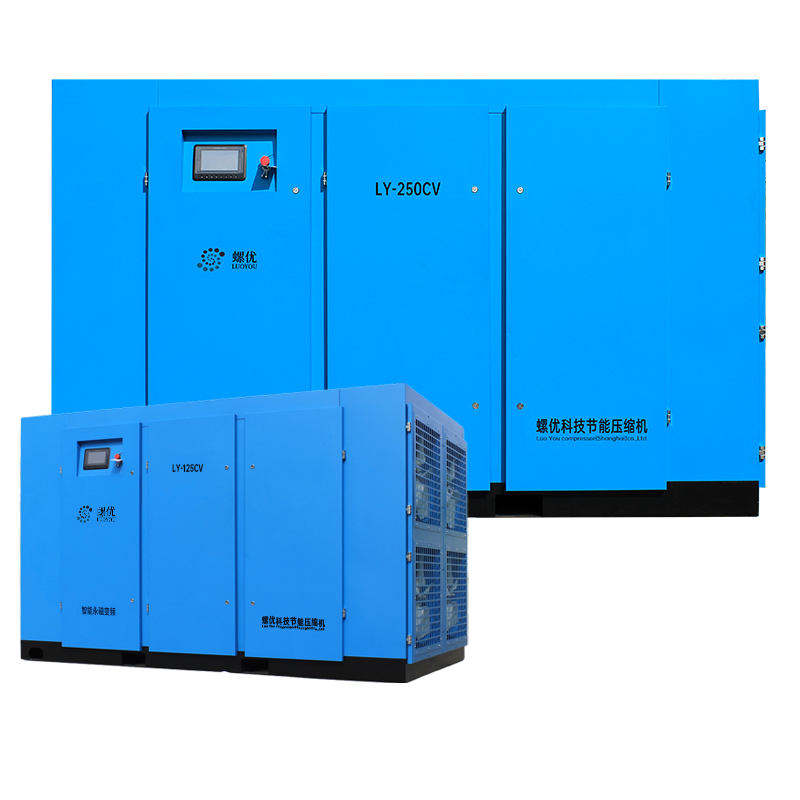
Q&A: Direct Answers for Automotive Procurement
Q: How do we verify the 35% savings claim?
A: We recommend a 7-day data logging audit of your current system. By measuring your current “unload” time and kW/CFM ratio, we can calculate the exact energy delta. Most AirSpace clients see a full ROI on the equipment within 14 to 24 months through energy savings alone.
Q: Can these compressors run 24/7 in a 3-shift automotive plant?
A: Absolutely. Our 4,000m² facility produces units designed for 100% duty cycles. We use oversized cooling fans and heavy-duty industrial enclosures to ensure the machine never derates due to heat.
Q: How do I verify CE and ISO 9001 documentation for export?
A: All AirSpace Machinery products come with a “Compliance Pack” including digital copies of our CE and ISO 9001 certifications. These are verified by third-party auditors and can be provided during the proposal stage to ensure your local safety regulations are met.
Q: What about lead times and logistics?
A: Lead times depend on the specific configuration (e.g., custom pressure settings or voltage). However, because we control our manufacturing in-house, we offer some of the most competitive shipping windows in the China manufacturing sector. We provide full export support, including sea freight coordination and customs documentation.

The Authority Hook: A Word from Johnny Wayne
“A lot of guys in the industry will tell you that ‘any’ compressor will work for a paint line. They’re wrong,” says Johnny Wayne, Managing Director of AirSpace Machinery Co., Ltd. “In painting, if your pressure drops by even 0.5 bar, your spray pattern changes. You get rework. You get waste. Our PMV tech isn’t just about the 35% energy delta, though that’s a massive win for the CFO, it’s about giving the plant manager a rock-solid, 7.0-bar pressure line that never budges. That’s how you run a world-class finishing line.”
Conclusion: The Move to PMV
If your automotive painting line is still running on a fixed-speed “load/unload” compressor, you are likely overpaying for electricity by 35%. By moving to an AirSpace PMV screw compressor, you gain precision pressure control, eliminate idle waste, and future-proof your plant with IoT-enabled monitoring. For the bigger decision framework on compressor efficiency, air quality, export compliance, and application matching, review the 2026 Industrial Air Compression Master Hub.
Ready to see the math for your specific plant?
[Get a Proposal]
(Note: Please provide your required Pressure (bar/psi) and Flow (m³/min or CFM) in the form below so our engineering team can provide an accurate specification. Lead times vary by configuration.)
Author: Penny Winston
Technical Writer, AirSpace Machinery Co., Ltd.
Penny specializes in translating complex mechanical specs into actionable ROI data for industrial procurement officers.
Reviewed by Engineering
Verified for technical accuracy regarding PMV motor curves, BAOSI/Hanbell component integration, and ISO 9001 compliance standards.
Sources & Standards Cited
- ISO 8573-1:2010: Compressed air contaminants and purity classes.
- ISO 9001:2015: Quality management systems.
- CE (Conformité Européenne): European health, safety, and environmental protection standards.
- CAGI (Compressed Air & Gas Institute): Data on VSD energy reduction averages (verified at 33-35% for fluctuating loads).
📅 Last updated:
⚡ Is Your Factory Bleeding Cash?
Most fixed-speed compressors waste $3,600/year in "Unload Tax." Test your waste level in 30 seconds.
RUN THE ROI TEST →Ready to See How Much Your Facility Can Save?
Fill out the form below for a Free Energy Assessment.