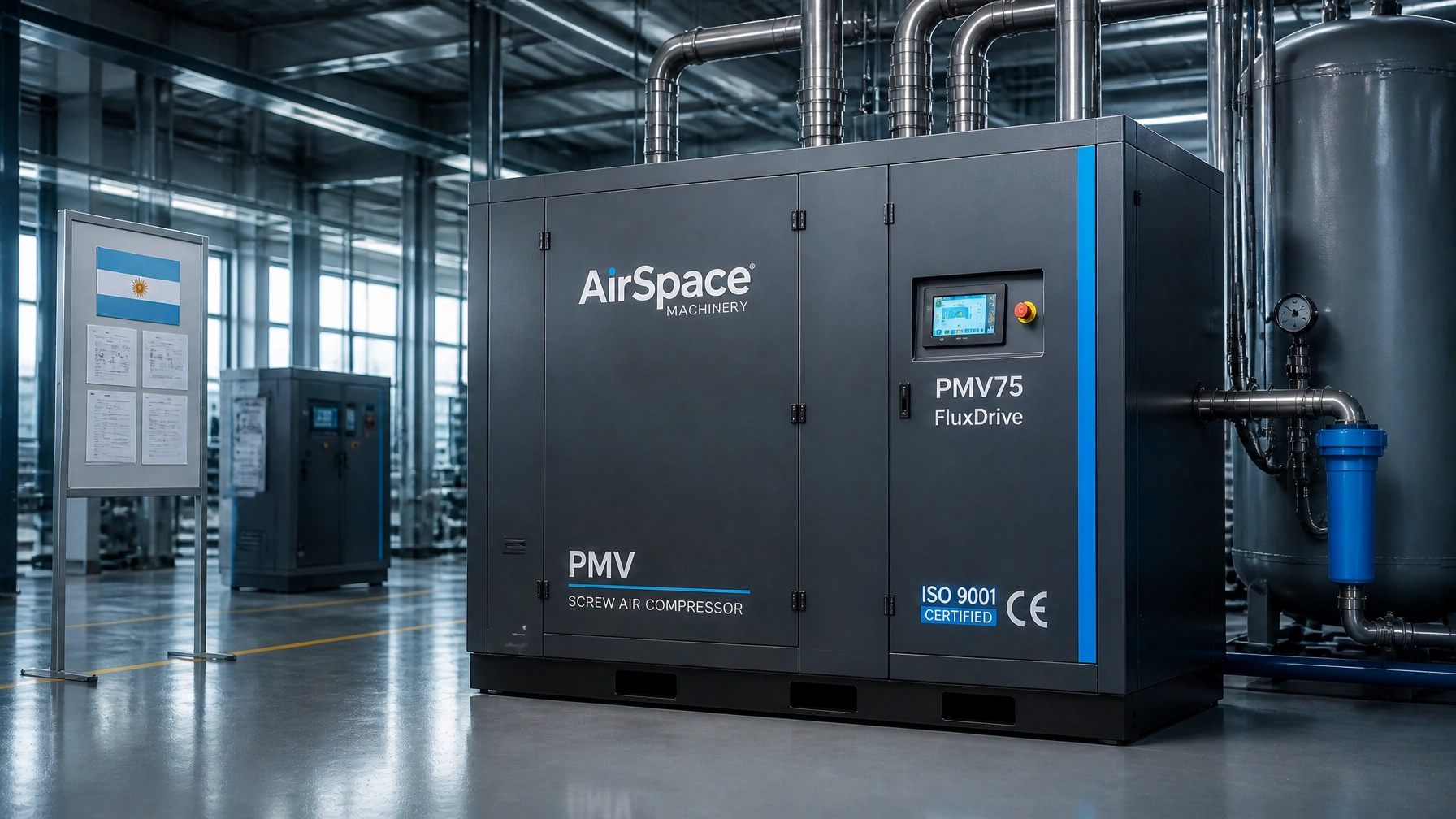
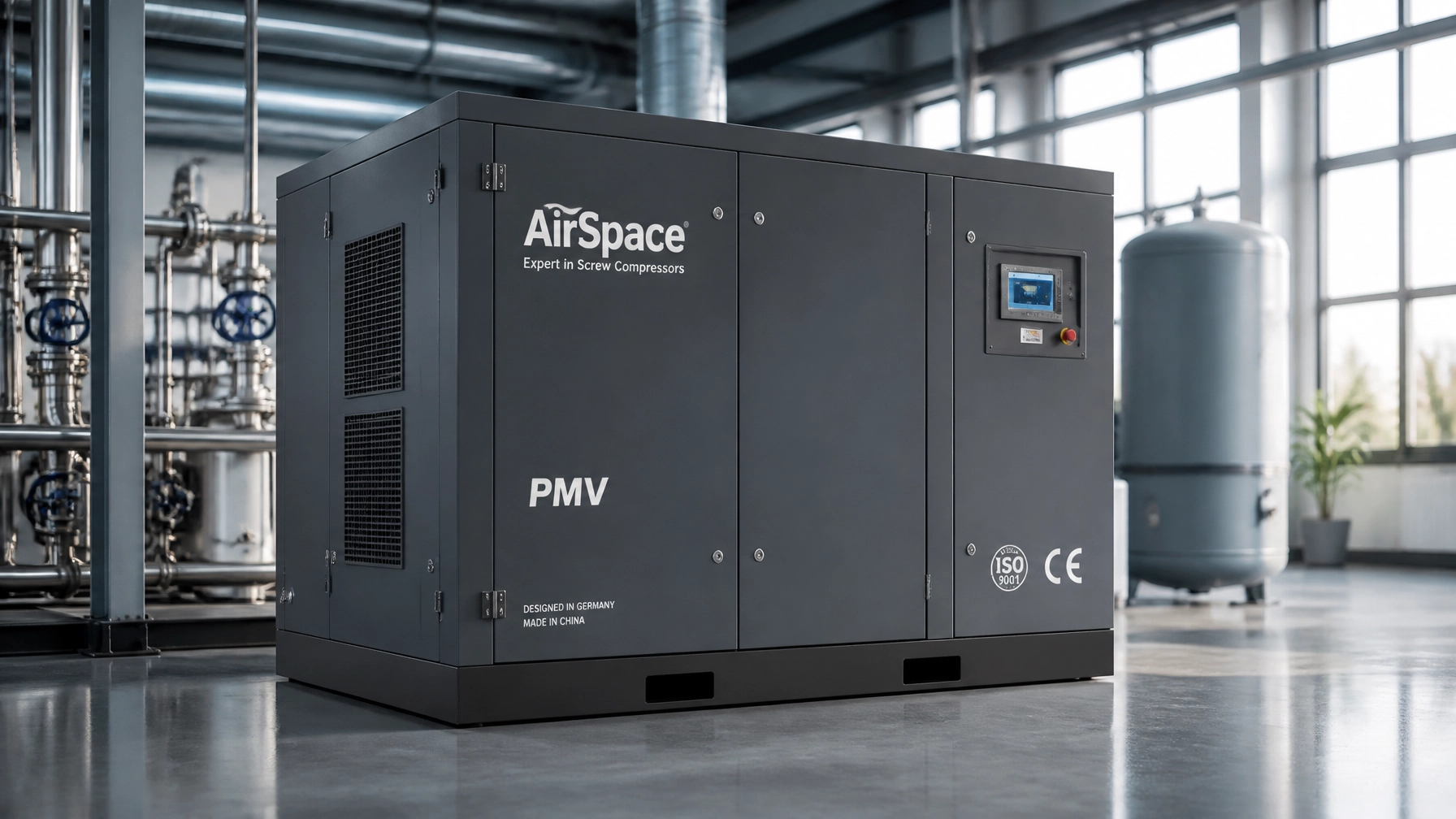
Direct Answer: As of 2026, Vietnam’s Ministry of Science and Technology (MOST) enforces Circular 30/2025/TT-BKHCN, which mandates that any imported used machinery must maintain at least 85% of its original design capacity and consume no more than 115% of its original energy design. For industrial screw air compressors, which naturally lose efficiency through air-end wear, meeting these strict thresholds is nearly impossible for second-hand units. Investing in a new Permanent Magnet Variable Frequency (PMV) Screw Air Compressor is currently the only guaranteed way to bypass customs seizures, satisfy the Digital Industry Law, and ensure long-term energy compliance in the Vietnamese market.
What Are the Key Criteria for Used Machinery Import Under Circular 30/2025?
Under the 2026 regulatory framework, the Vietnamese government has pivoted toward “Green Industry” standards to meet its net-zero commitments. Circular 30/2025 specifically targets the import of aged, inefficient machinery that drains the national power grid.
To clear customs, used equipment must pass three brutal tests:
- The 85% Capacity Rule: The machine must demonstrate an operational capacity of at least 85% of its original factory output.
- The 115% Energy Limit: Its energy consumption cannot exceed 115% of its original specifications.
- Safety & Environmental Standards: It must comply with current Vietnamese safety and environmental protection standards (TCVN) or equivalent G7/South Korean standards.
For a standard fixed-speed screw compressor used for 5–7 years, the mechanical wear on the air-end usually results in a 15–20% drop in efficiency. This puts most used imports right on the edge of rejection. If your shipment is flagged, you face heavy fines and the cost of re-exporting the unit.
The “Efficiency Trap”: Why Used Compressors Often Fail the 115% Rule
The Answer: Compressed air systems are the largest electricity consumers in most Vietnamese factories. Circular 30/2025 uses the 115% energy limit to filter out “energy vampires.” Because older machines suffer from internal leaks, friction, and clogged cooling systems, they almost always exceed this energy threshold during mandatory testing.
When you buy a used machine, you aren’t just buying the hardware; you’re buying its “energy history.” In tropical climates like Vietnam, heat accelerates the degradation of lubricants and seals. A compressor that was “efficient enough” in a climate-controlled warehouse in Europe will likely fail the 115% energy consumption test when operated in the high humidity of Binh Duong or Bac Ninh.
By contrast, an AirSpace PMV Screw Air Compressor utilizes a permanent magnet motor that maintains 95%+ efficiency even at low speeds. These units don’t just “pass” the regulation; they exceed it by such a wide margin that they qualify for further energy incentives under the 2026 Digital Industry Law.

How Does PMV Technology Align with Vietnam’s Digital Industry Law?
The Answer: Vietnam’s Digital Industry Law (effective 2026) prioritizes “Smart Manufacturing.” PMV Screw Air Compressors are inherently “smarter” because their variable frequency drives (VFD) and permanent magnet motors allow for precision control and data integration, two things Circular 30/2025 looks for when determining if a machine is “technologically relevant.”
At AirSpace Machinery, we’ve spent 20 years perfecting the balance between high-output and low-input. Our 4000m² facility is dedicated to engineering compressors that don’t just blow air; they manage energy.
- Permanent Magnet Motors: Unlike induction motors found in older units, PM motors don’t lose efficiency at low frequencies.
- IE4/IE5 Standards: Our PMV units typically meet or exceed IE4 energy efficiency classes, which makes them “future-proof” against upcoming Vietnamese energy audits.
- ISO 9001 Compliance: Every unit leaving our factory is documented to ISO 9001 standards, providing the paper trail Vietnamese customs agents now demand for all industrial imports.
Comparison: New AirSpace PMV vs. Used “Big Brand” Compressor (2026)
| Feature | New AirSpace PMV Compressor | Used 7-Year-Old “Big Brand” |
|---|---|---|
| Import Compliance | 100% Guaranteed (Circular 30/2025) | High Risk of Rejection (>15% Variance) |
| Energy Efficiency | 35-50% Higher | Declining (115%+ of original spec) |
| Motor Type | Permanent Magnet (IE4/IE5) | Standard Induction (IE1/IE2) |
| Customs Documentation | Full CE & ISO 9001 Certs Provided | Often Missing or Incomplete |
| Sea Level Performance | Optimized for SEA Humidity | High risk of “Tropical Failure” |
Technical Considerations for the Southeast Asian (SEA) Market
Vietnam isn’t just about regulations; it’s about the weather. High humidity and high ambient temperatures are “compressor killers.”
If you are importing a machine into Vietnam, you must account for the Pressure Dew Point (PDP). In high-humidity regions like the Mekong Delta, a standard used compressor’s cooling system will struggle to remove moisture from the air. This leads to rusted pipes and ruined downstream equipment.
Our integrated compressor systems are specifically designed for these conditions. We use oversized cooling vents and high-efficiency refrigerated air dryers to ensure that even in 40°C heat, your air remains dry and your motor stays within safe operating temperatures.

2026 Procurement Checklist: Verifying Compliance Before Shipping
If you are a procurement manager in Vietnam, don’t sign a contract until you verify these three things:
- CE and ISO 9001 Documentation: Do not settle for “copies.” You need verifiable, factory-direct certification to pass MOST inspections.
- Performance Test Report: Demand a data sheet showing the specific power (kW/m³/min). This is what customs will use to check against the 115% energy limit.
- HS Code Accuracy: Ensure your supplier uses the correct HS Code (typically 8414.80). Misclassification is the fastest way to get a “red channel” inspection at the port.
For more technical details on reducing operational costs, check out our 2026 Industrial Efficiency & Purity Handbook.
Frequently Asked Questions (FAQ)
Q: Can I still import used compressors older than 10 years?
A: Generally, no. While Circular 30/2025 focuses on performance (the 85/115 rule), most equipment older than 10 years is flatly banned unless it falls under a specific “high-tech” exemption. Even then, the testing costs often exceed the value of the machine.
Q: What happens if my compressor fails the 85% capacity test at the port?
A: You will be required to re-export the machinery at your own expense within 30 days. Failure to do so can result in the destruction of the equipment by Vietnamese authorities.
Q: How much can I really save with PMV vs. a used fixed-speed unit?
A: In a typical 2-shift Vietnamese textile factory, a PMV unit saves roughly $4,000–$7,000 USD per year in electricity alone compared to an aging used unit. Over 3 years, the machine pays for itself.
Q: Is AirSpace Machinery’s equipment CE certified?
A: Yes. All our screw compressors are CE and ISO 9001 certified, ensuring they meet international safety and quality benchmarks required for import into Vietnam and globally.
Get a Proposal
Ready to upgrade your factory with 2026-compliant technology?
- Mandatory: Pressure (bar/psi)
- Mandatory: Flow (m³/min or CFM)
- Note: Lead times vary based on configuration and current shipping schedules.

Sources & Standards:
- Vietnam Ministry of Science and Technology (MOST): Circular 30/2025/TT-BKHCN.
- ISO 9001:2015: Quality Management Systems.
- ISO 1217:2009: Displacement compressors : Acceptance tests.
- Vietnam Digital Industry Law (2026 Draft/Final Guidance).
Author: Penny Winston, Technical Writer
Reviewed by Engineering: May 2026
📅 Last updated:
⚡ Is Your Factory Bleeding Cash?
Most fixed-speed compressors waste $3,600/year in "Unload Tax." Test your waste level in 30 seconds.
RUN THE ROI TEST →Ready to See How Much Your Facility Can Save?
Fill out the form below for a Free Energy Assessment.