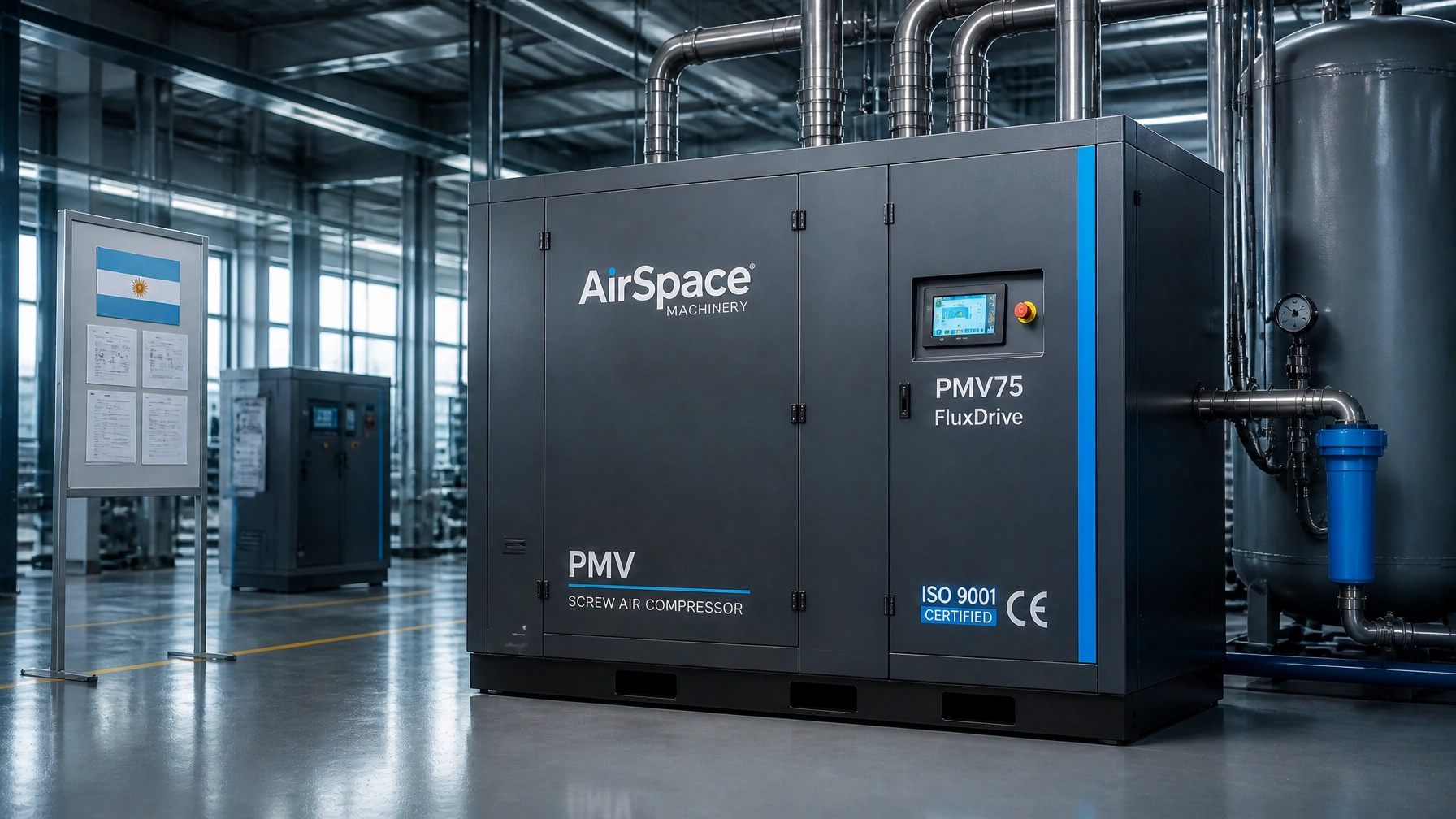
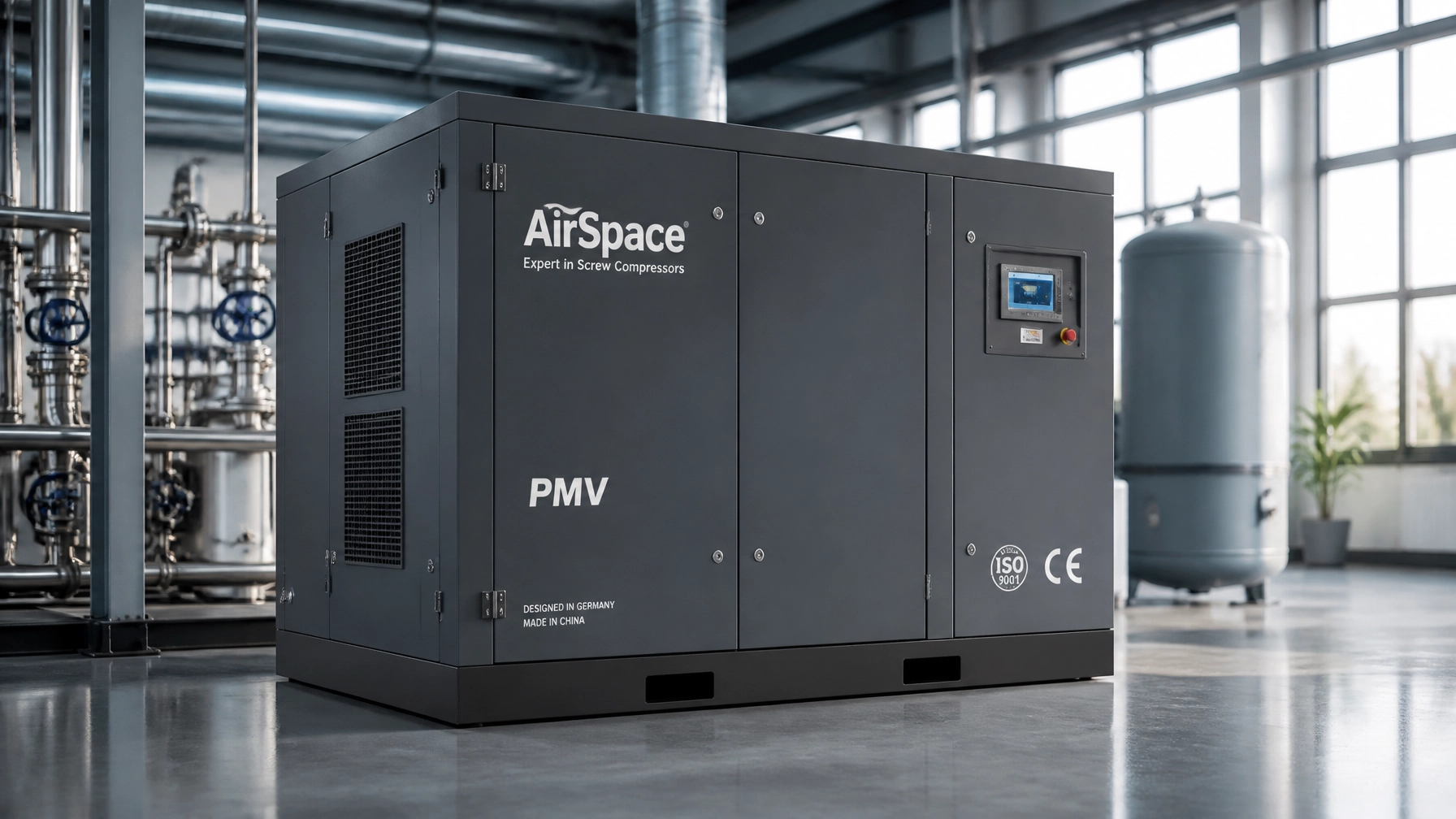
In 2026, Ho Chi Minh City (HCMC) laser cutting facilities should switch to Permanent Magnet Variable Frequency (PMV) screw compressors to meet the strict HEPZA “Green Industrial” energy efficiency mandates, survive the city’s high humidity that destroys laser optics, and reduce operational costs by up to 50% compared to traditional fixed-speed or budget local imports.
The industrial landscape in Southern Vietnam is changing fast. If you are running a laser cutting shop in Tan Thuan, Hiep Phuoc, or any of the major industrial parks under the Ho Chi Minh City Export Processing and Industrial Zones Authority (HEPZA), the equipment you bought five years ago is likely becoming a liability. Between rising electricity tariffs and the 2026 push for “Green Industrial” compliance, the “cheap” compressor is now the most expensive machine in your shop.
At AirSpace Machinery Co., Ltd., we’ve spent 20 years refining our engineering to solve these exact problems. With a 4000m² state-of-the-art facility and 100M yuan in annual sales, we’ve seen how the wrong air supply can turn a high-end fiber laser into a glorified paperweight.
Does your current compressor meet the 2026 HEPZA Green Mandates?
The direct answer is likely no, unless you are using PMV (Permanent Magnet Variable Frequency) technology. HEPZA’s 2026 mandates focus on “Energy Intensity,” requiring factories to reduce KWh per unit of production. Traditional fixed-speed screw compressors, and certainly old-school piston units (which have no place in a modern laser shop), waste massive amounts of energy during “unloaded” cycles.
PMV screw compressors, however, adjust their motor speed in real-time to match your laser’s air consumption. If your laser is between sheets or performing a low-pressure nitrogen cut, the compressor slows down. It doesn’t keep spinning at 100% capacity just to vent excess air. This isn’t just “eco-friendly”; it’s a survival strategy for HCMC businesses facing fluctuating power costs.
Why “Cheap Local Imports” are failing in HCMC’s humidity
Cheap local imports fail in HCMC because their cooling systems and air-end tolerances are not designed for a consistent 80% relative humidity environment, leading to rapid oil emulsification and moisture carryover into the laser head.
Ho Chi Minh City isn’t just hot; it’s wet. For a laser cutter, moisture is the enemy. If your air compressor doesn’t have an integrated, high-efficiency cooling and filtration system, that humidity ends up on your protective window or, worse, your focal lens.

While a budget compressor might look okay on a spreadsheet, they often use undersized heat exchangers. Our PMV75 Extreme Climate Series is engineered specifically for Southeast Asian conditions. We use oversized coolers and advanced moisture separators to ensure that by the time the air reaches your refrigerated dryer, it’s already significantly “pre-dried.”
PMV Technology vs. Budget Fixed-Speed: A Direct Comparison
When evaluating a switch, look at the numbers. In a laser cutting application, air demand is rarely constant. You have high-pressure bursts for piercing and lower-pressure sustained flows for cutting.
| Feature | AirSpace PMV Screw Compressor | Cheap Local “Budget” Import |
|---|---|---|
| Motor Efficiency | IE4/IE5 Permanent Magnet (96%+) | IE2/Standard Induction (<90%) |
| Pressure Stability | ±0.1 bar (Constant) | ±0.5 to 1.0 bar (Fluctuating) |
| Starting Current | Soft Start (0 to full load) | Star-Delta (6-8x surge) |
| Cooling System | Oversized for 45°C+ Ambient | Undersized for 30°C Ambient |
| HCMC Humidity Handling | Integrated Multi-Stage Separation | Basic Water Trap (Often fails) |
| Service Life | 10+ Years (ISO 9001 Certified) | 2-3 Years before major overhaul |
How power stability in HCMC affects your laser’s finish
Unstable air pressure, caused by low-end compressors, results in “dross” (slag) and rough edges on stainless steel and aluminum cuts.
HCMC’s power grid, while improving, still sees fluctuations in industrial zones during peak hours. A standard induction motor compressor can struggle with voltage drops, leading to pressure dips. A PMV system acts as a buffer. Because the Permanent Magnet motor is more resilient and the frequency inverter manages the load, you get a rock-steady stream of air.
Consistency is the difference between a clean, burr-free edge and a part that needs 20 minutes of manual grinding. If you are supplying parts to the automotive or electronics sectors in District 9’s Hi-Tech Park, you can’t afford that inconsistency.
Explore our dedicated range for laser cutting applications
The “Green Industrial” ROI: Saving more than just the planet
Switching to PMV technology typically pays for itself within 12 to 18 months through electricity savings alone in a double-shift HCMC factory.
Let’s talk money. If you’re running a 22kW (30HP) compressor for 10 hours a day, a PMV unit can save you roughly 30% on your monthly bill compared to a fixed-speed unit that spends half its time “unloading.” Over a year, that’s thousands of dollars back into your pocket.
Furthermore, we ensure all our units are CE and ISO 9001 compliant. For HCMC exporters, having certified “Green” equipment isn’t just about saving power; it’s about passing the sustainability audits required by European and American buyers.
Technical Standards for Laser Cutting Air
To get the most out of your fiber laser, your air supply must meet specific purity standards. We recommend following ISO 8573-1:2010 standards for air quality:
- Oil Content: Class 1 or 0 (to prevent lens contamination).
- Water Content: Class 4 or better (Pressure Dew Point of +3°C).
- Particulate: Class 1 (to prevent nozzle clogging).
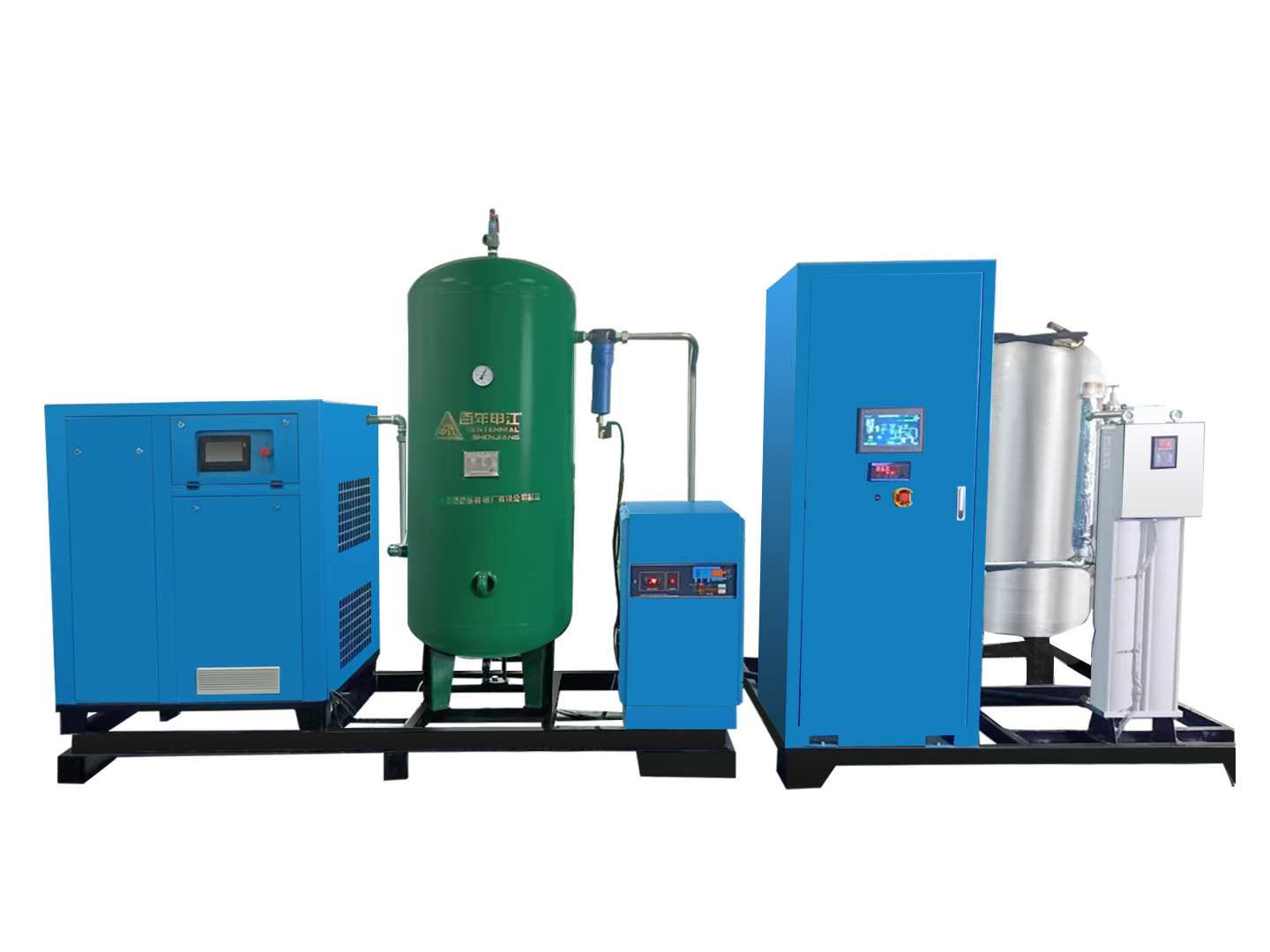
Our PMV systems are designed to work in tandem with high-efficiency refrigerated dryers and triple-stage filtration to hit these targets every single time.
Frequently Asked Questions (FAQ)
1. Why is PMV better than VSD?
Technically, PMV (Permanent Magnet Variable) is a type of VSD (Variable Speed Drive). However, PMV uses a permanent magnet motor which is more efficient and has a wider speed range than the standard induction motors used in basic VSD compressors. It stays efficient even at very low speeds.
2. Can I use a piston compressor for my 3kW Fiber Laser?
No. We strongly advise against this. Piston compressors produce high amounts of heat, oil carryover, and pulsed air pressure. This will destroy your laser lens and result in poor cut quality. Screw compressors are the only professional choice for laser applications.
3. How do I verify CE and ISO 9001 documentation?
At AirSpace, we provide all certification paperwork with every shipment. You can verify our ISO 9001:2015 status through international accreditation registries. This is vital for your own factory’s compliance audits in 2026.
4. What about lead times for HCMC?
Our lead times are neutral and depend entirely on your specific configuration (e.g., integrated tank-mounted vs. standalone). We manage the entire export process to ensure your machine arrives ready for the humid HCMC climate.
Conclusion: Don’t let your compressor be your bottleneck
In the competitive HCMC manufacturing market of 2026, efficiency isn’t optional, it’s the baseline. Switching to an AirSpace PMV Screw Compressor means you are investing in 20 years of engineering excellence. You get the stability your laser needs and the energy savings your CFO wants.
Ready to upgrade your shop to meet the new 2026 standards? Let’s get your air supply right.
Get a Proposal
Please provide your required specifications so our engineering team can tailor a solution for your facility.
Mandatory Fields:
- Required Pressure: [ ___ ] bar / psi
- Required Air Flow: [ ___ ] m³/min / CFM
- Laser Power (kW): [ ___ ]
- Location/Industrial Zone: [ ___ ]
Author: Penny Winston, Technical Writer, AirSpace Machinery Co., Ltd.
Reviewed by: Engineering Department
For more insights on industrial efficiency, check out the 2026 Industrial Efficiency & Purity Handbook.
📅 Last updated:
⚡ Is Your Factory Bleeding Cash?
Most fixed-speed compressors waste $3,600/year in "Unload Tax." Test your waste level in 30 seconds.
RUN THE ROI TEST →Ready to See How Much Your Facility Can Save?
Fill out the form below for a Free Energy Assessment.