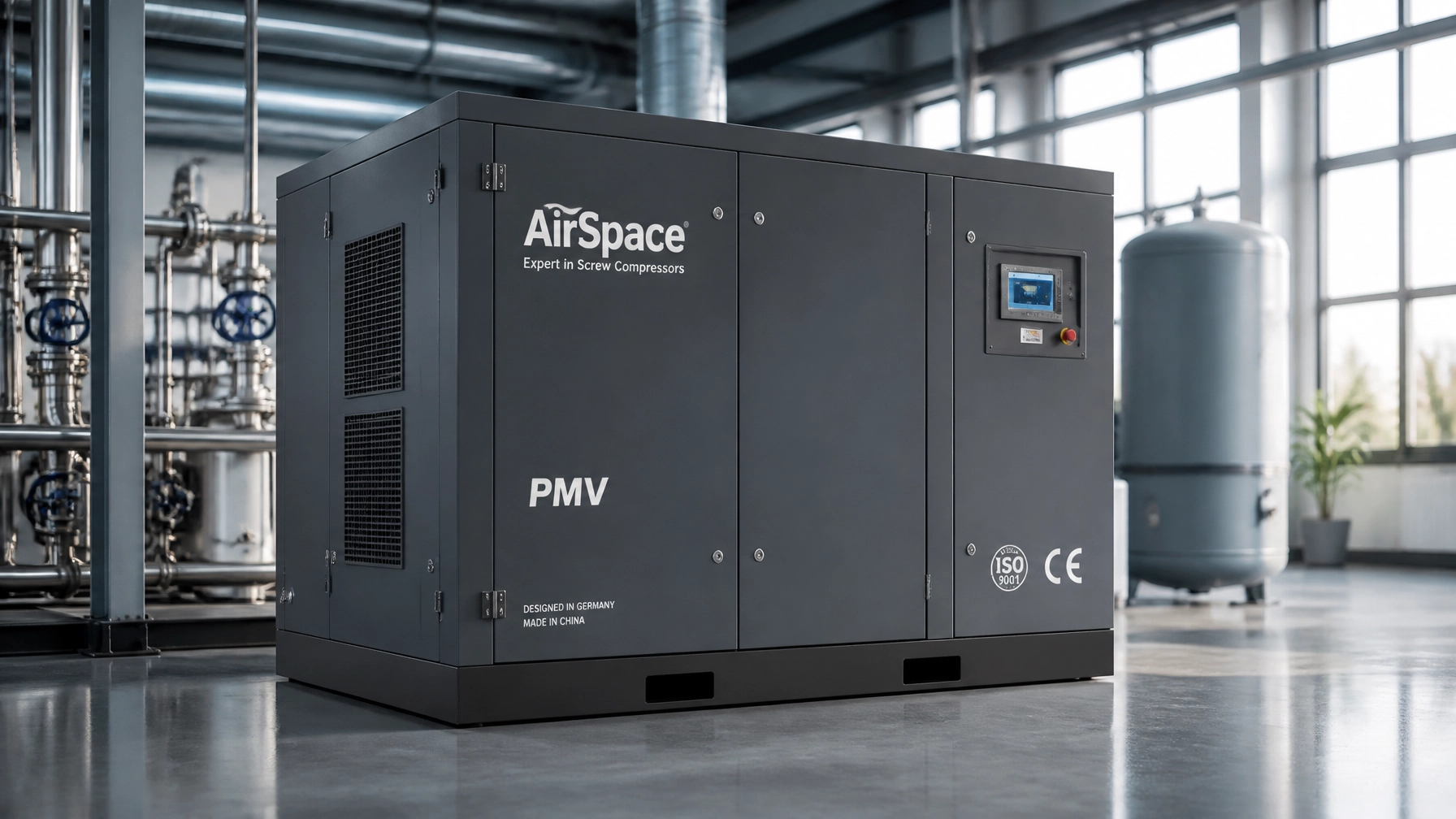
The short answer: You only “need” an oil-free air compressor if your end product comes into direct contact with compressed air and cannot tolerate a single molecule of lubricant contamination (think: medicine, sensitive electronics, or high-end food processing). For most industrial manufacturing, a high-efficiency PMV screw air compressor with a robust multi-stage filtration system provides the exact same air quality at a significantly lower total cost of ownership.
Choosing between oil-free and oil-lubricated systems isn’t just a technical decision; it’s a financial one. At AirSpace Machinery Co., Ltd., with over 20 years of engineering excellence and a 4,000m² state-of-the-art facility, we see buyers struggle with this daily. The “oil-free” label sounds safer, but it often comes with a steeper price tag and higher maintenance frequency.
The 10 Most Common Headaches for Compressed Air Buyers
Before we dive into the standards, let’s look at why this decision keeps plant managers up at night:
- Overspending: Buying an expensive oil-free unit when a lubricated one would suffice.
- Audit Anxiety: Fear of failing ISO 8573-1 compliance during a facility inspection.
- Maintenance Traps: Discovering too late that “oil-free” doesn’t mean “maintenance-free.”
- Energy Drain: Managing the efficiency losses inherent in some dry-screw designs.
- Contamination Risk: The nightmare of an oil leak ruining a $50,000 batch of pharmaceuticals.
- Certification Confusion: Not knowing how to verify CE or ISO 9001 documentation.
- Regional Extremes: Compressors failing due to high humidity in Southeast Asia or freezing in Russia.
- Noise Pollution: Dealing with the higher decibel levels of certain oil-free configurations.
- Replacement Costs: Realizing the “airend” (the heart of the machine) costs twice as much to replace in oil-free models.
- Lead Time Woes: Waiting months for specialized configurations to ship globally.
What Exactly is ISO 8573-1?
If you are operating an ISO 9001 air compressor system, you need to speak the language of ISO 8573-1. This is the international standard that defines air purity. It categorizes contaminants into three groups: solid particles, water (humidity), and oil.
When people talk about “clean air,” they are usually chasing Class 0.
- Class 0: The most stringent. It means the air is “cleaner than Class 1,” with oil concentrations typically below 0.01 mg/m³.
- Class 1: Technically allows for 0.01 mg/m³ of oil.
Here is the kicker: An oil-lubricated Permanent Magnet Variable Frequency (PMV) Screw Air Compressor paired with high-quality coalescing filters and carbon towers can technically achieve Class 1 or even Class 0 equivalent air. So, why buy the oil-free machine? Because in oil-free machines, there is no oil in the compression chamber to begin with, meaning there is zero risk of a mechanical failure “dumping” oil into your pipes.
Comparing the Options: Oil-Injected vs. Oil-Free
| Feature | PMV Screw (Oil-Injected) + Filtration | Oil-Free Screw Compressor |
|---|---|---|
| Initial Investment | Lower (Cost-effective) | High (2x – 3x more expensive) |
| Air Purity | Class 1 (or 0 with heavy filtration) | Guaranteed Class 0 |
| Energy Efficiency | Excellent (Lubricant seals the screws) | Good (but higher heat generation) |
| Maintenance | Oil changes and filter swaps | Specialized airend overhauls |
| Reliability | High (Oil cools and protects parts) | Moderate (Higher operating temperatures) |
When is Oil-Free a Non-Negotiable Must?
In certain sectors, “almost clean” isn’t good enough. If you are in any of the following industries, an oil-free air compressor is likely your only option for compliance and safety:
- Pharmaceuticals: Air is used to move pills, clean bottles, and even ferment active ingredients. Any oil vapor can alter the chemical composition of the medicine.
- Food & Beverage: If the air touches your soda or your snacks, it must be oil-free. Contamination leads to rancid flavors and massive product recalls.
- High-Tech Electronics: Microchips are manufactured in cleanrooms where a single microscopic oil droplet can short-circuit a circuit board.
- Medical/Dental: You wouldn’t want oil-laden air being pumped into a patient’s lungs or used in a surgical drill.
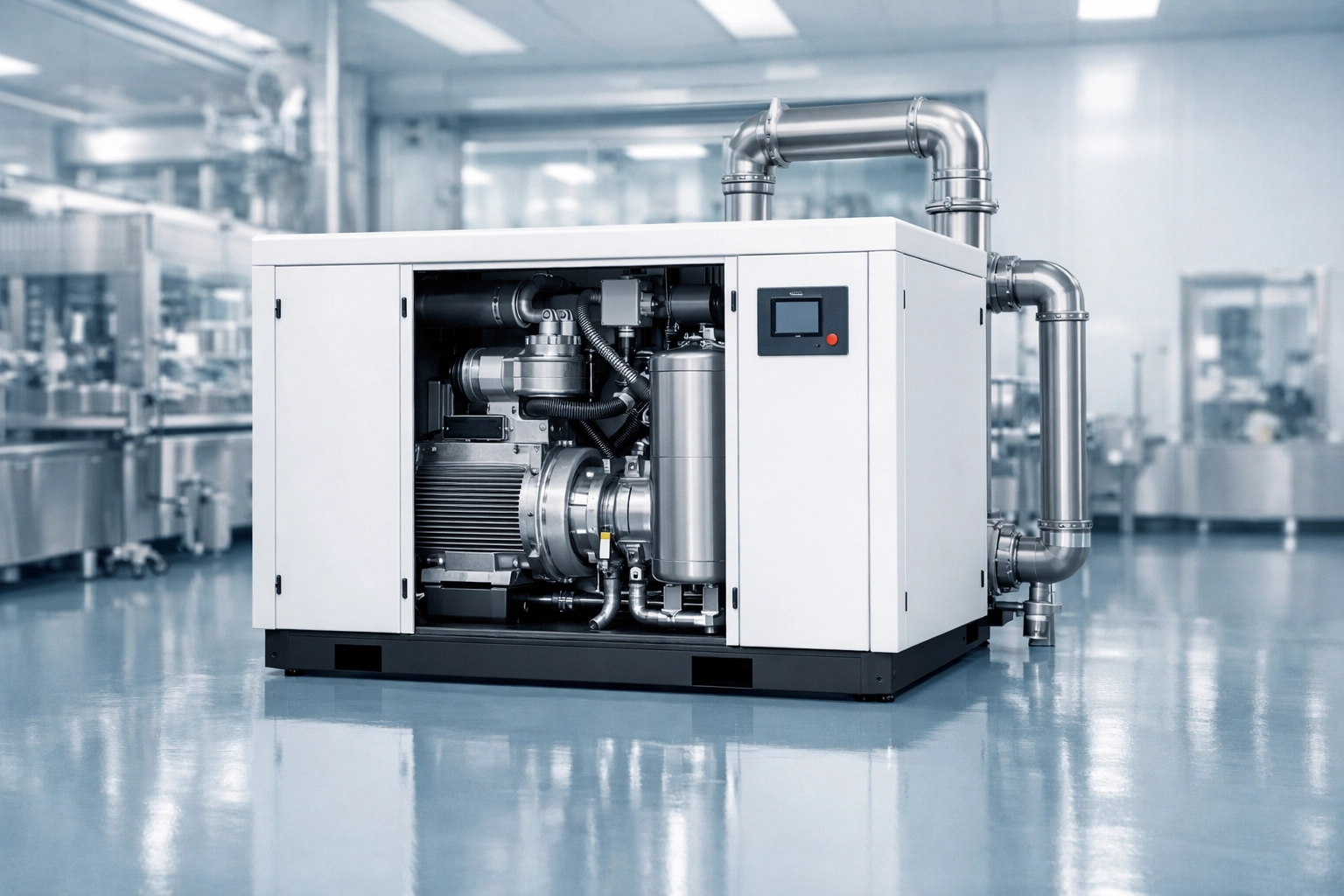
How PMV Technology Saves Your Bottom Line
Whether you go oil-free or lubricated, you should be looking at Permanent Magnet Variable Frequency (PMV) Screw Air Compressors. Traditional compressors run at 100% speed or stop completely. This is incredibly wasteful.
Our PMV systems adjust the motor speed to match your actual air demand in real-time. If you only need 30% of the air capacity, the motor only uses roughly 30% of the power. With 100M yuan in annual sales, our engineering team has proven that this technology can reduce factory energy bills by up to 35%.
Global Considerations: Humidity, Grid, and Cold
AirSpace Machinery Co., Ltd. supports buyers across the globe, and we know that geography dictates your compressor choice.
- Southeast Asia (SEA): The extreme humidity means your air dryers have to work double-time. We recommend oversized refrigerated dryers and stainless steel piping to prevent internal corrosion in oil-free systems.
- LATAM: Grid stability can be an issue. Our PMV controllers are designed with robust voltage protection to handle power quality fluctuations without frying the inverter.
- Russia/CIS: Cold weather is the enemy of air systems. We provide specialized winterization kits (heaters and insulated enclosures) to ensure the compressor starts even when the thermometer hits -30°C.
Verifying Quality: Don’t Take Their Word For It
In the world of international manufacturing, talk is cheap. To ensure you are getting an authentic ISO 9001 air compressor, always request:
- CE Certificate: Mandatory for the European market and a hallmark of safety worldwide.
- ISO 9001:2015 Documentation: This proves the factory follows strict quality management protocols.
- Original Testing Reports: Every AirSpace unit undergoes a rigorous 4-hour performance test before shipping. Ask for the data on flow (m³/min) and pressure (bar/psi).
Frequently Asked Questions (Q&A)
Q: Can I turn an oil-injected compressor into an oil-free one with enough filters?
A: No. You can achieve “technically oil-free air,” but the machine remains oil-injected. If a seal fails, oil enters the system. An oil-free compressor has a compression chamber that never touches lubricant.
Q: Is oil-free maintenance actually cheaper?
A: No. While you don’t buy oil, the specialized coatings on oil-free screws wear out over time. Replacing an oil-free airend is significantly more expensive than standard maintenance on a PMV screw unit.
Q: Does AirSpace provide export support?
A: Yes. We handle all logistics and export documentation, ensuring your compressor clears customs without the typical bureaucratic headaches.
The AirSpace Solution: Get a Proposal
Choosing the right system is about balancing risk and reward. Our team specializes in helping you navigate the ISO 8573-1 standards to find a configuration that keeps your plant compliant without wasting your budget.
Ready to upgrade your facility?
To receive a tailored quote, please Contact Us or visit our Shop. Note that lead times vary based on specific voltage requirements and regional winterization needs.
Required for Proposal:
- Target Pressure: (e.g., 7 bar / 100 psi)
- Required Flow: (e.g., 5 m³/min / 175 CFM)
Author: Penny Winston, Technical Writer
Penny has spent over a decade translating complex thermodynamics into actionable insights for plant managers. When she isn’t writing about air quality, she’s likely investigating the latest efficiency trends in PMV technology.
Reviewed by Engineering:
This article has been audited for technical accuracy by the AirSpace Engineering Department (April 2026). All claims regarding ISO 8573-1 and PMV efficiency are based on verified laboratory testing data.
📅 Last updated:
⚡ Is Your Factory Bleeding Cash?
Most fixed-speed compressors waste $3,600/year in "Unload Tax." Test your waste level in 30 seconds.
RUN THE ROI TEST →Ready to See How Much Your Facility Can Save?
Fill out the form below for a Free Energy Assessment.