
Short answer: It is a 0.5 bar pressure drop and trace moisture in the compressed air line affecting pneumatic actuators.
Written by Penny Winston, Blog Writer, AirSpace Machinery Co., Ltd. — a 4,000 m² compressor manufacturing facility in Shanghai, ISO 9001:2015 certified and CE marked.
Reviewed by Richard Moore, Field Technical Manager.
Yes. A factory is AI-ready only when its compressed air system works as a visible, connected, stable part of the automation stack. In practice, that means using IoT-enabled Permanent Magnet Variable Frequency (PMV) screw air compressors with real-time telemetry, predictive maintenance functions, stable pressure control, and air quality designed around the process requirement. Without that layer, AI-driven automation still fails on very ordinary problems: pressure drop, moisture, contamination, and unplanned pneumatic downtime.
What happens when smart robots run on a “dumb” air system?
The line becomes intelligent, but the utility stays blind. That mismatch causes stoppages.
Imagine a high-speed electronics plant in Southeast Asia. The site invests in AI-driven robotic arms and automated optical inspection systems for 24/7 output. Three weeks later, placement accuracy drifts, the AI tries to compensate, and the whole line stops. The root cause is not software. It is a 0.5 bar pressure drop and trace moisture in the compressed air line affecting pneumatic actuators.
The factory AI monitors assembly speed, but it does not see the condition of the china-screw-air-compressor. That is the gap between “automated” and actually AI-ready.
Why does compressed air matter in industrial automation and AI integration?
Because compressed air controls motion, repeatability, and uptime in many automated lines.
For years, compressed air was treated like a background utility. In modern Industry 4.0 plants, that approach is risky. High-precision automation usually depends on two basics from a china-industrial-compressor:
- Purity: Electronics, pharmaceuticals, food packaging, and medical production cannot tolerate oil carryover or excess moisture.
- Consistency: Automated equipment needs steady pressure. Pressure swings affect actuator timing, gripping force, placement accuracy, and repeatability.

What type of compressor supports AI-ready manufacturing best?
An IoT-integrated PMV screw air compressor is the practical fit for most smart factory applications.
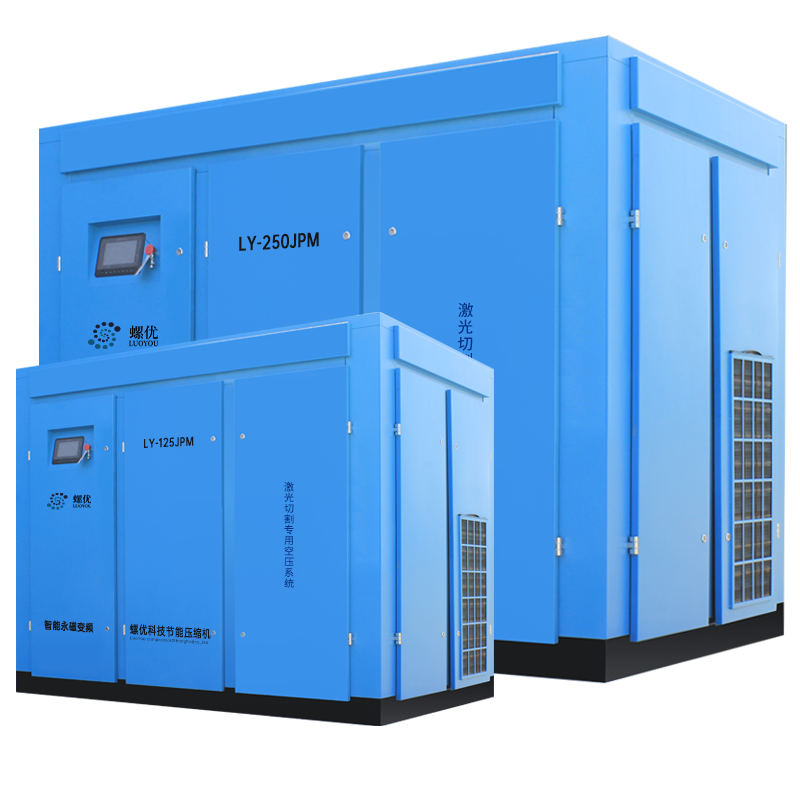
To reduce air-related downtime, modern facilities use oil-free PMV screw compressors as both a utility source and a data source. The point is simple: the air system should not just supply compressed air. It should report system health into the wider control environment.
How does IoT monitoring improve compressor performance in automated factories?
It shifts maintenance from reactive to predictive.
A smart industrial-compressor uses sensors to monitor vibration, discharge temperature, pressure, and flow. That data can feed into plant dashboards, MES layers, or maintenance systems so teams can spot developing faults early.
- Direct answer: Predictive maintenance reduces surprise shutdowns in 24/7 production.
- Practical outcome: Maintenance teams repair the unit before failure instead of after lost output.
Why is oil-free compressed air important for AI-driven production lines?
Because sensitive automated processes fail fast when air quality is wrong.
For electronics, pharmaceuticals, food processing, and medical manufacturing, air quality is non-negotiable. A properly specified oil-free screw air system helps prevent contamination risks that can damage product quality or process reliability.
- Direct answer: Oil-free compressed air protects contamination-sensitive production.
- Standard reference: ISO 8573-1 defines compressed air purity classes. Class 0 is the strictest class for oil content when tested according to the standard.
- Application note: Use a correctly sized oil-free screw configuration when the process requires no added oil risk.
How does PMV technology reduce energy use in a smart factory?
PMV technology saves energy by matching motor speed to real air demand instead of running at one fixed speed.
Energy is usually the largest lifecycle cost in a compressed air system. Permanent Magnet Variable Frequency control adjusts motor output continuously based on demand. Fixed-speed units, by comparison, often waste power during unload or part-load operation.
- Direct answer: PMV systems can reduce energy consumption by roughly 30% to 50% when the application has variable demand and the system is correctly sized.
- Condition: Actual savings depend on load profile, pressure band, control logic, leak rate, and operating hours.
| Feature | Standard Fixed-Speed Screw | AirSpace PMV Smart Screw |
|---|---|---|
| Energy Efficiency | Low (High Unloading Loss) | High (Real-time adjustments) |
| Data Integration | None / Manual | Full IoT Telemetry |
| Pressure Stability | +/- 1.0 Bar | +/- 0.1 Bar |
| Maintenance | Reactive (Fix when broken) | Predictive (AI-Driven) |
What regional issues affect smart compressed air deployment?
Humidity, power quality, and cold weather change system design.
Manufacturing is global, but installation conditions are local. Smart air systems need local engineering logic.
- Southeast Asia (SEA): High humidity makes dew point control critical. Systems should pair screw compressors with refrigerated dryers and suitable filtration to reduce moisture carryover into automated lines.
- Latin America (LATAM): Grid instability and power quality variation can affect controls and drive performance. PMV systems should be configured with suitable electrical protection and control cabinet design.
- Russia & CIS: Winter starts require cold-weather preparation. Winterization kits, heaters, and startup protection help maintain reliable operation in sub-zero conditions.
How can buyers verify CE and ISO 9001 documentation before purchase?
Ask for the actual documents, verify model matching, and confirm the manufacturer can support export paperwork.
When sourcing a china-air-compressor for an automated plant, check the paperwork like you check the specs.
Direct verification checklist:
- CE documentation: Request the CE Declaration of Conformity and confirm it matches the offered model and electrical configuration.
- ISO 9001 documentation: Request a valid ISO 9001 certificate showing the manufacturer’s quality management scope.
- Factory credibility: AirSpace Machinery operates a 4,000 m² manufacturing facility, has 20 years of engineering excellence, and reports 100M yuan in annual sales.
- Export support: Confirm packing lists, commercial invoices, manuals, and technical files are available for the destination market.

How should compressed air connect to MES, AI, or factory automation systems?
The compressor should act like a visible production utility, not a black box.
If the compressed air system does not share data with the plant’s monitoring environment, operators lose visibility into one of the most failure-prone utilities in automation. A variable-frequency smart system should provide status, alarms, energy data, and operating trends that support faster decisions.
- Direct answer: AI works better when the air system reports live operating data.
- Buyer takeaway: If production ramps quickly, the air system must react just as quickly.
What should industrial buyers ask before choosing a smart compressor for automation?
Start with application requirements, not brochure claims.
Ask these questions first:
- Pressure stability: Does the process need about +/- 0.1 bar control?
- Air quality: Does the application require oil-free air or a specific ISO 8573-1 target?
- Integration: Does the compressor support plant connectivity such as Modbus or Ethernet gateway options?
- Energy profile: Is plant demand variable enough for PMV savings to matter?
- Logistics and export: Can the supplier provide export documentation, local configuration support, and shipment coordination for your market?
What is the fast checklist for an AI-ready compressed air system?
Use this short list: connectivity, PMV control, air quality, and support.
- IoT Connectivity: Does the compressor have a Modbus or Ethernet gateway?
- PMV Drive: Is the motor permanent magnet variable frequency for efficiency under variable load?
- Air Quality: Is the system specified to the required ISO 8573-1 air quality target?
- Support: Does the supplier provide technical support and data-based troubleshooting?
At AirSpace Machinery Co., Ltd., we build screw air systems that support the real infrastructure behind industrial automation: stable air, clean air, visible data, and export-ready documentation.
Get a Proposal
Lead times depend on specific configuration and regional shipping schedules. Pressure (bar/psi) and Flow (m³/min or CFM) are required for all quotes.
Sources & Standards:
- ISO 8573-1:2010: Compressed air contaminants and purity classes.
- ISO 9001:2015: Quality management systems.
- CE Marking: European Conformity for machinery safety.
Technical specifications for PMV and Oil-Free systems verified by AirSpace Machinery Engineering Dept., April 2026.
⚡ Is Your Factory Bleeding Cash?
Most fixed-speed compressors waste $3,600/year in "Unload Tax." Test your waste level in 30 seconds.
RUN THE ROI TEST →Ready to See How Much Your Facility Can Save?
Fill out the form below for a Free Energy Assessment.


