How can I conduct a simple compressed air leak audit in my factory this week?
A simple compressed air leak audit is something you can run this week by walking your lines, checking the most common leak points with soapy water, tagging every leak you find, and (if you want faster coverage) renting an ultrasonic leak detector for a day or two to scan hard-to-reach areas during normal production.
At AirSpace Machinery Co., Ltd., we bring 20 years of engineering excellence, a 4000m² manufacturing facility, and 100 million yuan annual sales focused on industrial compressed air systems. This guide is a practical, factory-ready process you can use right away, and it also explains how leak control supports Energy-Efficient Air Compressor performance in real operating conditions.
Why Compressed Air Leaks Cost More Than You Think
Compressed air is often called the “fourth utility” in manufacturing, but it is also one of the most expensive. A single 3mm leak at 7 bar pressure wastes approximately 4.2 kW of compressor power continuously. Running 24/7, that single leak costs roughly $2,500-3,500 annually in electricity alone.
The problem compounds quickly. A typical factory with 50 connection points may have 10-15 active leaks. Combined, these leaks can waste 20-30% of total compressed air production. For a facility running a 75kW screw air compressor, this translates to $15,000-25,000 in unnecessary energy costs per year.
The good news: identifying and repairing leaks is straightforward, and most repairs cost under $50 in materials. The return on investment for a thorough leak audit typically exceeds 500%.
Two Proven Detection Methods: Soapy Water vs. Ultrasonic
Factory managers have two primary options for leak detection. Each has distinct advantages depending on your facility size, budget, and timeline.
Soapy Water Testing
The soapy water method remains the simplest and most cost-effective approach for accessible areas. Apply a soap solution (dish soap mixed with water works fine) to suspected leak points. If air is escaping, bubbles will form immediately.
Advantages of soapy water testing:
- Zero equipment cost
- Highly accurate for accessible connections
- Can be performed by any maintenance technician
- Works well for confirming suspected leaks
Limitations to consider:
- Time-consuming for large installations
- Cannot detect leaks in hard-to-reach locations
- Requires direct physical access to each connection point
- Less effective in dusty or oily environments
Ultrasonic Leak Detection
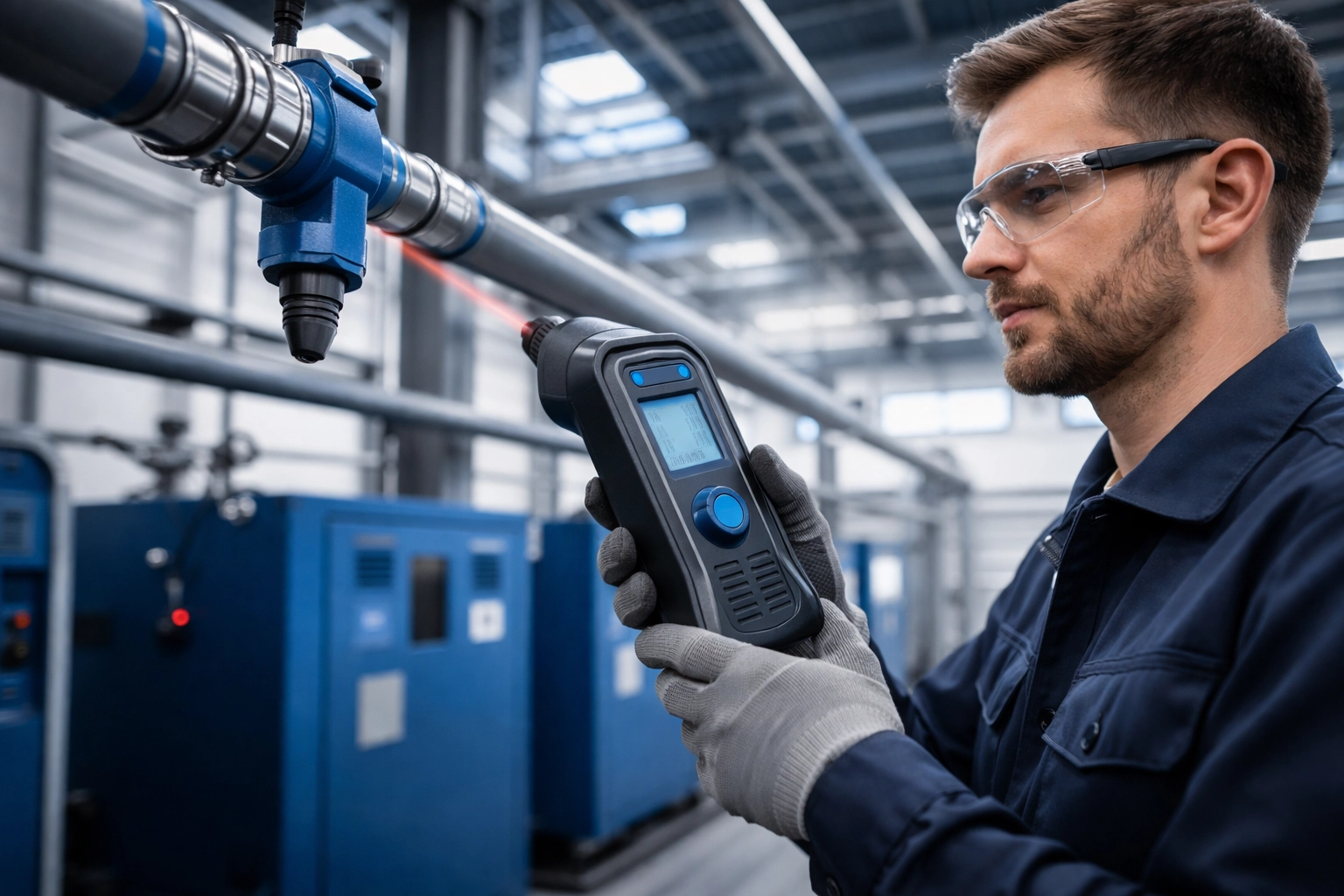
Ultrasonic detectors identify the high-frequency sound produced when compressed air escapes through a small opening. Professional-grade units can detect leaks from 6-20 feet away, even during normal production hours.
Advantages of ultrasonic detection:
- Covers large areas quickly
- Works in noisy production environments
- Detects leaks in ceilings, ducts, and behind machinery
- Quantifies leak severity for prioritization
Limitations to consider:
- Equipment rental costs $150-300 per week
- Requires brief training to operate effectively
- May produce false positives near pneumatic equipment
Recommended approach: Start with ultrasonic scanning to identify leak zones quickly, then confirm with soapy water testing before repair.
Priority Inspection Locations for Maximum Impact
Not all connection points have equal leak probability. Focus your audit on these six high-risk zones to maximize efficiency:
Couplings and Fittings
Threaded connections, quick couplings, and T-pieces are the most common leak locations. Vibrations and temperature fluctuations loosen these connections over time. Inspect every threaded joint and quick-connect fitting in your system.
Hose Connections and Attachment Points
Pay special attention to locations where hoses attach to fittings. Also inspect areas where hoses rub against equipment, racks, or other surfaces. Abrasion damage creates small holes that grow over time.
Valves and Control Equipment
Pressure control valves, shut-off valves, and automatic drain valves frequently develop leaks at seal points. Manual valves that are rarely cycled may have dried seals that no longer hold pressure.
Filters and Water Separators
Drain taps and service access points on filters and separators deserve extra attention, particularly after maintenance work. Improperly seated filter housings are common leak sources.
Hard-to-Reach Locations
Pipes running through ceilings, behind machines, and inside ducts often contain the largest undetected leaks. These areas are easy to overlook during routine maintenance but frequently harbor significant air loss.
Compressor Room Connections
The piping immediately downstream of your Energy-Efficient Air Compressor system experiences the highest pressure and flow. Even small leaks near the compressor room waste disproportionate amounts of energy.
Tagging and Documentation: Building Your Leak Database
Effective leak management requires systematic documentation. Every identified leak should be tagged immediately with the following information:
Essential Tag Information
- Location identifier (machine number, zone, pipe section)
- Date discovered
- Estimated severity (small/medium/large based on sound or bubble intensity)
- Assigned repair priority (urgent/scheduled/monitor)
Creating a Leak Map
Document all findings on a facility layout drawing. This leak map serves multiple purposes:
- Identifies pattern areas where leaks recur
- Guides future preventive maintenance routing
- Provides baseline data for measuring improvement
- Supports budgeting for system upgrades
Tracking Repairs
Record repair completion dates and methods used. Compare pre-repair and post-repair system performance to validate energy savings. This data proves the value of ongoing leak management programs.
Calculating the Cost of Wasted Air
Quantifying leak costs in financial terms helps justify repair investments and prioritize maintenance resources. Use this straightforward calculation method:
Step 1: Estimate Leak Volume
For each leak, estimate the equivalent hole diameter based on sound intensity or bubble formation rate:
- Small leak (barely audible): approximately 1mm equivalent diameter
- Medium leak (clearly audible at 1 meter): approximately 2mm equivalent diameter
- Large leak (audible at 3+ meters): approximately 3mm or larger equivalent diameter
Step 2: Calculate Air Loss
At 7 bar system pressure, approximate air loss rates are:
- 1mm leak: 0.6 m³/min (21 CFM)
- 2mm leak: 2.4 m³/min (85 CFM)
- 3mm leak: 5.4 m³/min (191 CFM)
Step 3: Convert to Energy Cost
A typical screw air compressor requires approximately 6-7 kW to produce 1 m³/min of compressed air. Multiply the air loss rate by your energy cost per kWh and operating hours to determine annual waste.
Example Calculation
A 2mm leak at 7 bar wastes 2.4 m³/min. At 6.5 kW per m³/min, this equals 15.6 kW continuous draw. Running 8,000 hours annually at $0.10/kWh, this single leak costs $12,480 per year.
Preventing Future Leaks: System Optimization
A leak audit provides immediate savings, but long-term efficiency requires system improvements. Consider these preventive measures:
Upgrade to Energy-Efficient Air Compressor Technology
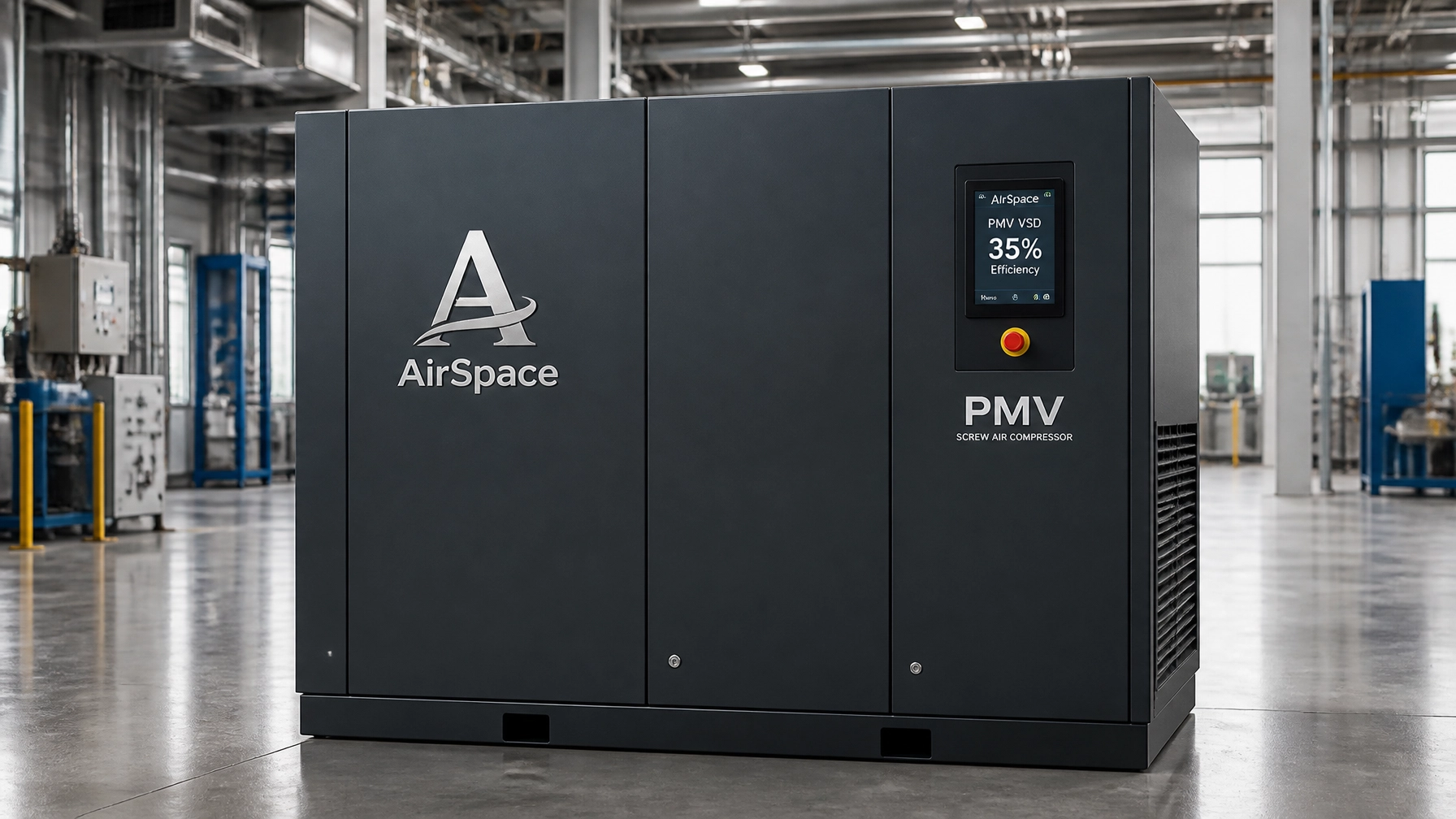
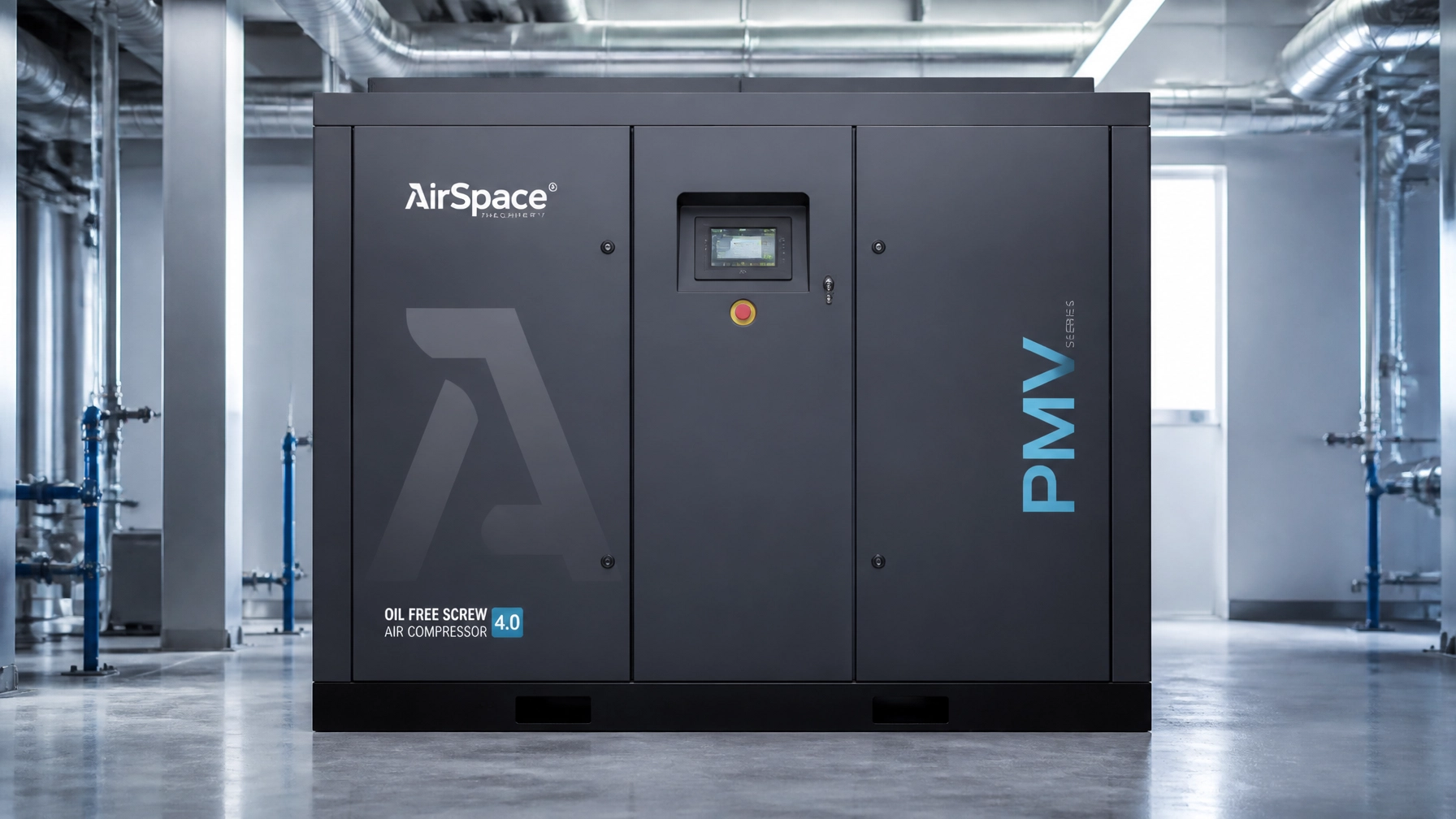
Modern Permanent Magnet Variable Frequency (PMV) Screw Air Compressors automatically adjust output to match demand. When leaks reduce system load requirements, PMV compressors consume less energy rather than cycling on and off wastefully. This technology provides a buffer against undetected leaks while delivering 30-50% energy savings compared to fixed-speed units.
Install Quality Fittings
Low-cost fittings often fail prematurely. Specify industrial-grade connections with metal-to-metal sealing surfaces for critical applications. The upfront cost difference is minimal compared to leak-related energy waste.
Schedule Quarterly Mini-Audits
Leaks develop continuously. A brief quarterly walkthrough using ultrasonic detection catches new leaks before they become expensive problems. Most facilities can complete a maintenance audit in 2-4 hours once the initial baseline is established.
Verify Equipment Certifications
When sourcing compressors and system components, verify CE and ISO 9001 certifications to ensure quality manufacturing standards. Certified equipment from reputable manufacturers like AirSpace Machinery reduces leak probability at connection points. Learn more about verifying CE and ISO 9001 certifications when importing industrial equipment.
Take Action This Week
A compressed air leak audit delivers immediate, measurable savings with minimal investment. Start with a visual inspection and soapy water testing on accessible connections. If your facility exceeds 500m² of production space, consider renting ultrasonic equipment to ensure comprehensive coverage.
For factories looking to maximize compressed air efficiency, upgrading to PMV screw compressor technology compounds the benefits of leak repair. AirSpace Machinery provides Energy-Efficient Air Compressor solutions with CE and ISO 9001 certification, backed by technical support for global customers.
Ready to optimize your compressed air system? Get a Proposal for a customized assessment. Specify your pressure requirements (bar/psi) and flow needs (m³/min or CFM) for accurate system recommendations. Lead times depend on configuration and destination.
Sources and Standards
- Compressed air leak cost calculations based on ISO 1217 compressor performance standards
- Energy consumption estimates reference typical specific power values of 6-7 kW per m³/min at 7 bar per ISO 1217 Annex C
- Leak detection methodologies align with Compressed Air and Gas Institute (CAGI) best practices
- Air quality classifications per ISO 8573-1 for industrial compressed air systems