Industry estimates suggest that poorly maintained compressed air systems can lose approximately 25–35% of their total compressed air production through leaks. A single 1/8-inch (3 mm) leak at 7 bar (100 psi) costs roughly $2,095 per year in wasted electricity, while a 1/4-inch (6 mm) leak can cost between $2,500 and $8,382 annually depending on system pressure and operating hours. Beyond direct energy waste, leaks force compressors to run longer hours, cause pressure drops that disrupt production, accelerate equipment wear, and lead to unnecessary capital expenditure on oversized replacement compressor.
At AirSpace Machinery, we see this pattern repeatedly: facilities invest in larger compressors to compensate for system pressure loss, when the real problem is 20–40 unrepaired leaks scattered across fittings, quick couplers, hoses, and valve seals.
The single most cost-effective compressed air system upgrade is fixing leaks first, then right-sizing your compressor and controls.
Why Leaks Cost So Much More Than You Think
Direct Energy Waste
Compressed air is one of the most expensive utilities in a factory. Generating 1 m³/min of compressed air at 7 bar requires approximately 7 kW of electrical power. When 30% of that air escapes through leaks, your compressor consumes 30% more electricity to maintain system pressure: around the clock, including nights, weekends, and holidays when production lines are idle.
Example: A 37 kW (50 HP) screw compressor running 6,000 hours/year at $0.18/kWh costs approximately $39,960 annually in electricity. If 30% is lost to leaks, you waste $11,988 per year on compressed air that never reaches your tools or equipment.
Hidden Operational Costs
Leaks trigger cascading problems that compound energy waste:
Pressure drop and production losses: Leaks reduce system pressure, causing pneumatic tools to underperform, CNC machines to fault, and laser cutting heads to lose precision. The typical response: turning up the compressor discharge pressure: wastes even more energy because leak flow rates increase exponentially with pressure.
Excessive run hours and maintenance: Compressors cycle on and off more frequently or run continuously in modulation mode to keep up with artificial demand. This accelerates wear on bearings, couplings, and air-end rotors, shortening oil change intervals and bringing forward major overhaul schedules.
Moisture and contamination issues: Higher compressor run time means less time for condensate to settle in receivers and dryers to regenerate properly. Moisture carryover damages downstream equipment, causes valve corrosion, and leads to scrap or rework in finishing operations.
Misdiagnosis and unnecessary capital expense: Facilities often purchase larger compressors, add a second unit, or upgrade to higher-pressure models to “solve” low pressure problems: when the real issue is 15–25 leaks totaling 8–12 CFM (13–20 m³/min) of waste.
How to Find Compressed Air Leaks: Practical Detection Methods
1. Listen and Soap-Test (Free, Low-Tech)
Walk the facility during a production shutdown when background noise is low. Leaks often produce a hissing sound. Mark suspected locations, then spray soapy water (dish soap + water in a spray bottle) on fittings, joints, and hose connections. Bubbles indicate leaks. This method works well for large leaks (>1 CFM) but misses smaller, high-frequency leaks.
2. Ultrasonic Leak Detector (Fast, Professional)
Ultrasonic leak detection cameras and handheld detectors sense the high-frequency sound (20–100 kHz) that leaks emit: frequencies beyond human hearing. Modern ultrasonic cameras can scan an entire production line in minutes and quantify leak flow rates on-screen. A professional ultrasonic survey (2–4 hours for a mid-sized facility) typically identifies 30–80 leaks and provides GPS-tagged photos and flow data for prioritization.
Cost vs. savings: A ultrasonic detector rental or one-time survey costs $500–$2,000, but often identifies $10,000–$25,000 in annual energy waste.
3. Pressure Decay Test (Quantifies Total System Leakage)
Isolate sections of your compressed air system (close ball valves on distribution headers). Pressurize the isolated section to operating pressure, then shut off the compressor supply and monitor pressure drop over 15–30 minutes using a calibrated gauge or data logger. Calculate total leak rate using the pressure decay formula:
Leak CFM = (V × ΔP) / (Pa × Δt) × K
Where V = system volume (gallons or liters), ΔP = pressure drop, Pa = atmospheric pressure, Δt = time, K = conversion factor.
Rule of thumb: System pressure should not drop more than 1–2 psi (0.07–0.14 bar) over 15 minutes during an off-shift test. A 10 psi (0.7 bar) drop in 15 minutes on a 500-gallon receiver indicates significant leakage (roughly 8–12 CFM / 13–20 m³/min at 100 psi / 7 bar).
4. Flow Meter Monitoring (Continuous, Data-Driven)
Install a thermal mass flow meter or insertion flow meter on the main compressor discharge header. Monitor baseline flow during non-production hours (nights, weekends). This “base load” represents parasitic demand from leaks, auto drains, and equipment left pressurized. If weekend base load exceeds 20–30% of peak production flow, your system has substantial leakage.
5. Common Leak Points to Inspect
Focus detection efforts on high-leak-probability locations:
- Pipe fittings and threaded connections (especially at elbows, tees, and reducers using BSPT/NPT threads without sealant)
- Quick couplers and disconnects (worn O-rings, corroded poppet valves)
- Rubber and PU hoses (cracks, punctures, worn crimp fittings)
- FRL units (filter, regulator, lubricator bowls, gauge ports, drain valves)
- Pneumatic cylinders (piston seals, rod seals, end-cap O-rings)
- Solenoid valves and manifolds (spool wear, cracked valve bodies)
- Pressure regulator relief ports (stuck relief valves, failed diaphragms)
- Auto condensate drains (zero-loss vs. timed drains; older timed drains often leak 2–5 CFM continuously)
How to Calculate the Cost of a Single Leak
Use this simplified formula to estimate annual electricity cost per leak:
Annual Leak Cost ($) = CFM × kW/CFM × Operating Hours × Electricity Rate ($/kWh)
Standard assumptions:
- 1 CFM at 7 bar (100 psi) requires approximately 0.25 kW (varies by compressor efficiency; older models use 0.28–0.30 kW/CFM)
- Operating hours = 6,000–8,760 hours/year (6,000 = single-shift + some weekend overtime; 8,760 = continuous 24/7)
Example calculation (1/4-inch / 6 mm leak at 100 psi / 7 bar):
A 1/4-inch orifice leak at 100 psi flows approximately 25 CFM (42 m³/min).
- CFM: 25
- kW/CFM: 0.25
- Total compressor power wasted: 25 × 0.25 = 6.25 kW
- Annual operating hours: 6,000
- Electricity rate: $0.18/kWh
Annual cost = 6.25 kW × 6,000 hours × $0.18/kWh = $6,750
If you have ten such leaks scattered across your facility, you waste $67,500 per year.
Quick reference table (7 bar / 100 psi, $0.18/kWh, 6,000 hours/year):
| Leak Size (orifice) | Flow (CFM) | Annual Cost |
|---|---|---|
| 1/16 inch (1.5 mm) | 1.5 | $405 |
| 1/8 inch (3 mm) | 6 | $1,620 |
| 3/16 inch (5 mm) | 14 | $3,780 |
| 1/4 inch (6 mm) | 25 | $6,750 |
Multiply by operating hours and adjust for your local electricity rate to refine estimates.
How PM VSD (PMV) Screw Compressors Help: After You Fix Leaks
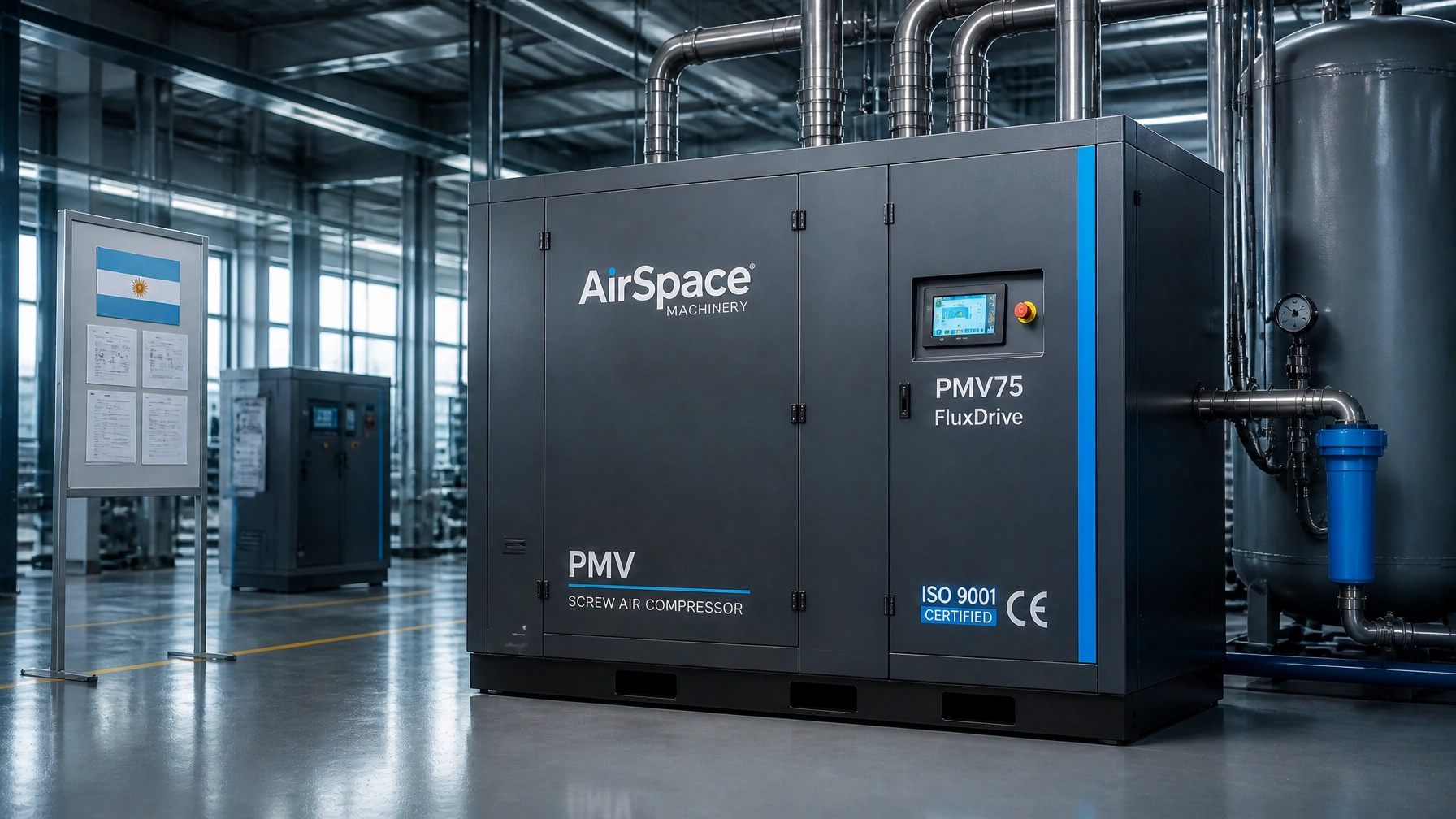
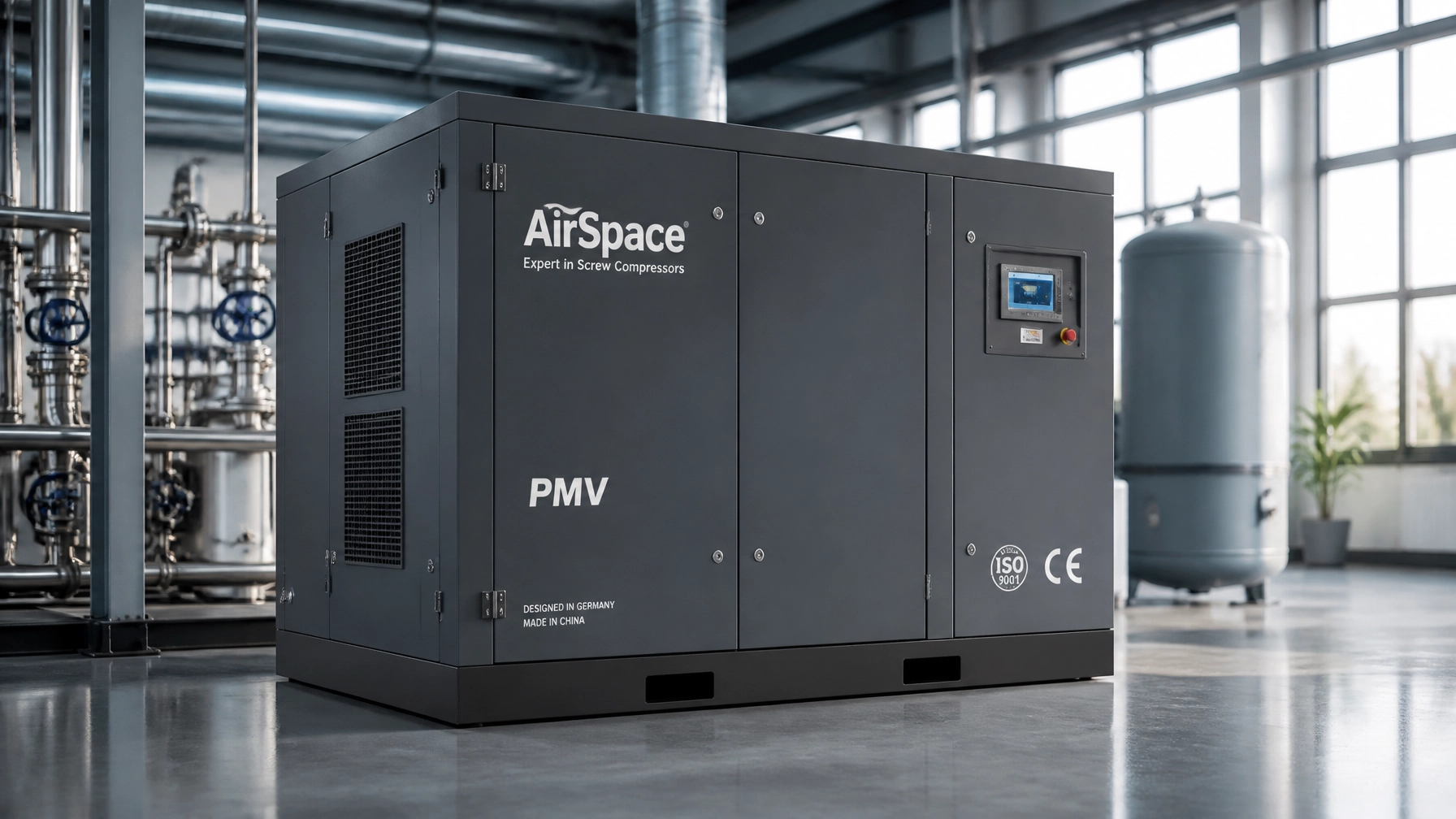
Permanent Magnet Variable Speed Drive (PM VSD or PMV) screw compressors deliver 30–40% energy savings compared to fixed-speed compressors, but only after you repair leaks and right-size the system.
Why PMV Technology Matters
Better part-load efficiency: PMV compressors use an integrated permanent magnet motor and inverter drive to modulate speed precisely. When air demand drops: such as during short production pauses or after leak repairs reduce artificial demand: the compressor ramps down to 20–30% of full speed, consuming only 20–30% of full-load power.
Traditional fixed-speed compressors waste 30–60% of full-load power in unload (idle) mode, blowing off compressed air through a dump valve while the motor continues spinning.
Stable pressure band: PMV compressors hold system pressure within ±0.1 bar (±1.5 psi), eliminating the need to over-pressurize to compensate for pressure swings. Lower average system pressure means leaks flow less air, further reducing waste.
Fix Leaks First, Then Right-Size
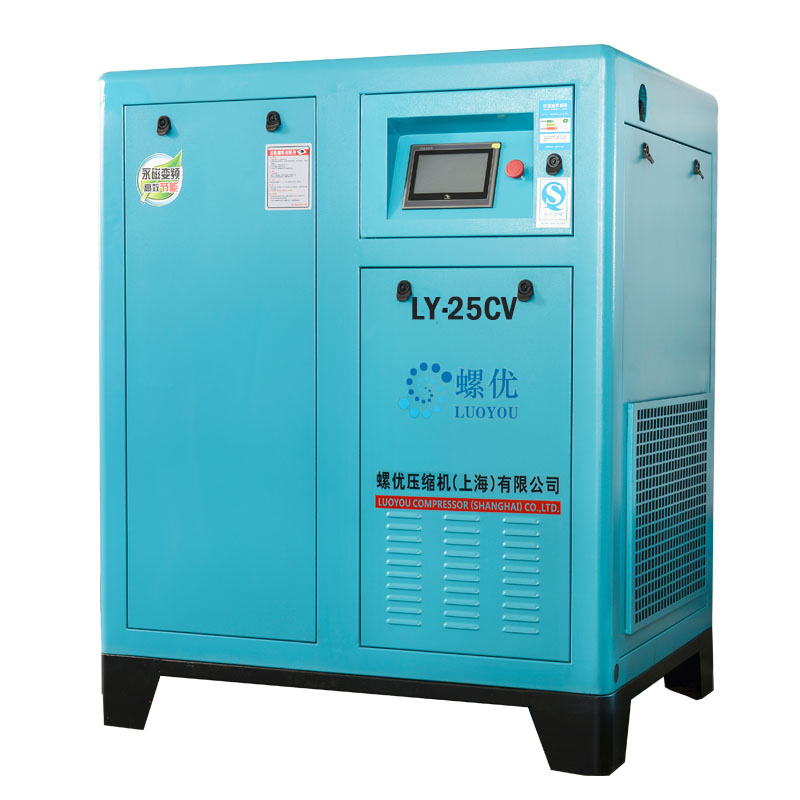
Common mistake: Facilities repair 40% of leaks, reduce base load by 20 CFM (34 m³/min), then continue running the same oversized 75 kW (100 HP) compressor. The compressor now spends 60–70% of its time in modulation or unload mode, wasting electricity.
Better approach:
- Conduct a thorough leak survey and repair all accessible leaks (target >80% capture rate).
- Monitor base load and peak demand for 7–14 days using a flow meter.
- Right-size your compressor based on measured demand plus 10–15% margin.
- Replace or supplement with a PMV screw compressor sized to run at 60–85% load most of the time.
AirSpace Machinery PMV screw compressor range: 2 HP–180 HP (1.5 kW–132 kW), 7–13 bar (100–188 psi) discharge pressure, with integrated refrigerated dryers, receivers, and filtration available as turnkey air stations.
Quick Leak Management Checklist
Monthly:
- Walk production floor during off-shift and listen for new leaks
- Check auto condensate drain operation (zero-loss drains should not vent air continuously)
- Inspect flexible hoses and quick couplers for visible damage
Quarterly:
- Conduct ultrasonic leak survey or soap-test high-traffic areas
- Review compressor run-hour logs and compare to production schedules (if weekend base load >30% of weekday peak, investigate leaks)
- Tag and prioritize leaks by flow rate (repair >2 CFM leaks immediately; schedule <0.5 CFM leaks for next shutdown)
Annually:
- Commission a professional ultrasonic survey with quantified leak report
- Perform pressure decay test on main distribution headers
- Calculate total annual leak cost and compare to repair budget (if leak cost >$10,000/year, justify dedicated maintenance budget)
- Review compressor sizing and control strategy after major leak reduction
Frequently Asked Questions
How much does a typical industrial facility lose to leaks?
Industry estimates suggest that facilities without active leak management programs lose approximately 25–35% of compressed air production through leaks. Well-maintained systems with quarterly surveys and rapid repair protocols typically hold leakage below 10%.
What is the fastest way to identify leaks?
Ultrasonic leak detection cameras or handheld detectors provide the fastest, most accurate method. A trained technician can survey a 10,000 m² facility in 2–4 hours and quantify each leak’s flow rate and annual cost.
Should I fix leaks or upgrade my compressor first?
Always fix leaks first. Repairing leaks reduces system demand by 20–40%, which means a smaller, more efficient compressor can meet your actual needs. Upgrading to a PMV compressor before fixing leaks locks in high operating costs and wastes capital on oversized equipment.
How do I calculate payback on a leak repair program?
Sum the annual cost of all identified leaks (use the formula above or ultrasonic survey data). Divide by the total cost of repairs (labor, fittings, hose replacements, contractor fees). Payback periods typically range from 2–8 months for comprehensive leak programs.
Can PMV compressors tolerate leaks better than fixed-speed units?
PMV compressors modulate down when demand drops, so they waste less energy than fixed-speed units during low-demand periods. However, leaks still force the compressor to run longer and consume unnecessary electricity. The best practice is to repair leaks and then leverage PMV efficiency to maximize savings.
Get a Free Compressed Air Leak Audit and Quotation
AirSpace Machinery offers complimentary compressed air system audits for facilities evaluating PMV screw compressor upgrades. Our factory-certified engineers measure system demand, quantify leak losses, and provide a detailed ROI report with equipment recommendations.
What we measure:
- Baseline flow and pressure profiles (7–14 day monitoring)
- Weekend/off-shift base load (leak-driven parasitic demand)
- Ultrasonic leak survey with GPS-tagged photo report
- Compressor run-hour analysis and efficiency benchmarking
- Recommended PMV screw compressor sizing (2 HP–180 HP range)
Request your audit: Contact AirSpace Machinery
Browse PMV screw compressors: Shop Compressor Range
Lead time: 3–6 weeks from order confirmation (depends on configuration and certification requirements)
Certifications: CE and ISO 9001 certified; documentation provided with every shipment
Form requirements: Specify required flow rate (m³/min or CFM) and operating pressure (bar or psi). Include discharge pressure, ambient temperature, and voltage/frequency for accurate selection.
Standards and Sources Referenced
- ISO 1217:2009 – Displacement Compressors – Acceptance Tests (establishes standard test conditions for compressor performance and flow measurement)
- ISO 11011:2013 – Compressed Air – Energy Efficiency – Assessment (provides methodology for calculating compressed air system energy consumption and leak quantification)
- Compressed Air & Gas Institute (CAGI) – Best Practices for Compressed Air Systems (industry guidelines for leak detection, measurement, and management)
- U.S. Department of Energy – Improving Compressed Air System Performance (technical reference for leak cost estimation formulas)
Leak flow estimates based on orifice flow calculations per ISO 6358-1 (sonic conductance method for compressed air components). Annual cost calculations assume 0.25 kW per CFM at 7 bar (100 psi) for modern two-stage screw compressors; older models or poorly maintained units may consume 0.28–0.32 kW/CFM.
Reviewed by Engineering
AirSpace Machinery Technical Team – February 2026
📅 Last updated:
⚡ Is Your Factory Bleeding Cash?
Most fixed-speed compressors waste $3,600/year in "Unload Tax." Test your waste level in 30 seconds.
RUN THE ROI TEST →Ready to See How Much Your Facility Can Save?
Fill out the form below for a Free Energy Assessment.