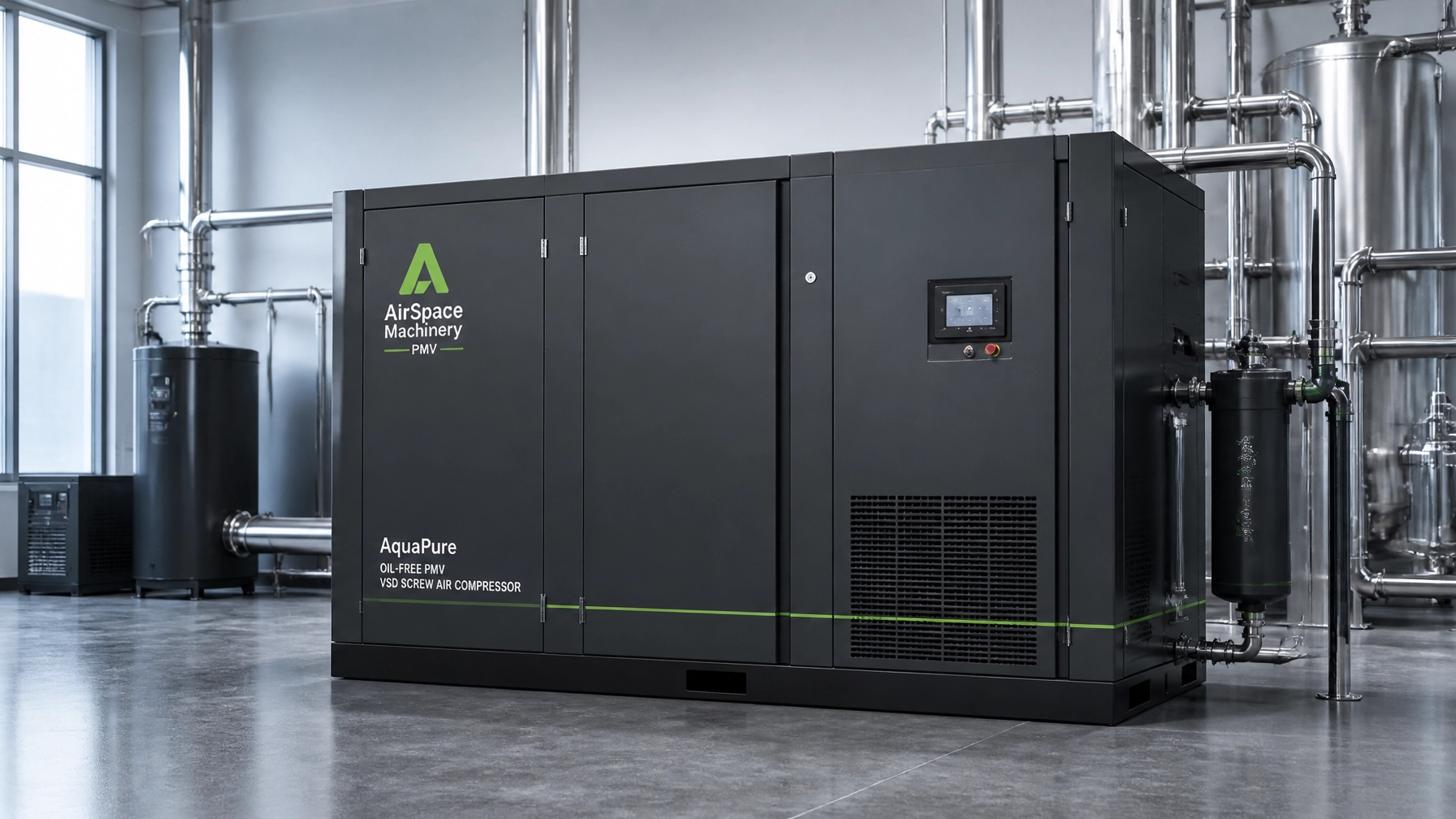
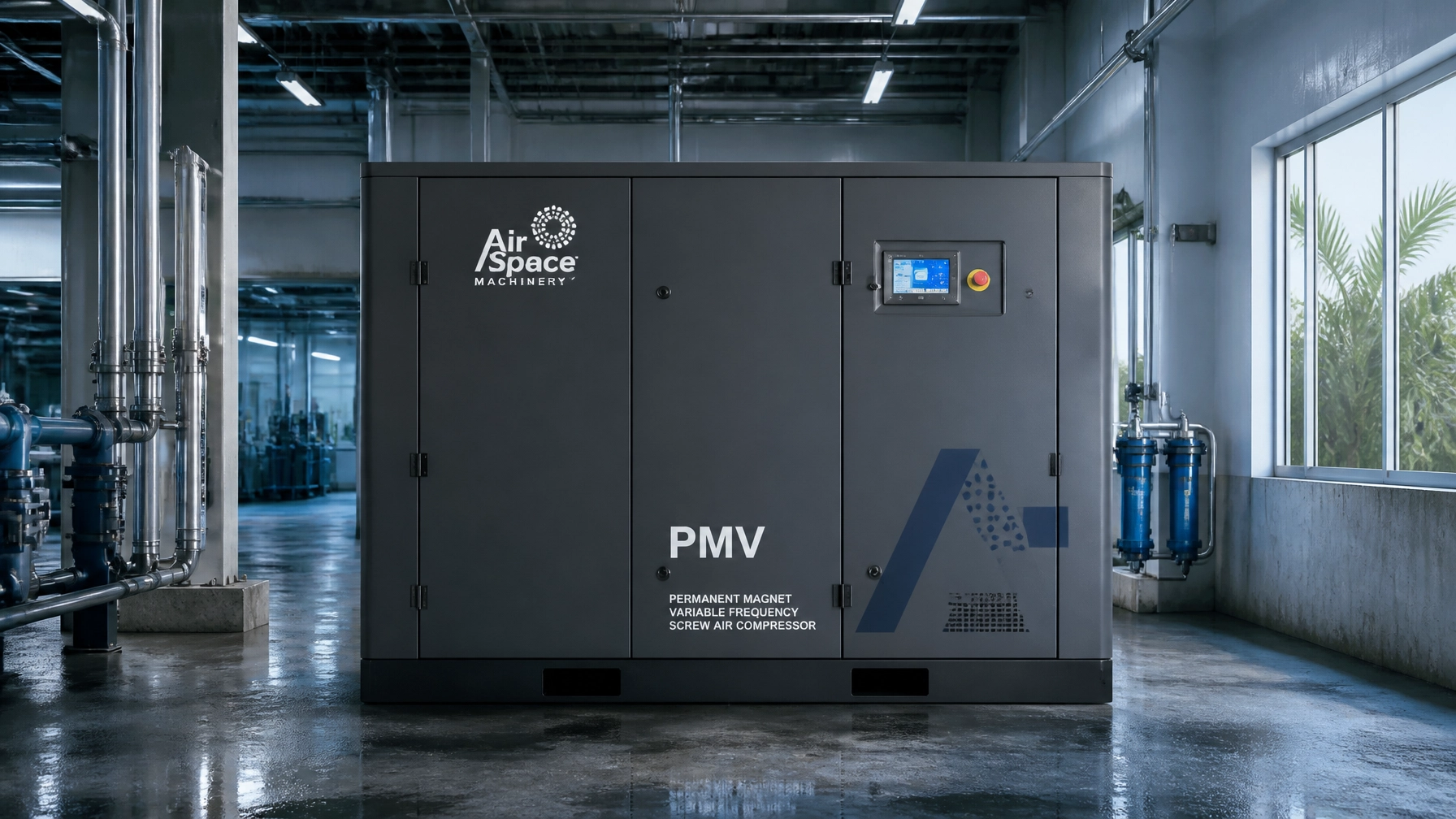
Supporting keywords: compresor de tornillo PM VFD, aire comprimido eficiente, PMV VFD screw compressor China, LATAM industrial compressor
ANSWER FIRST: CAN A PMV VFD COMPRESSOR CUT ENERGY COSTS BY 35% IN LATAM?
Yes. A correctly sized PMV VFD screw compressor can target an energy reduction of approximately 20–35% against a conventional fixed-speed load/unload system when demand varies throughout the day. The 35% Energy Delta is a planning benchmark, not a universal guarantee.
The result depends on operating hours, pressure, air demand, electricity tariff, storage capacity, leakage, and the existing compressor’s unload profile. In a factory that runs multiple shifts and spends long periods at partial load, PMV technology can reduce the Unload Tax by matching motor speed to real air demand instead of keeping a full-speed motor spinning with no useful output.
For LATAM buyers, the calculation must also include high ambient temperature, voltage stability, altitude, humidity, and service access. These factors decide whether a compressor merely starts or delivers stable air throughout the production shift.
WHY LATAM BUYERS KEEP PAYING THE UNLOAD TAX
The Unload Tax is the electricity consumed while a fixed-speed compressor is running but producing little or no useful air. The motor continues to draw power during unloaded periods, even though production is not receiving additional compressed air.
The common buyer headaches are clear:
- Electricity bills remain high during low-production shifts.
- The compressor cycles frequently between load and unload.
- Pressure drops appear when several machines start together.
- High ambient temperatures trigger thermal alarms.
- Voltage fluctuations cause drive or motor faults.
- The compressor room becomes excessively hot.
- Air treatment equipment adds pressure drop.
- Suppliers quote savings without showing load-profile assumptions.
- Altitude reduces delivered air capacity.
- Spare parts and technical support are difficult to plan.
This is why compressed air should be evaluated as The Fourth Utility Concept. Like electricity, water, and gas, it must be measured as a complete utility system rather than purchased only as a machine.
HOW DOES A PMV VFD SCREW COMPRESSOR REMOVE UNLOAD WASTE?
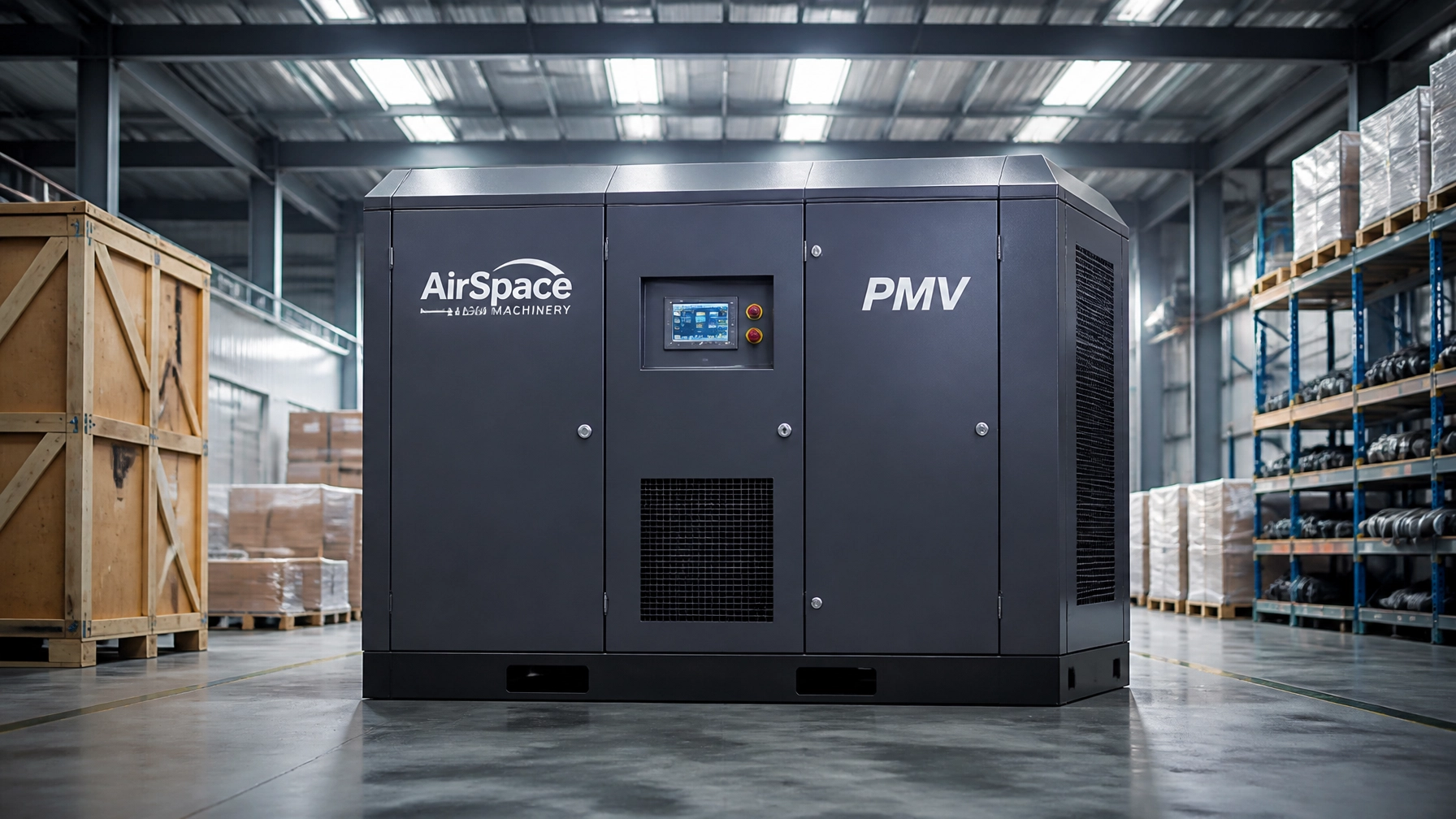
A PMV VFD system uses a permanent magnet motor and variable-frequency control to adjust motor speed as air demand changes. Instead of repeatedly running at full speed and then unloading, the compressor can reduce speed during lower-demand periods.
The main energy mechanisms are:
- Lower motor speed at partial demand.
- Reduced no-load running time.
- Less artificial pressure overshoot.
- Lower starting-current stress.
- Improved part-load motor efficiency.
- More stable system pressure.
Technical guidance from Natural Resources Canada and the Compressed Air and Gas Institute shows that variable-speed control can provide meaningful savings against traditional load/unload control, especially when demand changes during the operating cycle.
A practical estimate should use measured data:
Annual energy saving = difference in average kW × annual operating hours × electricity tariff
For example, a 50 HP compressor operating 6,000 hours per year at a tariff of USD 0.10/kWh can have a significant savings opportunity if it spends 30–40% of its time unloaded. The actual result must be calculated from measured kW, load hours, unload hours, pressure, and flow.
Use the AirSpace ROI Engine to model power, pressure, operating hours, demand, and electricity rate before requesting a final proposal.
WHAT DOES THE 35% ENERGY DELTA REALLY MEAN?
The 35% Energy Delta means the potential difference between a properly selected PMV system and an older fixed-speed system under comparable operating conditions. It is most relevant where the plant has variable demand, multiple shifts, frequent unload periods, or oversized compressor capacity.
It should not be interpreted as a guaranteed reduction on every site. Savings may be smaller when:
- Demand stays above 90% of rated capacity.
- The compressor is already well controlled.
- The system has significant air leakage.
- Pressure is set higher than necessary.
- Filters and dryers are heavily restricted.
- The compressor is incorrectly sized.
- The electricity tariff is low or operating hours are limited.
A responsible supplier should show the assumptions behind the estimate, including pressure in bar or psi, flow in m³/min or CFM, annual hours, average demand, and the existing compressor’s load/unload behavior.
PMV VFD VERSUS FIXED-SPEED: WHAT SHOULD YOU BUY?
| Evaluation point | Fixed-speed load/unload system | PMV VFD screw compressor |
|---|---|---|
| Motor operation | Full speed during loaded and unloaded periods | Speed varies with demand |
| Partial-load efficiency | Usually weaker | Usually stronger when demand varies |
| Pressure control | Wider pressure band may be required | Precise control available on suitable configurations |
| Unload energy | Motor continues consuming power | Unload exposure is materially reduced |
| Starting current | Higher in many installations | Controlled starting profile |
| Best application | Stable demand near full capacity | Variable demand and multi-shift production |
| Planning target | Baseline | Up to approximately 35% energy delta |
| High-ambient suitability | Depends on cooling and controls | Must be confirmed through model-specific ratings |
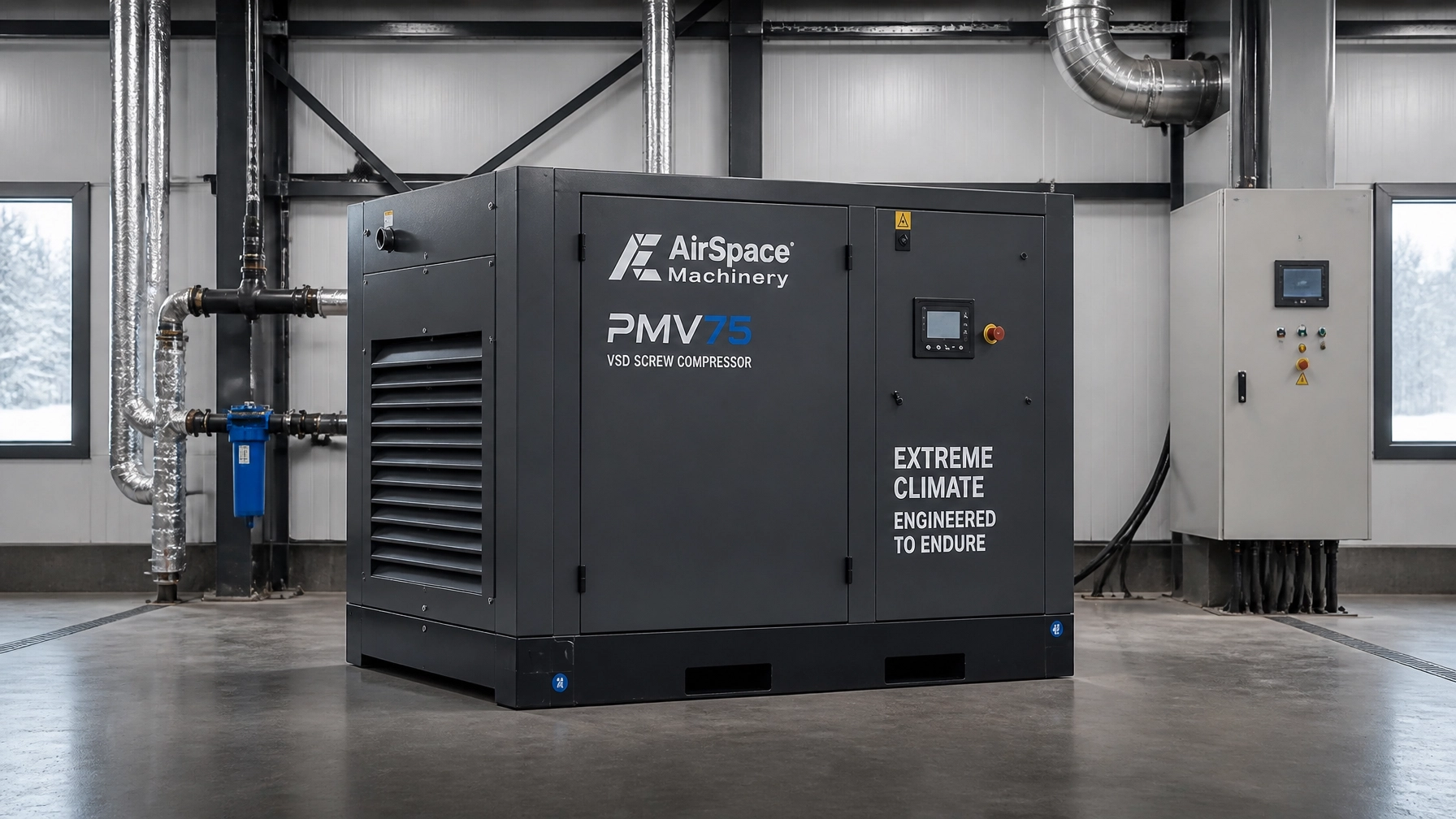
AirSpace published system information includes configurations with pressure stability of approximately ±0.1 bar and ambient engineering up to 55°C on selected Extreme Climate models. Buyers should request the exact performance curve for the proposed model rather than relying on a general series statement.

HOW DOES HIGH AMBIENT TEMPERATURE CHANGE THE DECISION?
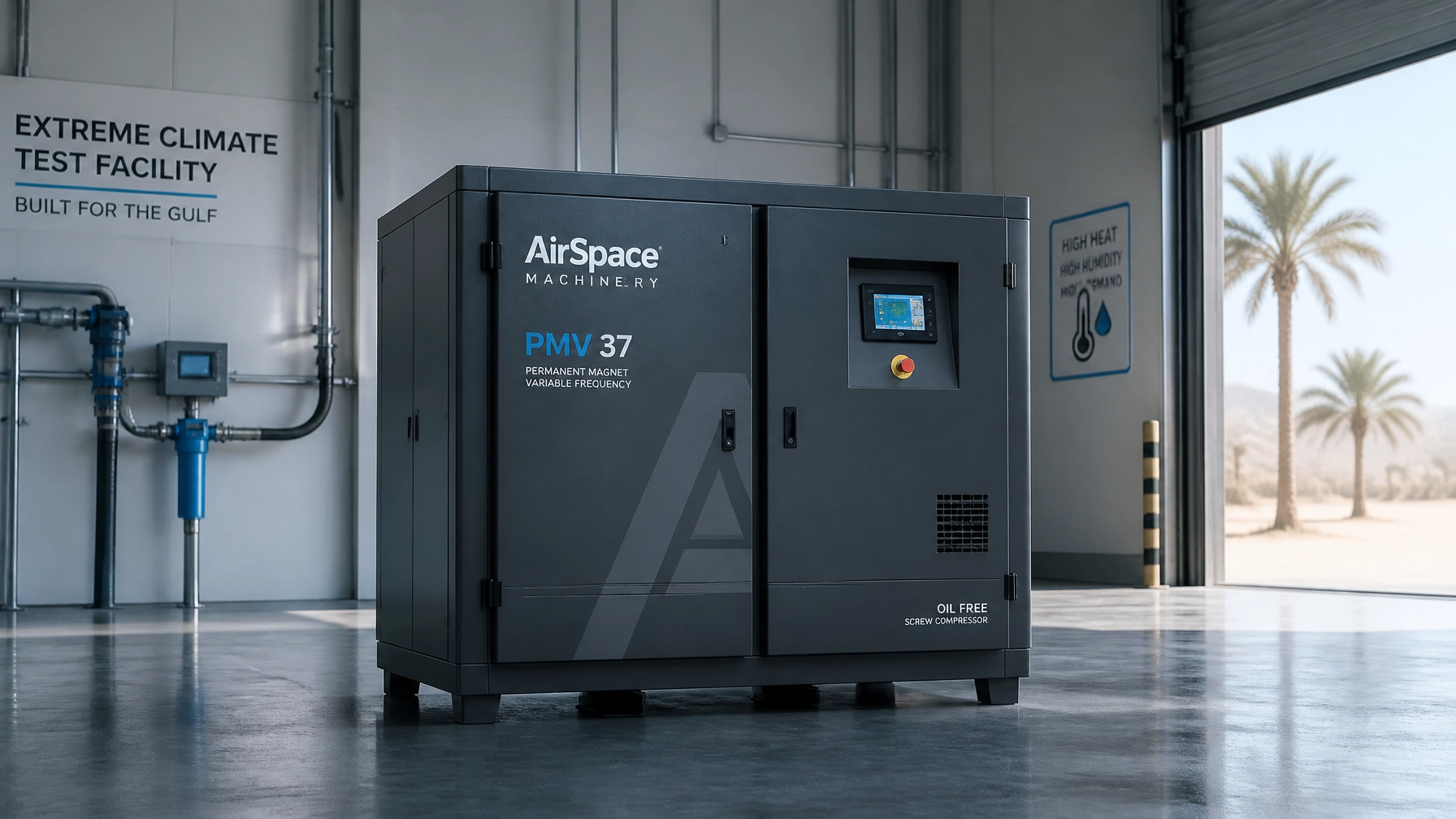
High ambient temperature creates the Heat Tax. Hot air is less dense, cooling becomes more demanding, and electrical components may derate if the cabinet is not designed for continuous high-temperature duty.
For a LATAM plant, ask for:
- Full-load and part-load performance at the expected ambient temperature.
- VFD operating and derating information.
- Discharge temperature limits.
- Cooling-airflow requirements.
- Filter maintenance intervals in dusty areas.
- Recommended installation clearance.
- Motor and electrical protection details.
- Refrigerated dryer performance at the same ambient condition.
A compressor marketed as “high temperature” may only survive a short peak. That is not the same as maintaining rated air delivery during a full production shift.
Read the technical guide 55°C Rated: Why Your Air Compressor Keeps Shutting Down at 40°C for a deeper explanation of continuous-duty high-ambient performance.
WHAT ARE THE LATAM-SPECIFIC TAXES BEYOND UNLOAD WASTE?
The Industrial Tax Series uses four practical names for common system losses:
- Unload Tax: power consumed while the compressor produces little or no useful air.
- Heat Tax: capacity and efficiency lost in high ambient temperatures.
- Altitude Tax: reduced air density and possible capacity impact at high elevation.
- Supply Chain Tax: extra downtime, freight cost, and maintenance exposure caused by weak procurement planning.
LATAM facilities should also review grid stability. Voltage variation, phase imbalance, harmonics, and frequent interruptions can affect compressor availability. A PMV system should be specified with suitable electrical protection, drive parameters, restart logic, and local installation requirements.
Altitude must also be included in the selection calculation. A plant located at high elevation may require additional capacity or a revised free air delivery calculation. Never size only from the motor horsepower.
HOW CAN YOU VERIFY A SUPPLIER BEFORE ORDERING?
Start with documentation, not promises.
Request the following:
- CE documentation for the supplied configuration.
- ISO 9001 quality-management evidence.
- Model-specific technical data.
- Pressure and flow performance tables.
- Electrical requirements for the destination country.
- Ambient-temperature operating limits.
- Recommended maintenance schedule.
- Spare-parts list and service procedure.
- Packaging and export documentation.
- Written assumptions behind the energy estimate.
Only CE and ISO 9001 should be treated as the applicable certification references in this purchasing review. Check that the model, rated pressure, motor power, voltage, and manufacturing entity shown in the documents match the quotation.
You can review the AirSpace technical catalog downloads and compare the proposed configuration with the information supplied for your project.
For direct product and system selection, visit the PMV VSD screw air compressor series or use the wider Solution Hub.
WHAT IS THE EXPECTED LEAD TIME AND EXPORT SUPPORT?
Lead time depends on configuration, pressure, flow, electrical specification, integrated dryer requirements, and production scheduling. A factory-direct planning range may be available for standard configurations, but it should never be treated as a universal promise.
Export buyers should confirm:
- Incoterms and shipping responsibility.
- Export packing and documentation.
- Destination voltage and frequency.
- Commissioning and remote technical support.
- Spare-parts availability.
- Warranty conditions.
- Local service expectations.
- Required pressure in bar or psi.
- Required flow in m³/min or CFM.
AirSpace Machinery has 20 years of engineering experience, a 4,000 m² manufacturing facility, and reported annual sales of 100 million yuan. Those figures are useful context, but the final decision should still be based on model-specific documentation and the buyer’s measured operating profile.
FAQ: PMV VFD SCREW COMPRESSORS FOR LATAM
Q: Is a PMV VFD screw compressor suitable for a factory with unstable air demand?
A: Yes, it is often a strong candidate because the motor speed can adjust to changing demand. The best result requires correct sizing, pressure control, sufficient storage, and a review of leaks and end-use pressure.
Q: Can a PMV system guarantee 35% savings?
A: No supplier should guarantee the same result for every factory. Approximately 35% is a planning benchmark for suitable variable-demand conditions. The final estimate should use measured kW, load profile, operating hours, pressure, flow, and tariff.
Q: Does high ambient temperature cancel the energy benefit?
A: No, but heat can reduce capacity and increase cooling demand. Select a configuration with documented high-ambient performance and request curves for the actual site temperature.
Q: What air quality standard should sensitive industries specify?
A: Specify the required purity class under ISO 8573-1. For contamination-sensitive applications, an oil-free configuration may be required, but the complete system must also include suitable filtration, drying, installation, and verification.
Q: How do I calculate the Unload Tax?
A: Record total run hours, loaded hours, unloaded hours, unloaded kW, and electricity tariff. Multiply the unloaded kW by unloaded hours and the tariff. A full ISO 11011-based assessment should also examine transmission losses and demand-side waste.
Q: How can I request a project quotation?
A: Use the AirSpace contact page and provide required pressure in bar or psi, required flow in m³/min or CFM, annual operating hours, voltage, ambient temperature, and application.
CONCLUSION: BUY THE AIR, NOT THE IDLE POWER
A compresor de tornillo PM VFD can improve aire comprimido eficiente performance in LATAM when it is selected from real demand data. The largest opportunity usually comes from reducing unload waste, controlling pressure, and protecting output in high ambient conditions.
The right procurement process is simple: measure first, specify pressure and flow clearly, verify CE and ISO 9001 documentation, check high-temperature performance, and calculate the full operating cost.
For related guidance, read the Unload Tax calculation guide and the LATAM VSD energy savings guide for pharmaceutical and food plants.
GET A PROPOSAL
If you need air consumption calculation, energy-saving scheme and factory quotation, please send us an inquiry.
Author box
Penny Winston, Technical Writer at AirSpace Machinery. Her work focuses on The 35% Energy Delta, The Fourth Utility Concept, and ISO 8573-1 Class 0 Integrity for industrial buyers.
Reviewed by Engineering
Sources and standards
- ISO 11011:2013, Compressed air : Energy efficiency
- ISO 8573-1, Compressed air purity classification
- Natural Resources Canada, Energy Efficiency Reference Guide for Compressed Air
- Compressed Air and Gas Institute, Variable Speed Drive Technical Brief
- AirSpace Machinery Solution Hub
- AirSpace Machinery Catalog Downloads
⚡ Is Your Factory Bleeding Cash?
Most fixed-speed compressors waste $3,600/year in "Unload Tax." Test your waste level in 30 seconds.
RUN THE ROI TEST →Ready to See How Much Your Facility Can Save?
Fill out the form below for a Free Energy Assessment.