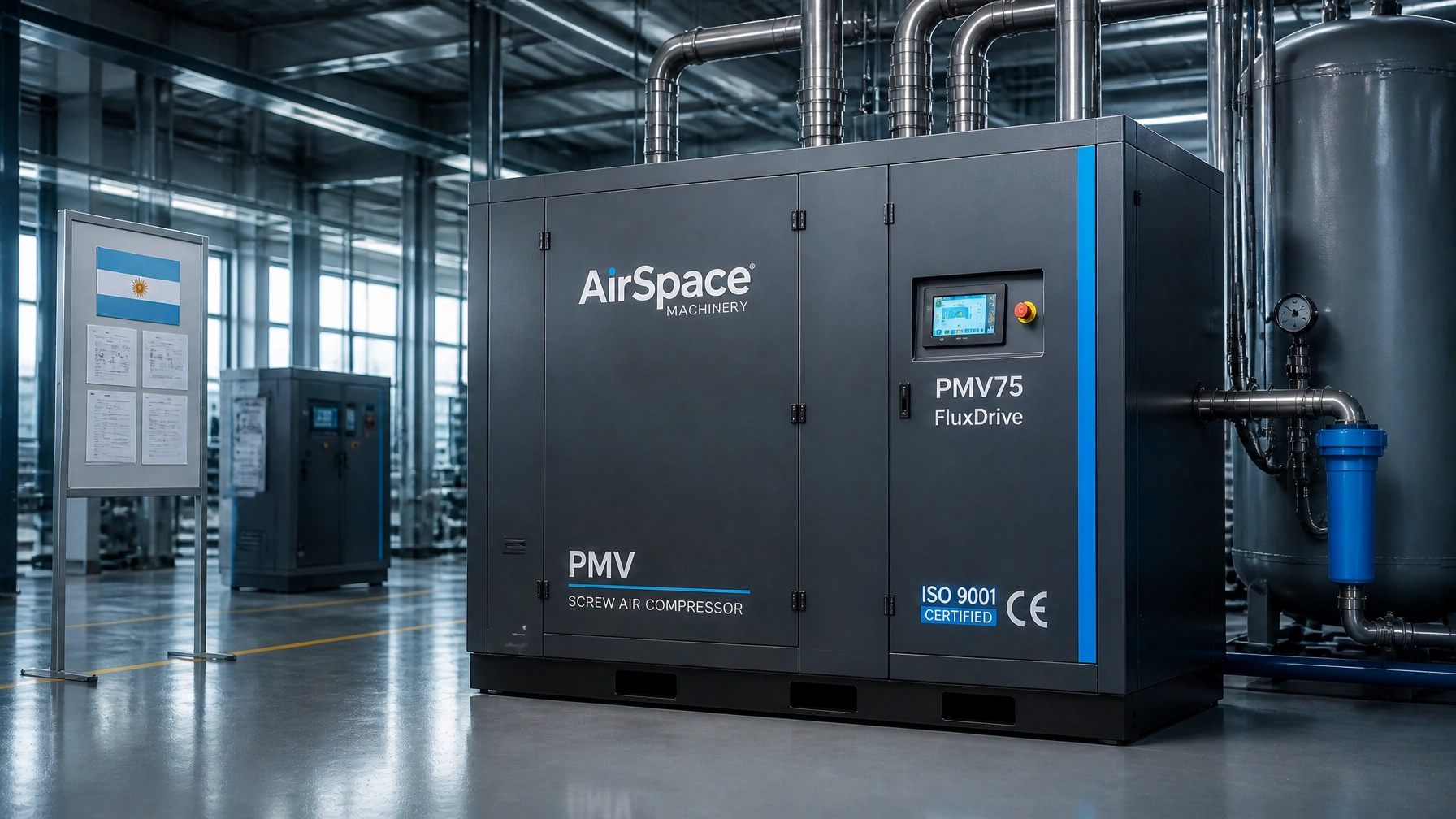
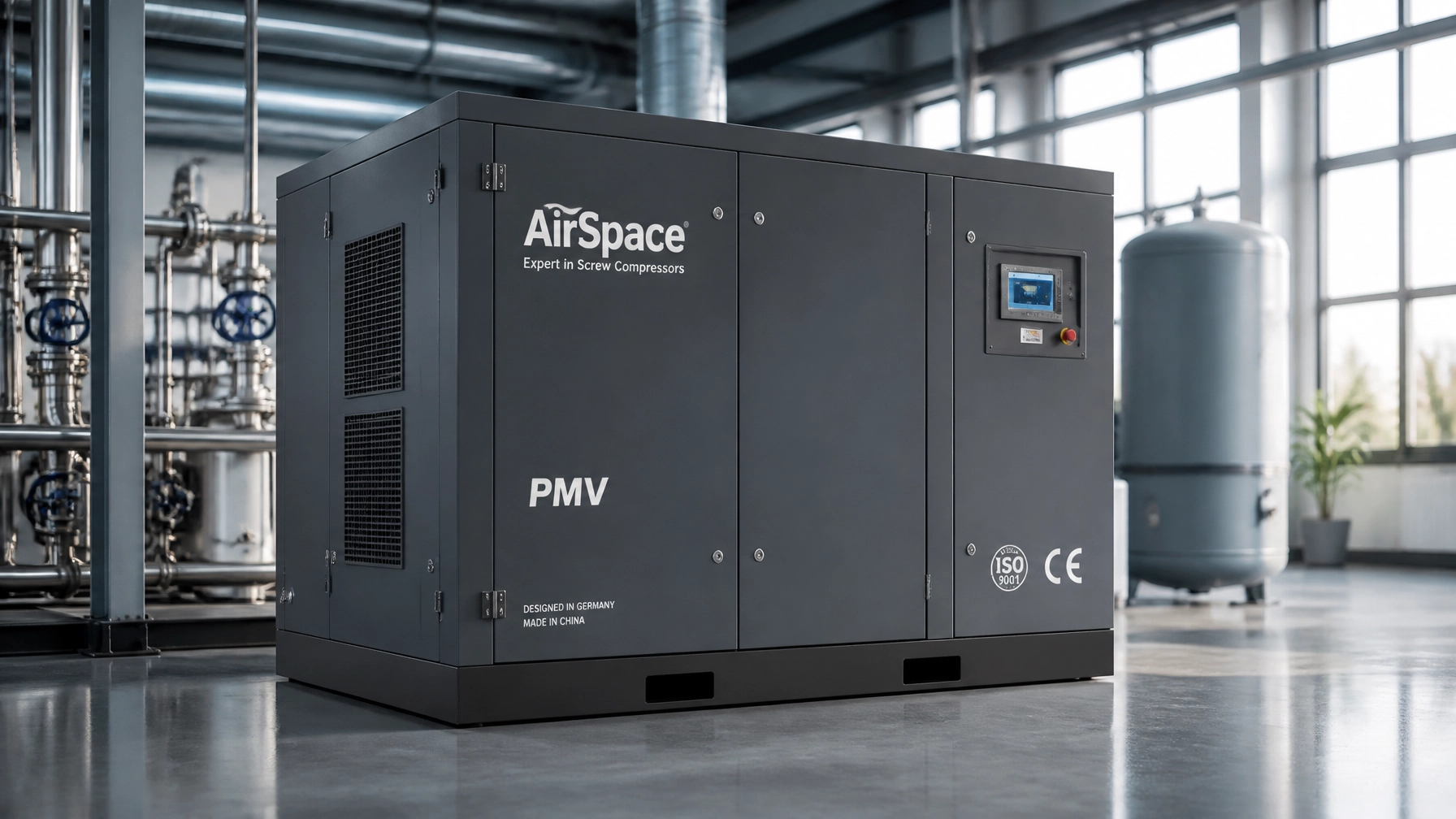
Are you paying a “Nitrogen Tax” that robs your shop of $31,000 every single year? For most fiber laser cutting facilities running 4kW systems, the answer is a definitive yes. By switching from bulk liquid nitrogen to a dedicated 16-bar PMV (Permanent Magnet Variable Frequency) compressor, a typical double-shift operation reduces its hourly assist-gas cost from $40/hour to less than $4.50/hour. This technical guide breaks down the 2026 ROI calculation, specifies the ISO 8573-1 purity standards required for oxidation-free edges, and identifies the engineering gaps that cause “budget” laser compressors to fail in high-demand environments.
The Answer-First Summary: Is the Switch Worth It?
For fiber lasers cutting stainless steel up to 10mm or carbon steel where a slightly textured edge is acceptable for powder coating, switching to high-pressure compressed air delivers a 90% reduction in gas overhead. A 4kW laser running 16 hours a day typically consumes $140,000 in nitrogen annually; a specialized china made screw air compressor reduces that to $9,000 in electricity and maintenance. The payback period for a high-performance AirSpace Machinery 16-bar PMV system is often less than 7 months.
The $31,000 Money Leak: Why Nitrogen is Bleeding Your Bottom Line
In the industrial landscape, compressed air is often called “The Fourth Utility.” However, in laser cutting, it is more accurately described as a financial bypass. Nitrogen is an expensive consumable. When you buy nitrogen, you are paying for the gas, the delivery logistics, the tank rental, and the “evaporation tax” (the gas that vents while your machine is idle).
The Hard Stats: Nitrogen vs. 16-Bar Air Cost Comparison
Based on 2026 industrial energy benchmarks and bulk gas pricing, the cost delta is staggering:
Liquid Nitrogen (Bulk/Cylinders):
Estimated Cost: $0.28 to $0.35 per m³
Hourly Cost (4kW Laser): $35.00 – $45.00
Annual Cost (Double Shift): ~$144,000
16-Bar PMV Compressed Air:
Estimated Cost: $0.025 to $0.035 per m³ (Power-based)
Hourly Cost (4kW Laser): $3.50 – $4.50
Annual Cost (Double Shift): ~$12,800
Total Annual Savings: $131,200 (Total Potential)
Note: We conservatively target $31,000 in savings for smaller shops or those alternating between gases, but for 24/7 heavy manufacturing, the “robbery” is even more significant.

The 2026 Laser ROI Calculator: How to Plug the Hole
To calculate your specific payback period, use the following engineering formula:
Step 1: Determine Hourly Nitrogen Burn
Measure your nitrogen flow (m³/min) at the nozzle during a 16-bar cut. Multiply by your local cost per m³.
Step 2: Calculate The 35% Energy Delta
Standard fixed-speed compressors waste energy during the “pierce cycle” or when the laser is traversing. AirSpace Machinery uses PMV (Permanent Magnet Variable Frequency) technology to eliminate the “Unload Tax.” Instead of running at 100% power while the laser is idle, our systems ramp down to match the exact demand of the machine, delivering a 35% energy delta over legacy units.
Step 3: Factor in Maintenance and Filtration
Do not forget the cost of industrial-grade compression equipment maintenance. A high-pressure laser system requires specialized filter changes to maintain ISO 8573-1 Class 1-2-1 air purity.
Common Mistakes: Why “Cheap” Laser Packages Fail
Many procurement managers fall into the trap of buying a generic “laser compressor package” from budget suppliers. This often leads to “The Humidity Tax”: where moisture enters the laser head, destroying expensive optics.
Mistake 1: Undersizing for Peak Piercing Demand
Laser cutting isn’t a steady-state flow. Piercing requires a sudden burst of high-pressure air. If your compressor is sized only for the “cut” and not the “pierce,” you will see pressure drops that cause slag and “dross” on the bottom of the part.
Mistake 2: Ignoring Ambient Temperature Derating
A compressor rated for 16-bar at 20°C will not perform the same at 40°C. AirSpace Machinery designs for “Extreme Climates,” ensuring that even in high-humidity SEA or high-heat Middle East environments, the discharge temperature remains low enough for the refrigerated dryer to function effectively.
Mistake 3: Sub-Standard Dryer Specs
If your air isn’t bone-dry, you are gambling with a $500,000 laser machine. You need a refrigerated dryer capable of a +3°C pressure dew point at 16-bar pressure. Budget units often use dryers rated for only 8-bar, which fail when pushed to laser pressures.

Case Study: The 4kW Fiber Laser Transformation
A mid-sized metal fabrication facility was cutting 10mm stainless steel for 16 hours a day using liquid nitrogen. Their monthly nitrogen bill was $12,500.
The Solution:
They installed an AirSpace Machinery 16-bar PMV integrated station. This system included a 22kW compressor for laser cutting, a high-pressure refrigerated dryer, and a 1.0m³ receiver tank.
The Result:
Monthly electricity increase: $850.
Monthly nitrogen savings: $12,500.
Net Monthly Profit Increase: $11,650.
Annual Savings: $139,800.
Even factoring in the initial $15,000 investment for the high-pressure system, the equipment paid for itself in less than 45 days of production.
Engineering the Solution: Dedicated vs. Central Systems
Dedicated Laser Compressor (The 16-Bar Plug):
Ideal for shops with 1-3 laser machines. These units are compact, integrated, and can be placed directly next to the machine. They eliminate the need for high-pressure piping throughout the factory.
Integrated Stations (All-in-One):
The AirSpace AS-20JTPM series combines the compressor, tank, and dryer on a single skid. This is the “Plug and Play” solution for shops looking to stop the nitrogen leak immediately.
Central High-Pressure Systems:
For large-scale facilities with 5+ lasers, a central 16-bar system with variable frequency control is the most energy-efficient choice, though it requires a higher initial piping investment.

Question and Answer: Direct Support for Industrial Buyers
Q: Can compressed air achieve the same edge quality as nitrogen?
A: On carbon steel and thick aluminum, compressed air is often superior or equal. On stainless steel, air cutting creates a thin oxidation layer. If your parts are being powder-coated, this layer is actually beneficial for adhesion. If you require a “mirror finish” edge for food-grade stainless, nitrogen is still required, but many shops use air for 80% of their work to maximize ROI.
Q: Why is 16-bar the “magic number” for fiber lasers?
A: Most fiber laser heads (3kW to 6kW) are optimized for assist-gas pressures between 12 and 15 bar at the nozzle. To account for pressure drop across the internal plumbing and filters, your china made screw air compressor must maintain a constant 16-bar at the discharge to ensure stable cutting performance.
Q: How do I verify the CE and ISO 9001 documentation of a Chinese manufacturer?
A: At AirSpace Machinery, we provide verifiable CE and ISO 9001 certification with every shipment. Buyers should ask for the original certificate number and verify it against the issuing body’s database. We also provide a complete factory test report showing the 35% Energy Delta performance for your specific unit before it leaves our 4,000m² facility.
Q: What maintenance is required for a 16-bar PMV system?
A: Beyond standard oil and filter changes every 3,000 hours, the primary concern is the high-pressure filtration. To maintain “ISO 8573-1 Class 0 Integrity,” you must replace the 0.01-micron coalescing filters annually. This prevents oil vapor from reaching your laser optics.
Conclusion: Stop Praying for Lower Gas Prices
Waiting for nitrogen prices to drop is a losing strategy. The most successful laser cutting facilities in 2026 are those that treat compressed air as a high-precision tool, not just a utility. By investing in a 16-bar PMV system from AirSpace Machinery, you are not just buying a compressor; you are plugging a $31,000 annual money leak and taking control of your production costs.
Author: Penny Winston
Penny Winston is a Technical Writer specializing in ‘The 35% Energy Delta’ and ‘The Fourth Utility Concept.’ With a focus on ISO 8573-1 Class 0 Integrity, she helps manufacturing facilities optimize their compressed air systems for maximum profitability and technical reliability.
Reviewed by Engineering
📅 Last updated:
⚡ Is Your Factory Bleeding Cash?
Most fixed-speed compressors waste $3,600/year in "Unload Tax." Test your waste level in 30 seconds.
RUN THE ROI TEST →Ready to See How Much Your Facility Can Save?
Fill out the form below for a Free Energy Assessment.