A dedicated 16 bar screw air compressor improves fiber laser cutting performance by providing a stable, high-pressure assist gas that replaces expensive nitrogen, reduces operating costs by up to 90%, and ensures dross-free edges on materials up to 8mm thick. By using an integrated system with multi-stage filtration, operators achieve the air purity required to protect sensitive laser optics while maintaining industrial-grade productivity.
At AirSpace Machinery Co., Ltd., we’ve spent 20 years perfecting the balance between pressure and purity. From our 4,000m² facility, we manufacture Permanent Magnet Variable Frequency (PMV) screw air compressors that generate over 100M yuan in annual sales. We know that for a fiber laser shop, the air compressor isn't just a utility, it’s a performance-critical component.
Q: Why is 16 bar the "Magic Number" for fiber laser cutting?
Answer: 16 bar (approximately 232 PSI) is the industry standard for "high-pressure air cutting" because it provides enough kinetic energy to effectively blow molten metal out of the kerf (the cut slit) before it can re-solidify.
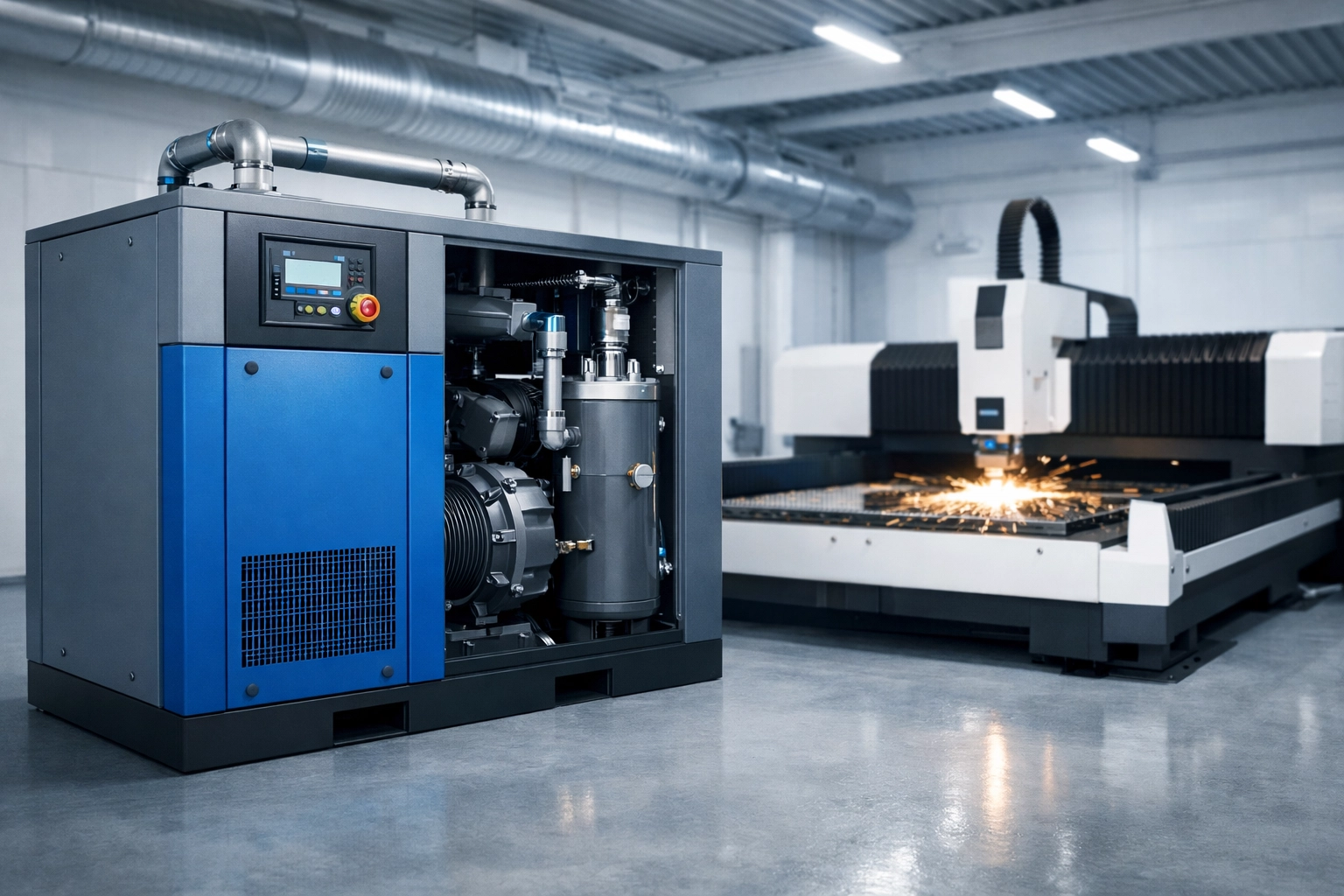
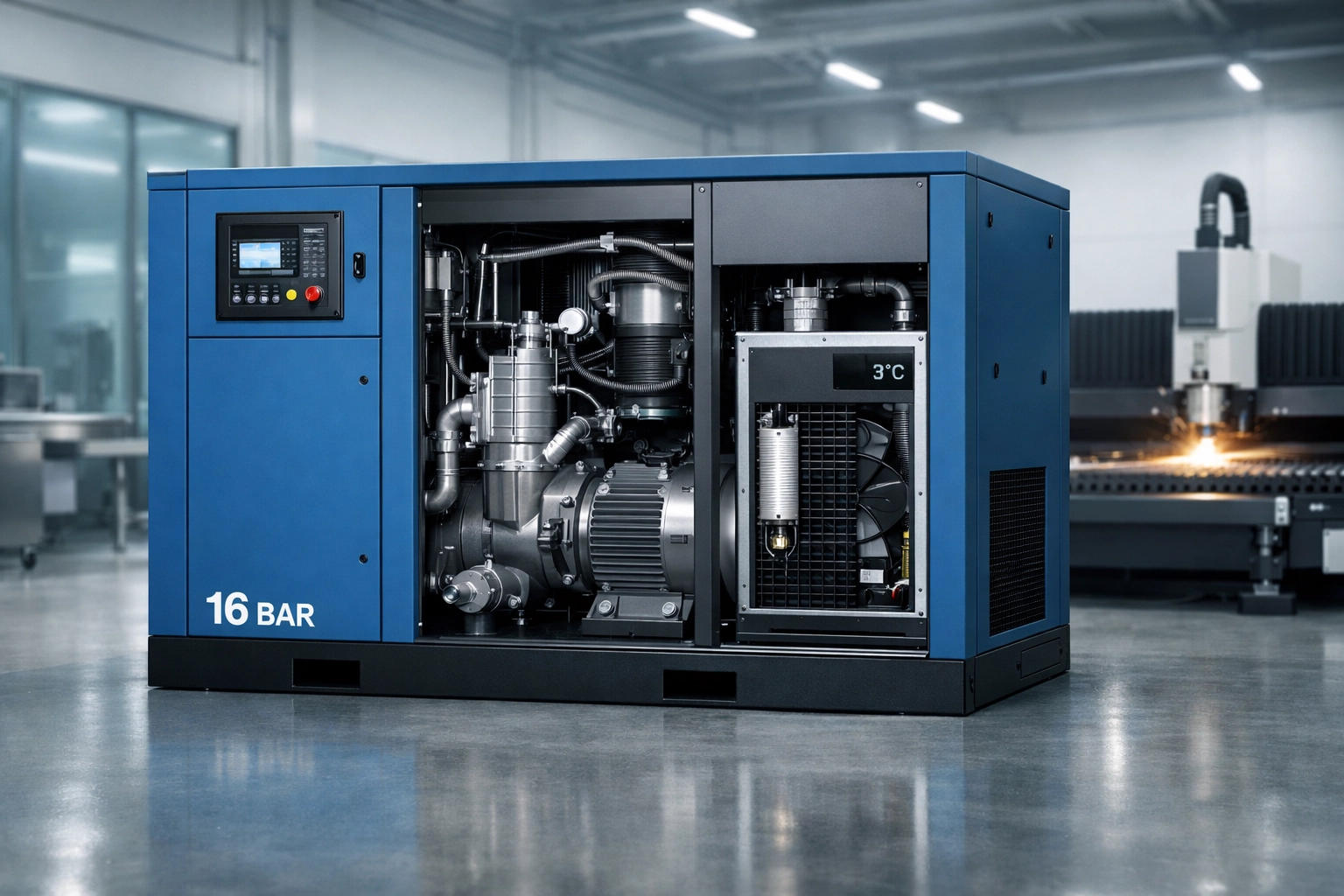
If you use a standard 8 bar or 10 bar shop compressor, you’ll find that as the material gets thicker, say, 3mm and above, the air pressure isn't strong enough to clear the debris. This results in "dross" or "burrs" on the bottom of the cut, requiring manual grinding. A 16 bar system, like our all-in-one 15HP 11kW 16 bar screw air compressor, provides the punch needed for clean cuts on 6mm carbon steel and even 8mm stainless steel when paired with a high-power laser (6kW-10kW).
Q: Can I really replace Nitrogen with compressed air?
Answer: Absolutely. In fact, most of our clients switch to air to stop "burning cash" on nitrogen tanks.
Nitrogen is used to prevent oxidation, but for many industrial applications, the slight oxidation from air cutting is irrelevant or even preferred for paint adhesion. When you switch to a dedicated 16 bar rotary screw air compressor, your only cost is electricity. Research indicates that the ROI on a dedicated laser compressor can be realized in as little as a few weeks because you eliminate the monthly rental, delivery, and gas refill costs of nitrogen.
Q: Does air quality matter as much as the pressure?
Answer: It matters more. If your air contains even a trace of oil or moisture, you risk destroying your laser’s protective window or, worse, the cutting head itself.
To meet the requirements of modern fiber lasers, the air must be processed to meet ISO 8573-1:2010 Class 1-2-1 standards. This means:
- Particles: Removed down to 0.01 microns.
- Moisture: A pressure dew point of 3-5°C via a refrigerated dryer.
- Oil content: Less than 0.01 mg/m³.
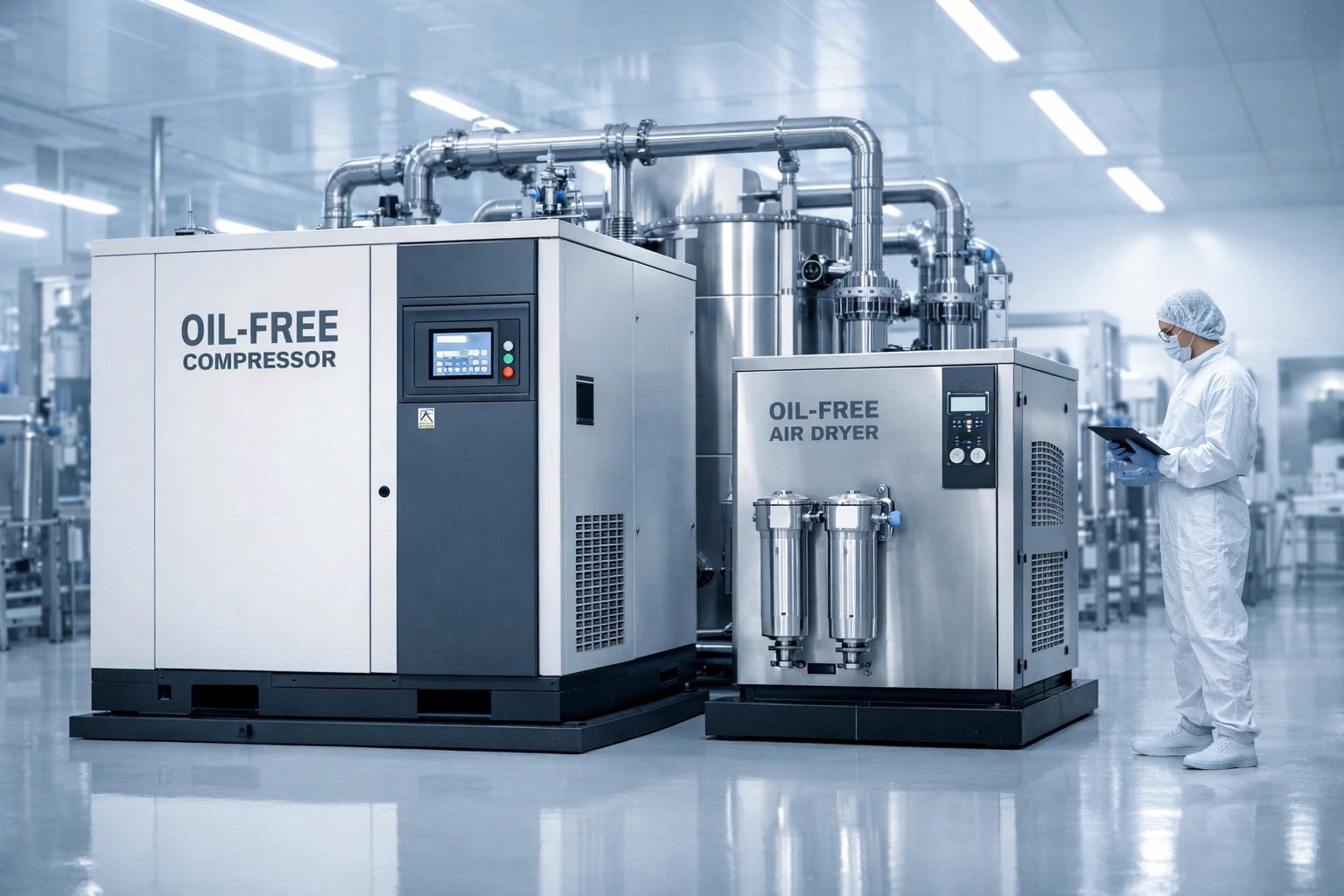
Our integrated PMV systems feature 5-stage precision filtration and built-in high-capacity refrigerated dryers to ensure the air hitting your lens is as clean as a pharmaceutical lab.
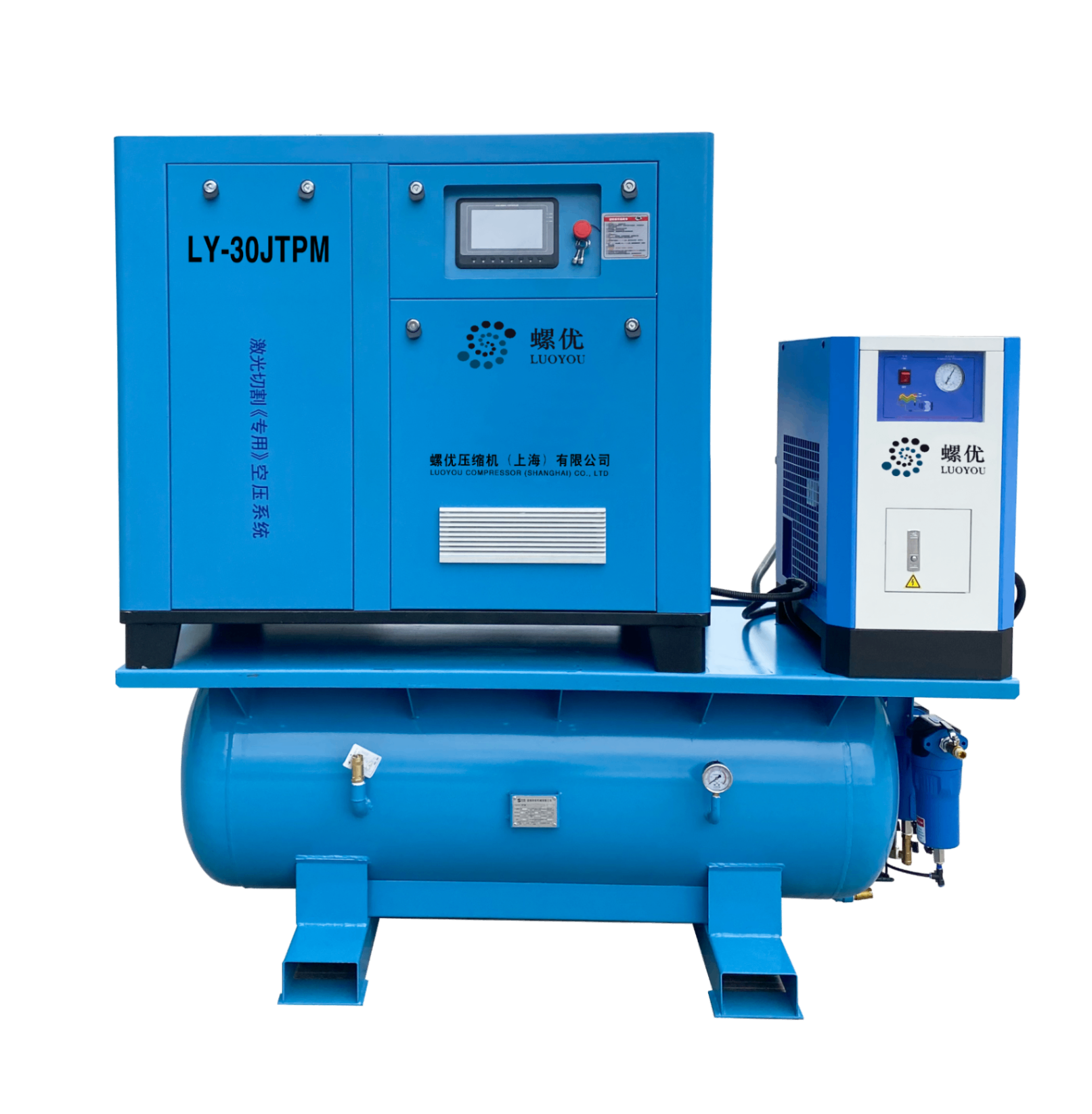
Q: What is the benefit of an "All-in-One" system versus standalone components?
Answer: Convenience, footprint, and performance matching.
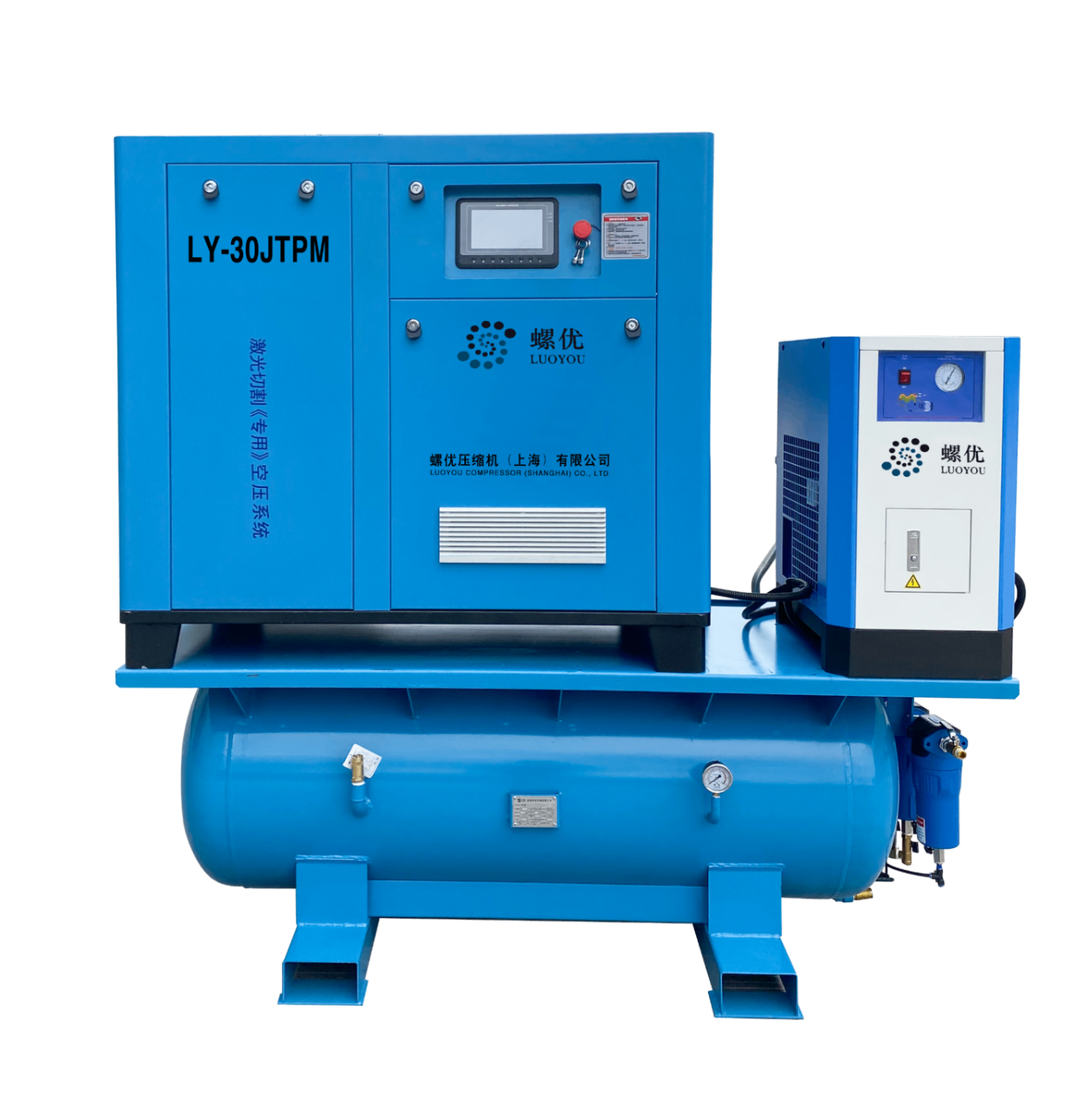
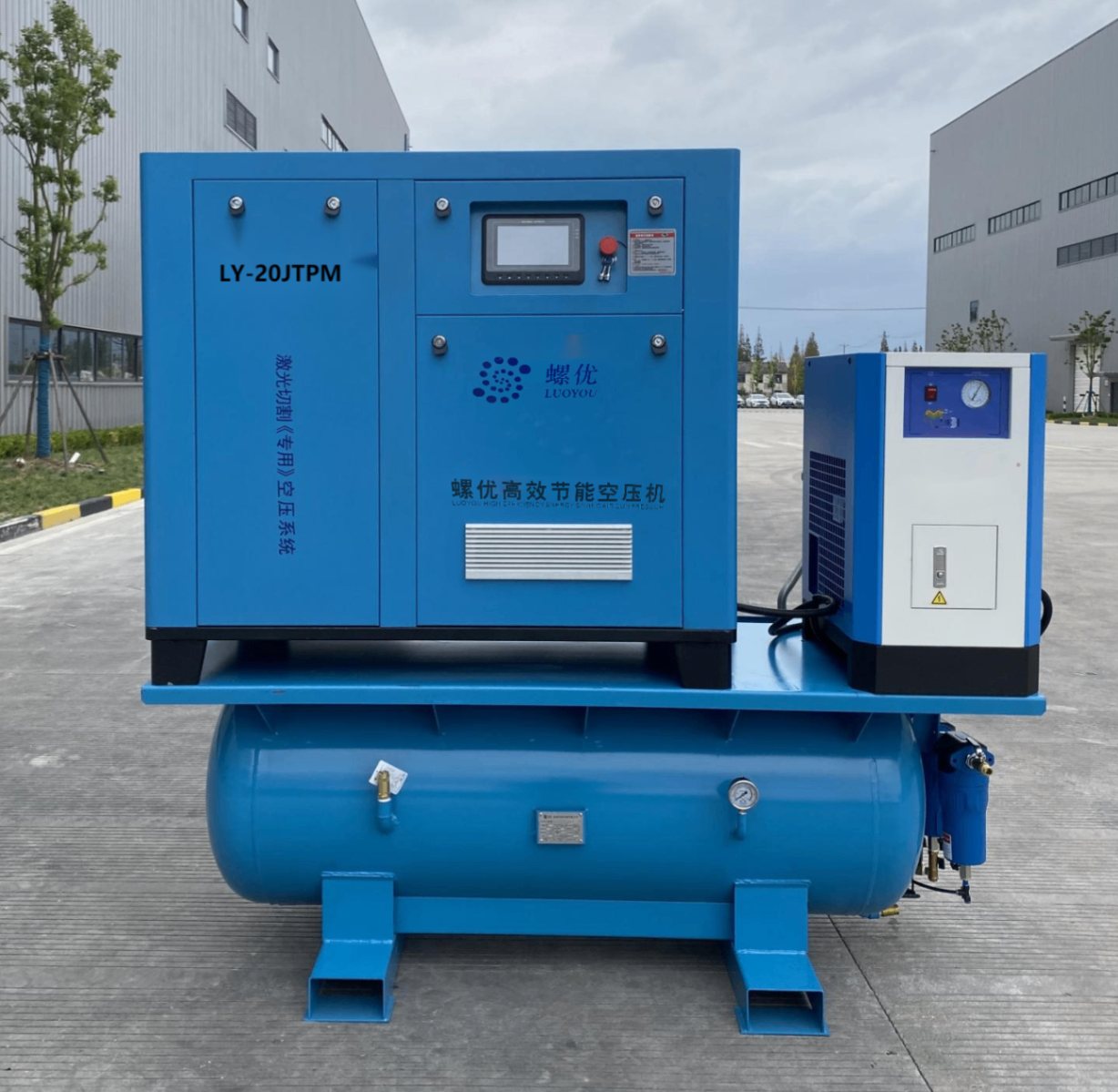
A fiber laser setup is already complex. An all-in-one unit, which includes the screw compressor, an air receiver tank, a refrigerated dryer, and the filters in a single cabinet, saves significant floor space in your workshop. More importantly, we factory-tune these components to work together. You don’t have to worry about a pressure drop between a standalone tank and a standalone dryer.
For small to mid-sized shops, models like the 10HP 7.5kW 16 bar all-in-one are the "plug-and-play" gold standard.
Q: How does PMV technology save me money on my electric bill?
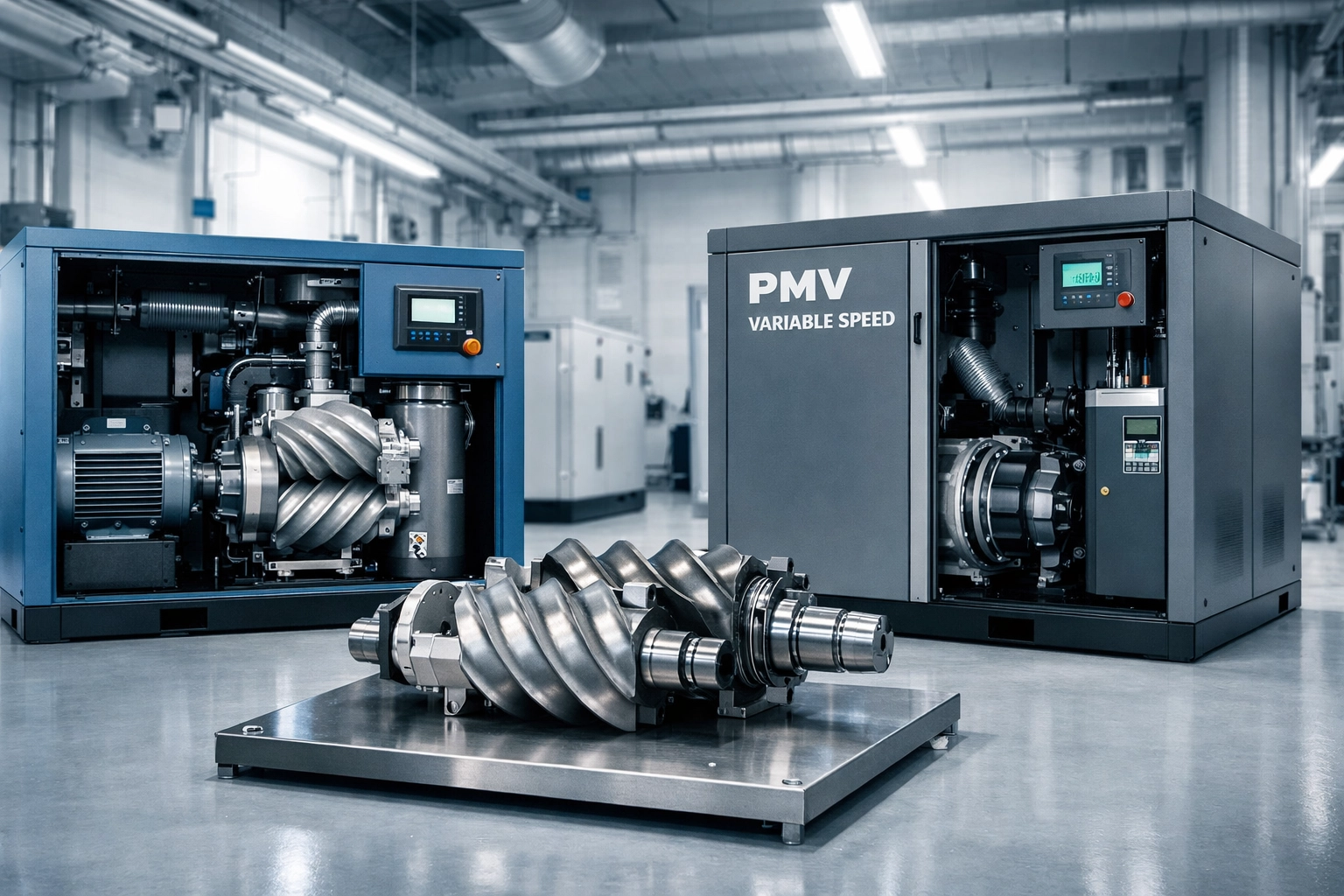
Answer: Permanent Magnet Variable Frequency (PMV) technology allows the compressor to adjust its motor speed in real-time to match your laser's air consumption.
Standard fixed-speed compressors run at 100% power even if you only need 50% air, wasting the rest as heat or through "unloading" cycles. PMV screw air compressors can reduce energy consumption by 30-40%. When the laser stops cutting, the compressor slows down. When you start a heavy nested sheet, it ramps up. This precision not only saves money but also reduces the wear and tear on the internal screw air end.
Q: Is a 16 bar compressor suitable for all regions and climates?
Answer: Yes, but the configuration needs to adapt to your local environment.
- Southeast Asia (SEA): High humidity requires a more robust refrigerated dryer and automatic drain valves to handle the massive amount of condensate.
- LATAM: In areas with unstable power grids, the VFD (Variable Frequency Drive) in our PMV models acts as a buffer, protecting the motor from minor voltage spikes, though we always recommend a localized stabilizer for the entire laser system.
- Russia/CIS: In cold climates, we recommend our winterization packages to ensure the oil stays at the correct viscosity during startup in unheated shops.
Q: How do I verify the quality and certifications of my compressor?
Answer: Don't take a salesperson's word for it. Always demand to see the CE and ISO 9001 documentation.
At AirSpace Machinery, every unit leaves our factory with a full test report. Our CE certification ensures the pressure vessels (the tanks) meet international safety standards, which is critical when you are dealing with 16 bar (232 PSI) of stored energy. We provide full export support, ensuring that all logistics and documentation are handled correctly for a smooth customs process.
Q: Which model is right for my laser wattage?
Answer: Use this quick-reference guide based on typical fiber laser air consumption:
| Laser Power | Recommended Compressor | Pressure | Link |
|---|---|---|---|
| 1kW – 2kW | 10HP (7.5kW) | 16 Bar | View Model |
| 3kW – 4kW | 15HP (11kW) | 16 Bar | View Model |
| 6kW + | 20HP – 30HP | 16 Bar | View Model |
Summary Checklist for Buyers
Before you pull the trigger on a 16 bar compressor for your laser, make sure you check these five boxes:
- Does it have at least 4-5 stages of filtration? (Crucial for lens protection).
- Is it a PMV screw type? (Piston compressors are too loud and oily for lasers).
- Is the dryer integrated? (Saves space and ensures air is dry before it hits the tank).
- Are the pressure vessels CE certified? (Safety is non-negotiable at 16 bar).
- Does the manufacturer have a history in the laser industry? (20 years of experience counts).
Technical Standards & Sources
- Air Quality: ISO 8573-1:2010 (International standard for compressed air purity classes).
- Quality Management: ISO 9001:2015 (Standard for quality management systems).
- Safety: CE Marking (Conformité Européenne) for pressure equipment and machinery.
Get a Proposal
Ready to upgrade your laser cutting efficiency? Please provide your requirements below:
- Required Pressure (bar/psi): [Mandatory]
- Required Air Flow (m³/min or CFM): [Mandatory]
- Note: Lead times vary based on custom voltage and filtration configurations.
Author: Penny Winston
Penny Winston is a Senior Technical Writer at AirSpace Machinery Co., Ltd., specializing in industrial air systems and energy efficiency. With a background in manufacturing logistics, she focuses on helping international buyers optimize their production lines with high-performance screw air compressors.
Reviewed by Engineering