status: Scheduled
publish_at: 2026-01-13T10:00:00+08:00
timezone: Asia/Shanghai
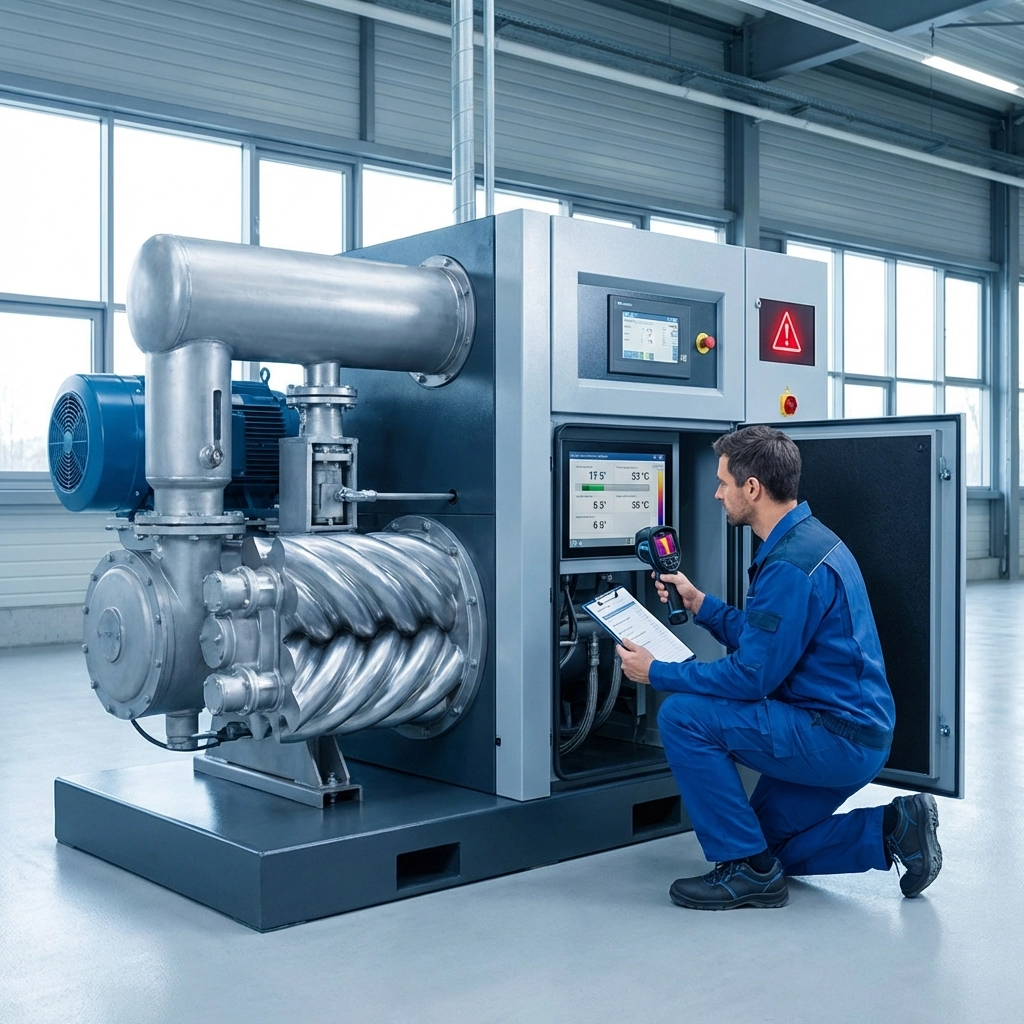
Industrial facilities waste millions of dollars annually on inefficient screw air compressor systems. With electricity costs rising and sustainability becoming critical, optimizing your screw air compressor operation isn't just smart: it's essential for staying competitive.
The good news? Most efficiency improvements require minimal investment while delivering substantial returns. These 10 proven strategies can significantly reduce your energy consumption, with some facilities achieving 30% or greater cost reductions when implementing multiple measures.
1. Upgrade to Variable Frequency Drive (VFD) Technology
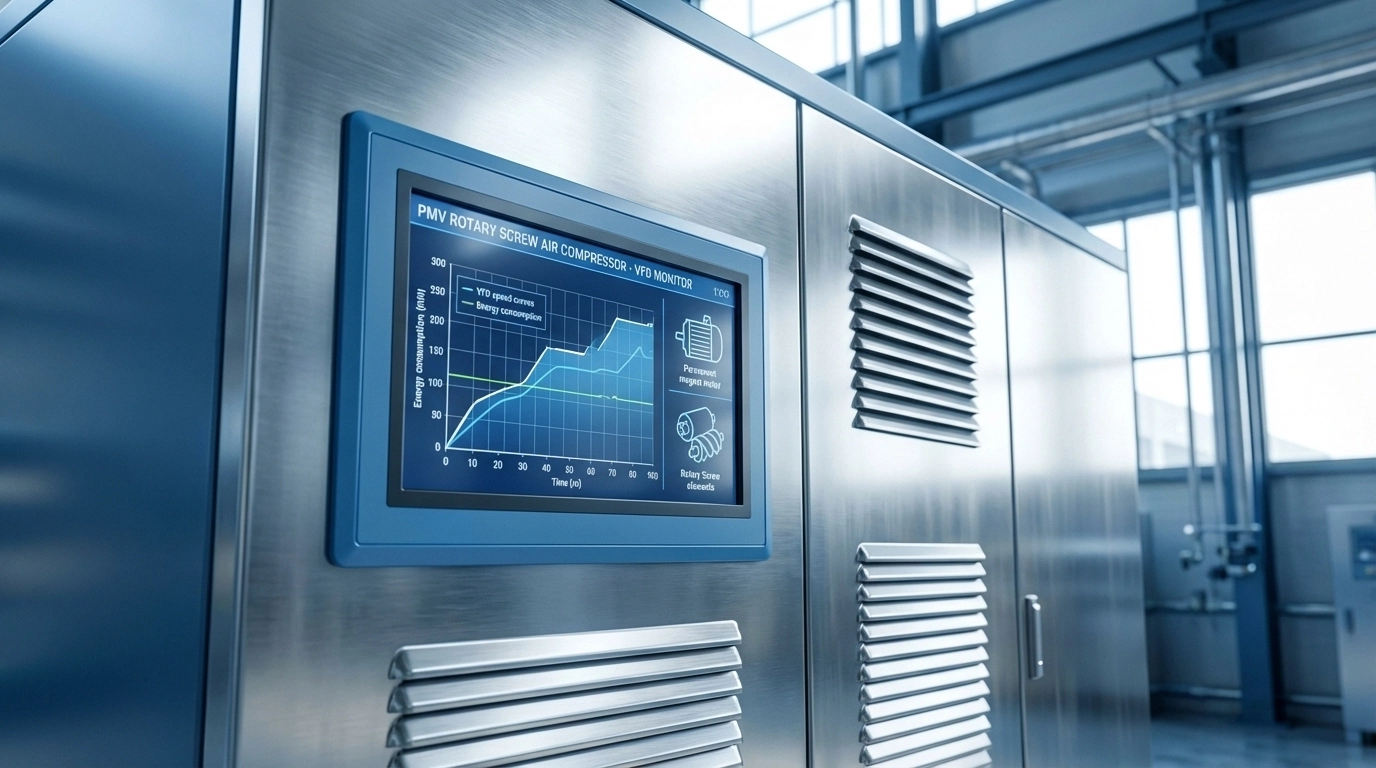
Fixed-speed screw compressors run at full capacity regardless of actual demand, wasting enormous amounts of energy during partial-load periods. Variable Frequency Drive (VFD) screw compressors adjust motor speed to match real-time air demand.
Energy Savings: VFD compressors typically reduce energy consumption by 35% compared to fixed-speed units, with advanced models achieving up to 50% savings.
Modern Permanent Magnet Variable Frequency (PMV) screw air compressors combine VFD technology with high-efficiency permanent magnet motors. This dual approach maximizes efficiency across all operating ranges, particularly during the partial-load conditions common in most industrial applications.
2. Reduce System Operating Pressure
Operating your screw air compressor system at higher pressure than necessary wastes significant energy. Every 2 PSI reduction in system pressure saves approximately 1% in compressor energy consumption.
Energy Savings: Reducing pressure by 1 bar (14.5 PSI) can cut electricity consumption by 7%.
Conduct a pressure audit to identify the minimum pressure required for each application. Use a properly sized receiver tank and master controls to stabilize demand so you can lower setpoints safely. Many facilities operate effectively at 85–90 PSI instead of 100+ PSI, delivering immediate energy savings without compromising performance.
3. Eliminate Air Leaks Systematically
Air leaks represent the single largest source of energy waste in screw air compressor systems, accounting for 20–30% of total consumption in poorly maintained facilities.
Energy Savings: A small 3 mm leak costs approximately £980 per week in wasted energy.
Implement regular leak detection programs using ultrasonic detection equipment. Focus on connections, fittings, hoses, receiver tanks, drains, and pneumatic equipment. In screw systems, leaks force frequent load/unload cycling and higher specific power (kW/CFM). Even minor leaks compound quickly: ten 1/8-inch leaks waste as much compressed air as one 3/8-inch hole running continuously.
4. Optimize Intake Air Temperature
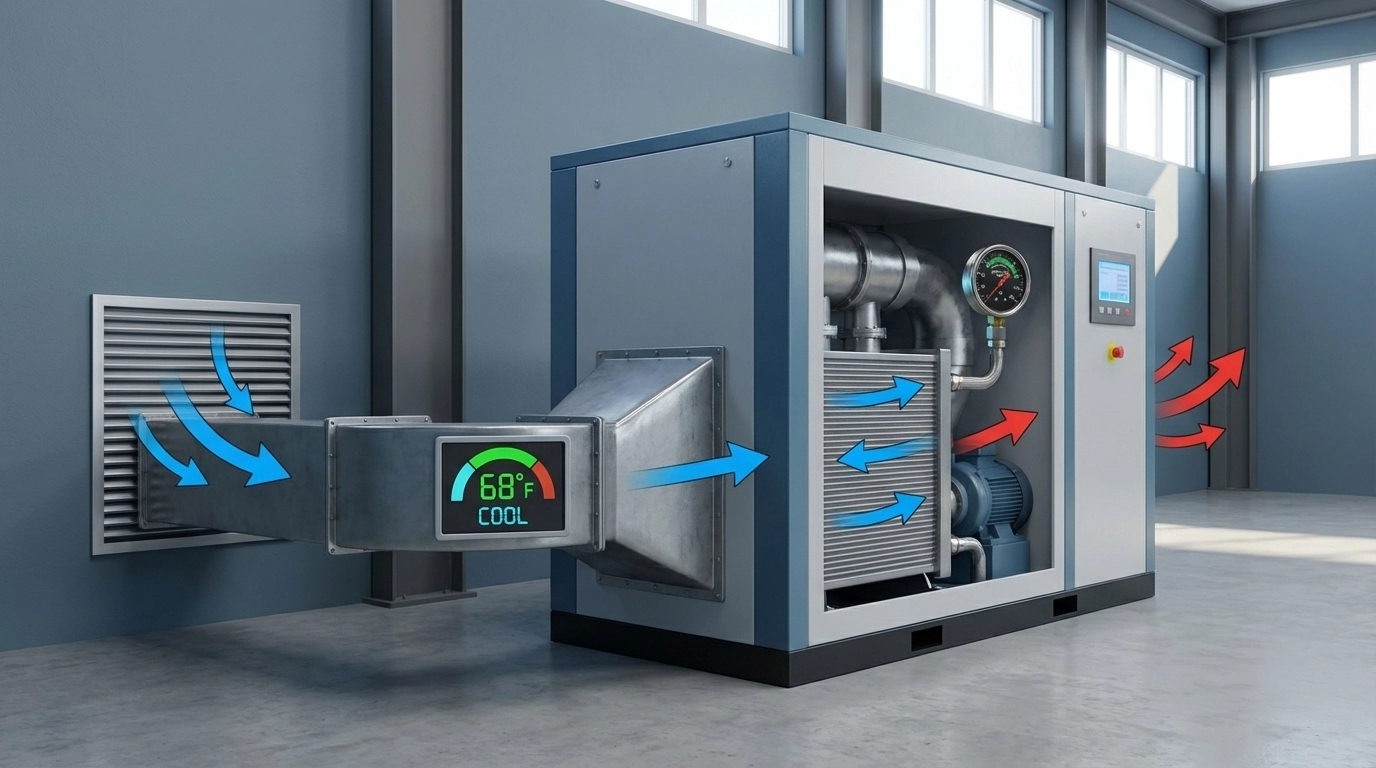
Screw compressor efficiency decreases significantly with warmer intake air. Cooler air is denser, requiring less energy to compress to target pressure.
Energy Savings: Using 10°C cooler intake air reduces energy consumption by 3%.
Position screw compressors to draw outside air during cooler months, or install ducting to bring in cooler ambient air year-round. Avoid drawing hot air from near other heat-generating equipment.
5. Implement Heat Recovery Systems
Compressed air generation converts up to 90% of input electrical energy into waste heat. Rather than venting this energy, capture it for facility heating, water heating, or other thermal processes.
Energy Savings: Heat recovery systems can offset significant portions of facility heating costs while improving overall system efficiency.
Heat recovery works particularly well with oil-injected screw compressors, where hot oil provides an excellent heat transfer medium. Oil-free screw compressors can reclaim heat via aftercooler air or water circuits. The recovered heat typically ranges from 50–90% of the electrical input energy.
6. Maintain Clean Air Filters
Dirty intake filters create pressure drops that force screw compressors to work harder. Clean filters ensure optimal airflow and efficiency.
Energy Savings: Maintaining clean filters and keeping supply resistance below 200 mmAq saves 1% in energy consumption.
Establish regular maintenance schedules for intake filters, dryer pre-filters and after-filters, and automatic condensate drains based on operating conditions. In dusty environments, filters may require weekly attention, while clean environments might only need monthly maintenance.
7. Right-Size Your Screw Compressor System
Oversized screw compressors operate inefficiently during partial-load conditions, while undersized units run continuously at full load, reducing lifespan and increasing maintenance costs.
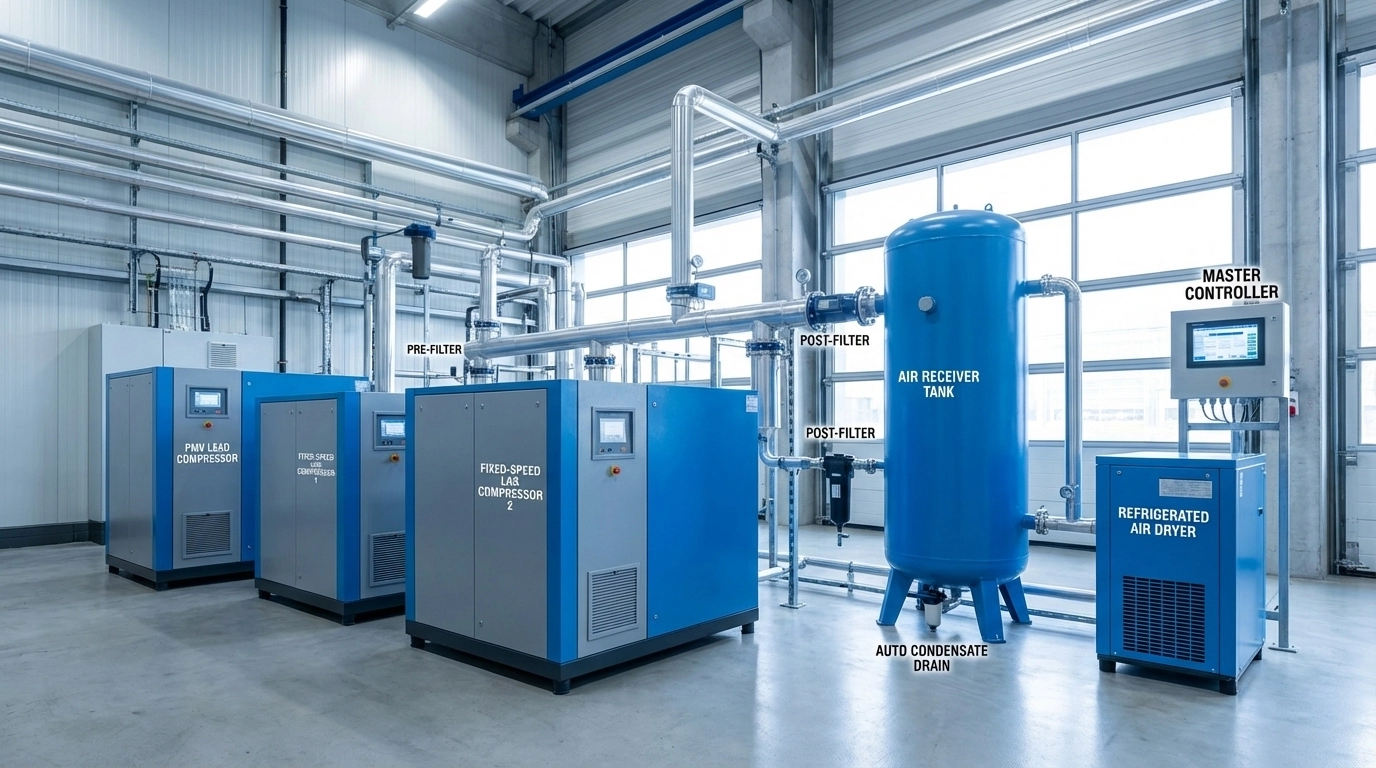
Match screw compressor capacity to actual demand patterns. For facilities with varying demand, consider multiple smaller units with intelligent sequencing controls and adequate receiver tank capacity rather than one large compressor. This approach improves part-load efficiency and provides redundancy.
8. Minimize Pressure Drop Throughout the System
Excessive pressure drop between the screw compressor and point of use forces higher discharge pressures, increasing energy consumption.
Energy Savings: Keeping total pressure drop below 10% of discharge pressure significantly improves system efficiency.
Optimize piping design with adequate diameter, minimize fittings and bends, and use smooth-bore piping where possible. Regular maintenance of dryers, filters, separators, and drain traps prevents excessive pressure drops from dirty equipment.
9. Install Intelligent Control Systems
Modern screw compressor control systems optimize multiple-unit operations, automatically selecting the most efficient combination of compressors to meet current demand.
Advanced controls reduce the pressure band, minimize unloaded running time, and coordinate compressor operation to maintain consistent pressure with minimum energy consumption. Many systems integrate VFD lead machines with fixed-speed base units, receivers, dryers, and filters via a master controller, with remote monitoring for proactive maintenance scheduling.
10. Schedule Operations Strategically
Many facilities reduce energy consumption by scheduling screw compressor operation around actual demand patterns rather than running continuously.
Energy Savings: Eliminating unnecessary unloaded running hours during off-shifts or low-demand periods provides substantial savings.
Analyze your facility's compressed air demand patterns. If certain periods show consistently low demand, enable automatic start/stop, sleep modes, or timer-based operation to eliminate wasteful unloaded running.
Measuring and Monitoring Results
Implementing these efficiency measures requires baseline measurement and ongoing monitoring. Install energy monitoring equipment to track kWh consumption, operating hours, and system pressure. Many modern screw compressors include built-in monitoring capabilities that track performance metrics and maintenance requirements.
Key Performance Indicators to Monitor:
- Specific power consumption (kW per CFM or kW per m³/min)
- Operating pressure trends and receiver tank stability
- Differential pressure across filters and dryers
- Leak rates and locations
- Heat recovery capture efficiency
- Overall system efficiency
Professional Assessment Benefits
While these ten strategies provide significant improvement opportunities, professional screw compressed air audits often identify additional facility-specific optimizations. Energy consultants use specialized equipment to measure actual consumption, identify inefficiencies, and calculate payback periods for various improvements.
Many utilities offer rebates or incentives for screw compressor efficiency upgrades, particularly for VFD installations and leak repair programs. These programs can substantially reduce implementation costs while accelerating payback periods.
Implementation Priority
Start with the measures offering the highest return on investment:
- Immediate (Low Cost): Leak repairs, pressure optimization, filter maintenance
- Short-term (Medium Cost): Control system upgrades, heat recovery installation
- Long-term (Higher Cost): VFD compressor upgrades, system redesign
Modern Energy-Efficient Air Compressor systems featuring PMV screw compressors with intelligent controls often pay for themselves within 2–3 years through reduced energy consumption alone.
Ready to reduce your screw compressor energy costs? Our engineering team can conduct a comprehensive efficiency assessment of your current system and recommend the most cost-effective improvements for your specific application.
Get a Proposal for a customized energy efficiency analysis and discover how much your facility can save with modern, efficient screw air compressor technology.