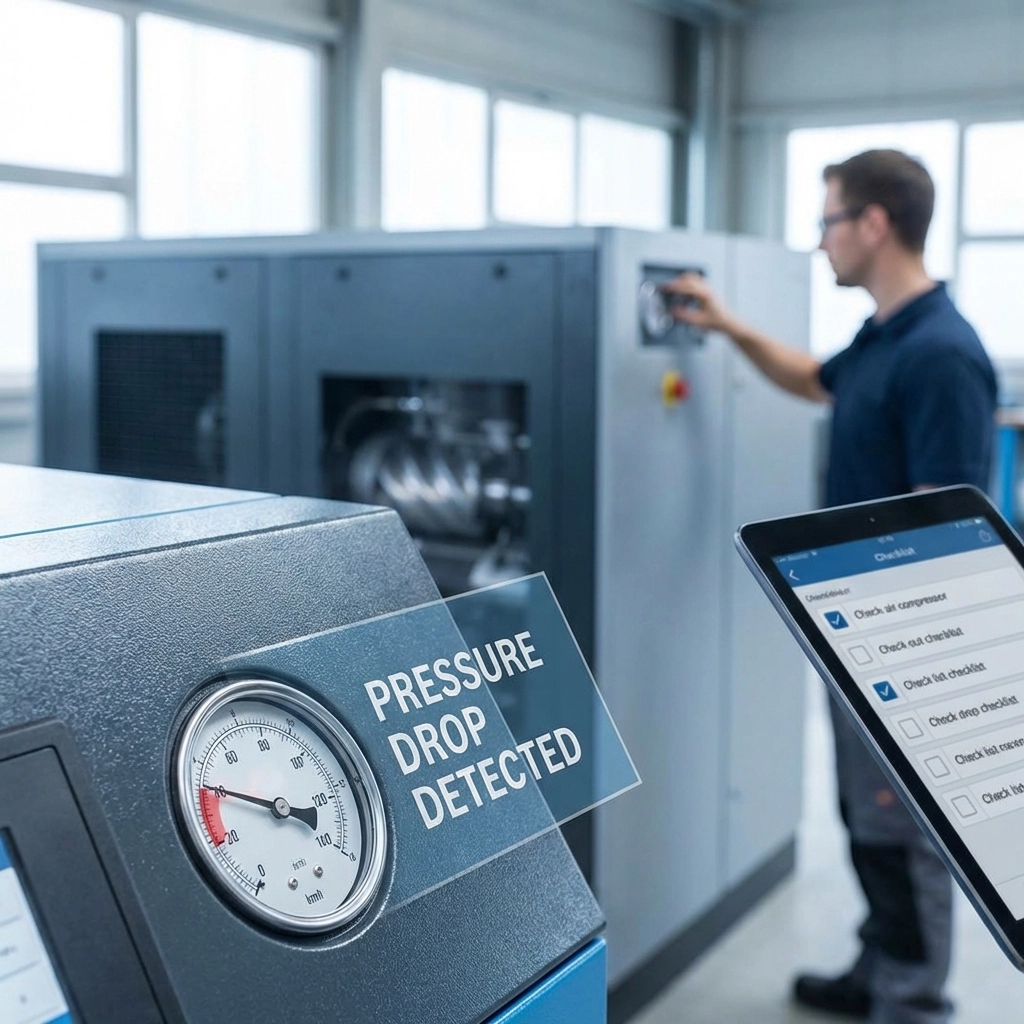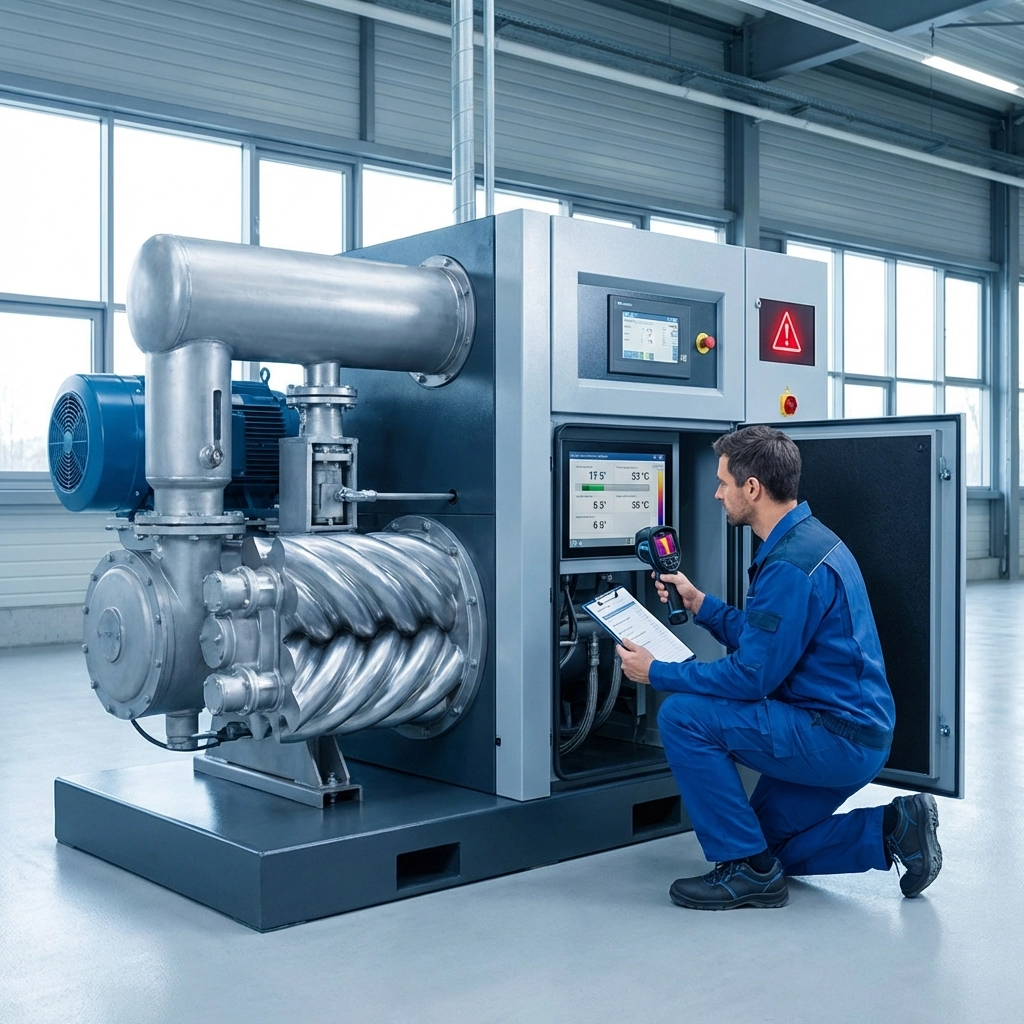
Manufacturing operations depend on compressed air systems that deliver consistent performance, cost efficiency, and product quality. The choice between oil-free and lubricated air compressors represents one of the most critical infrastructure decisions affecting operational costs, maintenance schedules, and product integrity across diverse manufacturing sectors.
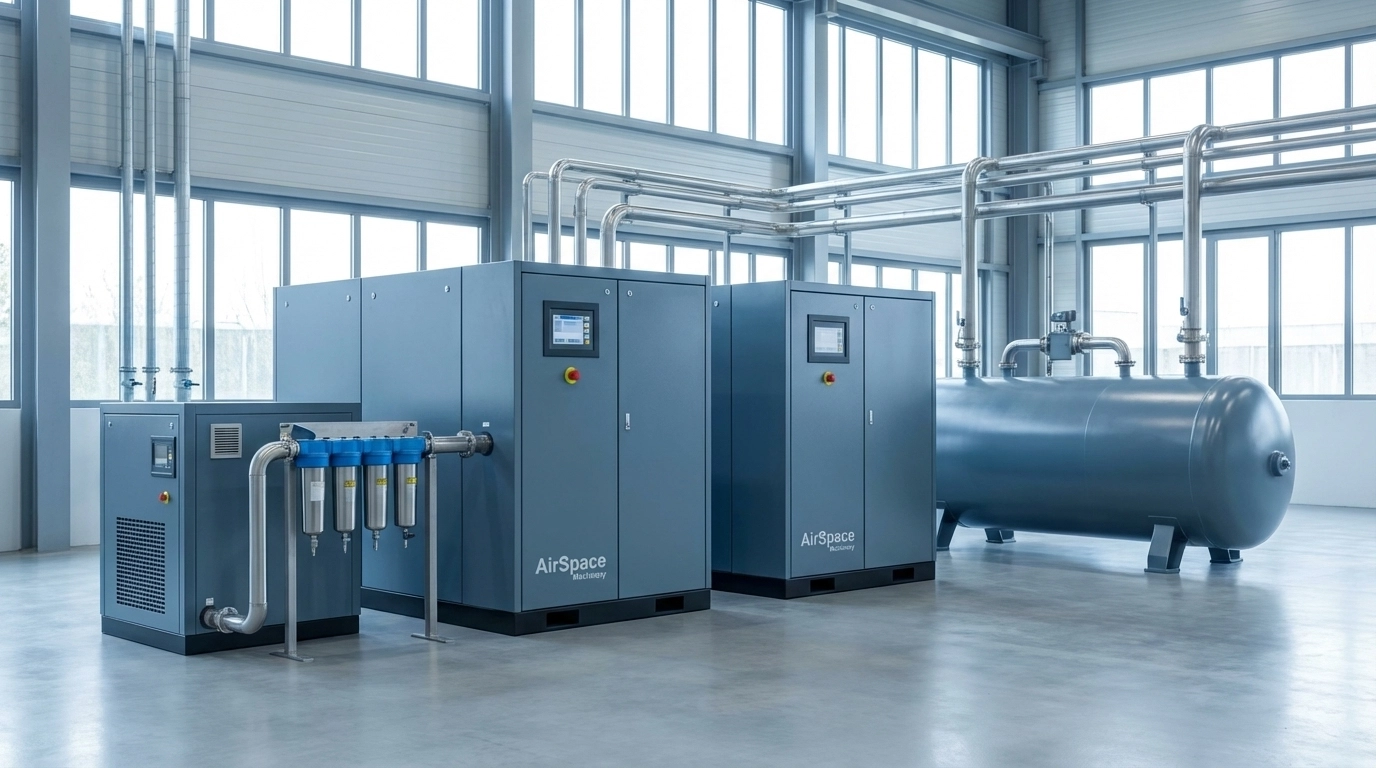
AirSpace Machinery Co., Ltd. operates extensive manufacturing facilities spanning over 50,000 square meters, delivering Permanent Magnet Variable Frequency (PMV) Screw Air Compressors to industries requiring precise compressed air solutions. With comprehensive expertise in both oil-free and lubricated systems, the company positions itself as the definitive resource for manufacturing operations seeking optimal compressed air technology.
Oil-Lubricated Air Compressors: Maximum Performance for Heavy-Duty Operations
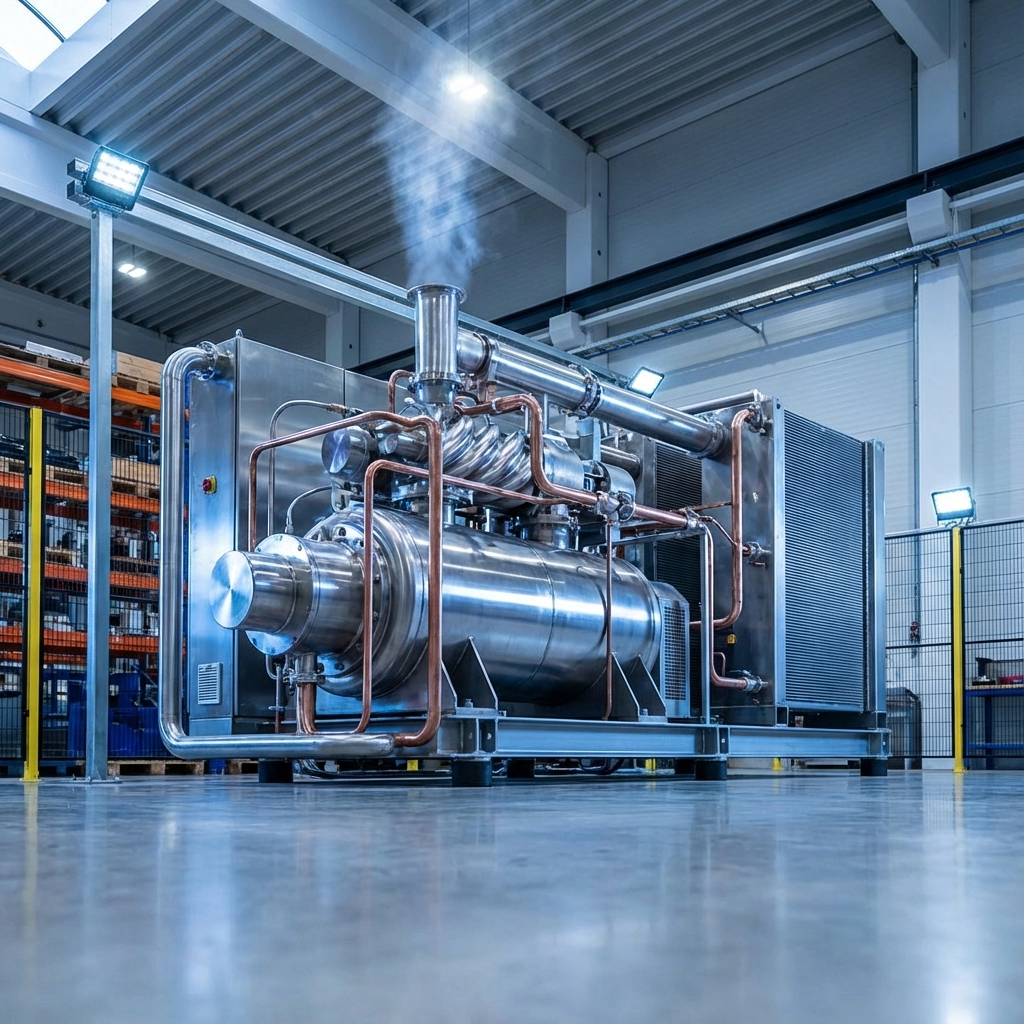
Oil-lubricated compressors deliver superior performance metrics for continuous, high-demand manufacturing environments. These systems utilize oil for cooling, sealing, and lubricating internal components, enabling higher pressure outputs and extended operational cycles.
Enhanced Thermal Management and Efficiency
Oil-lubricated systems demonstrate exceptional thermal regulation capabilities, maintaining consistent operating temperatures during extended production cycles. The oil circulation system removes heat generated during compression, preventing thermal stress on components and maintaining optimal performance parameters.
Manufacturing facilities operating 24/7 production schedules benefit from the superior heat dissipation properties inherent in oil-lubricated designs. These systems deliver higher CFM (Cubic Feet per Minute) outputs while consuming less electrical input power compared to equivalent oil-free units.
Extended Component Lifespan and Reliability
Oil lubrication significantly extends the operational lifespan of critical compression components. Rotors, bearings, and seals operate under reduced friction conditions, minimizing wear patterns and maintaining performance specifications over decades of operation.
Heavy manufacturing operations in automotive, steel processing, and construction sectors rely on oil-lubricated systems for their proven durability under extreme operational conditions. These compressors comprise robust designs engineered for continuous operation cycles exceeding 8,760 hours annually.
Cost-Effective Operational Economics
Oil-lubricated compressors present lower initial capital investment requirements while delivering superior performance-to-cost ratios. Manufacturing operations benefit from reduced equipment acquisition costs, enabling faster project implementation and improved cash flow management.
The maintenance requirements, while regular, remain predictable and cost-effective. Oil changes, filter replacements, and routine inspections follow established schedules, allowing maintenance teams to optimize inventory management and service planning.
Oil-Free Air Compressors: Contamination-Free Solutions for Sensitive Manufacturing
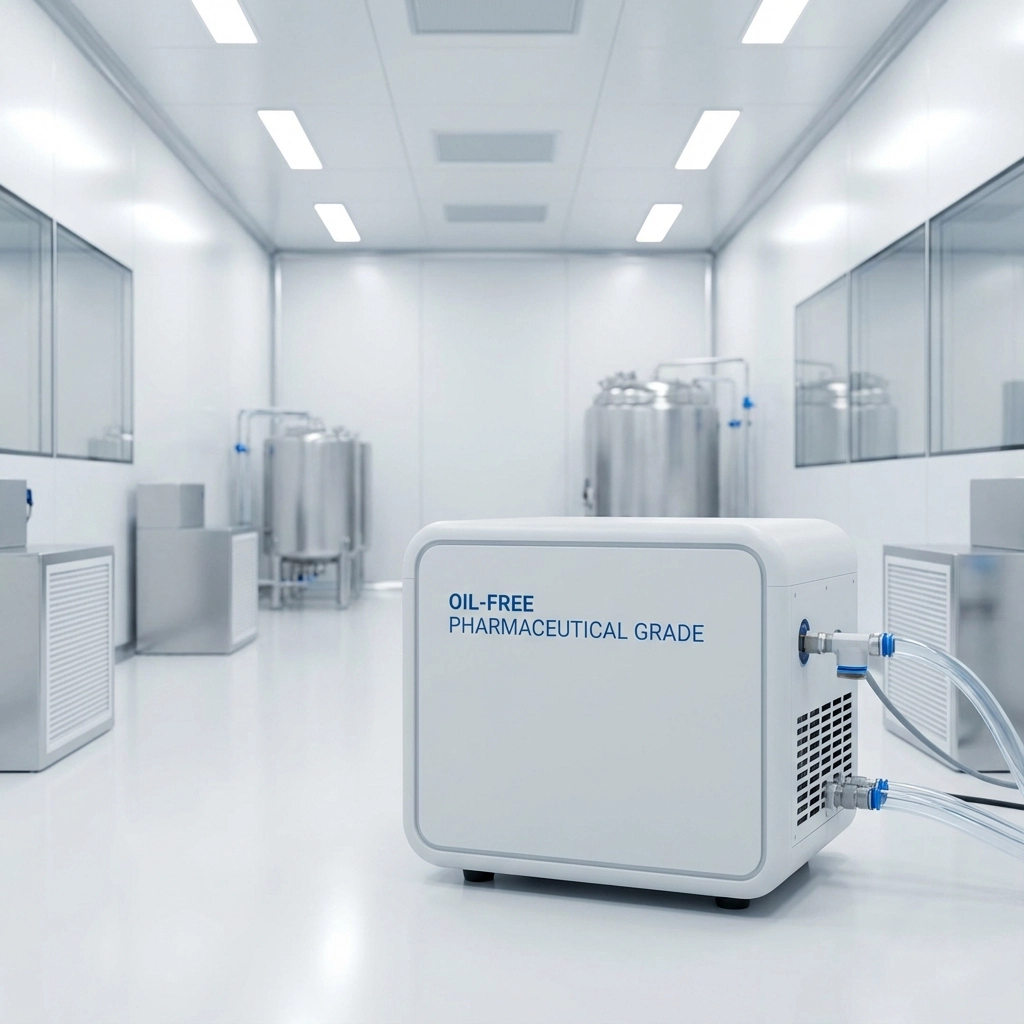
Oil-free air compressors eliminate oil carryover risks, delivering compressed air meeting ISO 8573-1 Class 0 purity standards required for sensitive manufacturing processes. These systems utilize alternative lubrication methods or engineered coatings to prevent contamination while maintaining operational performance.
Critical Applications Requiring Pure Compressed Air
Pharmaceutical manufacturing, food processing, electronics assembly, and medical device production demand compressed air systems incapable of introducing oil contamination. Even minimal oil carryover creates significant product quality risks, regulatory compliance issues, and potential product recall scenarios.
AirSpace Machinery’s oil-free scroll compressor product line addresses these critical requirements, delivering contamination-free compressed air for sensitive manufacturing environments. These systems meet stringent pharmaceutical and food-grade production standards while maintaining consistent performance metrics.
Reduced Maintenance Complexity and Operational Overhead
Oil-free systems eliminate oil management requirements, reducing maintenance complexity and operational oversight. Manufacturing facilities benefit from simplified service schedules, reduced consumable inventory requirements, and decreased environmental compliance responsibilities.
The absence of oil filtration systems, separators, and disposal protocols streamlines facility operations while reducing long-term operational costs. Maintenance teams focus on essential system components without managing complex oil circulation and filtration subsystems.
Enhanced Facility Flexibility and Installation Advantages
Oil-free compressors offer superior installation flexibility, operating effectively in challenging environmental conditions including extreme temperatures, high humidity, and contamination-prone manufacturing environments. These systems eliminate oil vapor emissions, supporting improved workplace air quality and environmental compliance.
Manufacturing facilities benefit from reduced secondary filtration requirements, minimizing pressure drops across downstream equipment and improving overall system efficiency. The elimination of oil-related filtration equipment reduces installation costs and simplifies facility layout planning.
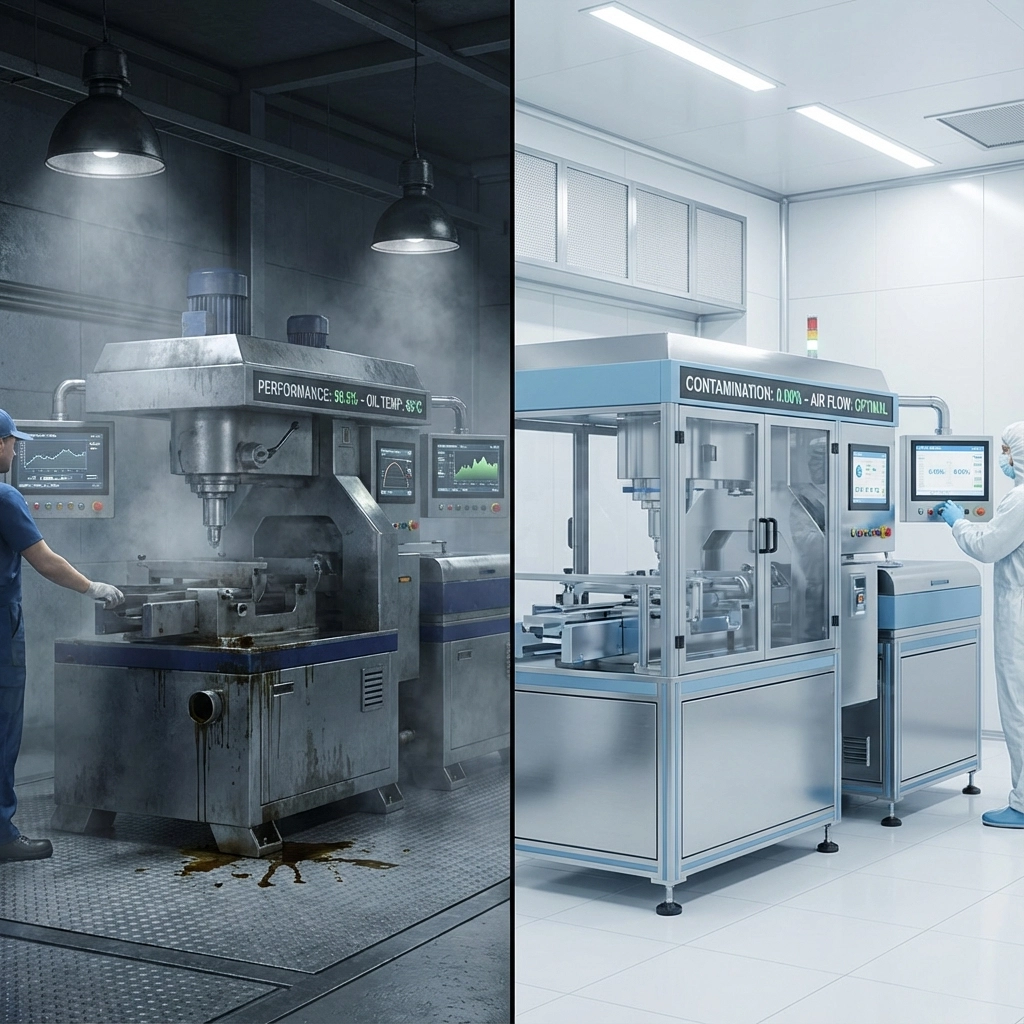
Performance Analysis: Operational Metrics and Cost Considerations
Manufacturing operations require comprehensive performance analysis encompassing initial investment, operational costs, maintenance requirements, and total cost of ownership calculations over typical 15-20 year equipment lifecycles.
Initial Investment and Capital Allocation
Oil-lubricated compressors typically require 20-30% lower initial capital investment compared to equivalent oil-free systems. This cost differential enables manufacturing operations to allocate additional resources toward production equipment, facility improvements, or working capital requirements.
Oil-free systems command premium pricing reflecting advanced engineering, specialized components, and contamination-prevention technologies. However, industries requiring pure compressed air justify this premium through product quality improvements and regulatory compliance assurance.
Energy Consumption and Operational Efficiency
Oil-lubricated systems demonstrate superior energy efficiency, delivering more compressed air per kilowatt-hour consumed. The oil circulation system enhances compression efficiency while maintaining optimal operating temperatures, reducing electrical consumption during continuous operation cycles.
Oil-free systems typically consume 10-15% additional electrical power for equivalent compressed air output. However, elimination of downstream filtration equipment and associated pressure drops can partially offset this efficiency differential in specific applications.
Maintenance Cost Structures and Service Requirements
Oil-lubricated systems require regular oil changes, filter replacements, and separator maintenance, creating predictable but recurring operational expenses. Manufacturing facilities benefit from established service protocols and readily available replacement components from multiple suppliers.
Oil-free systems eliminate oil-related maintenance while requiring specialized service expertise for critical components. Replacement parts typically command premium pricing, but reduced service frequency often results in comparable total maintenance costs over equipment lifecycles.
Industry-Specific Applications and Optimal Selection Criteria
Different manufacturing sectors demonstrate distinct compressed air requirements based on production processes, quality standards, and operational conditions. Understanding these sector-specific needs enables optimal compressor selection aligned with manufacturing objectives.
Automotive and Heavy Manufacturing
Automotive manufacturing operations utilize compressed air for pneumatic tooling, spray painting, parts cleaning, and assembly line automation. These applications typically tolerate minimal oil carryover while demanding consistent pressure levels and high volume output.
AirSpace Machinery’s fixed-speed screw air compressor and variable frequency air compressor product lines deliver the robust performance required for automotive manufacturing environments while maintaining cost-effective operational economics.
Precision Manufacturing and Electronics
Electronics manufacturing, semiconductor fabrication, and precision machining operations require contamination-free compressed air to prevent product defects and maintain quality specifications. Even microscopic oil particles create significant quality risks in these sensitive manufacturing environments.

Food and Pharmaceutical Production
Food processing and pharmaceutical manufacturing face strict regulatory requirements regarding compressed air quality. These industries cannot tolerate oil contamination risks and must implement systems meeting FDA, USDA, and international quality standards.
Oil-free compressors represent the only viable solution for direct food contact applications, pharmaceutical tablet production, and medical device manufacturing where product safety and regulatory compliance remain paramount.
Decision Framework: Selecting the Optimal Compressed Air Solution
Manufacturing operations benefit from systematic evaluation criteria encompassing technical requirements, financial considerations, and long-term operational objectives when selecting between oil-free and lubricated compressed air systems.
Technical Requirements Assessment
Evaluate production processes requiring compressed air, identifying applications sensitive to oil contamination and determining acceptable air quality specifications. Consider pressure requirements, volume demands, and duty cycle expectations across all manufacturing operations.
Industries requiring ISO 8573-1 Class 0 air quality standards mandate oil-free solutions regardless of cost considerations. Applications tolerating minimal oil carryover benefit from oil-lubricated systems’ superior performance and cost efficiency.
Financial Impact Analysis
Calculate total cost of ownership including initial investment, installation costs, energy consumption, maintenance expenses, and replacement component costs over projected equipment lifecycles. Consider production downtime risks, service availability, and operational complexity factors affecting manufacturing productivity.
Oil-lubricated systems typically demonstrate lower total cost of ownership for general manufacturing applications, while oil-free systems justify premium costs through product quality improvements and regulatory compliance assurance in sensitive manufacturing environments.
Operational Integration Considerations
Assess existing facility infrastructure, maintenance capabilities, and service support availability when selecting compressed air technology. Consider environmental compliance requirements, workplace safety standards, and facility layout constraints affecting system installation and operation.
AirSpace Machinery provides comprehensive technical support and service capabilities across both oil-free and lubricated compressed air technologies, ensuring optimal system performance regardless of technology selection. Manufacturing operations benefit from expert consultation addressing specific operational requirements and long-term performance objectives.
The choice between oil-free and lubricated air compressors ultimately depends on manufacturing processes, quality requirements, and operational priorities. Oil-lubricated systems excel in heavy-duty applications prioritizing performance and cost efficiency, while oil-free systems prove essential for sensitive manufacturing requiring contamination-free compressed air. Manufacturing operations achieve optimal results through careful evaluation of technical requirements, cost considerations, and long-term operational objectives aligned with production goals and quality standards.