HOW TO SIZE AN AIR COMPRESSOR FOR YOUR FIBER LASER MACHINE
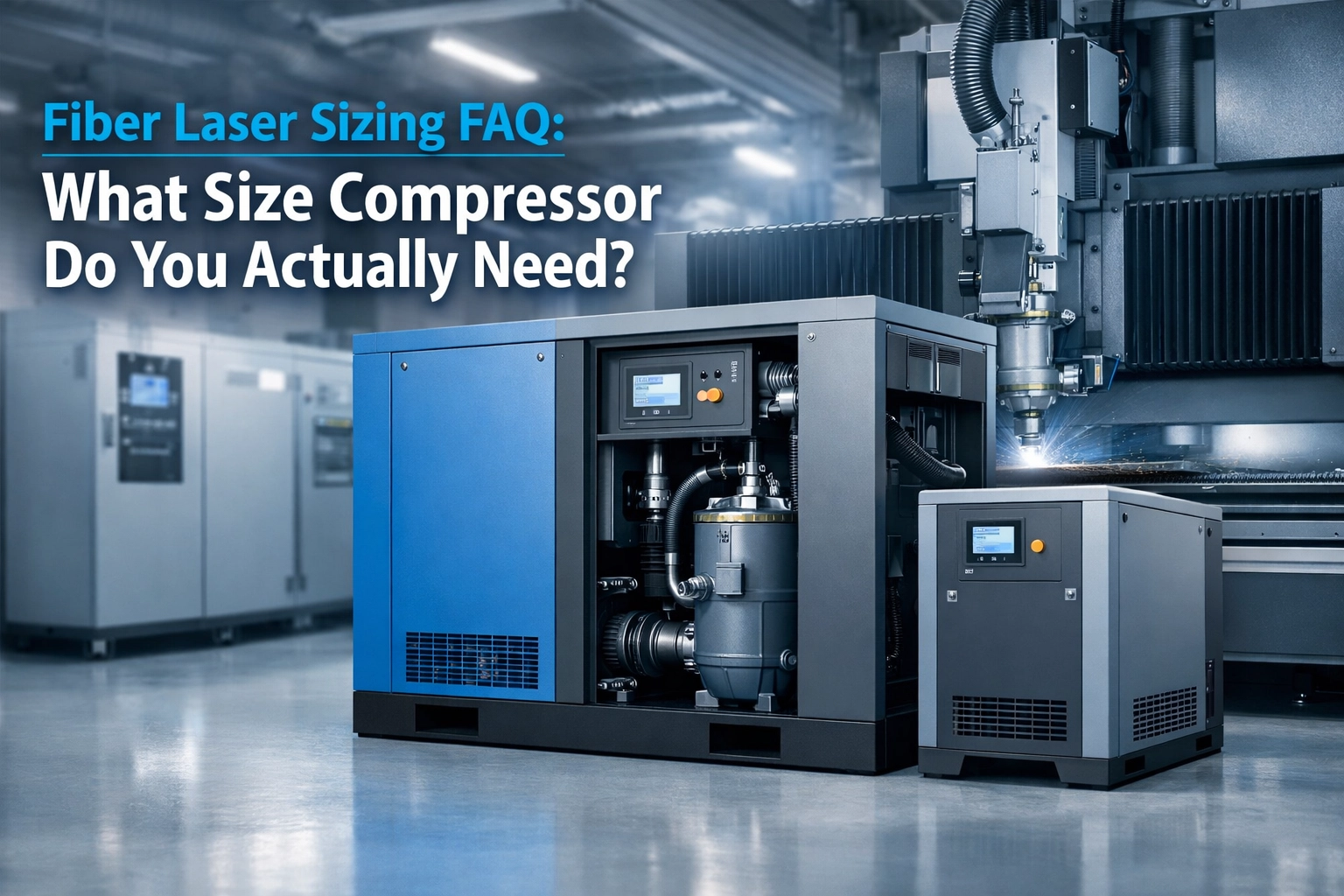
To size an air compressor for your fiber laser machine effectively, you must align the compressor output with the kilowatt power of your laser and the thickness of the material you are cutting. For a standard 1kW to 3kW fiber laser, the ideal air compressor should provide a discharge pressure of 13 to 16 bar and a flow rate between 1.0 and 1.5 cubic meters per minute. High-power lasers reaching 12kW to 30kW require significantly higher air flow, often exceeding 2.5 cubic meters per minute at a consistent 16 bar pressure to ensure clean cuts and high production speeds.
Sizing requires a precise understanding of the cutting nozzle size and the assist gas requirements. Using compressed air as an assist gas is a cost-effective alternative to nitrogen or oxygen, but only if the compressor can maintain the necessary velocity to clear the kerf. AirSpace Machinery Co., Ltd. brings 20 years of engineering excellence to this calculation, operating from a 4000 square meter facility to manufacture specialized Permanent Magnet Variable Frequency (PMV) Screw Air Compressors that meet these rigorous industrial demands.
WHAT ARE THE PRESSURE REQUIREMENTS FOR DIFFERENT MATERIAL THICKNESSES
The pressure required for your fiber laser cutting machine is directly dictated by the material thickness and type. For thin materials ranging from 0.5mm to 3mm, a working pressure of 0.8 to 1.2 MPa (8 to 12 bar) is generally sufficient. As you move into medium-thickness materials between 3mm and 10mm, the pressure must increase to 1.2 to 1.5 MPa (12 to 15 bar) to effectively blow away molten metal. For materials exceeding 10mm, a high-pressure setup of 1.6 MPa (16 bar) or higher is mandatory.
When cutting stainless steel, higher pressure is always preferred to prevent dross buildup on the bottom of the cut. Conversely, when cutting carbon steel with air, the pressure needs to be balanced to avoid excessive oxidation while maintaining enough force to clear the cut path. It is standard engineering practice to select a compressor with a pressure rating 0.2 MPa higher than your maximum requirement to account for pressure drops across filters and dryers.
https://cdn.marblism.com/yjGkiyGx_j2.png
HOW DOES LASER POWER (KW) IMPACT COMPRESSOR SELECTION
Laser power determines the speed at which you cut, and cutting speed influences how much air is consumed per minute. Below is a professional breakdown of sizing recommendations based on laser kilowatt ratings for optimal performance:
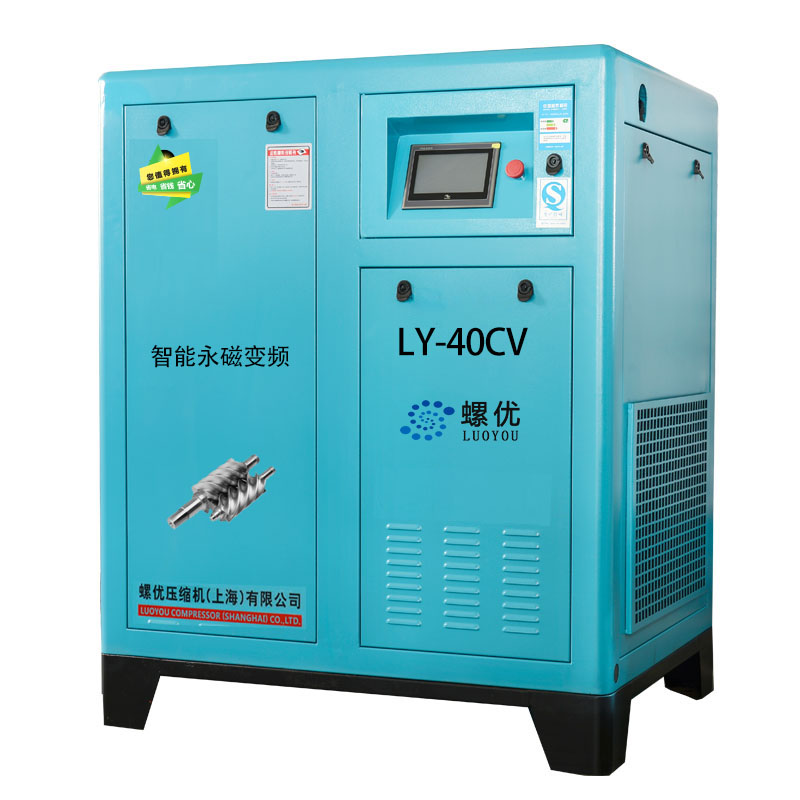
For 1kW to 1.5kW Fiber Lasers: A 7.5kW to 11kW (10HP to 15HP) screw air compressor is typically sufficient. These units, such as our 10HP fixed speed efficient screw air compressor, provide the necessary 1.0 m³/min flow rate at 13 bar.
https://www.chinacompressor.org/product/10hp-7-5kw-fixed-speed-efficient-low-noise-screw-air-compressor
For 2kW to 3kW Fiber Lasers: An 11kW to 15kW (15HP to 20HP) unit is recommended. This ensures a flow of approximately 1.2 to 1.5 m³/min, allowing for continuous cutting of thicker plates without pressure fluctuations.
https://www.chinacompressor.org/product/20hp-15kw-fixed-speed-efficient-low-noise-screw-air-compressor
For 4kW to 6kW Fiber Lasers: A 22kW to 30kW (30HP to 40HP) PMV screw air compressor is the standard choice. These systems provide roughly 2.0 to 2.5 m³/min, which is necessary to support the high-speed nozzles used in these power ranges.
https://www.chinacompressor.org/product/30hp-22kw-fixed-speed-efficient-low-noise-screw-air-compressor
For 12kW to 30kW Fiber Lasers: These ultra-high-power machines require specialized high-flow systems. In many cases, multiple units or a large 37kW to 45kW (50HP to 60HP) compressor is required to maintain a flow rate above 3.5 m³/min at high pressure.
https://cdn.marblism.com/cAuvllVAITn.jpg
WHY IS AIR QUALITY CRITICAL FOR FIBER LASER CUTTING
Air quality is not a luxury; it is a requirement for protecting your laser lens and maintaining cut quality. Compressed air must be free of moisture, oil, and dust particles. According to ISO 8573-1:2010 standards, air used for laser cutting should ideally meet Class 1.2.1 or better. This means oil content should be less than 0.01 mg/m³ and particles should be smaller than 0.01 micrometers.
If oil or moisture reaches the laser head, it can contaminate the protective window or even the focus lens, leading to expensive repairs and downtime. This is why AirSpace Machinery integrates high-efficiency refrigerated dryers and a multi-stage filtration system into our all-in-one laser compressor solutions. These systems ensure the pressure dew point remains low enough to prevent condensation in the lines, regardless of the ambient temperature.
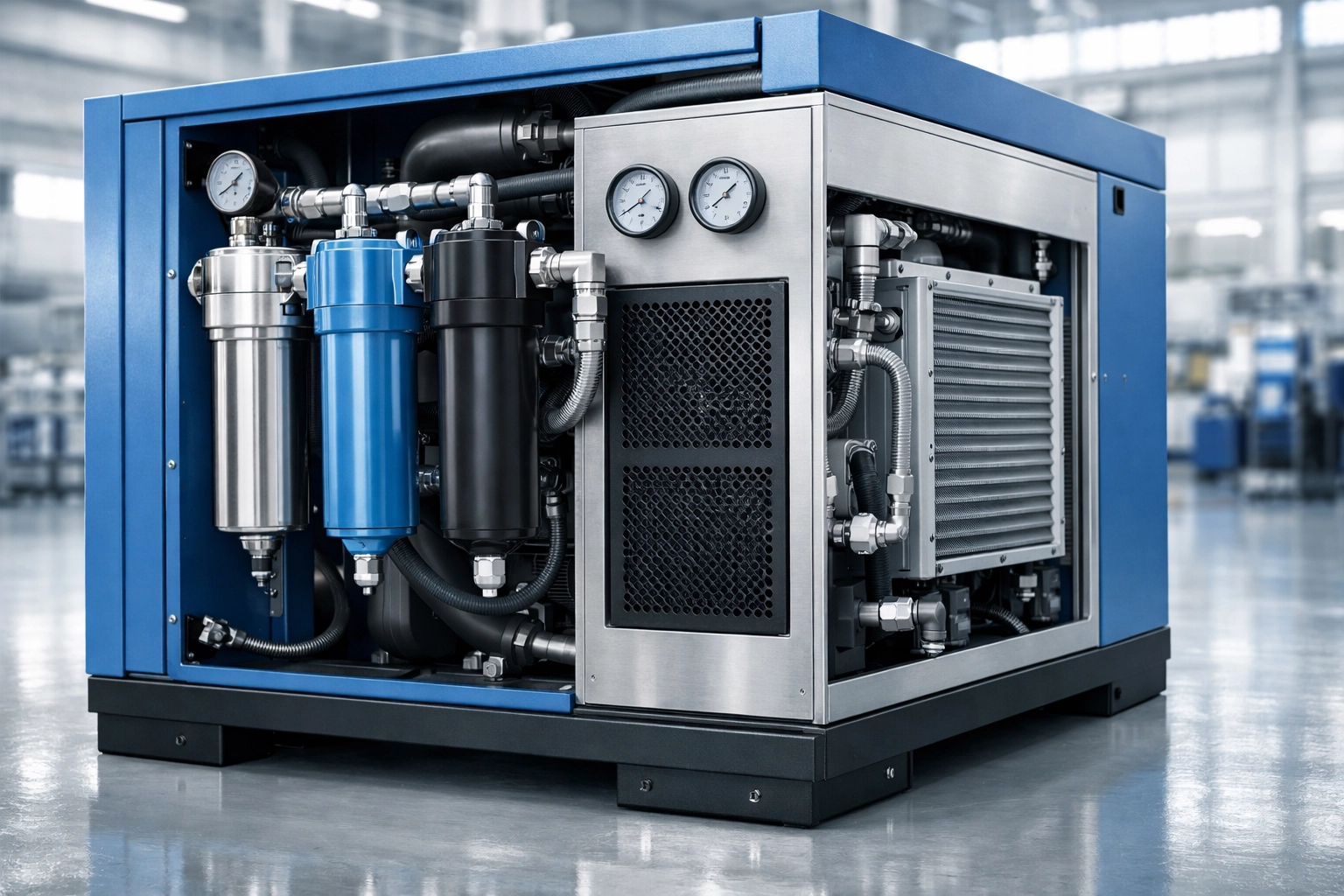
HOW DO PMV SCREW AIR COMPRESSORS SAVE ENERGY IN LASER APPLICATIONS
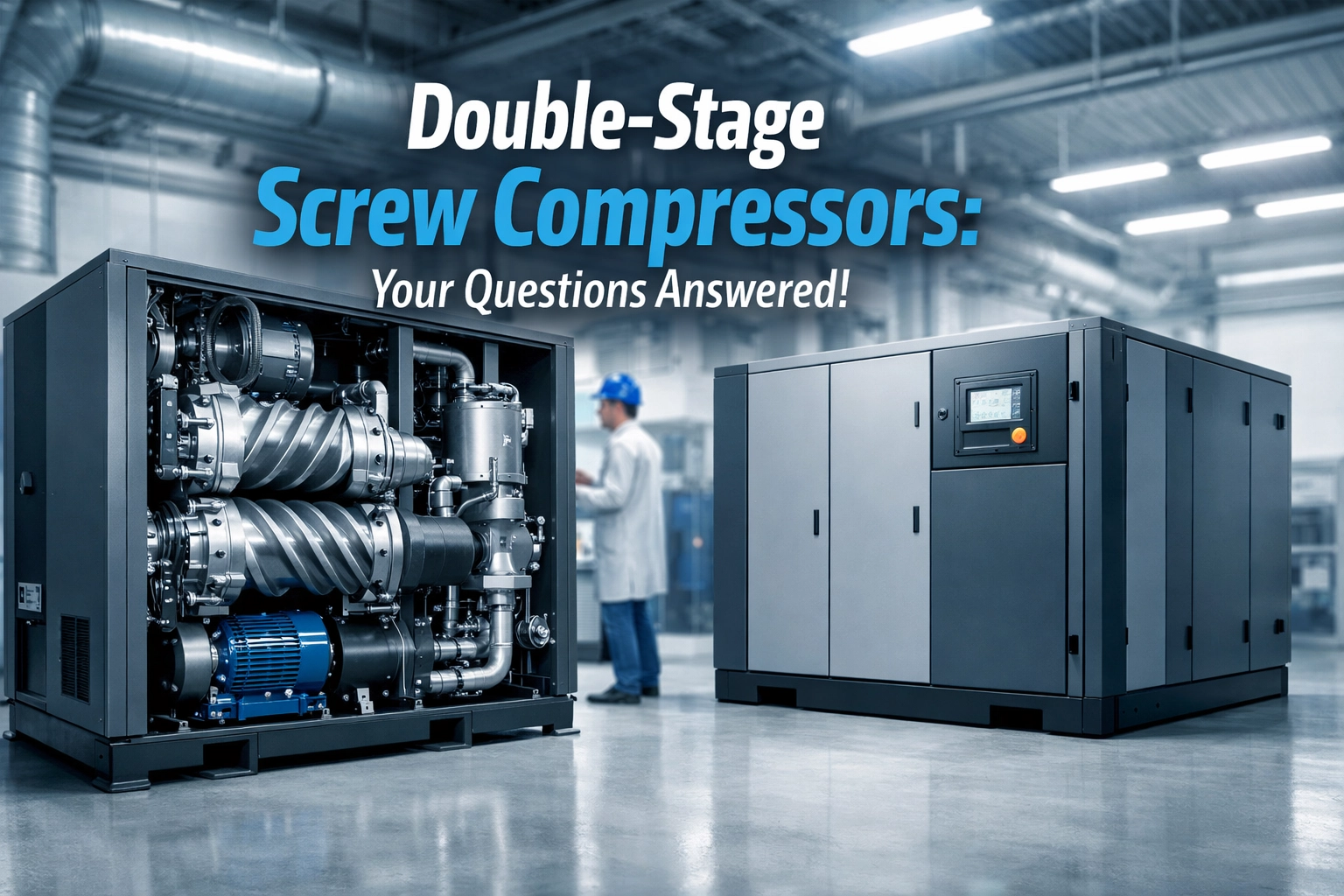
Permanent Magnet Variable Frequency (PMV) technology allows the compressor to adjust its motor speed in real-time based on the actual air consumption of the laser. Laser cutting is rarely a continuous high-flow process; there are pauses for loading material, changing heads, or shifting between different parts of a nest. A traditional fixed-speed compressor would continue to run at full power or enter a wasteful unload cycle during these periods.
A PMV screw air compressor from an industrial air compressor manufacturer ISO 9001 certified like AirSpace can reduce energy consumption by up to 30 percent compared to fixed-speed models. By matching the motor frequency to the air demand, the system eliminates peaks in starting current and maintains a steady pressure, which also contributes to a more stable cutting arc and better edge finish.
https://cdn.marblism.com/yFOqnsxkcHI.jpg
HOW TO VERIFY CE AND ISO 9001 DOCUMENTATION FOR GLOBAL EXPORT
For international buyers, verifying the quality of an industrial air compressor manufacturer is vital. AirSpace Machinery Co., Ltd. maintains strict compliance with CE and ISO 9001 standards. To verify documentation, buyers should request the certificate numbers and use the official accreditation body websites to confirm the validity and scope of the certification. We provide full transparency in our documentation to support smooth logistics and customs clearance in regions including Southeast Asia, Latin America, and the Russia-CIS markets.
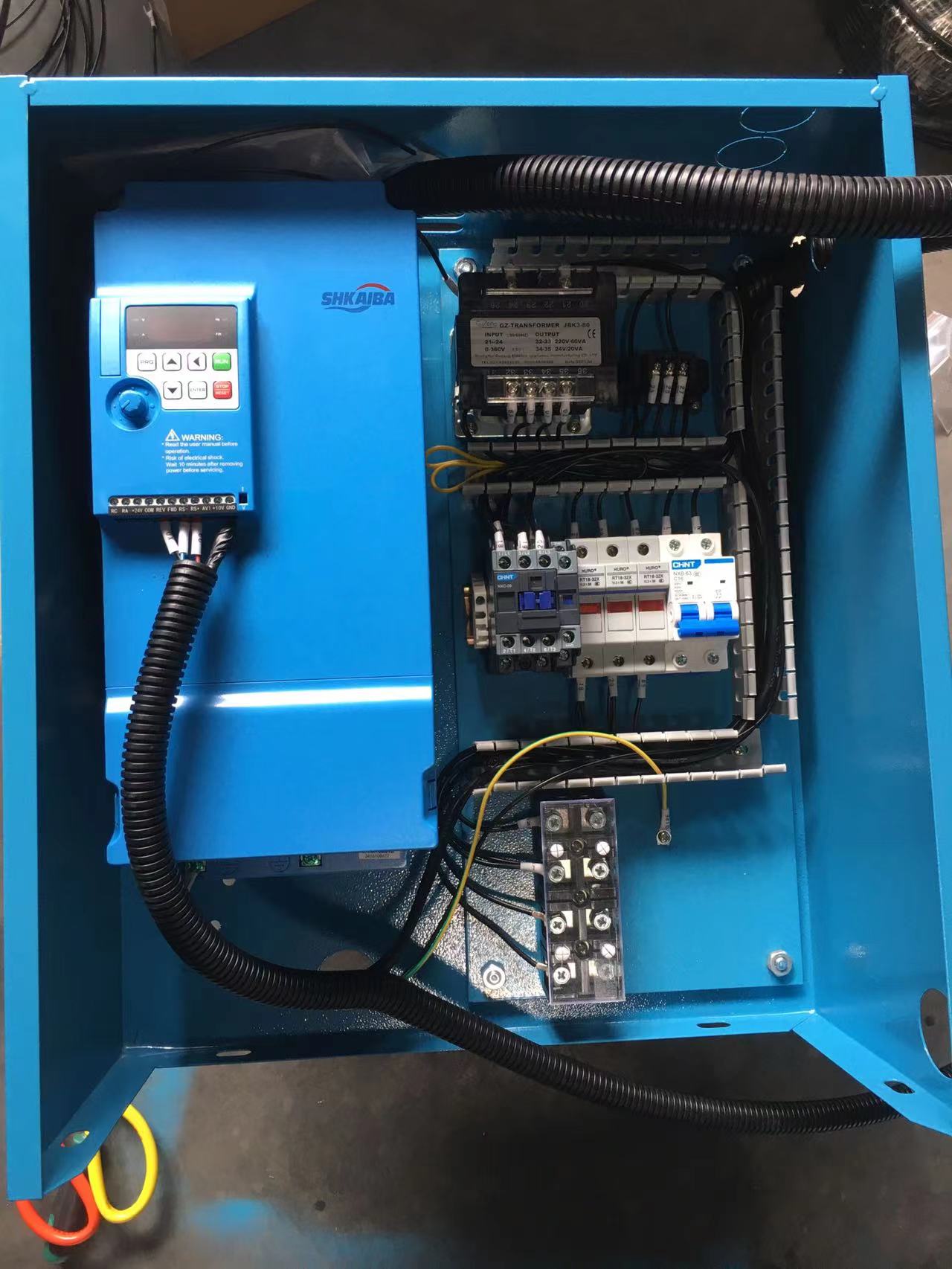
Our export support includes comprehensive winterization for cold climates in Russia and the CIS, ensuring that oil heaters and specialized lubricants are used. For Southeast Asia, we focus on high-ambient temperature cooling systems and enhanced moisture separation to handle extreme humidity. In Latin America, our electrical control panels are designed to handle grid instability, utilizing robust SHKAIJA variable frequency drives to protect the internal components.
https://cdn.marblism.com/xI2MhYMtcug.jpg
HOW DO I CALCULATE THE EXACT AIR FLOW NEEDED FOR MY NOZZLE
If you want to be precise, you can use the flow coefficient calculation. Air flow (Q) equals the flow coefficient (k) multiplied by the nozzle area (A) and the cutting speed (V). In practical terms, most operators use a 1.5mm to 2.5mm nozzle. A 2.0mm nozzle at 15 bar pressure will consume approximately 1.2 to 1.4 m³/min of air. Always add a 20 percent safety margin to your final calculation to account for potential leaks in the piping or the aging of the compressor unit.
Selecting a compressor that is too small will result in pressure drops during long cuts, which ruins the material. Selecting one that is slightly larger and equipped with PMV technology ensures you have the power when you need it without wasting electricity when you do not.
SOURCES AND TECHNICAL STANDARDS
ISO 8573-1:2010: Compressed air purity classes for particles, water, and oil.
ISO 9001:2015: Quality management systems requirements for manufacturing.
ISO 1217: Displacement compressor acceptance tests.
CE Marking: Compliance with health, safety, and environmental protection standards for products sold within the European Economic Area.
GET A PROPOSAL
To receive a tailored solution for your laser cutting operation, please provide your requirements. Note that lead times depend on the specific configuration and voltage requirements of your region.
Required Pressure (bar or psi):
Required Flow Rate (m³/min or CFM):
Laser Power (kW):
Submit your details to our engineering team to ensure you get the right size for your machine.
Author: Penny Winston
Reviewed by Engineering