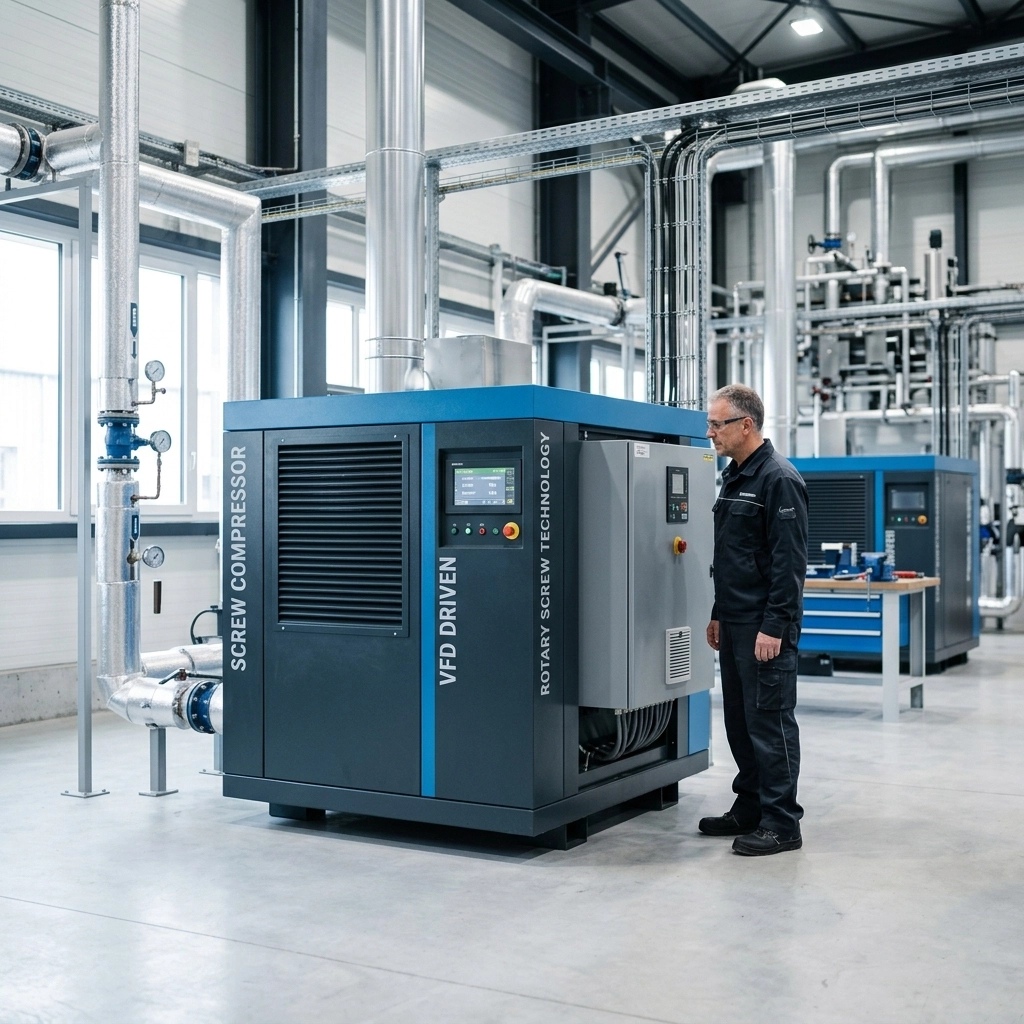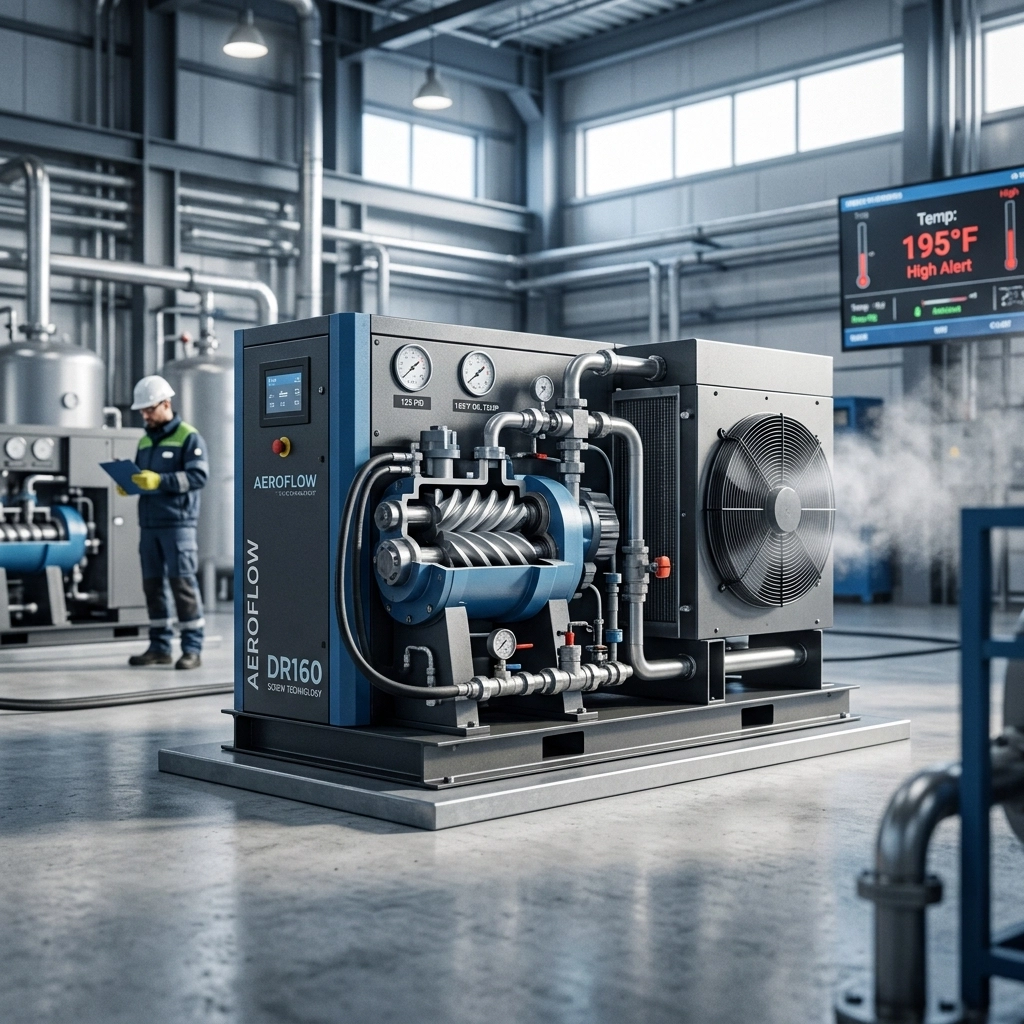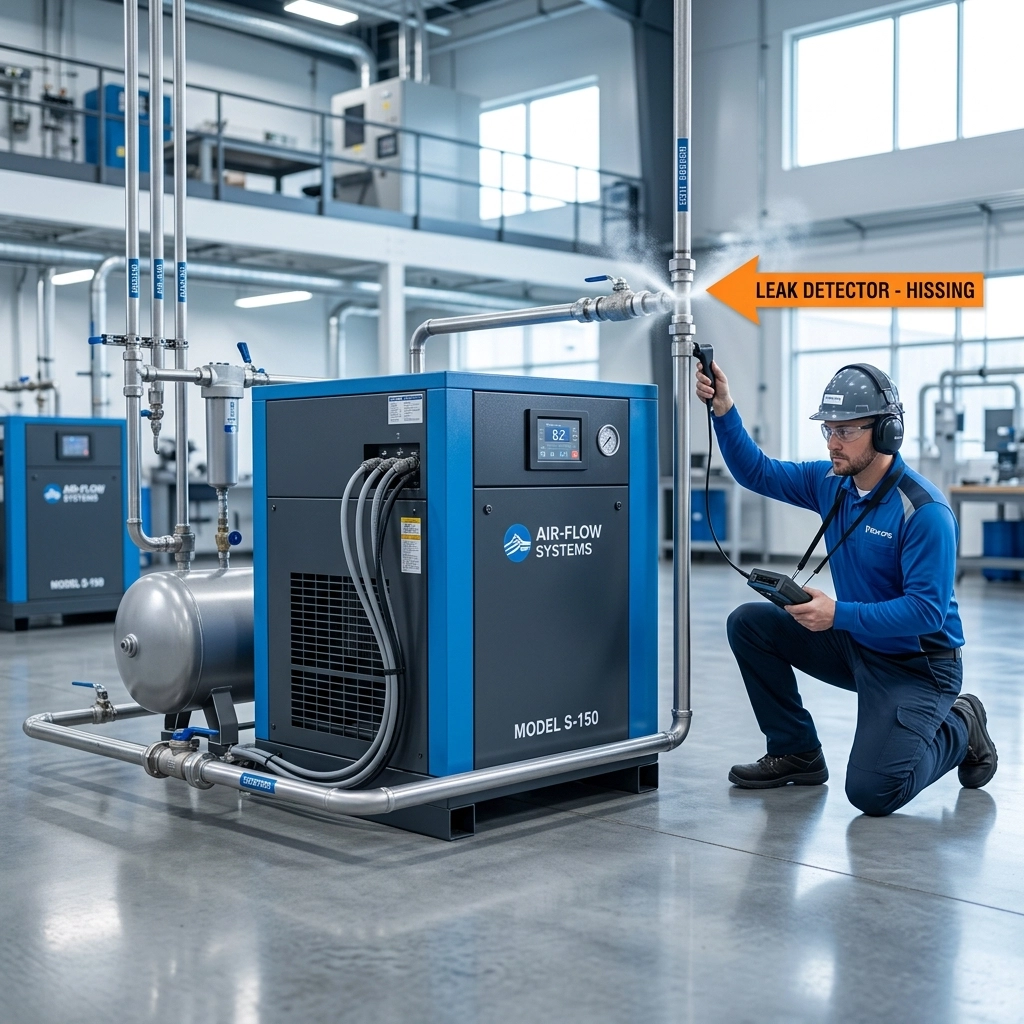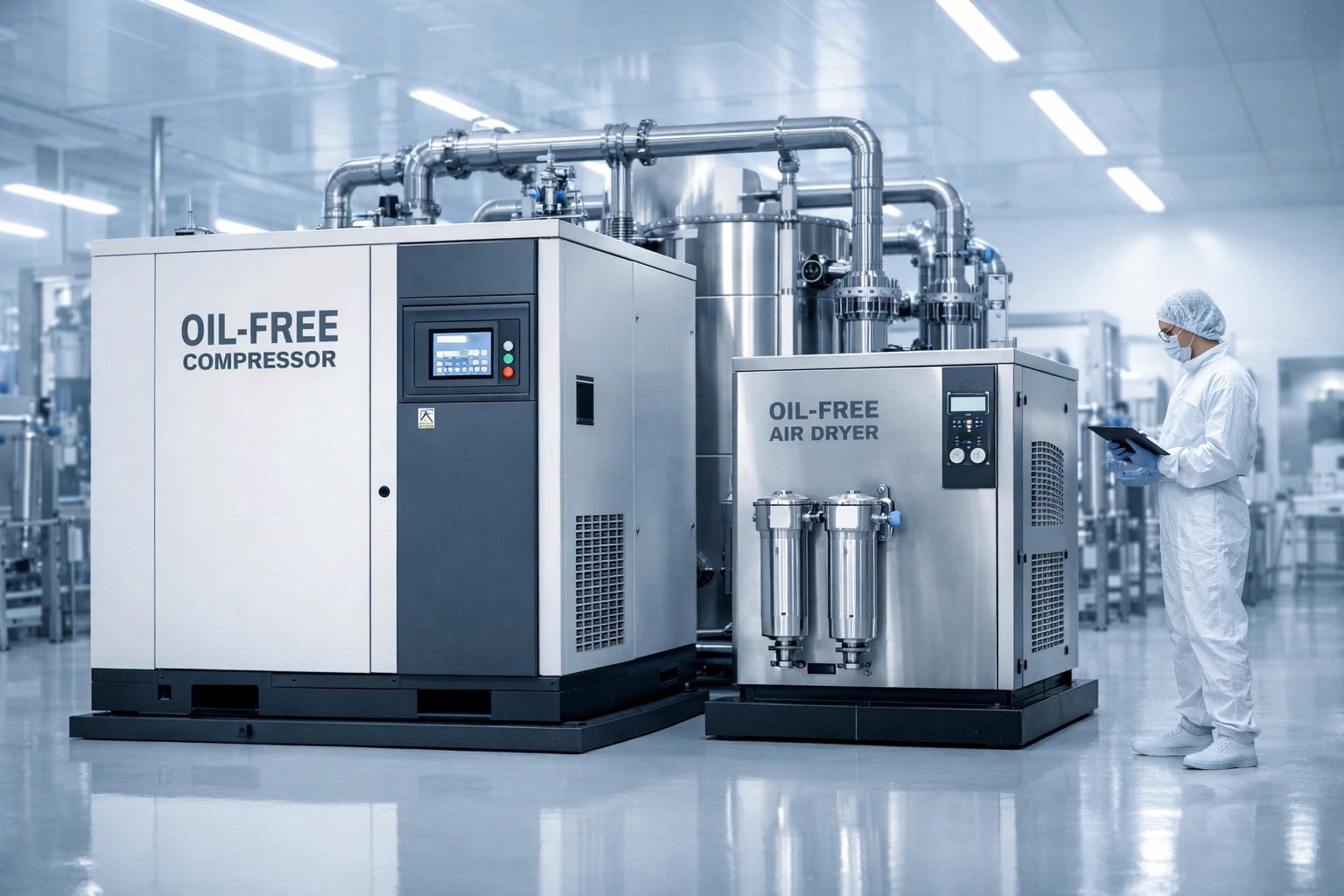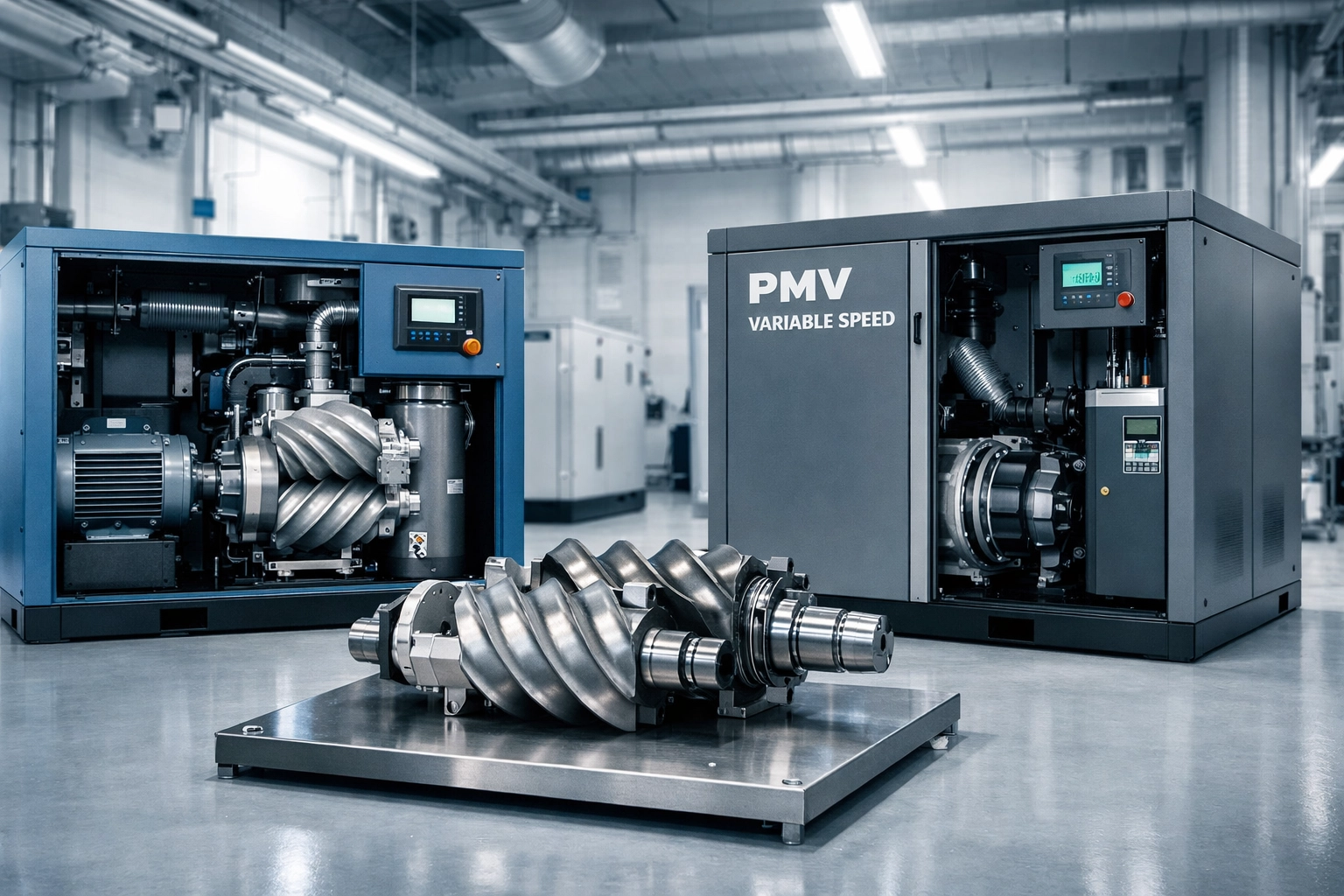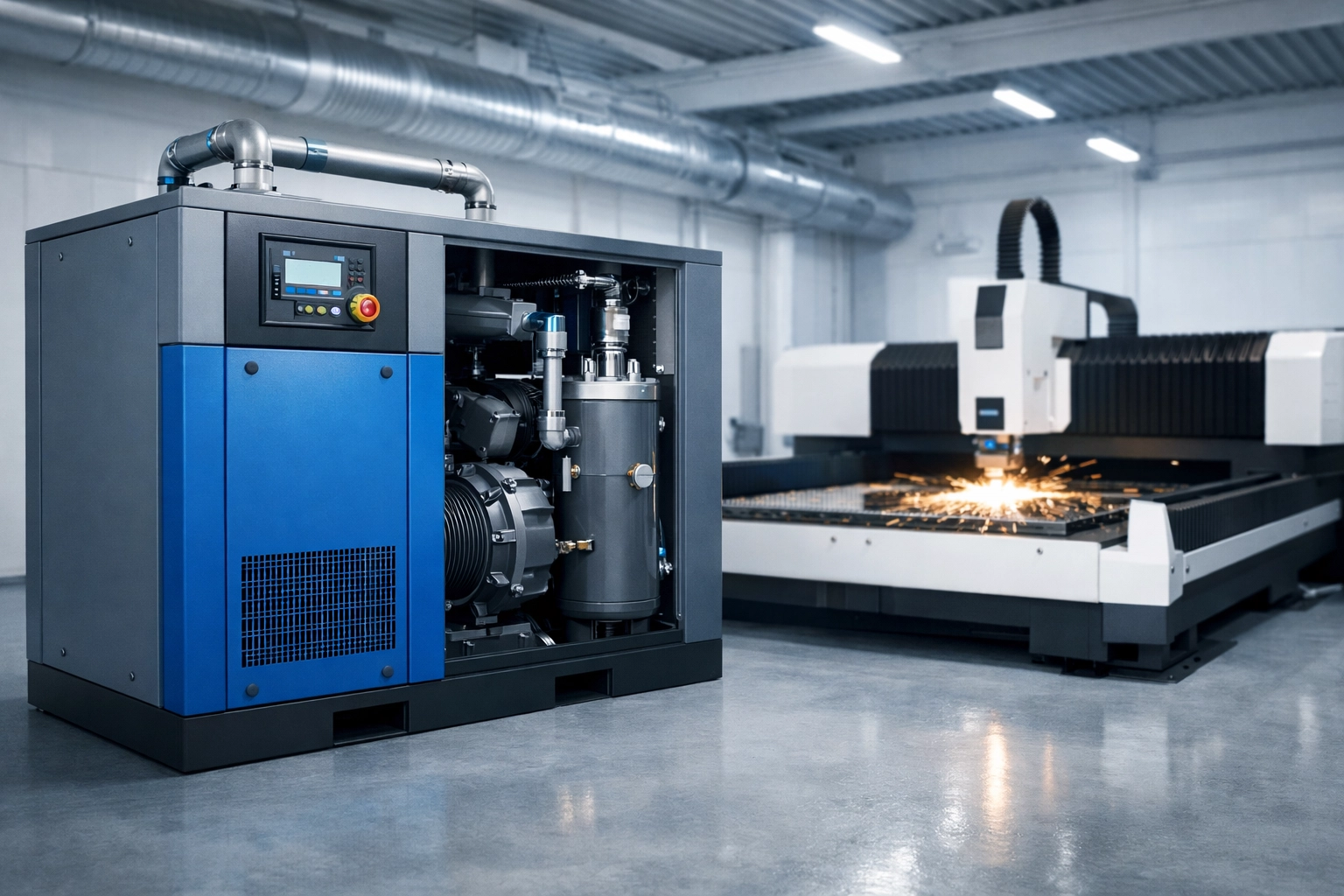
For most industrial facilities with fluctuating air demand, the answer is a definitive yes. A Variable Frequency Drive (VFD) air compressor, specifically a Permanent Magnet Variable Frequency (PMV) system, typically delivers a Return on Investment (ROI) within 12 to 24 months by reducing energy consumption by 35% to 50% compared to traditional fixed-speed units.
Q: What is the fundamental difference between a Fixed-Speed and a VFD Air Compressor?
Answer: The primary difference lies in how the motor reacts to air demand. A fixed-speed compressor operates at a constant RPM regardless of whether your tools need 10% or 100% of the air capacity. When demand is low, it “unloads,” meaning the motor still spins (consuming about 30% of full power) without producing useful air.
In contrast, a Variable Speed Drive (VSD) air compressor uses an inverter to adjust the motor’s speed to match the exact air demand in real-time. By eliminating “unload” cycles and preventing over-pressurization, the system only consumes the precise amount of electricity required for the task at hand. At AirSpace Machinery Co., Ltd., we specialize in Permanent Magnet Variable Frequency (PMV) air compressors, which utilize high-efficiency motors that maintain peak performance even at low speeds, further widening the efficiency gap.
Q: How do I calculate the ROI of a 22kW/30HP PMV system versus a fixed-speed unit?
Answer: To calculate the ROI, you must look at the Total Cost of Ownership (TCO). While a VFD unit has a higher initial purchase price, electricity accounts for approximately 70% of a compressor’s lifetime cost.
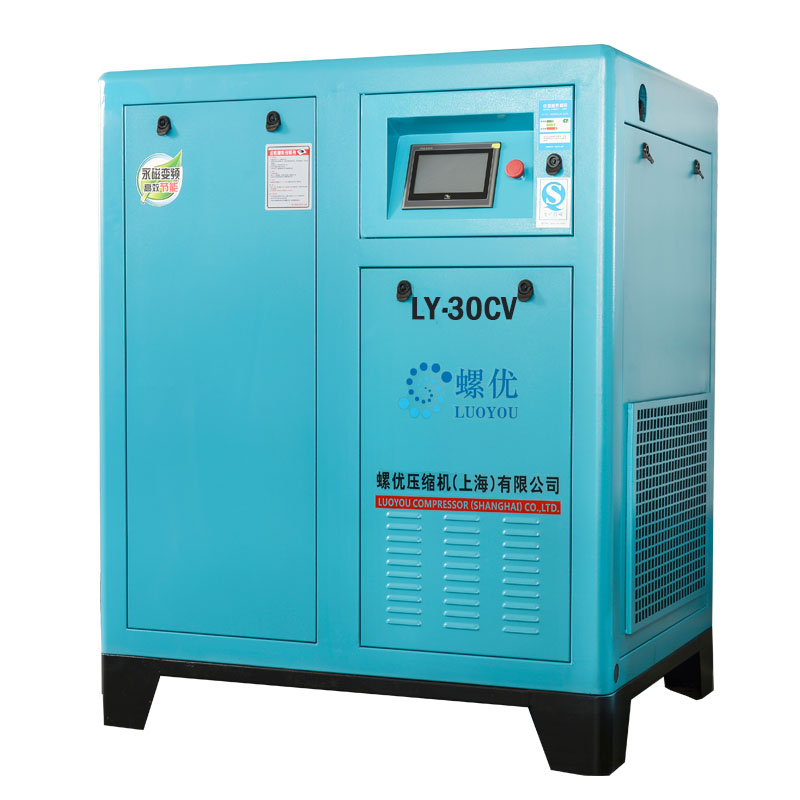
Based on our real-world data from client installations of the LY-30CV 22kW PMV model, here is a structured comparison for a facility operating 4,000 hours per year at 70% average load:
| Feature | Fixed-Speed (22kW) | PMV VFD (22kW) | ROI Impact |
|---|---|---|---|
| Annual Energy Use | ~88,000 kWh | ~57,200 kWh | 35% Savings |
| Idle/Unload Waste | High (25-30% power) | Zero (Motor stops/slows) | Direct Profit |
| Start-up Current | 6-8x Full Load | <1x Full Load (Soft Start) | No Peak Demand Charges |
| Pressure Stability | ±0.5 to 1.5 bar | ±0.1 bar | Reduced Leakage & Waste |
| Estimated Payback | N/A | 14–18 Months | Fast Capital Recovery |
Q: What role does an “Inverter Air Compressor Energy Audit” play in deciding?
Answer: An energy audit is a professional assessment that logs your facility’s air consumption patterns over a 7-day period. This data is the only way to accurately predict your variable speed drive (VSD) air compressor savings.
If your audit shows a “flat line” demand (meaning you run at 100% capacity 24/7), a fixed-speed compressor might actually be more efficient. However, 90% of industrial applications, from CNC machining to textile manufacturing, have variable loads. The audit quantifies the “Unload Time” and “Pressure Overshoot” of your current system, giving you a hard number on how much cash is being vented into the atmosphere. At AirSpace Machinery, we leverage our 20 years of engineering expertise to help clients interpret these audits, ensuring the technology matches the application.
Q: Why is Permanent Magnet (PM) technology better than standard VFD?
Answer: Standard VFDs use induction motors. While they are better than fixed-speed, induction motors lose efficiency significantly when they slow down. A Permanent Magnet Variable Frequency (PMV) air compressor uses rare-earth magnets that do not require electricity to create a magnetic field in the rotor.
This allows the motor to maintain 95%+ efficiency even at 25% speed. For a plant manager, this means that during light shifts or weekend maintenance, the compressor is still saving you money rather than operating in an inefficient “low-speed” zone. Our LY-series PMV compressors are designed to handle these fluctuations without the heat build-up associated with standard motors.
Q: Does a VFD increase or decrease maintenance costs over time?
Answer: It significantly decreases long-term maintenance costs and extends equipment life. Fixed-speed compressors suffer from “Hard Starts”, a massive surge of electricity and mechanical torque that stresses the motor windings, belts, and air-end bearings every time the machine turns on.
A VFD provides a “Soft Start,” gradually ramping up the speed from zero. This eliminates mechanical shock. Furthermore, because a VFD unit often runs at lower average RPMs than a fixed-speed unit, the actual wear and tear on the screw rotors is reduced. Our 4000m² manufacturing facility integrates high-grade components that complement this reduced stress, ensuring that your investment lasts well beyond its payback period.
Q: How do regional power and climate conditions affect VFD performance?
Answer: Geography matters when selecting an inverter-driven system.
- SEA (Southeast Asia): In high-humidity environments like Vietnam or Thailand, the VFD must be rated for high ambient temperatures and moisture resistance. Our units feature optimized cooling paths to prevent condensation within the electronics.
- LATAM (Latin America): In regions with less stable power grids, the VFD acts as a protective barrier. It can handle slight voltage fluctuations that might otherwise burn out a standard across-the-line motor starter.
- Russia/CIS: Cold-weather winterization is key. While the VFD creates less heat at low loads, our systems include thermal management to ensure the oil stays at the correct viscosity during start-up in freezing conditions.
Q: How can I trust the quality and export compliance of these systems?
Answer: When investing in high-value PMV technology, verification of the manufacturer is critical. AirSpace Machinery Co., Ltd. maintains a consistent annual sales volume of 100 million yuan, a testament to our scale and reliability in the international market.
All our screw-type air compressors are manufactured in our ISO 9001-certified facility and carry full CE certification for the European and global markets. We provide comprehensive export support, including digital documentation for customs and logistics coordination to ensure your unit arrives ready for commission.
Q: When is a VFD not the right choice?
Answer: Honesty is central to our engineering philosophy. You do not need a VFD if:
- Your air demand is 100% constant, 24 hours a day (e.g., a specific high-volume continuous chemical process).
- Your environment is extremely dirty or lacks ventilation (though we offer specialized enclosures, VFD electronics prefer clean, cool air).
- Your daily air usage is less than 2 hours total; in this case, the energy savings may take too long to offset the initial cost.
For everyone else, the transition to PMV technology is no longer a luxury, it is a competitive necessity.
Sources and Technical Standards
- Energy Efficiency: Calculations based on the “Affinity Laws” for centrifugal loads and ISO 1217 Annex C/E for displacement compressors.
- Motor Standards: PM motors comply with IE4 and IE5 (Ultra-Premium Efficiency) standards.
- Quality Management: ISO 9001:2015 and CE (MD 2006/42/EC, LVD 2014/35/EU).
- Air Quality: Performance data verified against ISO 8573-1:2010 standards.
About the Author: Penny Winston
Penny is a senior technical writer at AirSpace Machinery Co., Ltd., specializing in industrial energy optimization and compressed air systems. With a focus on helping global manufacturers reduce operational overhead, she translates complex engineering data into actionable business insights.
Reviewed by Engineering
Get a Proposal
Ready to see how much a PMV system can save your facility? Our team provides tailored solutions based on your specific requirements.
Please include the following details for an accurate quote:
- Required Pressure: (e.g., 8 bar / 116 psi) [Mandatory]
- Required Air Flow: (e.g., 3.5 m³/min / 123 CFM) [Mandatory]
- Industry/Application: (e.g., Laser cutting, Textile, Food packaging)
- Input Power: (e.g., 380V/50Hz/3Ph)
Lead times vary based on specific configuration and voltage requirements.