How much money does the average industrial facility lose to compressed air leaks?
Direct Answer: Most industrial plants lose between 20% and 30% of their total compressed air capacity to leaks, though in poorly maintained systems, this figure can soar to 40%. For a facility operating a standard 100kW industrial screw air compressor, a 30% leak rate can represent over $10,000 USD in wasted electricity annually, depending on local energy tariffs.
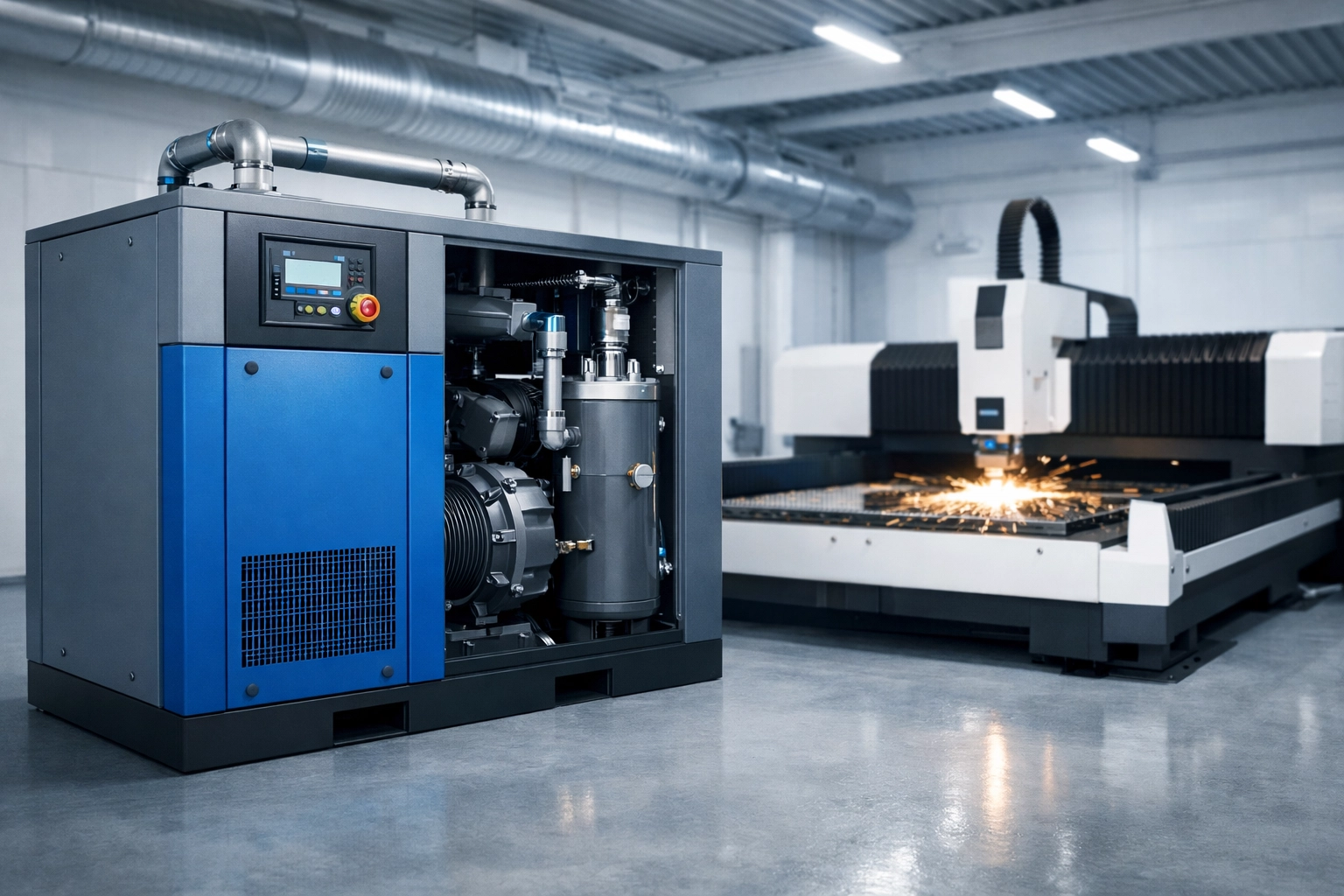
At AirSpace Machinery Co., Ltd., our 20 years of engineering expertise have shown that air is often the most expensive utility in a factory. Unlike a water leak, which creates a visible puddle, or a gas leak, which carries an odor, compressed air leaks are often “invisible” and ignored because they don’t stop production, they just make it significantly more expensive. In a compressed air system for textile manufacturing, where high-volume air is required 24/7, these small “hisses” can equate to the cost of a brand-new machine every few years.
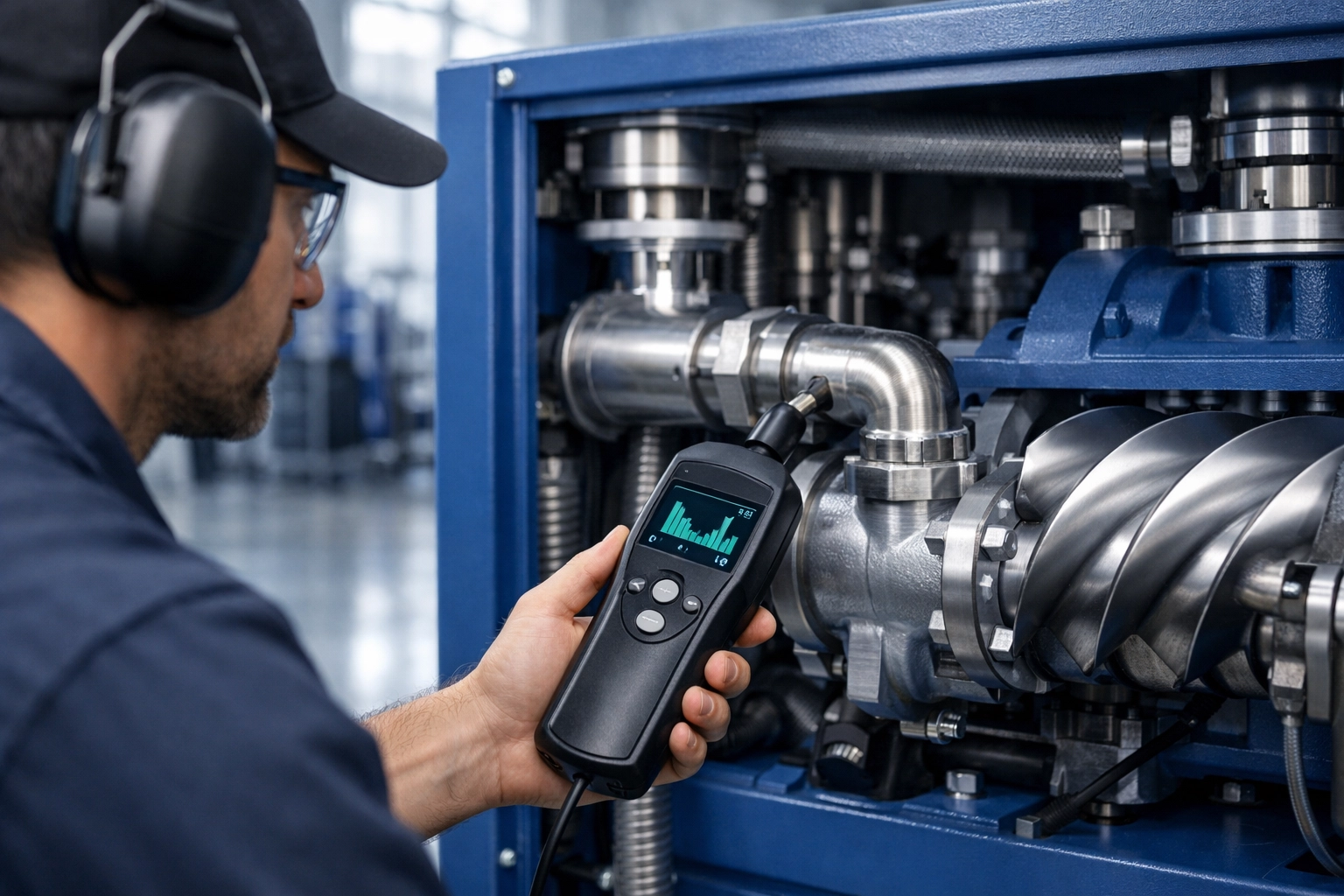
How can I identify air leaks without specialized equipment?
Direct Answer: You can perform a manual “Pressure Drop Test” or the “Timed Cycle Test” during a production shutdown. By running the compressor to full pressure and then turning it off (or timing how often it loads/unloads when no tools are in use), you can calculate the percentage of air being lost to the system’s “base load” of leaks.
For facilities looking for an industrial screw air compressor for sale, it is vital to understand that even the most efficient machine cannot overcome a leaky pipe network.
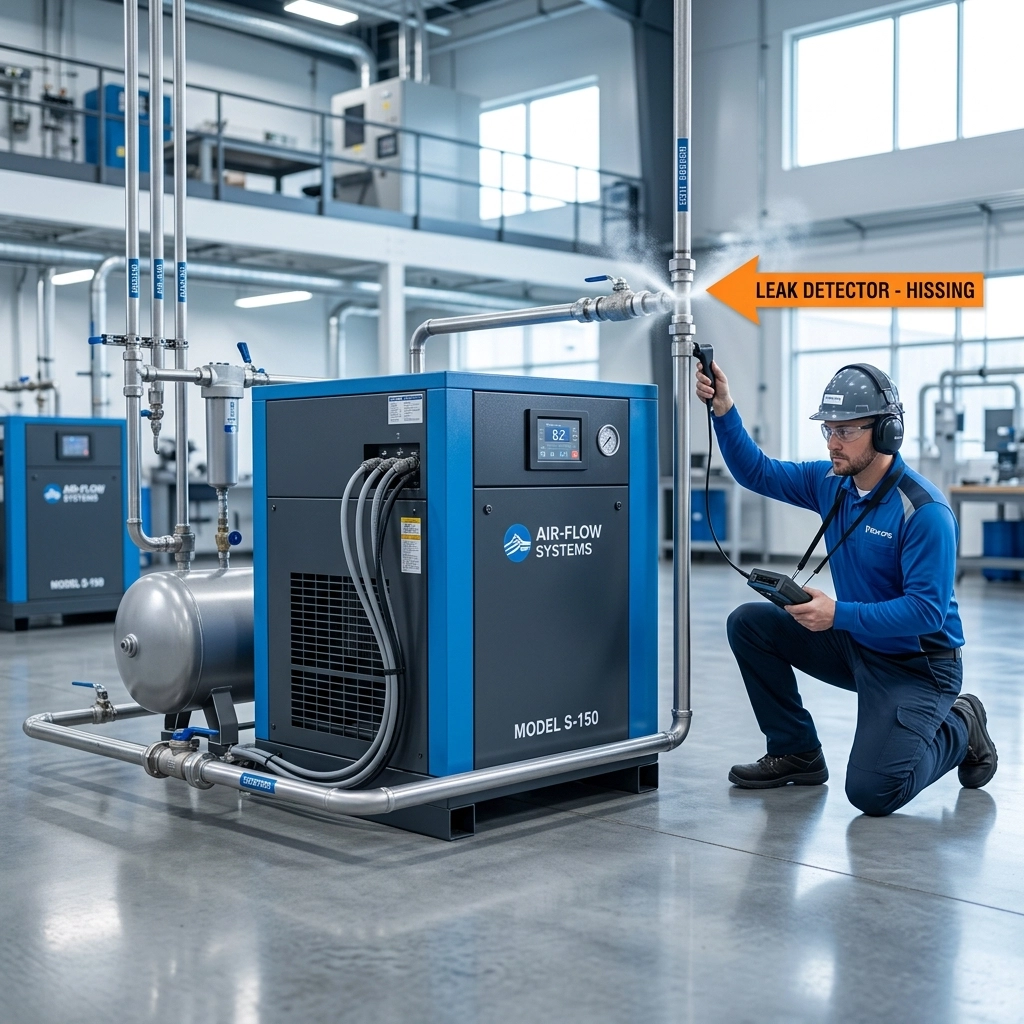
- The Ear Test: During a weekend or night shift when the plant is quiet, walk the lines. Large leaks are often audible.
- The Soapy Water Test: Apply a mixture of dish soap and water to joints, valves, and couplings. If bubbles form, you have a leak.
- The Downtime Observation: If your compressor kicks on frequently when no machines are running, your leak rate is likely exceeding 20%.

What is an Inverter Air Compressor Energy Audit, and why is it necessary?
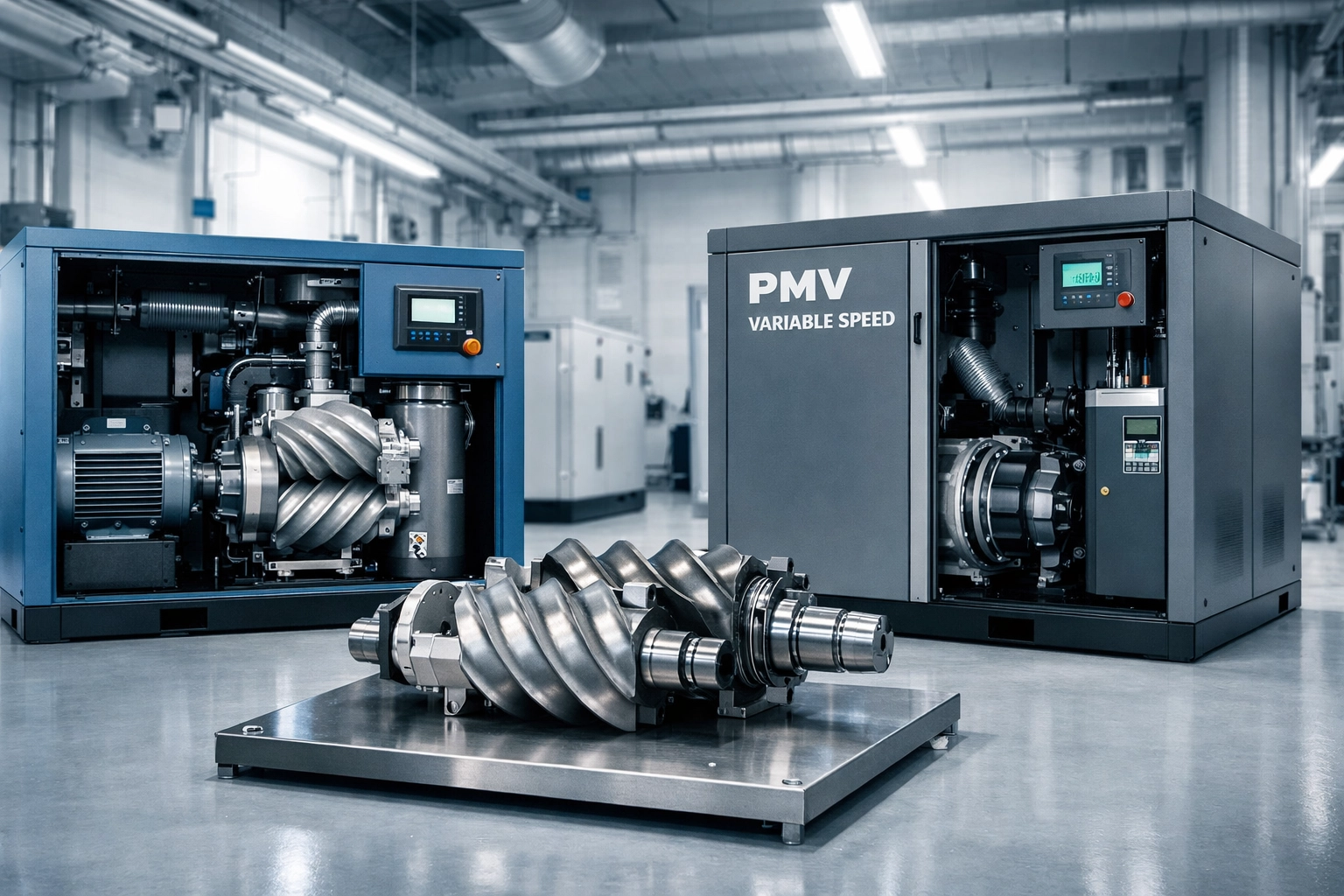
Direct Answer: An inverter air compressor energy audit is a professional assessment that uses data loggers to measure current draw, pressure fluctuations, and flow rates over a set period (usually 7 days). This audit identifies the “leakage load” and determines if your current system is oversized or if a Permanent Magnet Variable Frequency (PMV) system could reduce your energy bill by matching output to actual demand.
At our 4000m² facility in China, we manufacture PMV screw air compressors specifically designed to handle fluctuating loads. During an audit, we often find that customers are using fixed-speed compressors that run at full power even when leaks are the only thing consuming air. Upgrading to a PMV system doesn’t fix the leaks, but it ensures you aren’t paying “full price” for the air that escapes.
How does Permanent Magnet Variable Frequency (PMV) technology impact the cost of leaks?
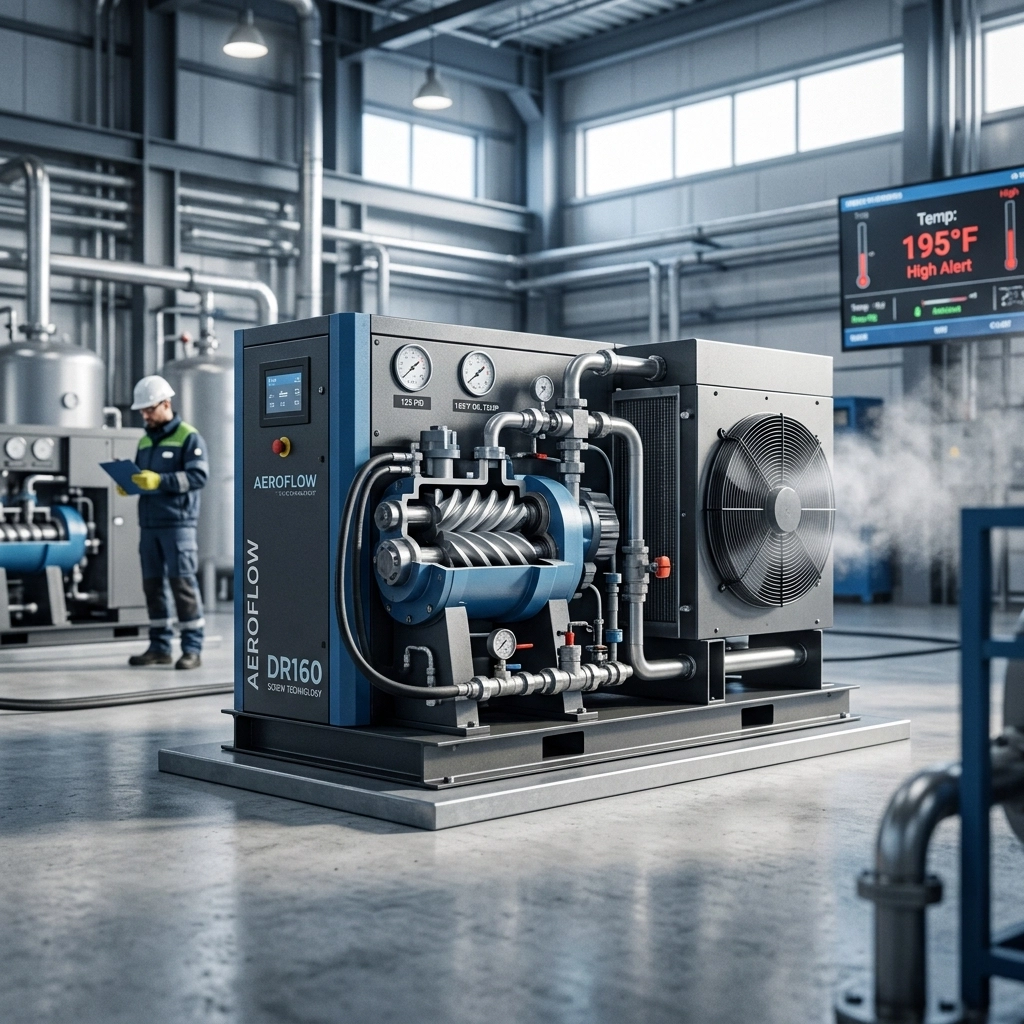
Direct Answer: PMV technology reduces the financial impact of leaks by allowing the motor to slow down and consume less power when demand is low. While a fixed-speed compressor consumes roughly 70-80% of its full power even when unloaded, a PMV compressor can reduce energy consumption proportionally to the reduced air demand, often saving 30-50% on total energy costs.
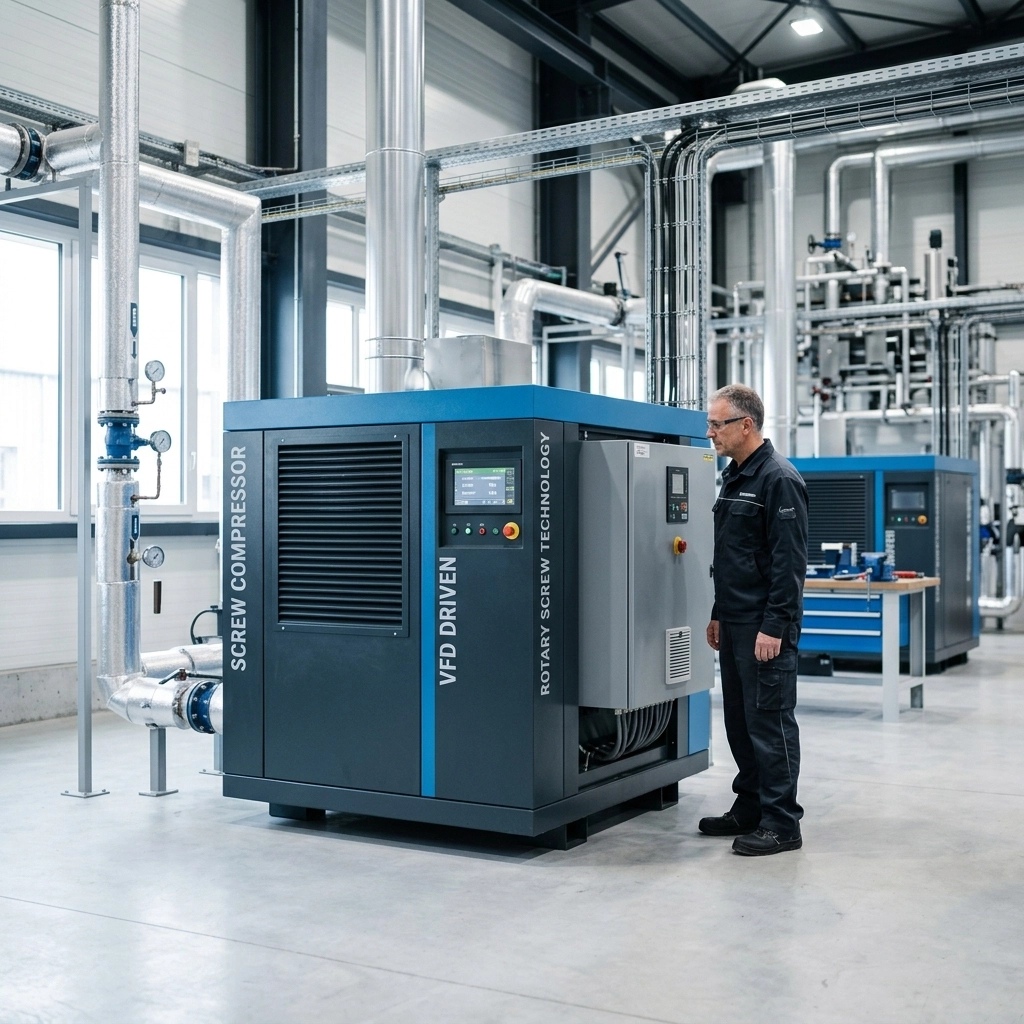
Our LY-series, such as the LY-50CV, utilizes advanced PMV technology to provide stable pressure. In demanding environments like a compressed air system for textile manufacturing, the PMV drive reacts instantly to pressure drops caused by leaks or tool activation, maintaining a steady 0.01 MPa pressure range. This prevents the “over-pressurizing” of leaks, which otherwise increases the volume of air lost.
What is the typical ROI for a leak detection and repair program?
Direct Answer: Most industrial facilities see a Return on Investment (ROI) in less than six months. By spending a few hundred dollars on ultrasonic leak detection or manual repairs, a plant can save thousands in energy costs and prevent the premature wear of their compressor.
Consider the physics: a single 3mm hole in a 100 psi (7 bar) system can lose approximately 30 CFM. If your compressor requires 4kW of power to produce 30 CFM, that one tiny hole is costing you the electricity of a large commercial air conditioner running 24/7. When you multiply this by dozens of small leaks across a factory floor, the waste is staggering. Reducing system pressure by just 1 bar (14.5 psi) can result in a 7% energy saving across the entire system.
How should international buyers verify the quality and compliance of a new compressor?
Direct Answer: International buyers should demand verified ISO 9001 and CE certification documentation. Ensure the manufacturer has a track record of global exports and offers transparent technical specifications regarding Free Air Delivery (FAD) and Specific Power (kW/m³/min).
AirSpace Machinery Co., Ltd. maintains a strict quality control protocol. Our annual sales exceed 100 million yuan, backed by 20 years of engineering excellence. We provide full logistics and export support for markets in Southeast Asia (SEA), LATAM, and Russia-CIS. For buyers in humid regions like SEA, we recommend integrated refrigerated dryers to prevent moisture-induced corrosion in the pipework, which is a leading cause of new leaks. For our clients in Russia and the CIS, we offer winterization packages to ensure the internal components and PMV electronics remain stable in sub-zero temperatures.
What are the 5 most common locations for air leaks?
Direct Answer: Over 90% of leaks are found in the “last mile” of the system, the points where the air reaches the application. The most common culprits are:
- Couplings and Hoses: Worn-out quick-connects are the #1 source of leaks.
- Pressure Regulators: Faulty internal seals.
- Pipe Joints: Improperly applied thread sealant or vibration-induced loosening.
- Condensate Drains: Manual drains left cracked open or stuck-open automatic traps.
- Valves and Flanges: Worn packing around valve stems.
How can I prevent air leaks from returning after a repair?
Direct Answer: Implement a “Total Productive Maintenance” (TPM) schedule that includes quarterly ultrasonic inspections and the use of high-quality piping materials like aluminum or stainless steel instead of traditional black iron, which is prone to internal corrosion.
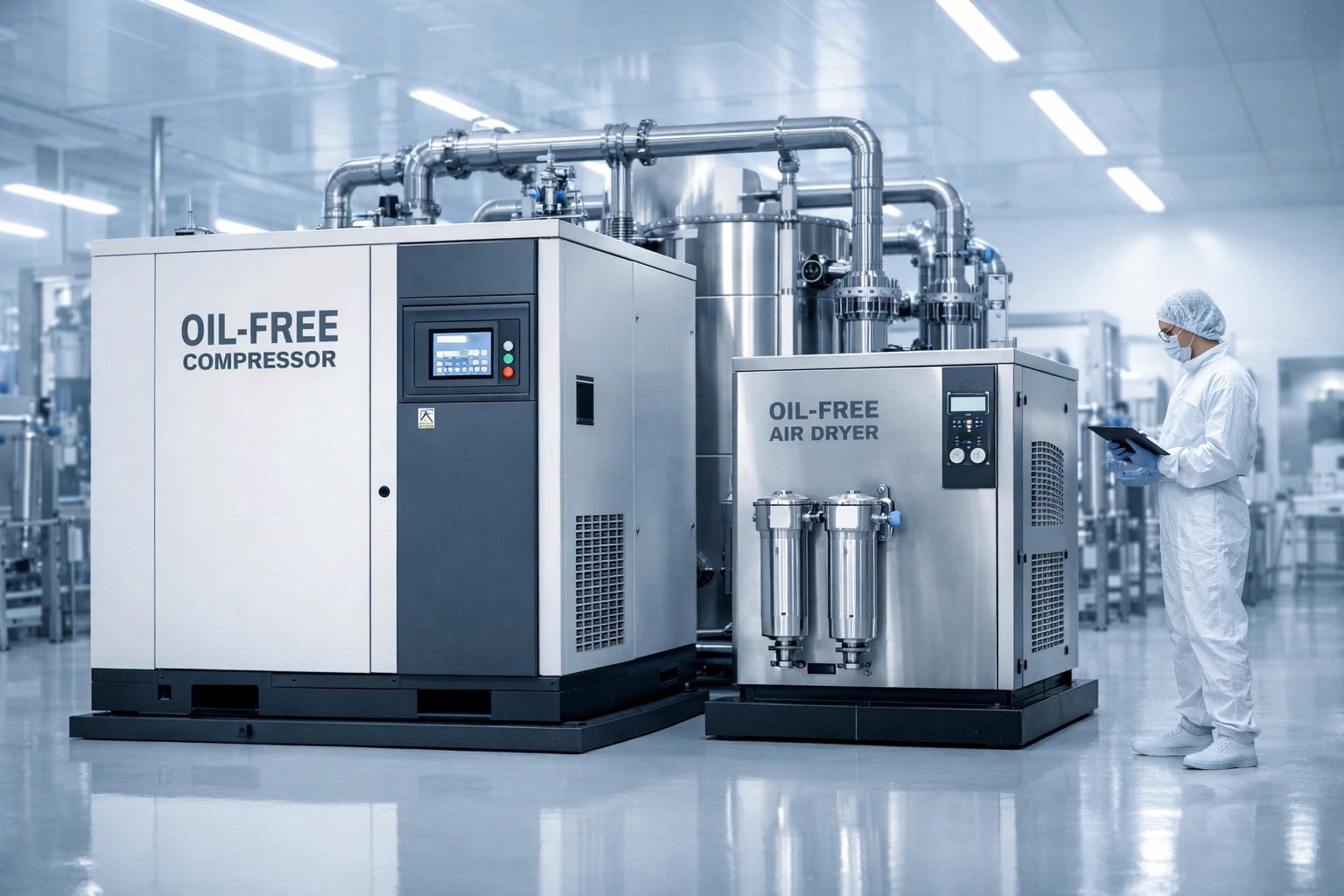
Using a high-performance system like our PMV integrated units (Model LY-20JTPM) ensures that the air entering your lines is clean and dry. Moisture is the enemy of pipe integrity. By integrating an air dryer and receiver tank into a single assembly, you reduce the number of external connections and potential leak points at the source.
Sources and Technical Standards
- ISO 8573-1:2010: Standard for compressed air contaminants and purity classes.
- ISO 9001:2015: Quality management systems for manufacturing.
- CE Certification: Compliance with health, safety, and environmental protection standards for products sold within the EEA.
- Energy Statistics: According to the US Department of Energy (DOE), compressed air accounts for 10% of all industrial electricity usage.
Get a Proposal
If you are looking to replace an aging, inefficient unit or want to optimize your plant’s energy consumption, AirSpace Machinery Co., Ltd. is here to help. Our engineering team can provide a tailored solution based on your specific flow and pressure requirements.
Please provide the following details for a customized quote:
- Required Pressure: [Specify Bar or PSI]
- Required Flow: [Specify m³/min or CFM]
- Industry Application: (e.g., Textile, Laser Cutting, General Manufacturing)
Lead times vary based on configuration and regional logistics.
Author: Penny Winston
Position: AI Blog Writer, AirSpace Machinery Co., Ltd.
Reviewed by Engineering: March 28, 2026