Short answer: The Math of the Efficiency Gap: Energy Consumption: A typical 75kW unit at $0.12/kWh costs roughly $36,000 to run annually.
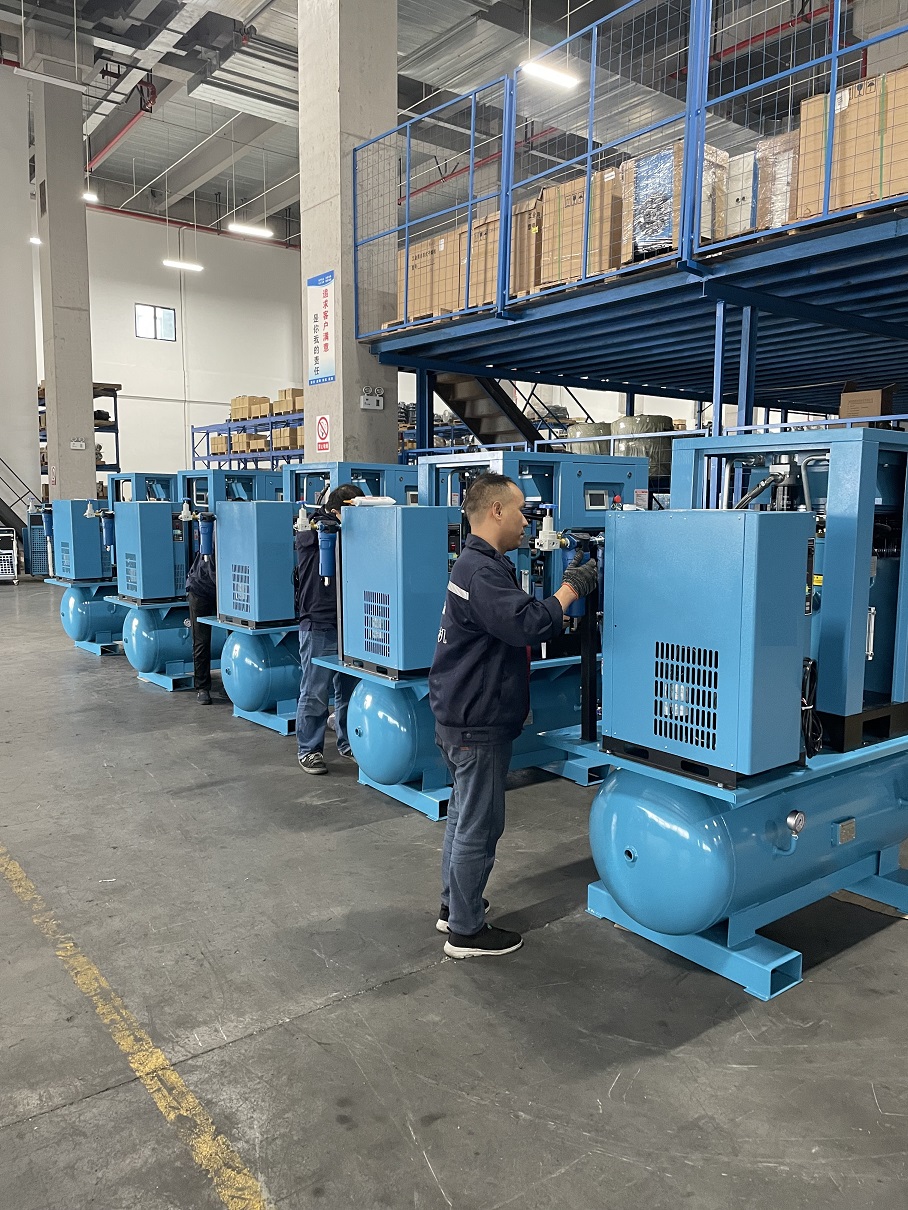
Written by Penny Winston, Blog Writer, AirSpace Machinery Co., Ltd. — a 4,000 m² compressor manufacturing facility in Shanghai, ISO 9001:2015 certified and CE marked.
Reviewed by Richard Moore, Field Technical Manager.

The "made in-house" claim is one of the most effective smoke screens in the industrial compressor market. On the surface, it sounds like total quality control. In reality, it is often a race to the bottom where manufacturers sacrifice specialized engineering to save a few pennies on manufacturing costs. For a factory manager, those saved pennies turn into a massive "Efficiency Tax" that bleeds thousands of dollars into the local power grid every year.
At AirSpace Machinery, we believe in specialized excellence. By integrating established, tier-1 specialized components rather than generic "in-house" alternatives, we deliver a 35% energy delta compared to standard legacy systems. This technical decision isn't just about build quality; it is about plugging the $8,400 annual hole in your operational budget.
The Answer: Why Specialized Components Beat "In-House" Generics
In-house component manufacturing is frequently driven by profit margins, not performance metrics. When a supplier makes their own motors, air ends, and controllers, they are often building "good enough" parts to lower their own production costs. By contrast, a specialized component strategy uses parts from dedicated engineering firms that spend hundreds of millions on R&D for that one specific part. The result is a machine where every clearance is tighter, every magnetic field is more efficient, and every watt of electricity is squeezed for more CFM.
1. The $8,400 Leak: Breaking Down the Numbers
When we talk about the "Industrial Tax" of inefficient machinery, we aren't being dramatic. Let’s look at a standard 75kW (100HP) compressor running 4,000 hours a year.
A generic in-house system often suffers from wider tolerances in the screw rotors and lower-grade motor magnets. This creates a performance gap. While a high-tier China made screw air compressor with specialized PMV technology maintains peak efficiency across its range, the generic alternative wastes energy through heat and friction.
The Math of the Efficiency Gap:
- Energy Consumption: A typical 75kW unit at $0.12/kWh costs roughly $36,000 to run annually.
- The Efficiency Delta: Specialized components and PMV technology reduce power consumption by 20% to 35% compared to "vertical-integrated" fixed-speed or basic VSD units.
- The Waste: A 20% efficiency loss (common in generic machines) equals $7,200. When you factor in the "Unload Tax" of fixed-speed legacy systems, that figure easily climbs to $8,400 or more.
Over a 10-year lifespan, that "cheap" in-house machine costs you $84,000 extra. You didn't save money; you just financed the manufacturer’s margin with your utility bill.
2. The Truth About Vertical Integration
Many buyers ask: "Isn't it better if they make everything themselves?" Johnny Wayne, Managing Director of AirSpace Machinery, has a blunt take on this.
"Think of it like a high-performance car," Johnny says. "Do you want a car where the company made their own tires, their own fuel injectors, and their own brake pads just to save a buck? Or do you want the one with Brembo brakes and Michelin tires? In the compressor world, specialized foundries produce the best air ends. Specialized electronics firms produce the best drives. We hunt down those top-tier components and integrate them into our PMV framework. That is how you get 99.9% uptime."

3. Comparison: In-House Generics vs. Specialized Integration
To understand the 35% energy delta, you have to look under the hood.
| Metric | Generic "In-House" Units | AirSpace Specialized Integration |
|---|---|---|
| Rotor Precision | Standard tolerances; higher internal air leakage | High-precision specialized rotors; minimal backflow |
| Motor Tech | Basic IE2 or IE3 induction / Generic PM | High-tier Permanent Magnet (PM) motors |
| Bearing Life | 20,000 – 30,000 hours | 50,000+ hours (Standard-compliant) |
| Energy Waste | High "Unload Tax" and heat loss | 35% Energy Delta vs. legacy systems |
| Stability | Pressure swings of 1.0 bar or more | Constant pressure within ±0.1 bar |
4. The Fourth Utility Concept
Compressed air isn't just a piece of equipment; it is the "Fourth Utility" in your plant, right alongside water, gas, and electricity. If your water pipes were leaking 30% of their volume, you would fix them immediately. Yet, many factories accept a 30% energy leak in their air system because it is "invisible."
Our focus on ISO 8573-1 Class 0 Integrity and CE-certified safety standards ensures that your Fourth Utility isn't just reliable: it’s optimized. When you move away from the "in-house" myth, you move toward a system designed for the buyer’s ROI, not the manufacturer’s cost-cutting.
You can explore our high-efficiency range here:
- Variable Frequency Air Compressors: https://www.chinacompressor.org/product-category/variable-frequency-air-compressor
- Fixed Speed Screw Air Compressors: https://www.chinacompressor.org/product-category/fixed-speed-screw-air-compressor
- Integrated Systems for Laser Cutting: https://www.chinacompressor.org/product-category/air-compressor-for-laser-cutting
5. How to Spot the Trap
Before you sign off on a new unit, ask the supplier three questions:
- Are the screw rotors sourced from a specialized foundry or made on general-purpose CNC machines in-house?
- What is the verified specific power (kW/m³/min) at 100%, 70%, and 40% load?
- Is the PM motor a generic assembly or a specialized high-temperature-resistant unit?
If the answers are vague or rely heavily on "we make it all ourselves," you are likely looking at a machine designed for their profit, not your performance.

Conclusion: Stop Paying the Efficiency Tax
In 2026, there is no excuse for "good enough" engineering. The technology exists to eliminate the Unload Tax and provide stable, efficient air for decades. Choosing a China made screw air compressor that prioritizes specialized, established components is the single fastest way to drop your operational costs by $8,400 per year.
Get a Proposal today and let our engineering team show you how the 35% Energy Delta works in your specific facility.
⚡ Is Your Factory Bleeding Cash?
Most fixed-speed compressors waste $3,600/year in "Unload Tax." Test your waste level in 30 seconds.
RUN THE ROI TEST →Ready to See How Much Your Facility Can Save?
Fill out the form below for a Free Energy Assessment.